How history’s most powerful manipulators controlled reality itself, through fear, spectacle, propaganda, and manufactured loyalty. From Augustus Caesar to Goebbels, history’s greatest manipulators used the same hidden tactics. Learn how they controlled fear, loyalty, and story itself.
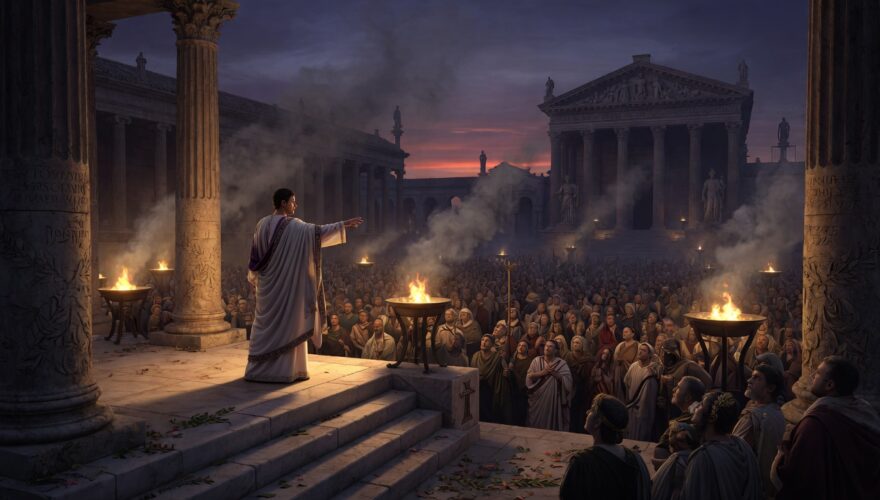
In 27 BC, a man stood before the Roman Senate and handed power back to the people. He said so himself. He returned control of the provinces, restored the ancient offices, kept his own titles modest. The senators wept with gratitude. The crowds celebrated. Poets wrote hymns.
His name was Augustus Caesar, and he had just completed one of the most sophisticated acts of political manipulation in recorded history. He gave nothing back. He kept everything. He simply changed the vocabulary. That is the oldest trick in the manipulator’s arsenal, and it has never stopped working.
Across centuries and continents, a certain type of person has understood something most others miss: reality is only partly about what happens. It is mostly about what people believe happened. Control the belief, and you control the world.
This is a study of the methods, not just the monsters. Because the terrifying truth is that manipulation, at its most effective, does not look like villainy. It looks like leadership, salvation, and common sense.
- 1 Controlling the Story Before Anyone Else Can
- 2 Create an Enemy, Offer Yourself as the Shield
- 3 Divide People Before They Can Unite Against You
- 4 Loyalty Built on Debt Is Stronger Than Loyalty Built on Love
- 5 Hide the Ambition Inside a Noble Cause
- 6 Control Who Reaches the Throne
- 7 Repeat It Until It Sounds Like Common Sense
- 8 Theater, Spectacle, and the Architecture of Awe
- 9 The Thread That Runs Through All of It
Controlling the Story Before Anyone Else Can
Every successful manipulator throughout history has understood one rule before all others: whoever frames the situation first, wins.
Augustus was a master of framing. After decades of civil war that he himself helped prolong, he presented himself as the reluctant restorer of order. He refused the title of dictator. He called himself princeps, meaning “first citizen,” a word with no sharp edges. He kept the Senate, the elections, the ancient ceremonies. He also kept the armies, the treasury, and the final word on everything. The Republic’s ghost walked Rome’s streets while Augustus lived in its house.
Napoleon Bonaparte understood the same principle, though he was considerably less subtle about packaging it. He commissioned paintings. He rewrote battlefield dispatches. After genuine defeats, official accounts described miraculous tactical withdrawals. He understood that most Frenchmen would never visit a battlefield but they would see a painting in a public hall, and the painting would show a white horse and a calm expression and a sky designed by God. He manufactured mythology in real time.
“Men judge by the event, not by the action.”
Niccolò Machiavelli, The Prince (1513)
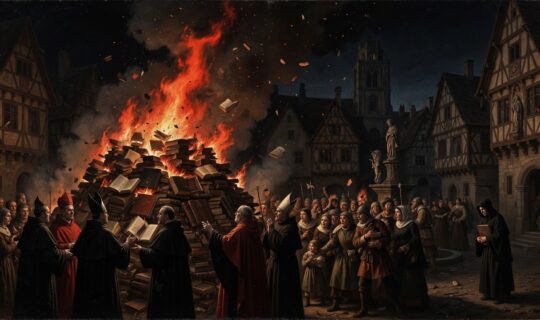
Joseph Goebbels then industrialized the process. As Reich Minister of Propaganda, he did not invent lies so much as he engineered an atmosphere in which truth became irrelevant. Repetition was the core technology: say something often enough and it stops being a claim and starts being furniture. Slogans replaced arguments. Spectacle replaced evidence. The enemy was always identifiable, always threatening, always responsible for everything wrong. Goebbels himself wrote in his diary: “If you tell a lie big enough and keep repeating it, people will eventually come to believe it.” He built a system that treated human psychology the way an engineer treats a bridge: find the load-bearing points, apply the right pressure.
Join The Archive Briefing
Weekly dispatches. The history they didn't teach you — sourced, subverted, delivered to your inbox.
LESSER-KNOWN DETAILS
Augustus Caesar kept a list of senators he considered loyal and one he considered doubtful, and privately referred to the doubtful list as “those who wait.” He never moved against them openly. He simply ensured they never received the appointments they needed to become powerful. The Republic’s forms remained intact; only the outcomes were managed.
Less often discussed is Queen Elizabeth I of England, whose management of her own image was extraordinary by any era’s standards. She cultivated the cult of the Virgin Queen deliberately, turning a political liability (her unmarried status) into a symbol of sacred devotion to England. Portraits were regulated. Unflattering likenesses were destroyed. She understood, centuries before the term existed, that a monarch’s image was a weapon of statecraft.
Create an Enemy, Offer Yourself as the Shield
Fear is the oldest political currency.
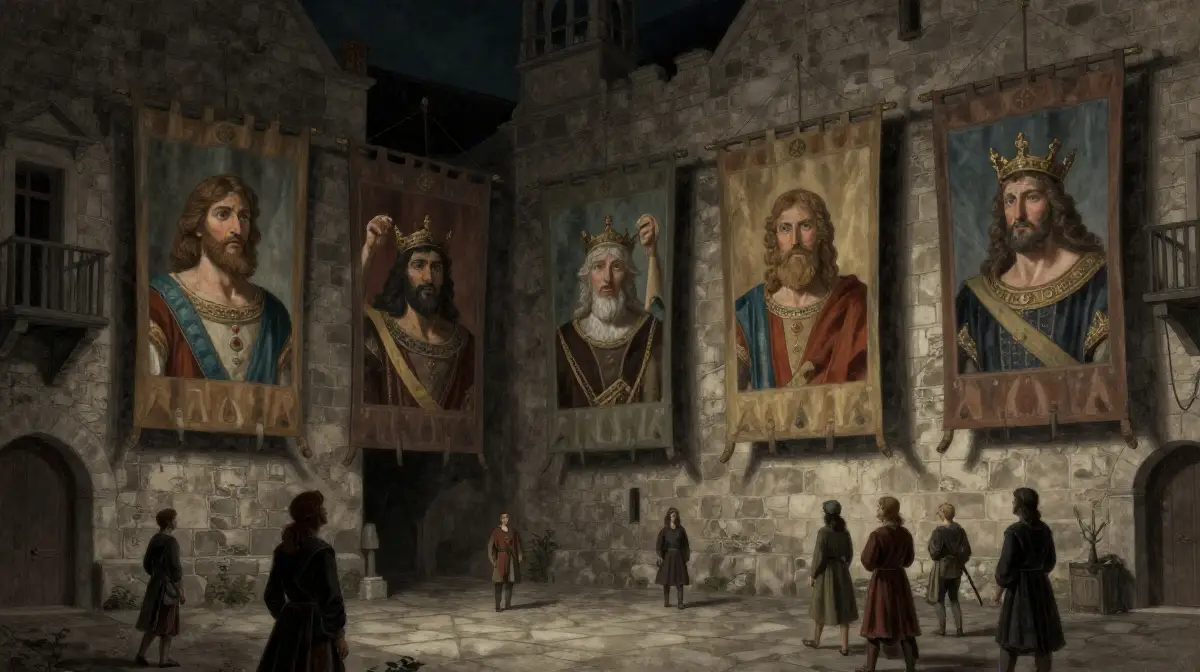
In 1692, Salem, Massachusetts, became one of history’s most chilling case studies in how accusation can function as proof when the right atmosphere of fear has been established first. The accusations of witchcraft did not emerge from nothing: there were land disputes, family feuds, class resentments, and a Puritan theology that genuinely believed the Devil walked among them. What the accusers understood, consciously or not, was that fear suspended normal rules of evidence. Fourteen women and five men were hanged. The real mechanisms were property, power, and personal score-settling, wrapped in the language of spiritual emergency.
“The best way to keep one’s word is not to give it.”
Napoleon Bonaparte
Senator Joseph McCarthy did something structurally similar 260 years later. He did not invent the fear of communist infiltration; it was already there. He simply learned how to operate it. His lists of supposed communist agents in the U.S. government changed number every time he mentioned them. Evidence was never necessary. The accusation itself was enough to destroy a career, because in an atmosphere of genuine national anxiety, suspicion felt safer than skepticism. McCarthy fell eventually, but only after four years, during which he had demonstrated how completely fear can override institutional reasoning.
Maximilien Robespierre gave the same dynamic its most philosophical formulation. During the Terror of the French Revolution, he argued that virtue required violence. Those who opposed the revolution were not merely wrong; they were enemies of the people, by definition. The guillotine became a purification machine. Robespierre himself was eventually consumed by the logic he had constructed. He was arrested, convicted in hours, and executed the following day by the same revolutionary tribunal he had helped design. There is a specific historical irony in watching a system of manufactured fear turn on its own architect.
LESSER-KNOWN DETAILS
When the painter Jacques-Louis David submitted his massive canvas of Napoleon’s coronation, Napoleon’s mother was included in the painting despite not having attended the ceremony. Napoleon had inserted her retroactively into official history.
Heinrich Himmler, building the SS into a state-within-a-state, used fear on two levels simultaneously. Outward fear of enemies kept the population compliant. Internal fear within the SS, the knowledge that disloyalty meant destruction, kept the organization ruthlessly coherent. Fear managed externally and internally at the same time is the most efficient form of political control ever devised.
Divide People Before They Can Unite Against You
A unified population is a manipulator’s nightmare. The most durable strategy against unity is fracture.
British imperial administration in India did not invent Hindu-Muslim division, but it refined and weaponized existing tensions with extraordinary precision. The policy of separate electoral rolls for different religious communities, introduced by the Morley-Minto reforms of 1909, embedded communal identity into the political structure itself. Voting as a Hindu or voting as a Muslim became legally defined acts. The effect was to ensure that political organizing along class or economic lines, the kind that might challenge imperial rule directly, was continually interrupted by religious competition.
“It is better to be feared than loved, if you cannot be both.”
Niccolò Machiavelli, The Prince
The Roman political elite practiced a different version with remarkable consistency. Roman leaders played generals against senators, populares against optimates, veterans against landowners. Julius Caesar was a master of this, cultivating the loyalty of common soldiers and the urban poor as a counterweight to senatorial power. His successors learned the lesson and applied it to foreign policy as well: client kingdoms on Rome’s borders were kept stable enough to be useful and unstable enough to need Roman supervision.
Catherine de’ Medici deserves particular attention because she practiced division without obvious ideology. During the French Wars of Religion, she maneuvered between Catholic and Protestant factions not from conviction but from calculation. She reportedly attended both Protestant sermons and Catholic masses. She arranged the marriage of her daughter Margaret to the Protestant Henry of Navarre, a diplomatic bridge-building move that ended in the St. Bartholomew’s Day Massacre of 1572, when thousands of Huguenots were killed across France. Whether Catherine planned the massacre or simply lost control of forces she had manipulated is still debated. What is not debated is that she survived the chaos while everyone around her did not.
Loyalty Built on Debt Is Stronger Than Loyalty Built on Love
Love can change its mind. Debt accumulates interest.
Cardinal Richelieu understood this with cold clarity. As chief minister to Louis XIII, he did not simply serve the king; he restructured French political life so that access to power ran through him. He systematically dismantled the independent fortifications of the Huguenots, not only for religious reasons but because armed independence was structural defiance. He kept nobles close enough to watch and far enough from real authority to be harmless. He made himself the man you could not bypass, which is a different and more durable power than being the man everyone loves.
“Terror is nothing but justice: prompt, severe, and inflexible.”
Maximilien Robespierre, 1794
Boss Tweed of New York’s Tammany Hall built his machine on a principle that sounds almost generous until you examine it closely: he made himself useful. He found jobs for immigrants, paid rent for the destitute, organized holidays and entertainments. His network of patronage employed thousands directly and connected tens of thousands to city contracts, permits, and licenses. The loyalty this created was not sentimental; it was economic. People supported Tweed because the alternative was unemployment or eviction. He stole an estimated $25 to $200 million from New York City’s treasury, but the genius of his system was that the people most dependent on him were the least likely to oppose him.
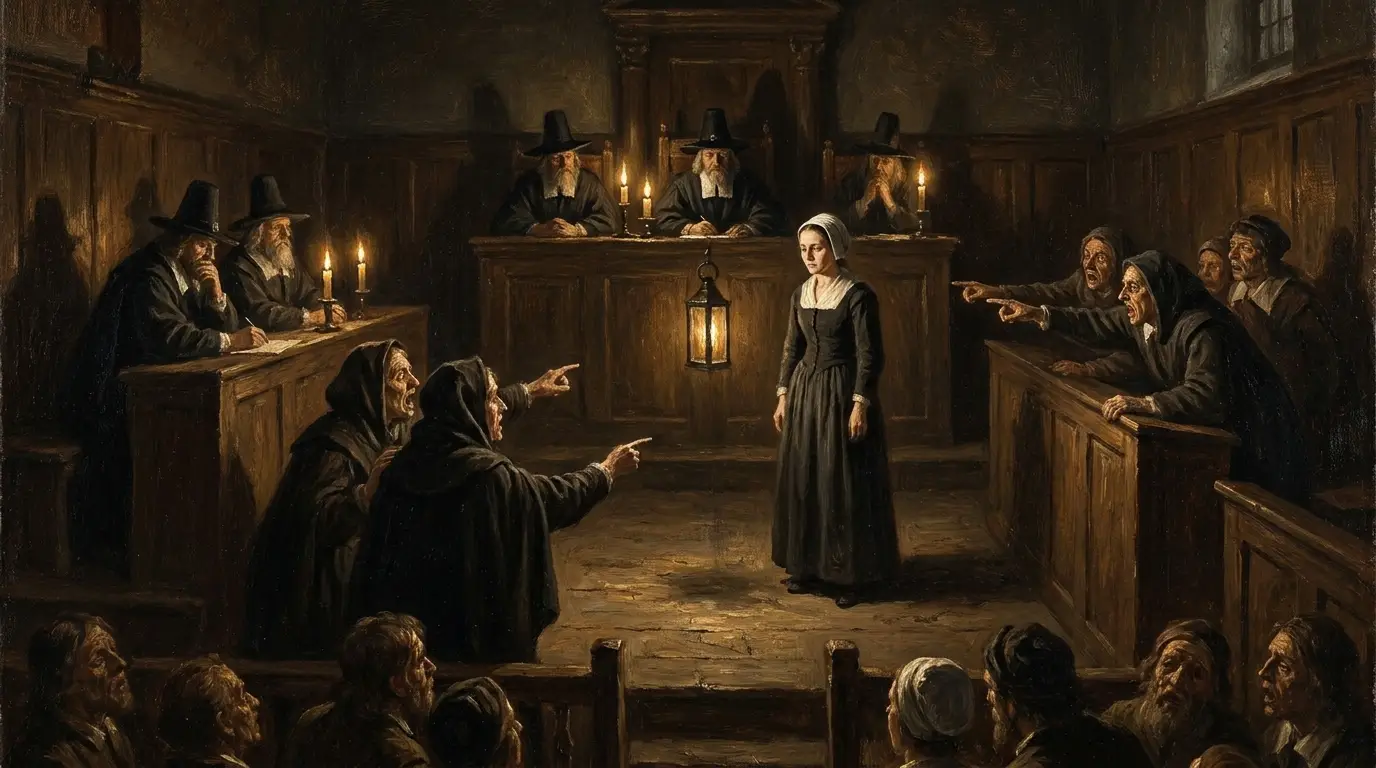
The Medici family of Florence operated the same principle at a more rarefied altitude. They were bankers first, and everything else second. Art patronage, political marriages, church influence, all of it was underwritten by the reality that half of Florence’s significant families owed the Medicis money. Cosimo de’ Medici spent his life technically a private citizen. He held no formal office for most of his career. He simply financed popes, funded armies, and made himself so embedded in the structure of Florentine life that removing him would have caused the city to collapse on itself. He was exiled once, in 1433. The city’s economy immediately began deteriorating. He was recalled within a year.
Hide the Ambition Inside a Noble Cause
The most sophisticated manipulation is not deception exactly. It is the genuine belief that your ambition and the greater good are the same thing.
Oliver Cromwell seems to have believed completely in his own righteousness, which made him far more dangerous than a simple hypocrite would have been. He dismantled the English monarchy in the name of Parliament, then dissolved Parliament when it disagreed with him. He executed a king for tyranny and then ruled with broader personal authority than that king had ever exercised. He refused the title of king but accepted the title of Lord Protector and governed with king-like permanence. Every action was framed in the language of divine providence. God’s will, as Cromwell understood it, happened to align precisely with Cromwell’s political interests in every instance.
“Give me six lines written by the most honest man in the world, and I will find enough in them to hang him.”
Cardinal Richelieu
The Crusades offer a panoramic view of this phenomenon across multiple centuries. The rhetoric of holy war and the liberation of sacred sites was genuine for many participants. It was also extraordinarily convenient for the political ambitions of European monarchs who needed to redirect restless noble violence, for the papacy’s project of asserting authority over secular rulers, and for Italian merchant cities like Venice and Genoa who saw enormous commercial opportunity in the eastern Mediterranean. The Fourth Crusade, launched in 1204, never reached the Holy Land. It sacked Constantinople, a Christian city, instead. The commercial interests of Venice, which had financed the expedition, required it.
LESSER-KNOWN DETAILS
Joseph Goebbels had a club foot and was rejected from military service. His physical difference in a movement that fetishized physical perfection was something he navigated carefully and never directly acknowledged in public life. Some historians argue his fanaticism about Nazi spectacle was partly compensatory.
Throughout European history, royal confessors and spiritual advisors occupied a peculiar position of structural power. They heard the fears and sins of monarchs in private. They shaped the spiritual interpretation of political decisions. A confessor who told a king that a particular war was God’s will, or that a particular minister was spiritually dangerous, exercised real power over policy without ever appearing in the historical record as a political actor. This invisible influence was understood well enough that control of the royal confessor’s appointment was itself a matter of intense political competition.
Control Who Reaches the Throne
History’s most consequential manipulators were often never rulers at all. They were doorkeepers.
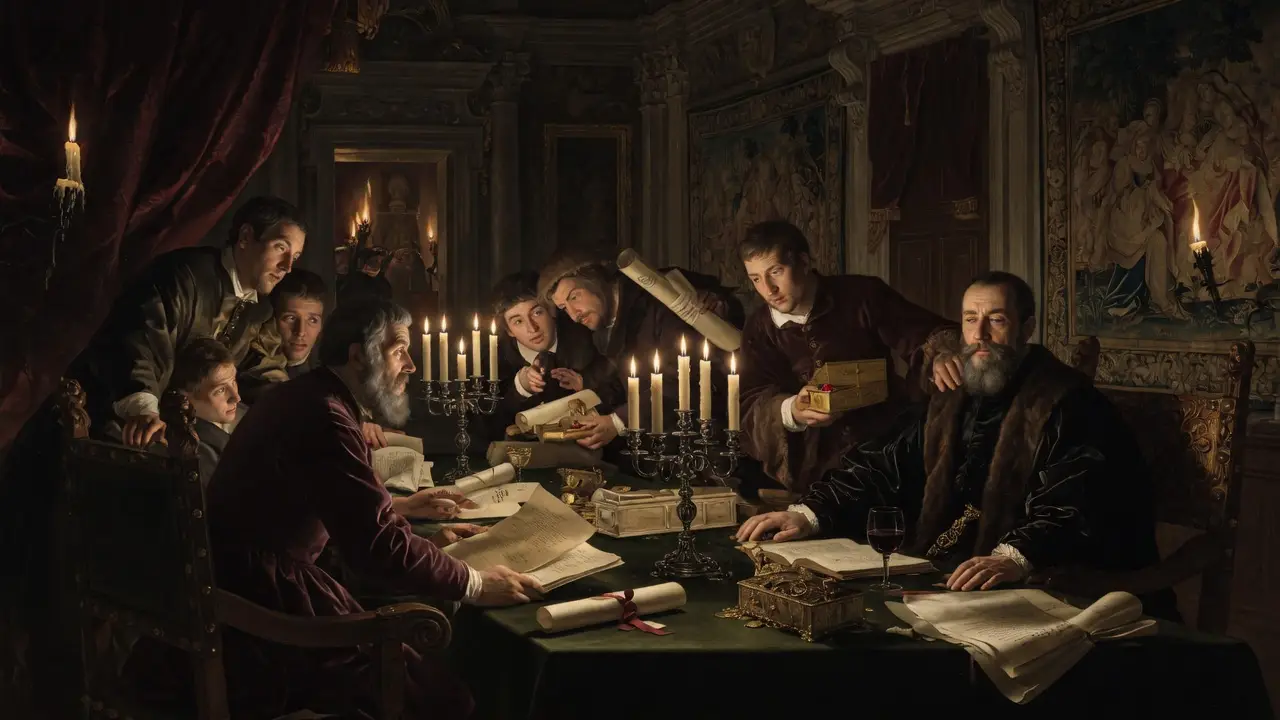
Grigori Rasputin’s influence over the Romanov family has been sensationalized to the point of caricature, but the structural dynamic beneath the mythology was real. Tsarevich Alexei suffered from hemophilia. His pain was genuine and severe. Alexandra believed, with the desperation of a mother, that Rasputin could alleviate it, and by several accounts, he sometimes could, possibly through hypnosis, possibly through his instructions to stop administering the aspirin that made bleeding worse. This gave him something no courtier could manufacture: access through emotional need. By 1916, he was commenting on military appointments and ministerial positions. He was murdered by members of the Russian aristocracy who recognized that killing him was the only way to remove his influence. It took multiple attempts.
“Propaganda works best when those who are being manipulated are confident they are acting on their own free will.”
Joseph Goebbels
The eunuch officials of the Chinese imperial court represent perhaps the most sustained example of this pattern across history. Physically marked as non-threatening, legally barred from founding dynasties, they were trusted with proximity that was denied to other men. In the later Ming dynasty, eunuchs controlled the imperial secretariat, managed the emperor’s correspondence, and effectively administered the empire. The eunuch Wei Zhongxian during the Tianqi Emperor’s reign (1620-1627) ran a network of informants and officials so extensive that temples were built to him while he lived. The emperor, who preferred carpentry to governance, simply did not notice, or did not care, for years.
In the European court tradition, the royal favorite, a person whose primary qualification was personal intimacy with the monarch, was a recurring source of genuine political power. Robert Carr and later George Villiers, Duke of Buckingham, shaped English foreign policy under James I and Charles I respectively, primarily by controlling the emotional landscape of the monarch’s daily life. Buckingham’s assassination in 1628 was carried out by a naval officer who blamed him for military failures, but the parliamentarians who resisted Buckingham’s influence understood that what they were really fighting was the structural vulnerability of a system where one man’s access to a king was worth more than any formal constitutional office.
Repeat It Until It Sounds Like Common Sense
There is a point at which a repeated idea stops being heard as a claim and starts being absorbed as background reality.
Medieval blood libel accusations, the false charge that Jewish communities murdered Christian children for ritual purposes, spread across Europe from the 12th century onward not because they were credible but because they were repeated. Each new accusation referenced the previous ones as precedent. The repetition created the impression of a pattern, and the pattern created the impression of truth. Hundreds of Jews were killed in pogroms triggered by accusations that bore no resemblance to evidence.
“A soldier will fight long and hard for a bit of colored ribbon.”
Napoleon Bonaparte
Wartime propaganda in the 20th century refined this technology with industrial efficiency. British propaganda during World War I took atrocity stories about German soldiers, some true, some false, and many embellished, and circulated them as news. The resulting image of the German soldier as a bestial barbarian was so thoroughly manufactured that it survived in public consciousness long after the war ended and shaped the humiliating peace terms that contributed to the conditions for the next war.
LESSER-KNOWN DETAILS
Cosimo de’ Medici’s bank held the papal accounts for decades. This gave him both enormous leverage over Church policy and advance notice of political decisions made in Rome before they were public knowledge. Financial information as political intelligence, used in the 15th century.
The slogan as political technology deserves its own analysis. A well-designed slogan does not argue; it forecloses argument. “Make America Great Again,” “Workers of the World Unite,” “Liberty, Equality, Fraternity,” these phrases work not by conveying information but by triggering emotional states and implying that everyone who agrees with the emotion must also agree with the political program attached to it. They are shorthand that replaces thought with membership. Totalitarian regimes understood this and pushed it to its extreme: in systems where the same slogans appeared on every wall, every broadcast, every public gathering, the words eventually stopped carrying meaning and simply marked the social territory of obedience.
Theater, Spectacle, and the Architecture of Awe
Before the modern era, most people experienced political power through their senses: the sound of drums, the smell of incense, the sight of enormous organized bodies of people moving in unison. Manipulators throughout history understood that the body can be convinced of things the mind would resist.
The Roman triumph was a masterpiece of political stagecraft. A victorious general rode through Rome in a chariot painted red, dressed in the clothing of Jupiter, holding an eagle scepter. A slave stood behind him whispering “remember you are mortal,” partly to prevent divine hybris and partly to make the humility more visible. The procession included captive kings in chains, mountains of plunder, exotic animals, and tens of thousands of cheering Romans who had been given the day off and fed at public expense. The message was not merely “we won.” The message was that Rome’s victory was cosmically ordained and the general who led it was something close to divine. The Republic explicitly forbade such men from entering Rome with their armies; the triumph was the safety valve, channeling the energy of military success into ceremony rather than coup d’état. It mostly worked.
LESSER-KNOWN DETAILS
Generals were forbidden by law from entering Rome with their armies. The triumph was partially designed as a reward that channeled the dangerous loyalty between a general and his troops into a civilian ceremony. Crossing the Rubicon, as Caesar famously did, was illegal for exactly this reason.
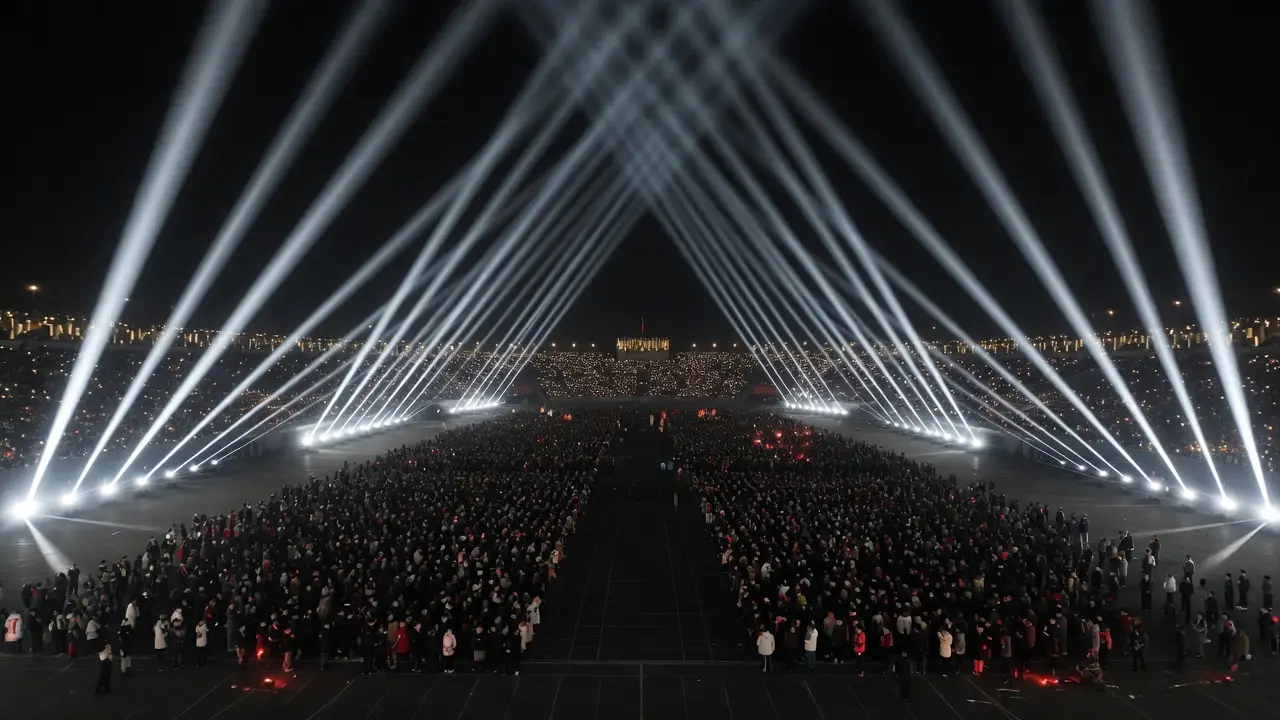
The Nuremberg rallies of the 1930s were designed by Albert Speer with explicit theatrical intention. The “Cathedral of Light,” created by 150 anti-aircraft searchlights pointing skyward, was calculated to make individual humans feel microscopic against a backdrop of power that seemed supernatural. Hundreds of thousands of people standing in absolute darkness with only the geometry of light above them: the effect was not political, it was liturgical. Hitler understood, as Augustus had understood, that the emotional experience of power is more durable than any argument for it.
Royal coronations across cultures serve the same function through different symbolic languages. The English coronation ceremony contains elements traceable to the 10th century. The anointing with holy oil, performed behind a screen to preserve its sacred privacy, transforms a person into a monarch through ritual rather than law. The crown is not simply placed; it is placed to a specific musical response while the congregation shouts acclamation. None of this is accidental. The ceremony is designed to make a political fact feel like a metaphysical one.
The Thread That Runs Through All of It
These tactics appear across vastly different cultures, centuries, and political systems because they are not ideological. They are psychological. Human beings navigate the world through stories, fear responses, social bonds, and the need to belong to something larger than themselves. Every tactic described in this article is a precise exploit of one of those tendencies.
What changes across history is the technology available. Augustus used paintings and coins. Napoleon added newspapers. Goebbels added radio and film. The digital age has not invented manipulation; it has given it scale and speed that would have made every person in this article envious and dangerous in new ways.
The Roman historian Tacitus, writing about the early empire, described Augustus this way: “He seduced the army with bonuses, and the people with cheap food, and everyone with the sweetness of peace, and so grew greater by degrees, concentrating in himself the functions of the Senate, the magistrates, and the laws.”
Two thousand years later, the method is still recognizable. The names change. The tactics do not.
Recognizing a tactic is the first defense against it. Not because knowledge makes people immune, fear and loyalty and the need for belonging are not weaknesses to be overcome, they are fundamental to being human. But because understanding how these mechanisms work makes it slightly harder to mistake manipulation for destiny.
Slightly harder is not nothing. In politics, slightly harder has sometimes been enough.