Books so threatening to power structures that governments spent centuries hunting every copy. Some survive. Most don’t. Discover the forbidden texts that threatened empires and the people who died preserving them.
The Man Who Burned with His Words
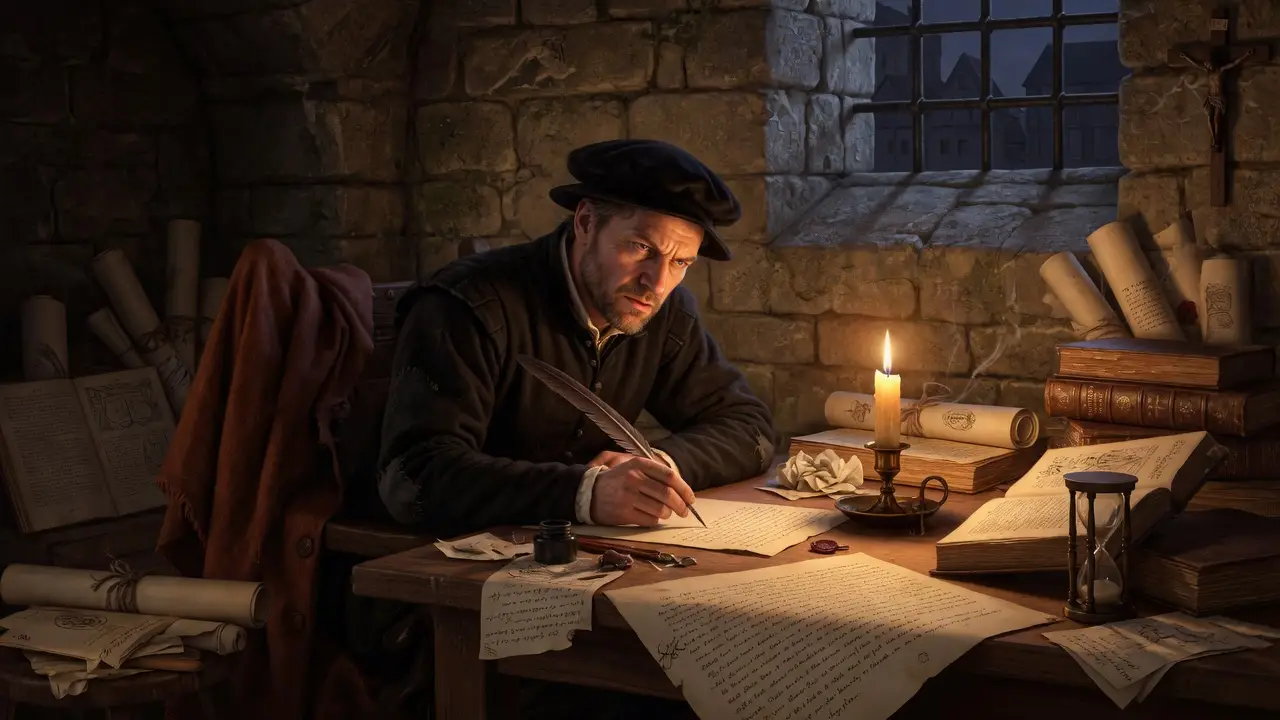
In 1536, William Tyndale was strangled at the stake in a courtyard outside Brussels. His body was then set on fire. His crime? He had translated the Bible into English so that ordinary people like farmers, merchants, mothers could read it themselves without a priest standing between them and God. The authorities called it heresy. Tyndale called it literacy.
Before the flames reached him, he reportedly cried out: “Lord, open the King of England’s eyes.”
Three years later, King Henry VIII authorized an English Bible for every parish church in England. It was largely Tyndale’s translation. Word for word. The man was dead. His words were everywhere.
That is the central cruelty, and miracle of dangerous books. You can burn a person. You can burn a thousand copies. But ideas move through people, and people are harder to fully extinguish than paper.
What Makes a Book Dangerous
Not every banned book is truly dangerous. Plenty were suppressed simply for embarrassing the wrong duke or mocking the wrong cardinal. The books in this story are something else. These are texts that, if widely read, would change who held power over what, and who knew it. They threatened the architecture of control itself: religious, political, scientific, racial. The empires and institutions that hunted them understood, often better than their authors, exactly what was at stake.
“I defy the Pope and all his laws. If God spare my life, ere many years I will cause a boy that driveth the plough shall know more of the Scripture than thou dost.”
William Tyndale, c. 1522
The story of these books is not a story about literature. It’s a story about who gets to know what, and what someone is willing to do to stop you from finding out.
Paris, 1242: Twenty-Four Cartloads of Ash
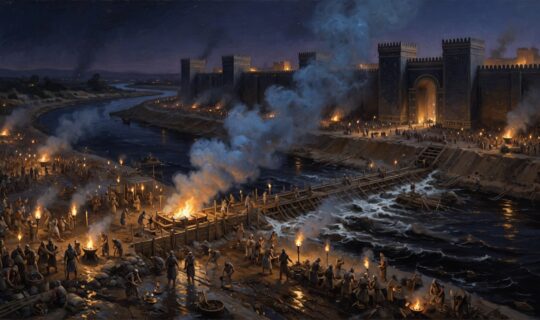
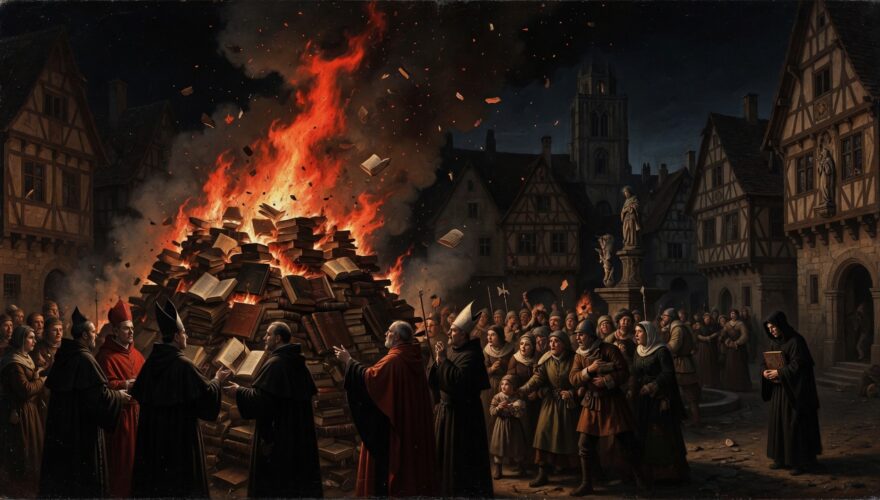
On a June morning in Paris, wagons rolled through the streets carrying roughly ten thousand handwritten volumes of the Talmud, the central text of Jewish religious and intellectual life, centuries in the making, irreplaceable. They were piled in the Place de Grève and set alight. It took the fire most of the day to finish the job.
Rabbi Meir of Rothenburg stood and watched. He composed a lamentation on the spot, modeled on the Book of Lamentations from the Hebrew Bible, addressing the burning books directly as if they were people: “Ask, O you who are burned, how it is with those who mourn for you.”
Join The Archive Briefing
Weekly dispatches. The history they didn't teach you — sourced, subverted, delivered to your inbox.
The burning had been ordered by King Louis IX of France, later canonized as Saint Louis following a church trial at which the Talmud was convicted of blasphemy against Christianity. It was prosecuted as a criminal. It was sentenced to death. What made the Talmud specifically threatening was its internal commentary tradition: thousands of years of Jewish scholars arguing, questioning, disputing, and reinterpreting sacred text. That culture of relentless intellectual challenge was precisely what the Church found intolerable.
The lesser-known detail: Pope Gregory IX had initially ordered the burning, but many European rulers ignored him. Louis was the only major monarch who complied enthusiastically, and he went on to order Talmud burnings multiple times throughout his reign. The book kept coming back. Scribes across Europe quietly reproduced it. Some hid copies in walls. Some carried fragments in their clothing across borders.
The Chinese Literary Inquisition
Between 1772 and 1782, the Qianlong Emperor of China launched what he called a grand literary project: a compilation of all significant Chinese books into one imperial collection, the Siku Quanshu. It was the largest editorial undertaking in Chinese history. It was also a cover operation.
While his scholars collected books from across the empire, imperial censors went through them systematically. Anything critical of Manchu rule, anything that questioned the Qing dynasty’s legitimacy, anything that praised the previous Ming dynasty too warmly were confiscated, revised, or destroyed. Estimates suggest that over seventy thousand titles were targeted. More than two thousand were banned outright. Entire literary genealogies were erased.
Authors didn’t just lose their books. They lost their families. Possessing banned texts was a capital crime, and punishment extended to relatives. One scholar, Zhuang Tinglong, had already been dead for years when his privately printed history of the Ming dynasty was deemed seditious. They dug him up and executed his corpse.
What survived often did so because someone hid it. A historian named Xu Qianxue preserved thousands of texts in a private library so vast that it took up an entire compound. Some of those texts exist today solely because of what he quietly refused to hand over.
Giordano Bruno and the Infinite Universe
In 1600, Giordano Bruno was burned alive in the Campo de’ Fiori in Rome. He had been imprisoned by the Inquisition for eight years before his execution. He refused, every single time, to recant.
Bruno was a former Dominican friar who had read Copernicus and kept going — further than Copernicus dared. He argued that the universe was infinite, that the sun was just one star among infinite others, and that those stars likely had planets, and those planets likely had life. He wrote these ideas in a series of books through the 1580s, including On the Infinite Universe and Worlds and The Ash Wednesday Supper, circulating them across Europe while moving constantly to stay ahead of the authorities.
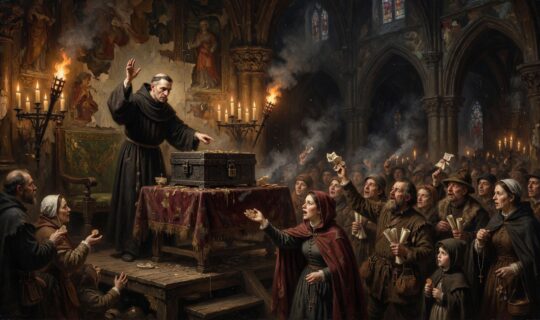
His books were placed on the Church’s Index Librorum Prohibitorum, the official list of forbidden texts maintained by Rome from 1559 until 1966. At its peak, the Index contained thousands of titles spanning science, philosophy, theology, and history. Descartes was on it. Galileo was on it. John Locke was on it. The complete works of Voltaire were on it. The list was not just a moral recommendation. Possessing indexed books could bring Inquisition proceedings.
Bruno had reportedly said: “Perhaps you pronounce this sentence against me with greater fear than I receive it.”
He was not wrong. The Catholic Church formally cleared his name of heresy in 2000. His statue now stands in the Campo de’ Fiori, at the exact spot where they killed him, looking down at the daily market.
Thomas Paine’s The Age of Reason: The Last British Execution for Blasphemy
Most people know Thomas Paine for Common Sense, the pamphlet that lit the American Revolution from the inside. Fewer know what happened after.
In 1794, while imprisoned in France and expecting to be guillotined at any moment, Paine wrote The Age of Reason, a systematic critique of organized religion and Biblical authority. He wrote the first part in a single sustained effort, handing the manuscript to a friend as he was arrested, convinced he would be dead within days. He survived. The book didn’t stay quiet.
In Britain, the book was considered so dangerous that the government prosecuted anyone who sold it. Booksellers were jailed. A hawker named Richard Carlile was imprisoned for two and a half years simply for distributing it. His wife continued selling copies from the same shop while he was incarcerated. They jailed her too. His sister took over. She was also imprisoned. The copies kept moving.
“The cause of America is in a great measure the cause of all mankind.”
Thomas Paine, Common Sense, 1776
In Scotland, a twenty-year-old student named Thomas Aikenhead had been executed in 1697 (just under a century before Paine) for blasphemy, in what became the last such execution in British history. Aikenhead had reportedly called the Bible a collection of fables while drunk with friends. Someone told the authorities. He was hanged. He was twenty years old.
The Age of Reason is still in print.
The Ones That Didn’t Survive
Here is the part that doesn’t get discussed often enough: we have almost no idea what we lost.
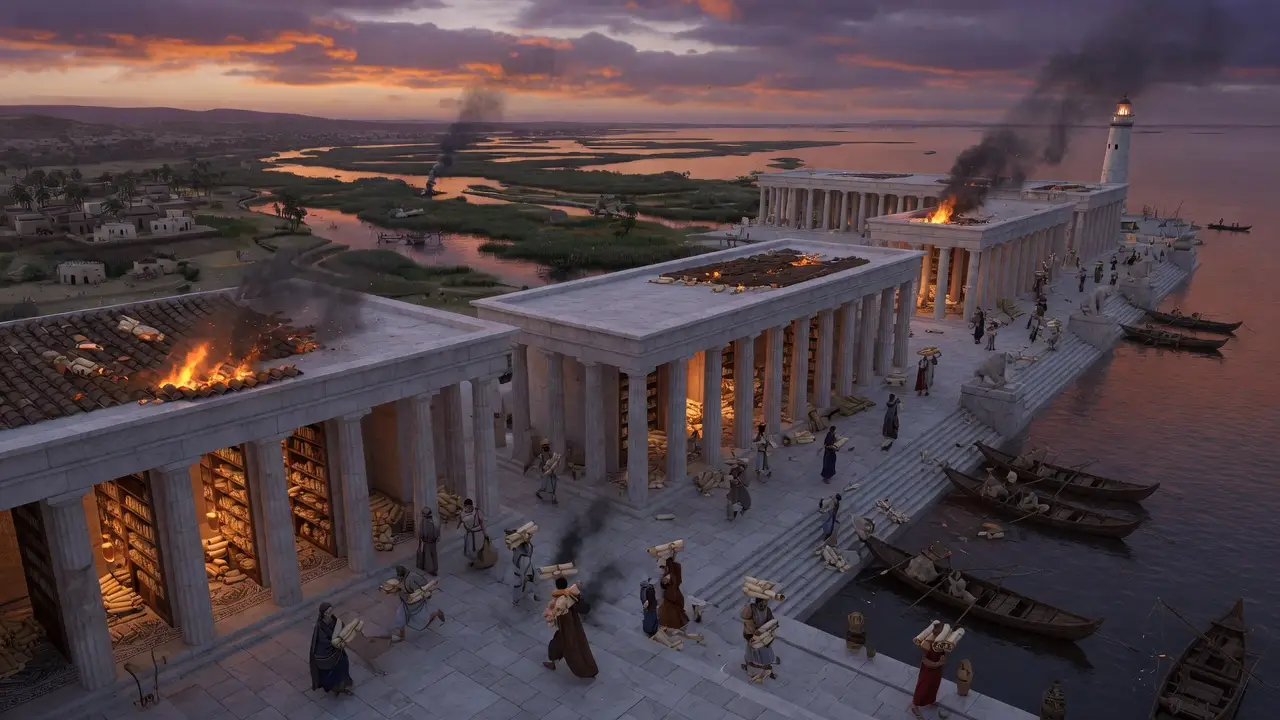
The Library of Alexandria wasn’t burned in a single dramatic night… that’s a myth. It declined across centuries of neglect, political instability, and small deliberate destructions. But the effect is the same. Gone are the complete works of Aristotle’s contemporaries. Gone are the full plays of Sophocles — we have seven; he wrote over one hundred. Gone are entire schools of Greek philosophy, entire traditions of Egyptian and Babylonian astronomy, medical texts that might have accelerated Western medicine by centuries.
In 1562, Bishop Diego de Landa ordered the burning of virtually every Maya codex he could find in the Yucatán, calling them works of the devil. Of the thousands that existed, four survived. Four. He later wrote a detailed account of Maya culture himself, recognizing its sophistication. The irony seems to have been lost on him.
We will never know what was in those books. We have descriptions of some of them from the people who watched them burn. We have the ashes.
The Survival Strategies of Impossible Things
Books survived through a specific kind of human stubbornness that is worth naming precisely.
Monks copied texts they weren’t supposed to have, hiding them inside the covers of approved manuscripts. Jewish communities memorized entire sections of banned texts so that even total destruction of physical copies couldn’t erase them. Booksellers in Enlightenment Paris ran underground networks that moved illegal books the same way contraband moved, hidden in barrels, stitched into coat linings, carried across borders in false-bottomed trunks. A historian named Robert Darnton spent decades documenting this trade, finding that the most popular books smuggled into France before the Revolution weren’t pornography, as authorities feared, they were political satire and philosophical critique. The appetite was for ideas, not shock.
After the Nazi book burnings of 1933, German students and faculty at targeted universities quietly duplicated and shipped abroad any texts they could reach. Many of those books ended up in American and British university libraries, where they sat on shelves, survived the war, and eventually went back.
Heinrich Heine had written in 1820: “Where they burn books, they will ultimately burn people also.”
He was right. He had also been writing about a play set in medieval Spain. He could not have known that his own books would be burned in Germany a century after his death.
The Weight of What Remains
There is a book in the Bodleian Library at Oxford that was owned by William Tyndale. It’s one of the few physical objects we have that he touched. His annotations are in the margins, in his handwriting. The man was strangled and burned, and his handwriting is still there, in pencil, at the edge of a page.
That gap between the violence used to silence someone and the survival of their words, is the real story of every book on this list. Power is loud and spectacular. It burns in public. It executes in squares. But books are patient in a way that fire is not.
The most dangerous thing about a dangerous book is not what it says. It’s that someone, somewhere, decided it was worth dying to keep alive. That decision, repeated across centuries and cultures and languages, is the reason you can still read Tyndale’s English today. It’s why Bruno’s cosmology preceded the Hubble telescope by four hundred years. It’s why we know the Qianlong Emperor was afraid.
The books they burned hardest are the ones still burning brightest.