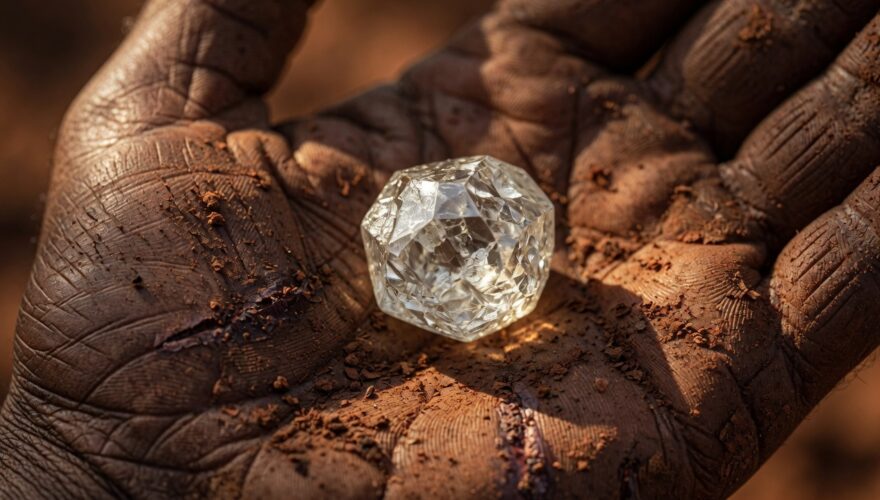
Before the diamond became a symbol of love, it was soaked in blood. Discover the brutal legacy of the early jewelry industry, from colonial African mines to the warlords who turned gemstones into weapons of mass control.
Blood and Brilliance: The Brutal Legacy of the Diamond Trade
In the summer of 1999, a ten-year-old boy named Sahr sat in a Red Cross camp in Freetown, Sierra Leone. Both of his hands had been cut off at the wrists. He was one of thousands. The rebels who mutilated him, who called themselves the Revolutionary United Front, were not driven by ideology. They were driven by diamonds. Small stones, pulled from rivers and red earth, that had been funding a civil war for the better part of a decade. Sahr’s hands were gone so that someone, somewhere, could wear a ring.
That is the story diamonds never tell from inside a velvet box.
The Stone That Built Empires
Long before blood diamonds became a humanitarian crisis headline, gemstones were already entangled with violence. The history of the jewelry industry is inseparable from the history of conquest, slavery, and colonial extraction. The two grew up together, and neither one was clean.
LESSER-KNOWN DETAIL
The compound system Rhodes designed for Black diamond miners in South Africa served as a direct institutional model for the architects of apartheid. It was not a coincidence or an evolution. It was a blueprint.
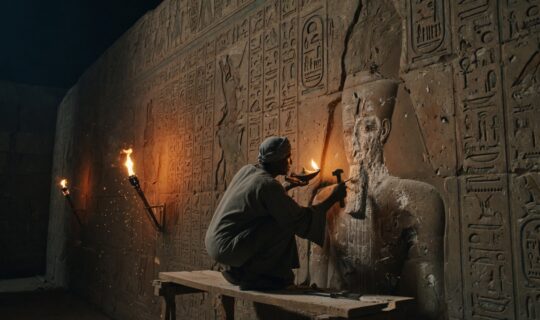
The trade in precious stones stretches back thousands of years. Ancient Egyptians wore carnelian and lapis lazuli mined by forced labor in the Eastern Desert. Roman aristocrats adorned themselves with pearls pulled from the Persian Gulf by divers who worked until their lungs gave out. The Mughal courts of India accumulated rubies, emeralds, and sapphires through campaigns of conquest and tribute that left entire provinces stripped bare.
But diamonds were different. Diamonds would become something else entirely. Diamonds would become a market.
De Beers and the Architecture of Desire
The modern diamond trade does not begin with love. It begins with one man standing in a muddy South African field in 1871, staking a claim over a small hill called Colesberg Kopje. His name was Cecil John Rhodes, and within two decades he had consolidated nearly the entire diamond supply of the world under a single company: De Beers Consolidated Mines.
Rhodes operated through a combination of legal maneuvering, intimidation, and raw political power. He once described his ambition as wanting to “paint the map red,” meaning British red, across as much of Africa as possible. His diamond fortune funded that project.
Join The Archive Briefing
Weekly dispatches. The history they didn't teach you — sourced, subverted, delivered to your inbox.
LESSER-KNOWN DETAIL
In the 1890s, to prevent workers from swallowing diamonds, De Beers employed company surgeons whose sole job was performing X-rays and invasive examinations on workers at the end of each shift. Workers were also forced to swallow laxatives and supervised until the process was complete.
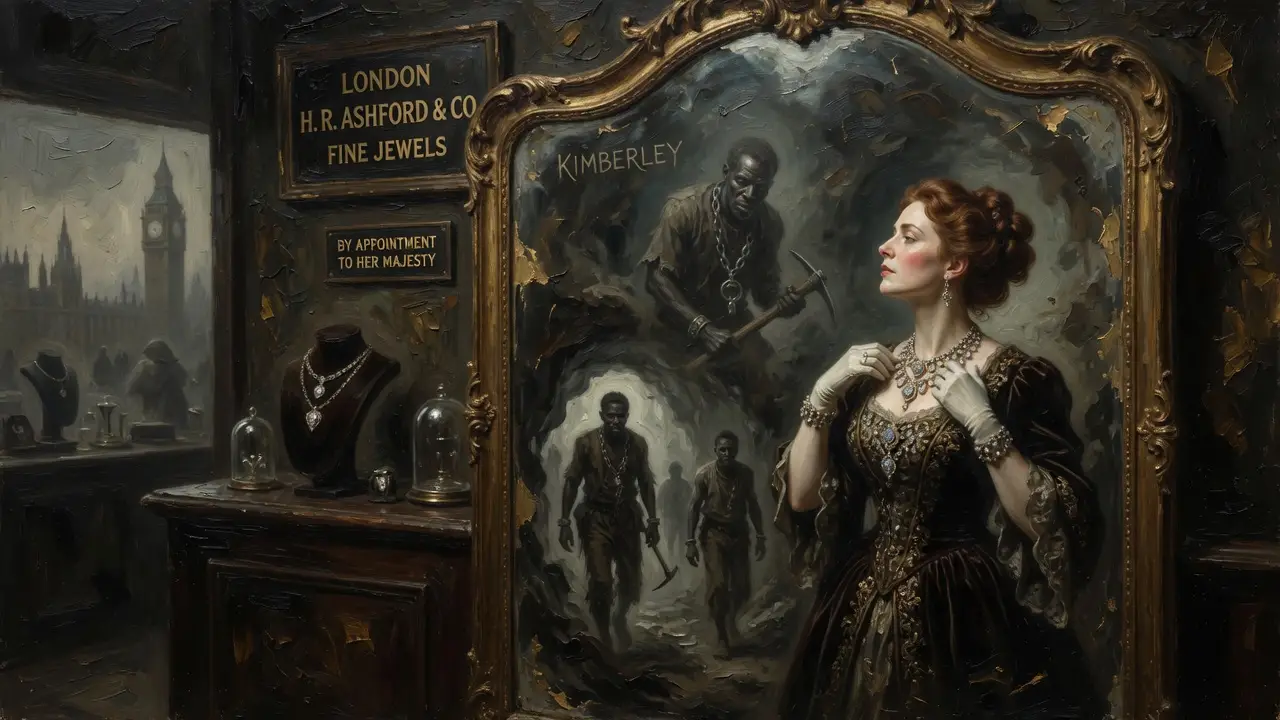
Laborers in his mines, most of them Black South Africans, worked under a compound system that was barely distinguishable from imprisonment. Workers were searched on arrival and departure, housed in locked barracks, and forbidden from leaving the grounds during their contracts. The diamonds they pulled from the earth with their hands were sold to buyers in London and Amsterdam who never asked where they came from.
“I contend that we are the finest race in the world and that the more of the world we inhabit the better it is for the human race.”
Cecil Rhodes, 1877
What made the industry genius, in a dark sense, was that it manufactured the very demand it was supplying. Diamonds were not always precious. For much of European history, they were less coveted than rubies or pearls. De Beers changed that. Beginning in 1938, the company hired the New York advertising agency N.W. Ayer to create a cultural obsession from scratch. The result was the 1947 slogan that would become one of the most effective pieces of marketing in human history: “A Diamond Is Forever.”
It was fiction sold as fact. A diamond is not forever. It can burn, it can shatter, and the sentiment behind it was invented by a corporation that controlled the world’s supply of the stone being sold.
The Mines Beneath the Myth
The reality inside the mines looked nothing like the advertisements. In South Africa’s Kimberley and later in the Belgian Congo, diamonds and other precious minerals were extracted through a system of racialized labor that predated apartheid and helped inspire it. Workers in the Kimberley diamond fields during the 1880s earned a fraction of what white miners made for the same work. The compound system pioneered by De Beers was studied and explicitly adopted by other colonial industries across sub-Saharan Africa.
Leopold II of Belgium ran the Congo Free State as a personal fiefdom between 1885 and 1908, using forced labor to extract rubber and ivory. Quotas were enforced through mutilation. Workers who failed to meet their extraction targets had their hands cut off. By conservative estimates, the population of the Congo fell by ten million people during Leopold’s reign. The severed hand became so common as a symbol of colonial terror that it was used as currency, a grotesque proof of enforcement delivered to overseers to justify the bullets spent.
LESSER-KNOWN DETAIL
The term “blood diamond” did not originate with the 2006 film. It entered formal diplomatic language in the 1990s through United Nations resolutions attempting to define conflict minerals funding civil wars in Angola, Sierra Leone, and the Democratic Republic of Congo.
The jewelry the world was buying, the pearls and rubies and diamonds moving through markets in London, Paris, and New York, rested on a supply chain that most customers never thought about. The industry had no reason to make them think about it.
Sierra Leone and the Price of a Ring
Sierra Leone gained independence from Britain in 1961. It was rich in diamonds. That richness became a curse.
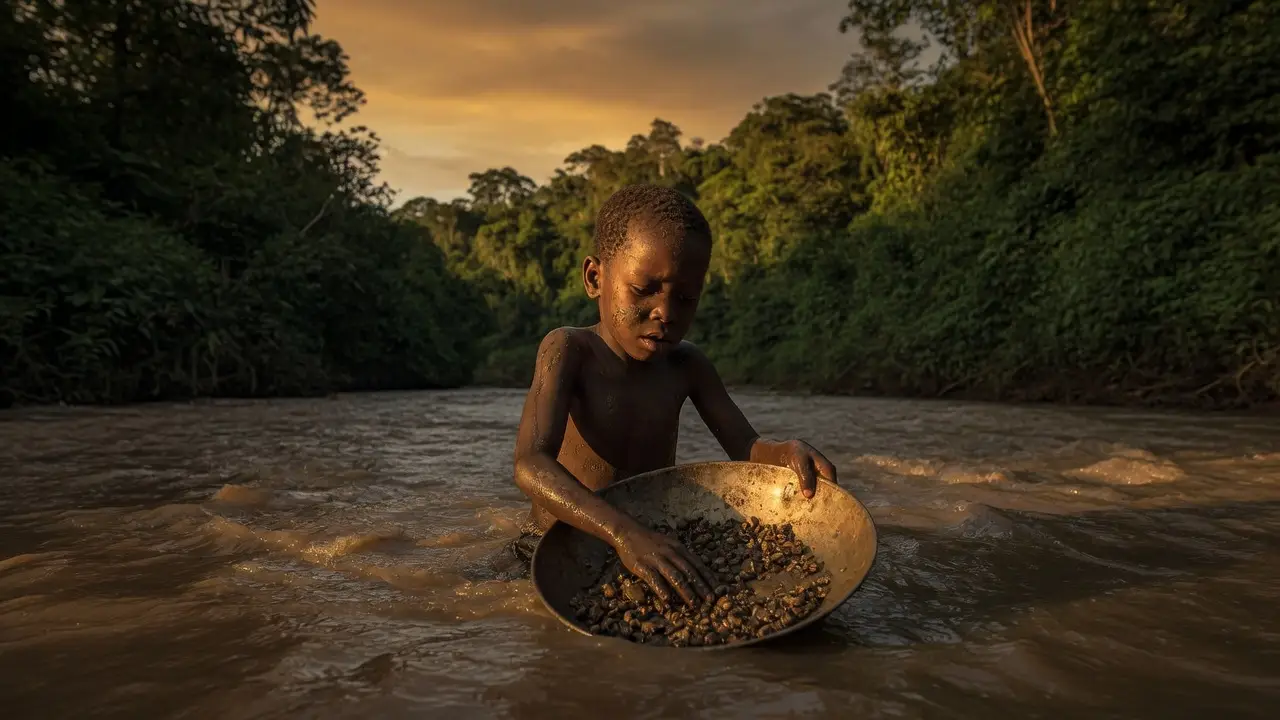
The Revolutionary United Front launched its insurgency in 1991 with backing from Liberian warlord Charles Taylor, who wanted access to Sierra Leone’s diamond fields. The RUF did not need popular support. They needed territory, and territory meant mines. Over the next decade, they financed their campaign entirely through alluvial diamonds dug from riverbeds by captive civilian laborers, including children. The diamonds were then smuggled through neighboring countries and sold into the legitimate market, where they mixed with certified stones and disappeared into the supply chain.
The war produced some of the most systematic atrocities in post-independence African history. The RUF’s signature tactic was amputation, carried out with machetes and axes on men, women, and children who were seen as supporters of the government or simply as examples to terrorize the surrounding population. An estimated 50,000 people were killed. Two million were displaced. The wounds that did not kill left survivors permanently unable to work, in a country with almost no disability infrastructure and no formal support system.
All of this was funded by stones small enough to hide in a shirt pocket.
The World Looks Away
The uncomfortable truth the jewelry industry spent decades hoping consumers would not discover is that the problem was never hidden. Journalists, human rights investigators, and UN monitors had been documenting the link between diamond sales and conflict financing since the early 1990s. The industry’s response was largely to dispute the numbers, question the motives of critics, and lobby against binding regulation.
When Global Witness, a British human rights organization, published its 1998 report “A Rough Trade,” it detailed with precision how Angolan rebel group UNITA had been financing a twenty-year civil war through diamond sales to Belgian and Israeli trading houses. The trading houses continued operating. The war continued for another four years.
LESSER-KNOWN DETAIL
During the diamond rush in the Central African Republic in the 2010s, armed groups controlling mining zones demanded tribute from diggers in the form of a percentage of each day’s finds. This system, called “taxation by the gun,” mirrors almost exactly the tribute systems that colonial administrators used a century earlier.
The Kimberley Process, which eventually emerged from international pressure, was designed and negotiated largely with industry participation. Critics noted from the beginning that an oversight system designed with the active involvement of the entities being overseen would protect commerce more reliably than people.
They were right. In 2011, Global Witness withdrew from the Kimberley Process altogether, stating that the scheme had become a “diplomatic cover” for diamonds produced amid serious violence and abuse.
What Changed, and What Didn’t
The 2006 film Blood Diamond, starring Leonardo DiCaprio, brought the issue into mainstream consciousness in a way that a decade of UN reports had not managed. Consumer awareness increased. Several major retailers publicly committed to sourcing transparency. The phrase “conflict-free” appeared on marketing materials in jewelry stores across the United States and Europe.
“The Belgians in the Congo have stamped out slavery in a peculiarly Belgian way: they have made all the natives slaves of the state.”
E.D. Morel, British journalist and activist, c. 1905
The phrase is largely meaningless. Under the Kimberley Process definition, a diamond can be certified conflict-free even if it was mined in a zone of severe labor exploitation, environmental destruction, or systematic human rights abuse, as long as the violence was not perpetrated by a recognized rebel group fighting a recognized government. Diamonds from Zimbabwe’s Marange fields, where government soldiers shot and killed miners in 2008 and forced civilians to dig at gunpoint, were certified and sold as conflict-free.
The industry adapted its language. The reality in the mines adapted less.
The Echo That Runs Forward
The brutality that built the early jewelry trade was not an accident of the times. It was a system, designed and maintained because it was profitable and because the people bearing its costs had no political power to make it stop. The severed hands in the Congo in 1900 and the severed hands in Sierra Leone in 1998 were not separated by coincidence. They were connected by a century of institutional logic that treated human bodies as extraction tools and precious stones as more valuable than the lives spent pulling them out of the ground.
LESSER-KNOWN DETAIL
The Kimberley Process Certification Scheme, launched in 2003 to prevent conflict diamonds from entering the global market, has been widely criticized for certifying diamonds from zones of serious human rights abuse because those abuses do not technically meet its narrow definition of “conflict.”
The young men who buy diamond rings today mostly do not know this. The industry has spent enormous resources making sure they don’t need to. But the earth the stones came from remembers. So do the people whose grandparents worked the compounds, the people whose children were conscripted into mining camps, and the communities still living downstream from open-pit mines that will be toxic for generations.
A diamond is forever. So is what was done to get it.