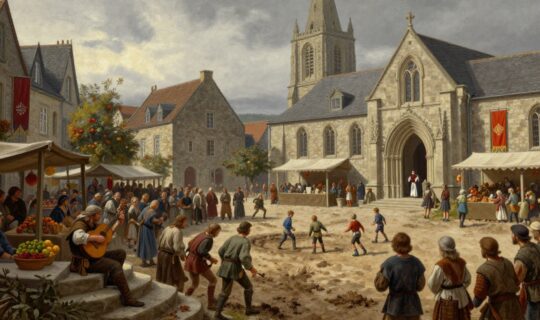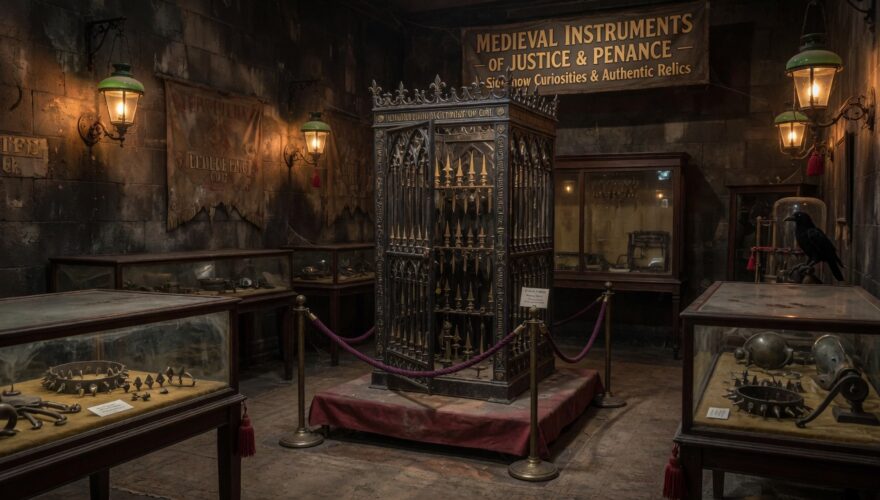
Just imagine a damp stone basement somewhere in medieval Europe. Iron shackles on the wall. A rack in the corner. An iron maiden standing upright in the shadows, its spiked interior waiting. You know this room. You’ve seen it in films, in haunted attractions, in the basements of every castle tour you’ve ever taken.
The man who built it was not a medieval torturer. He was a Victorian showman with a mustache and a nose for profit.
Most of what the modern world “knows” about medieval torture is a lie, and not an accidental one. It was engineered, marketed, and sold to a public hungry for gothic horror. The actual history is something stranger and more disturbing than any iron maiden ever could be, because the truth doesn’t need props.
The Museum Hustle
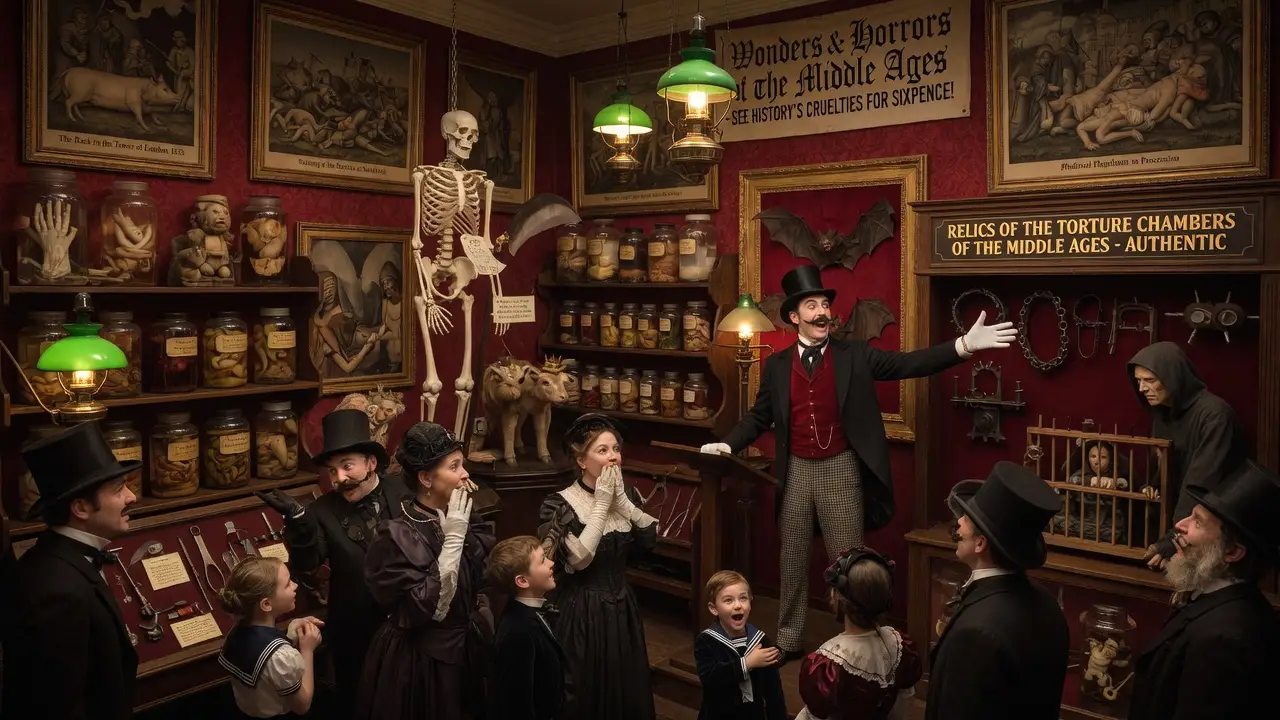
By the mid-1800s, a new kind of entertainment had taken hold across Europe and America. Museums were booming, and competition was fierce. The British Museum had art and antiquities. Natural history museums had bones and taxidermy. But a growing class of entrepreneurs realized there was money in darkness.
The Nuremberg Torture Museum. The London Dungeons. A dozen traveling exhibitions and curiosity cabinets set up in the basements of rented buildings. These places made one promise to paying visitors: come see what they did to people down here.
The problem was that most of the devices they displayed had never existed in the medieval period at all.
The Iron Maiden of Nuremberg, perhaps the most iconic “torture device” in Western imagination, was assembled in the early 19th century from mismatched pieces of unrelated medieval artifacts. A historian named Jan Bondeson spent years investigating its origins and concluded it was essentially a Frankenstein’s monster of old hardware, cobbled together to look sinister. There is no documented evidence of any person ever being placed inside one in the medieval era. Not one. The spikes, the hinged doors, the whole theatrical concept appears to have been invented after the fact.
Similar stories trail almost every famous device. The Pear of Anguish, supposedly used to rupture internal cavities during interrogation, appears in almost no primary historical records from the periods it was allegedly in use. The devices that do appear in period illustrations look nothing like the ornate, jewel-like instruments displayed in museums. Most historians believe those objects were decorative or symbolic, not functional.
The showmen knew this. They simply didn’t care.
Join The Archive Briefing
Weekly dispatches. The history they didn't teach you — sourced, subverted, delivered to your inbox.
What Actually Went On
Here’s where the story becomes genuinely uncomfortable.
Real medieval and early modern torture was bureaucratic. In most jurisdictions where it was legally sanctioned, including the Roman Catholic Inquisition, it followed written procedures. There were rules about who could authorize it, how long it could last, what methods were permitted, and who had to be present. Records were kept. The whole process was documented with the same administrative thoroughness that medieval courts applied to property disputes.
This wasn’t mercy. It was process.
The most common method used by the Inquisition was the strappado: the subject’s hands were tied behind their back, they were hoisted by a pulley, and then dropped, stopping just short of the ground. The sudden jerk dislocated shoulders. It left no permanent visible marks, which was often the point. The goal in judicial torture was confession, not punishment. Marks complicated things legally.
Crucially, torture in these contexts was supposed to be used only to confirm evidence that already existed, not to generate accusations out of nothing. In practice that rule was frequently broken, but the fact that the rule existed at all tells you something about how differently contemporaries thought about the process compared to the Victorian fantasy version.
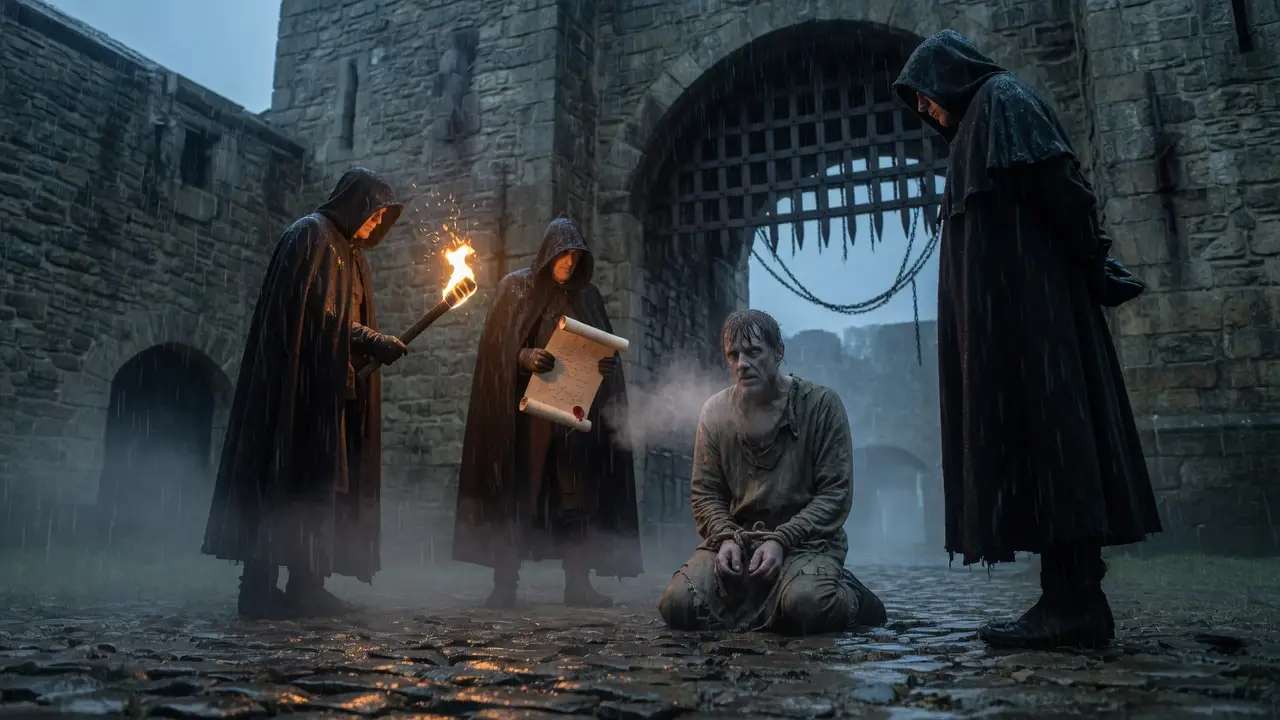
The Rack did exist. It was used in England, notably in the Tower of London. But it was a political instrument, deployed against specific enemies of the state, not a standard feature of everyday medieval justice. Most people who were tortured in the medieval and early modern periods experienced nothing that would make for good museum scenery. They experienced cold, darkness, sleep deprivation, and psychological pressure. Effective, brutal, and completely invisible.
The Tower of London Problem
The Tower of London is worth examining on its own because it sits at the center of this entire mythology.
The Tower was a royal palace, a treasury, an armory, and yes, a prison. It held high-status prisoners, the kind of people whose fates mattered politically. What it was not, for most of its history, was a torture facility in any routine sense.
The “torture chamber” that guides describe to visitors today was used in a handful of documented cases, primarily during the Elizabethan and Jacobean periods when the English state was genuinely paranoid about Catholic conspiracies. The Rack there is real. Its use is documented. But those cases were exceptional, and even they were contested at the time. Lawyers argued about them. They were recorded precisely because they were controversial.
The image of routine medieval torture, peasants and heretics screaming in dungeon after dungeon across the continent, is largely a projection of Victorian gothic imagination onto a more complicated past.
Why the Victorians Needed All This
You have to ask why. Why did a civilization that considered itself the pinnacle of human progress need to believe in a barbaric medieval world of iron maidens and spiked pits?
The answer is that it was useful.
Victorian colonialism required a story in which European history was one of inevitable improvement, a march from darkness into enlightened civilization. The medieval torture chamber, grotesque and primitive, served as the before picture. Victorian Britain, with its industry and empire, was the after. Never mind that Victorian prisons were places of systematic psychological destruction. Never mind that children worked in mines and that flogging was standard in the British military. The medieval dungeon absorbed all of that. It gave the Victorians somewhere to put the violence they didn’t want to see in themselves.
The same dynamic has continued. Whenever a culture needs to feel modern, it reaches for images of past barbarism to justify the contrast.
So This Was Actually Worse?
The real horror, the one the Victorian showmen never put on display, is harder to look at because it doesn’t have a form you can point to.
Consider the conditions in medieval and early modern prisons that did exist. Prisoners awaiting trial paid for their own food, their own bedding, their own candles. If you had money, you could make yourself reasonably comfortable. If you had none, you starved. Jailers extracted fees for everything, including the removal of chains. People died in pre-trial detention from disease, exposure, and hunger at rates that dwarf any documented use of mechanical torture devices.
Or consider the punishments that were completely public and completely normalized: public flogging, branding, mutilation of ears and fingers, the pillory, execution by methods designed to be slow. These weren’t hidden in dungeons. They happened in town squares in front of crowds. They were the point. Visibility was the mechanism of social control.
The dungeon fantasy inverts the actual logic of historical violence. Real punishment was meant to be seen. The private chamber of secret torment is almost entirely a product of later imagination.
The Inheritance
Walk into almost any medieval castle in Europe today and you’ll find a torture exhibit somewhere in the basement. The devices gleam under track lighting. A recorded voice explains their functions. Children take photos.
Almost none of those devices are what they’re claimed to be.
That isn’t a minor historical footnote. It shapes how we understand violence, justice, and the distance we believe separates us from the past. When we locate atrocity in a medieval dungeon, in an iron maiden that never held a body, we are not confronting history. We are hiding from it.