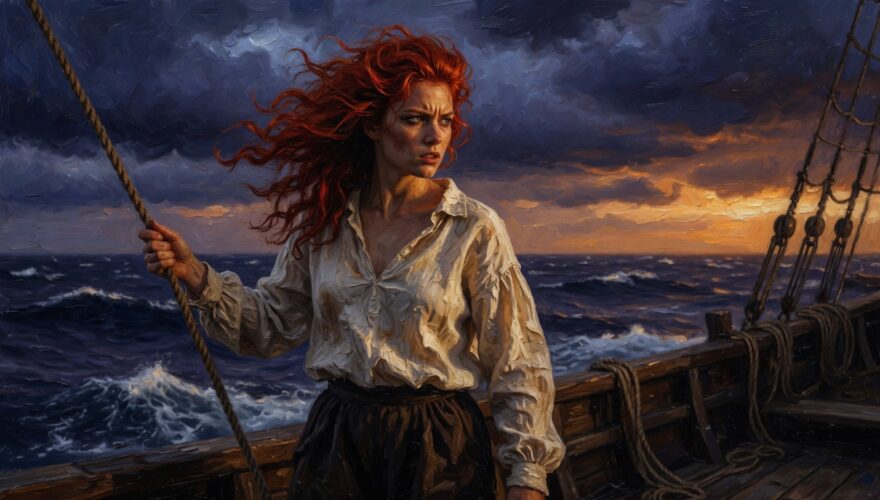
Anne Bonny was not a crowned queen, a pirate captain, or the ruler of a vast fleet. Her documented pirate career may have lasted only months. Yet her name survived for three centuries because, at a time when women were expected to remain ashore, she stood trial as one of the most infamous pirates in the Caribbean.
Anne Bonny stood trial for piracy in 1720, escaped the gallows through a legal claim, and then vanished from history entirely. Separating fact from legend, this is the real story of the Caribbean’s most famous female pirate and why three centuries later, no one has stopped looking for her.
The World That Made Pirates
Before we can understand Anne Bonny, we need to understand what piracy actually was in the early eighteenth century Caribbean, because it was not a swashbuckling adventure. It was organized crime on water, brutal and short-lived, fueled by economic desperation and imperial warfare.
The period roughly spanning the 1680s through the 1720s is often called the Golden Age of Piracy, a name that flatters what was largely a decade or two of violent opportunism concentrated in the Atlantic and Caribbean. The conditions that produced it were specific: major European powers had spent years funding privateers, essentially licensed pirates who raided enemy ships under legal cover during wartime. When the wars ended, those men were out of work. The ships and skills remained. The legal cover did not.
“If I had ventured my life in such service, I had not been tried here as a pirate.”
Mary Read at trial, via Captain Charles Johnson, 1724
The Caribbean was the obvious hunting ground. Sugar, tobacco, rum, enslaved people, silver, and manufactured goods moved through these waters constantly, flowing between colonies and European capitals in a commerce that underpinned entire empires. Disrupting that trade was not merely a nuisance to colonial administrators; it was a threat to the economic architecture of empire. Colonial governments did not find pirates colorful or romantic. They found them existentially dangerous to commerce and hunted them accordingly.
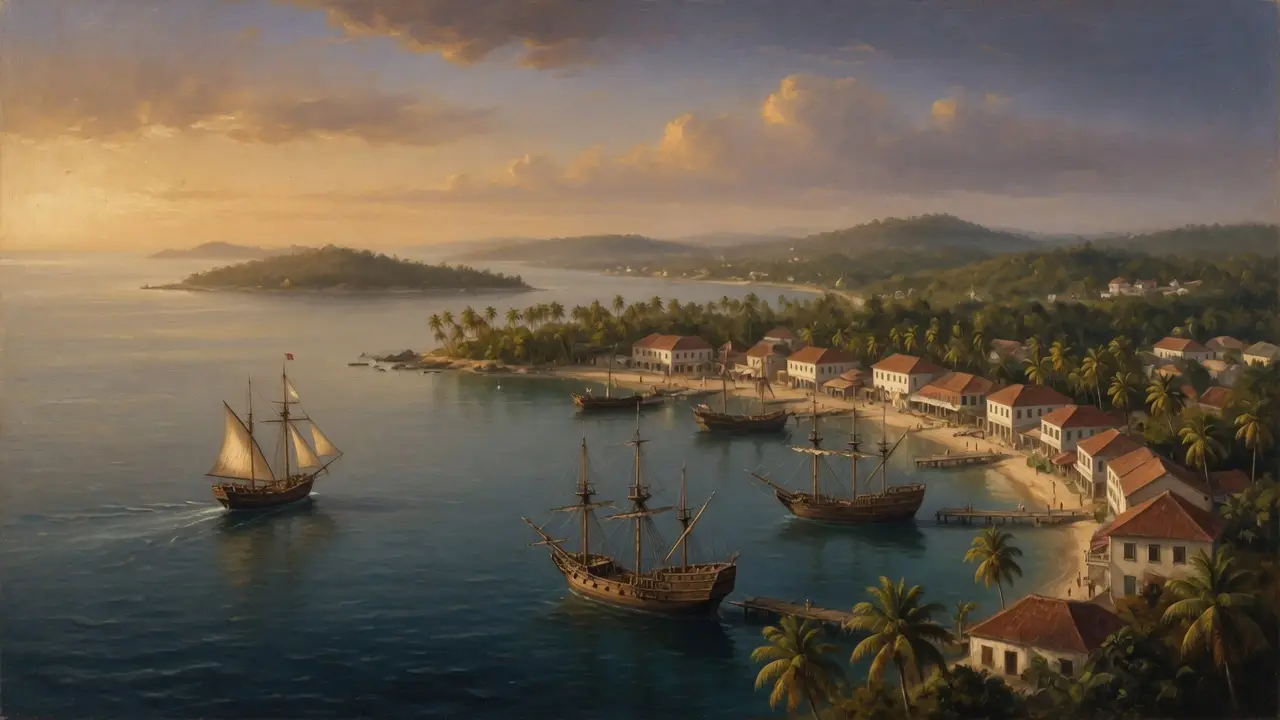
Nassau, in the Bahamas, briefly became the closest thing pirates had to a headquarters. Weakly governed and conveniently positioned, it drew former privateers, runaway sailors, and men with nothing left to lose. By the time a royal governor arrived to clean it up in 1718, an estimated thousand pirates had used it as a base. Some accepted the Crown’s offered pardons. Others did not.
John Rackham accepted the pardon. Then broke it. Anne Bonny, by most accounts, was with him when he did.
The Woman Before the Legend
Here is what popular history tells you about Anne Bonny’s early life: she was born near Cork, Ireland, around 1698, the illegitimate daughter of a lawyer named William Cormac and a servant woman in his household. The scandal drove the family from Ireland. They resettled in South Carolina, where William Cormac built a prosperous life. Anne grew up there, married a small-time sailor named James Bonny, and eventually drifted to Nassau with him, where the marriage disintegrated and she fell in with John Rackham.
Here is the problem: almost none of that can be firmly verified. The birthplace, the family story, the servant mother, the South Carolina years, the first marriage, these details come largely from later accounts rather than contemporary documents, and major scholarly references treat them as speculative. The story is plausible. It is also exactly the kind of origin story that later writers might construct around a mysterious woman who left almost no paper trail.
Join The Archive Briefing
Weekly dispatches. The history they didn't teach you — sourced, subverted, delivered to your inbox.
“The sea hath no king but God alone.”
English sailor’s proverb, seventeenth century
What we can say with confidence is that she was real, that she was with Rackham’s crew, and that she appeared in court. Everything before that trial exists somewhere in the territory between memory, legend, and invention.
This is actually what makes her interesting. The Anne Bonny of popular imagination, the fiery Irish rebel who fought her way onto a pirate ship and refused to be contained, was built on a foundation of gaps. Later writers filled those gaps with the character the story seemed to demand.
Nassau, Rackham, and the Stolen Sloop
John Rackham is worth handling honestly. He is famous today almost entirely because of his association with Anne Bonny and Mary Read, not because he ranked among the great pirate captains of the era. His career was comparatively modest and comparatively brief. He operated in 1720, near the end of the Golden Age, when colonial authorities were aggressively dismantling pirate networks across the Caribbean.
What we know is that Rackham and Anne Bonny were connected in Nassau, and that in August 1720, they, along with a small crew that included Mary Read, stole the sloop William from Nassau Harbour. It was not a dramatic sea battle. They simply took the ship while it sat anchored and sailed out before anyone stopped them.
What followed was a real but limited campaign. Rackham’s crew raided merchant vessels and fishing boats along the Caribbean coastlines over the next few months. This was not the stuff of epic naval warfare. It was robbery at sea, targeting relatively small vessels, the kind of operation that could not last long once colonial authorities decided to pursue it seriously.
“In an honest service there is thin commons, low wages, and hard labour; in this, plenty and satiety, pleasure and ease, liberty and power.”
Bartholomew Roberts, pirate captain, early 1700s
Governor Woodes Rogers of Nassau issued a proclamation against them. Captain Jonathan Barnet was dispatched to find them. He did not have to look for long.
Anne Bonny’s reported break from her first husband, her departure from Nassau with Rackham, her presence on that stolen sloop: these are the facts the historical record supports. What she thought, felt, or intended remains entirely her own.
Anne and Mary: The Heart of the Story
Rackham’s crew contained something that had almost no precedent in the documented history of Atlantic piracy: two women, both apparently active participants, both tried together, and both defiant enough in court to demand a hearing as pirates rather than passengers.
Mary Read’s story is, if anything, stranger and more uncertain than Bonny’s. The standard account holds that she was born in England, raised dressed as a boy following the death of her brother, served in military campaigns in male disguise, married a Flemish soldier, was widowed, returned to wearing men’s clothing, and eventually ended up aboard a Caribbean pirate vessel.
Like Bonny’s biography, this account comes heavily filtered through Captain Charles Johnson’s 1724 history, a work that is invaluable precisely because it is so early and suspicious precisely because it reads so well. Johnson had a talent for the kind of detail that makes a story breathe, and it is not always clear where his reporting ends and his embellishment begins.
What made both women remarkable to contemporaries was not simply that they were women on a pirate ship. It was that they were women who appeared in a pirate trial as active participants, not as captives or victims. Witnesses testified that they had been seen dressed in men’s clothing during raids. The court treated them as pirates, which, by any practical measure, they apparently were.
The idea that they spent their time in full male disguise, systematically hiding their identities from their crewmates, is probably too theatrical. Life aboard a small sloop is not a stage. Royal Museums Greenwich has observed that practical clothing suited to work at sea may explain their attire better than an elaborate ongoing deception. The romance of the disguise belongs to the legend. The simpler truth, two women who wore what the job required and did the work in front of people who likely knew exactly who they were, is in some ways more interesting.
Their relationship with each other, as companions, as the only women in a crew of men, as the two defendants who outlasted Rackham in that Spanish Town courtroom, is the most compelling part of this whole story. And it is the part the record tells us least about.
The Capture at Negril Point
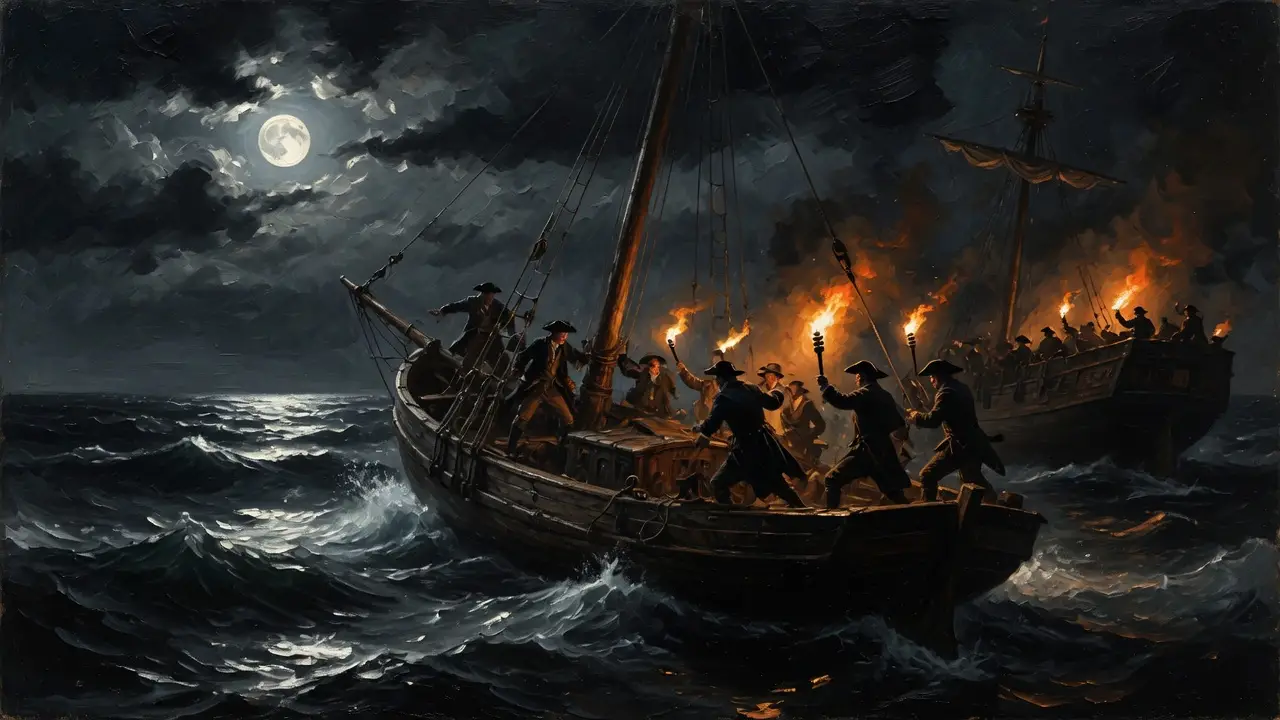
October 1720. The William was anchored near Negril Point, off the western tip of Jamaica, when Captain Jonathan Barnet found them.
Later accounts describe the male pirates as drunk, hiding below deck while Bonny and Read were among the few who showed any fight. It is a satisfying scene: the women who had sailed and raided alongside men now standing while those men cowered. It also comes to us through the same filtered and occasionally embellished tradition that shapes most of this story. The capture itself is documented. The dramatic details of who fought and who hid deserve to be labeled as they are: reported in later pirate history, not confirmed by the trial record.
What is certain is that Barnet captured the William and its crew without significant resistance. The entire company was taken to Jamaica to face Admiralty justice. Rackham went to the gallows. Bonny and Read went to trial.
A Courtroom in Jamaica, November 1720
The court was already done with John Rackham by the time Anne Bonny faced her judges.
Rackham, known to sailors and merchants across the Caribbean as Calico Jack for the striped cotton trousers he favored, had been convicted of piracy and sentenced to hang. His execution came quickly. According to accounts from the period, Anne Bonny was permitted a final visit, and she had little comfort to offer him.
She reportedly told him that she was sorry to see him there, but that if he had fought like a man, he would not be hanged like a dog. That line comes to us through Captain Charles Johnson’s 1724 history of pirates rather than any verified court document, so take it for what it is: a story shaped by a writer who understood that great pirates deserved memorable last words, even if he had to supply them himself.
LESSER-KNOWN DETAIL
Before he stole the William and resumed piracy, Rackham had accepted the British Crown’s general pardon for pirates in 1718. He gave up the life legally, then went back to it. That decision cost him everything.
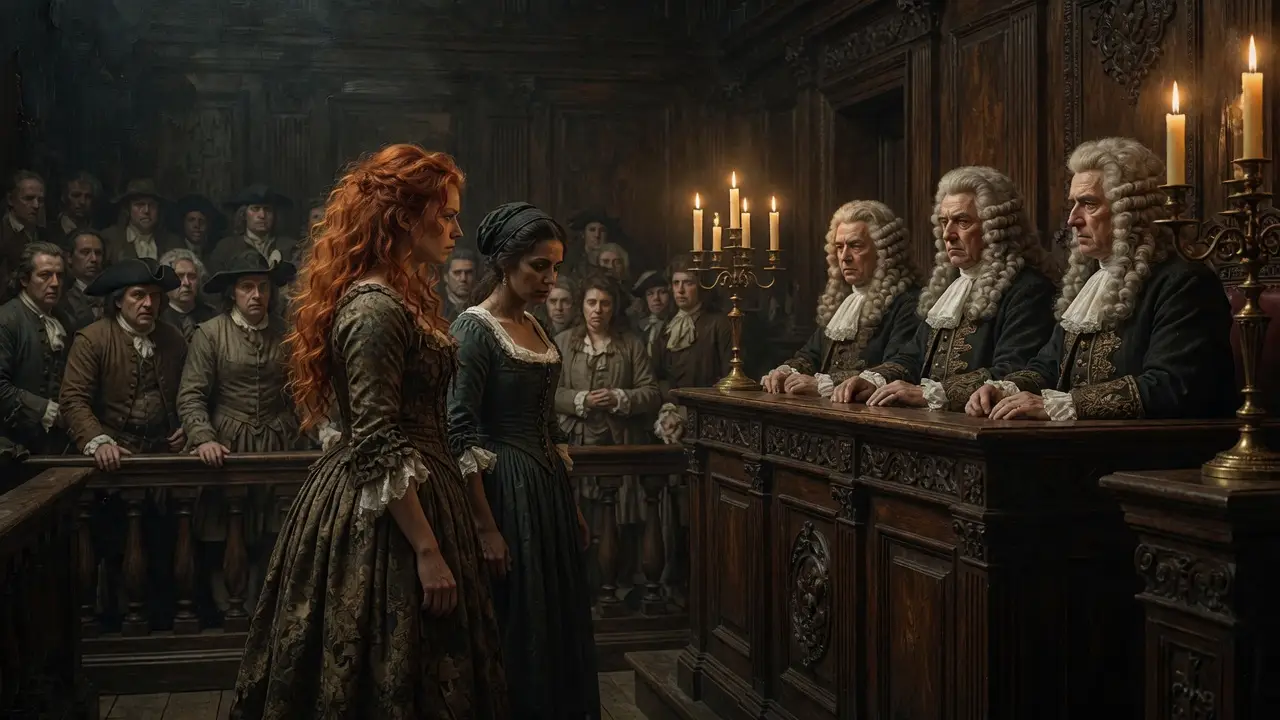
What happened next in that courtroom is documented. Anne Bonny and Mary Read stood before an Admiralty court in Spanish Town, Jamaica. Both pleaded not guilty. Witnesses testified against them. The court found them guilty. The judge sentenced them both to death.
Then both women declared they were pregnant.
Under English law, a condemned woman carrying a child could not be executed until after the birth. Physicians examined them. The court accepted the claims and postponed the sentences. Mary Read died in prison in April 1721, most likely from fever. Anne Bonny’s trail goes cold soon after.
She is one of the most famous pirates in history. Almost nothing about her life is certain.
The Silence Built a Legend
Mary Read died in prison in April 1721. There is a record for that. For Anne Bonny, there is almost nothing.
Some later accounts, working from tradition rather than documentation, suggest she was eventually released, returned to South Carolina, remarried a respectable man, bore several children, and died in old age sometime around 1782. That would make her roughly eighty years old, which is possible. It would also mean that one of the most wanted pirates in the Caribbean quietly settled into domestic life in a colony where people presumably knew her name.
It might be true. The documentary trail is too thin to say.
LESSER-KNOWN DETAIL
The Admiralty courts in colonial Jamaica were designed for efficiency. Pirates were not given lengthy legal proceedings. The entire trial of Rackham’s crew, the executions, and the separate trial of Bonny and Read were compressed into days rather than months.
What that absence created was space. Every legend requires room to grow, and Anne Bonny provided it. She did not die on the gallows like Rackham. She did not die in prison like Read. She walked out of the historical record and into something more useful to storytellers: mystery.
Later writers, novelists, filmmakers, game designers, and popular historians have filled that space with whatever their era needed her to be. A feminist icon. A romantic rebel. A warrior woman ahead of her time. An outlaw who chose freedom over respectability. Each version carries some truth, and each version is also a reflection of the age that produced it rather than the woman who stood in that Jamaican courtroom in 1720.
The real Anne Bonny, the one who actually existed, was a person who made dangerous choices in a brutal and particular world, who survived a death sentence through a legal procedure that was not heroic but effective, and who then became invisible to history. We do not know why. We do not know where she went. We do not know if she was ever afraid, or relieved, or sorry.
That silence is what turned her into a queen.
The gallows took Rackham. Prison took Mary Read. But Anne Bonny slipped beyond the record, and in that silence, history made her into something no court could sentence and no document could contain.