Before European explorers mapped the continent, Mali’s Mansa Musa crashed the global gold market, Timbuktu ran a university of 25,000 students, and Great Zimbabwe’s stone walls stood without mortar. The history of Africa’s most powerful medieval empires, and why it was deliberately forgotten.
The City That Stunned the World
In 1324, a man crossed the Sahara with so much gold that he single-handedly crashed the Egyptian economy for a decade.
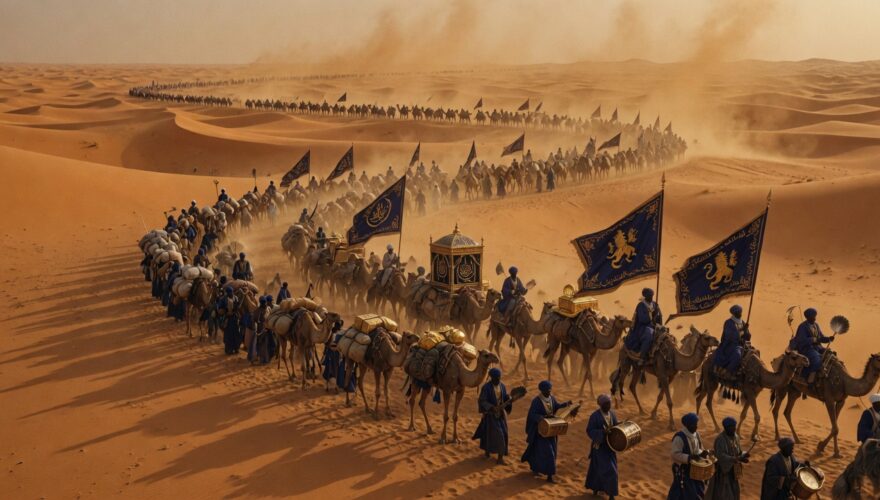
His name was Mansa Musa, and he was the ruler of Mali. He traveled to Mecca for the Hajj, as any devout Muslim ruler might. But Musa didn’t travel quietly. He brought an entourage estimated at 60,000 people, 12,000 servants, 500 enslaved men each carrying a golden staff, and 80 to 100 camels loaded with gold dust. As he moved through Cairo, he handed out gold so freely, to strangers, to local officials, to the poor, that the price of the metal collapsed across North Africa and the Middle East. Recovery took twelve years.
Medieval chroniclers in Cairo and Mecca scrambled to record what they’d witnessed. None of them had ever seen anything like it. Here was a king from a place most Europeans couldn’t locate on a map, commanding resources that dwarfed the treasuries of the French Crown and the Holy Roman Empire combined.
This was not a fluke. This was not a lucky kingdom sitting on an accidental gold deposit. This was the product of centuries of deliberate, sophisticated statecraft, trade networks that stretched from the Atlantic coast to the Red Sea, and civilizations that built universities, legal systems, and architectural programs while most of Europe was still negotiating which lord owned which peasant.
The World They Inherited
To understand what Mali, Songhai, and Great Zimbabwe achieved, you have to understand the world they were operating in.
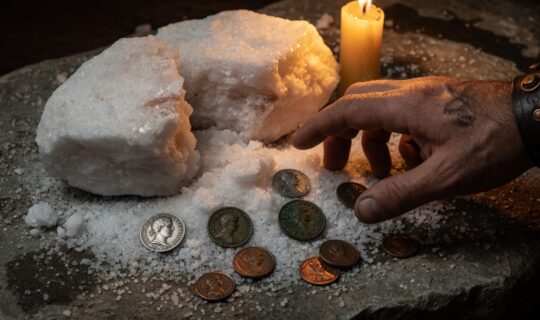
By 1000 CE, sub-Saharan Africa was fully integrated into a global commercial system. Gold from West African mines fed the Islamic world’s monetary economy. Salt from the Saharan deposits at Taghaza was worth its weight in gold to communities further south. These weren’t peripheral trades. They were the backbone of medieval international finance.
“The Negroes possess some admirable qualities. They are seldom unjust, and have a greater abhorrence of injustice than any other people.”
Ibn Battuta on Mali (1352)
The Ghana Empire, predecessor to Mali, had already established the foundational infrastructure: taxing all gold and salt passing through its territory, maintaining professional armies, and controlling access to resources with enough sophistication that Arab geographers like Al-Bakri were writing detailed accounts of its capital, Kumbi Saleh, as early as 1068. When Ghana weakened under a combination of internal pressures and Almoravid incursion, the structures it built didn’t vanish. They were inherited.
Mali absorbed them, refined them, and went further.
Join The Archive Briefing
Weekly dispatches. The history they didn't teach you — sourced, subverted, delivered to your inbox.
Mali: Where Commerce Met Philosophy
The empire of Mali at its peak covered an area roughly equivalent to Western Europe. It governed diverse ethnic groups, managed long-distance trade across the Sahara, and maintained diplomatic relationships with the sultans of Morocco, the rulers of Egypt, and the merchant republics of the Mediterranean.
Its capital, Niani, was a city of administrative buildings, mosques, and markets. But the city that truly defined the empire’s intellectual ambition was Timbuktu.
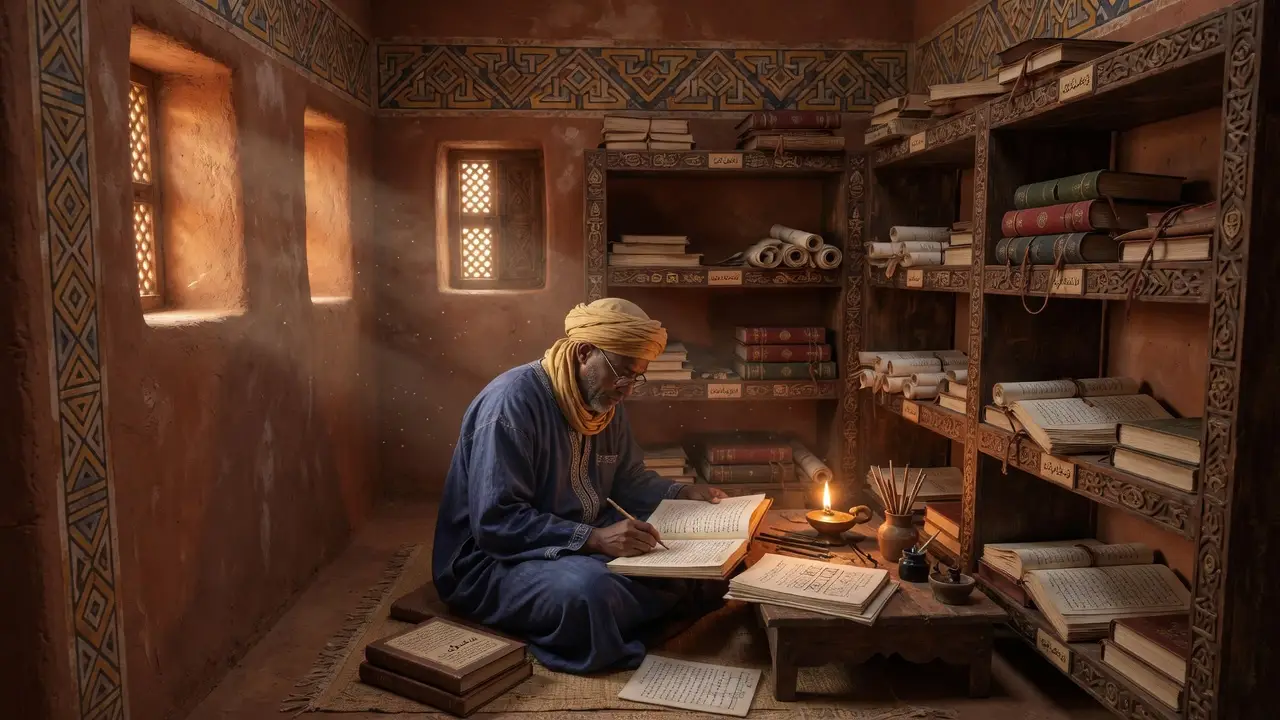
By the 14th century, Timbuktu’s Sankore Mosque had evolved into a university that drew scholars from across the Islamic world. At its height, the city had over 180 Quranic schools and housed roughly 25,000 students, in a total population of about 100,000. Subjects taught included astronomy, mathematics, law, rhetoric, and medicine. The manuscripts produced there, handwritten books on theology, grammar, history, and science, numbered in the hundreds of thousands. Many still survive today, housed in private family libraries in Timbuktu, their parchment fragile but their contents intact.
The scholar Mahmud Kati, who lived during the height of the Songhai Empire and wrote the Tarikh al-Fattash, one of the great chronicles of West African history, noted matter-of-factly: “A man could only succeed in Timbuktu through the quality of his learning.”
This was a city where books were its most valuable export. Arab traveler Ibn Battuta, who visited Mali in 1352, was startled by what he found. He had already traveled through Persia, India, and China. He was not easily impressed. Yet he wrote that the people of Mali showed “a greater abhorrence of injustice than any other people,” and praised the safety of travelers and the reliability of the legal system. He noted that despite the wealth on display, theft was rare. The legal infrastructure worked.
What Ibn Battuta didn’t particularly dwell on, though it was obvious from his account, was how deliberately Mali had structured the rules of commerce. Market inspectors maintained prices. Standard weights were enforced. Merchants arriving from North Africa knew exactly what to expect and returned repeatedly because the system was predictable.
Songhai: The Empire That Ran on Information
When Mali weakened in the late 14th century, Songhai didn’t just fill the vacuum. It expanded it.
At its peak under Askia Muhammad, who seized power in 1493 and ruled for 36 years, the Songhai Empire was the largest state in African history. It stretched from the Atlantic coast of present-day Senegal to the borders of what is now Nigeria, from the Saharan salt mines in the north to the forest zones in the south.
What made Songhai functionally different from the empires that preceded it was its administrative sophistication. Askia Muhammad understood that you couldn’t govern an empire the size of Western Europe through personal charisma alone. He divided the territory into provinces, each with its own governor appointed by the center. He standardized weights and measures across markets. He established professional bureaucracies to manage taxation and trade. He consulted with Islamic scholars, including the great jurist Al-Maghili, on questions of governance, religious law, and how to reconcile Islamic legal principles with local custom.
This was, in practice, constitutional dialogue. A ruler submitting questions of authority and jurisdiction to independent legal scholars, recording the exchange, and acting on the resulting opinions. It predated similar formal mechanisms in most European states.
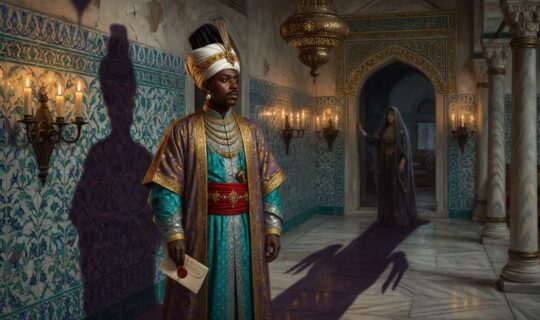
Askia made the Hajj in 1497, traveling as Musa had before him, with enormous ceremony. But where Musa’s journey had been partly a display of personal glory, Askia used his time in Cairo and Mecca to negotiate. He met with the Abbasid Caliph and secured recognition of his political legitimacy. He recruited scholars and administrators to return to Songhai with him. He was building an empire in the most literal sense: not just controlling territory, but constructing the institutional architecture to hold it together.
His downfall, when it came in the late 1500s, was not internal rot. A Moroccan army crossed the Sahara with firearms the Songhai cavalry couldn’t match. It was a military shock, brutal and sudden, and it fractured the political order in ways the region took centuries to recover from.
Great Zimbabwe: Stone That Shouldn’t Exist
Roughly three thousand kilometers to the southeast, a different kind of civilization was building something that would confuse and disturb European observers for the next five centuries.
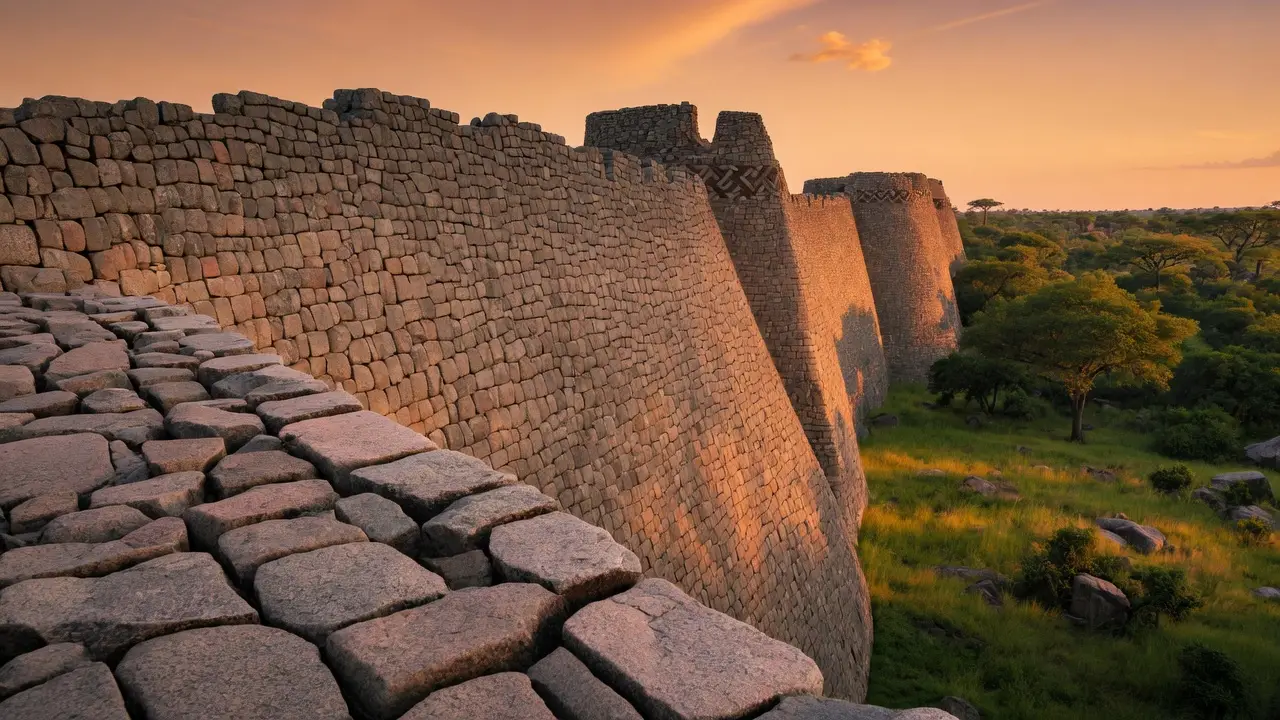
Great Zimbabwe was a city of dry-stone architecture: massive granite walls built without mortar, fitted together with such precision that the structures still stand more than 700 years after their construction. The word Zimbabwe itself means “great stone house” in the Shona language. At its peak between the 11th and 15th centuries, it was the political capital of an empire controlling the gold trade between the interior of southern Africa and the Swahili Coast ports on the Indian Ocean.
The scale is hard to convey from a description. The Great Enclosure, the largest single structure on the site, has walls that stand up to 11 meters high and 5 meters thick at the base. They enclose an area large enough to comfortably contain the entirety of Westminster Abbey. They were built from over a million granite blocks, shaped and fitted by hand, with no binding material of any kind.
Inside the city and across the wider ruins, archaeologists have found Chinese porcelain from the Song dynasty, Persian pottery, glass beads from the Middle East, and even a coin from the Sultanate of Kilwa in modern Tanzania. Great Zimbabwe was plugged into the Indian Ocean trade network, receiving goods from merchants operating thousands of miles away. Its rulers exchanged ivory, gold, and cattle for manufactured luxuries that arrived via a chain of coastal intermediaries.
When Portuguese explorers reached the region in the late 15th century and then when later European settlers in the 19th century encountered the ruins, the response was revealing. The structures, they insisted, must have been built by Phoenicians. Or Arabs. Or any ancient civilization that was not African. Carl Mauch, a German geologist who visited in 1871, concluded the ruins were the work of the Queen of Sheba.
The actual evidence, the Shona cultural continuity in the region, the absence of any non-African construction techniques, the local oral traditions, was dismissed. Theodore Bent, who conducted the first formal excavations in 1891, explicitly stated his purpose was to find evidence of a “more civilized race.” He found none. But the mythology persisted for decades, because the alternative required acknowledging that African architects had built something Europeans couldn’t explain.
Modern archaeology has long since settled the question. Great Zimbabwe was built by the ancestors of the Shona people. Full stop.
What the Merchants Knew
The trade routes connecting these civilizations were not crude paths of necessity. They were sophisticated commercial corridors maintained over generations.
Gold from the Bambuk and Bure mines in West Africa moved north to North African markets, where it entered Mediterranean commerce and eventually became the gold in European coins. When medieval European economies began transitioning away from barter in the 12th and 13th centuries, the metal that made that possible came substantially from West Africa.
Salt moved in the opposite direction. Cowrie shells, originating from the Maldive Islands in the Indian Ocean, circulated as currency across both West Africa and East Africa simultaneously. Kola nuts, cloth, and copper moved along regional networks that connected farming communities to pastoral ones to urban ones.
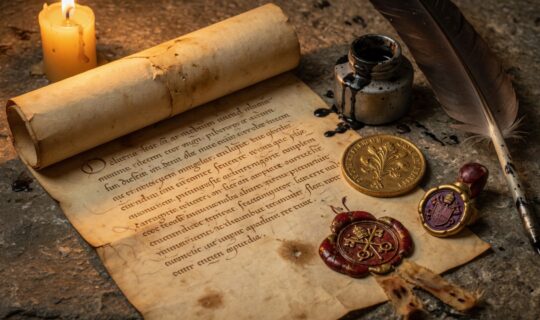
The merchants who ran this system were literate, legally protected, and internationally connected. The Dyula traders of West Africa and the Swahili merchants of the coast maintained commercial relationships that spanned generations and depended on reputation, written contracts, and Islamic commercial law. They had credit systems. They had agents operating in distant cities on their behalf. They had letters of introduction that allowed a merchant from Timbuktu to arrive in Cairo and be received not as a stranger but as a known quantity within a recognizable professional network.
This was, functionally, proto-globalization. Not as a metaphor. As a description of what was actually happening.
The Weight of Forgetting
These civilizations did not collapse because they were fragile. Songhai fell to firearms. Mali’s successor states were disrupted by the same Moroccan military expansion. Great Zimbabwe’s decline was gradual, probably related to environmental pressures and shifting trade routes, rather than any dramatic conquest.
What happened to their memory in the Western historical consciousness was a different kind of erasure. The manuscripts of Timbuktu were dismissed as religious texts of limited intellectual interest. Great Zimbabwe’s builders were replaced, in print, by Phoenicians and Arabs. The gold that built European financial systems was attributed to trade with “Africa,” an undifferentiated geographic category that erased the specific political entities that had actually organized and controlled that trade.
The result was a version of history in which African civilizations existed only as context for what came later: the contact with Europeans, the slave trade, the colonial period. The centuries of prior development were compressed into background noise.
The manuscripts survive. Roughly 100,000 to 300,000 of them still exist in Timbuktu and in libraries across Mali, Morocco, and elsewhere. The stone walls of Great Zimbabwe still stand. The trade records exist in Arabic chronicles, in Egyptian archives, in Portuguese colonial reports that couldn’t quite explain the sophistication of what they were encountering.
The history is recoverable. It’s just not always taught.
The Debt Owed to Dust and Gold
Here is what the record shows: while France was fighting the Hundred Years’ War over which king could claim a throne, Timbuktu was graduating scholars in Islamic law and astronomy. While the Black Death was dismantling a third of Europe’s population and much of its institutional memory, Askia Muhammad was reorganizing a continental bureaucracy. While the merchant cities of northern Italy were pioneering European commercial techniques, the Dyula trading networks had already been running functionally equivalent systems across the Sahara for generations.
None of this is an argument that African civilizations were superior or that European ones were worthless. It’s simpler than that. The world in 1300 or 1400 was not organized around a single dominant center. It was plural, complex, and interconnected in ways that don’t reduce to a single story of progress radiating outward from one continent.
Mansa Musa crossed the Sahara with enough gold to destabilize the global economy and enough confidence to think nothing of it. That confidence didn’t come from nowhere. It came from an empire that had been working, trading, building, and learning for centuries before a single European sailor rounded the Cape of Good Hope.
The gold was real. The libraries were real. The walls are still standing.