Before every royal meal came a nameless servant forced to eat first. Discover the brutal truth behind royal food tasters, the science of arsenic and belladonna, the psychology of daily terror, and the exploited lives hidden in history’s most dangerous job.
Before the First Bite
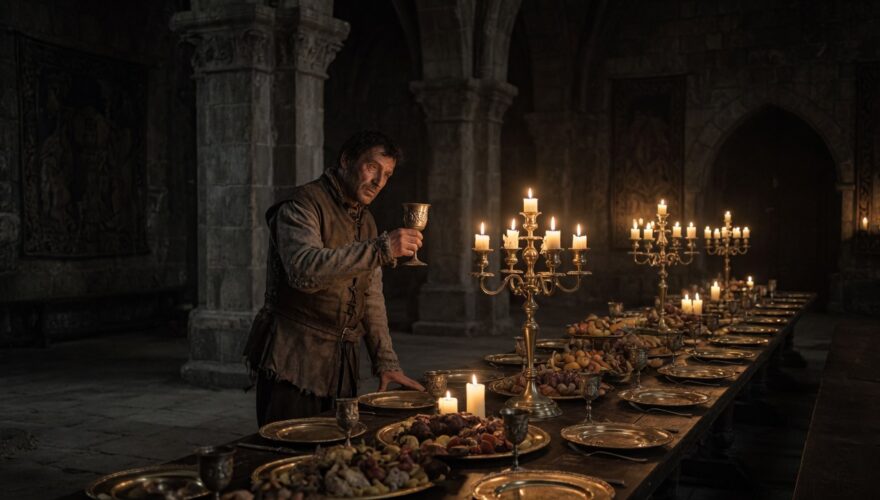
The servant lifts the spoon. He does not do it with ceremony. There is no gratitude in the gesture, no pride. He simply puts the food in his mouth, chews, swallows, and waits. The courtiers watch him the way a hunter watches brush… still, attentive, waiting for something to move. If his lips swell, if his hands begin to shake, if his eyes lose their focus, the dinner is cancelled. If nothing happens, the Queen eats.
This ritual played out at nearly every significant royal court in history, from the pharaohs of Egypt to the Hapsburg emperors of Vienna. It was not considered unusual. It was considered prudent. A monarch who did not employ a food taster was thought reckless, almost naive. Poison was not merely a danger, it was an industry. And the men and women who stood between a ruler and a slow, agonizing death were among history’s most quietly exploited human beings.
Their story is not about courage. It is about desperation, coercion, and the machinery of power that turns living people into disposable instruments.
Arsenic and Bella Donna: The Weapons Nobody Could See
To understand why food tasters existed, you have to understand what they were tasting for, and why those substances were so terrifyingly effective.
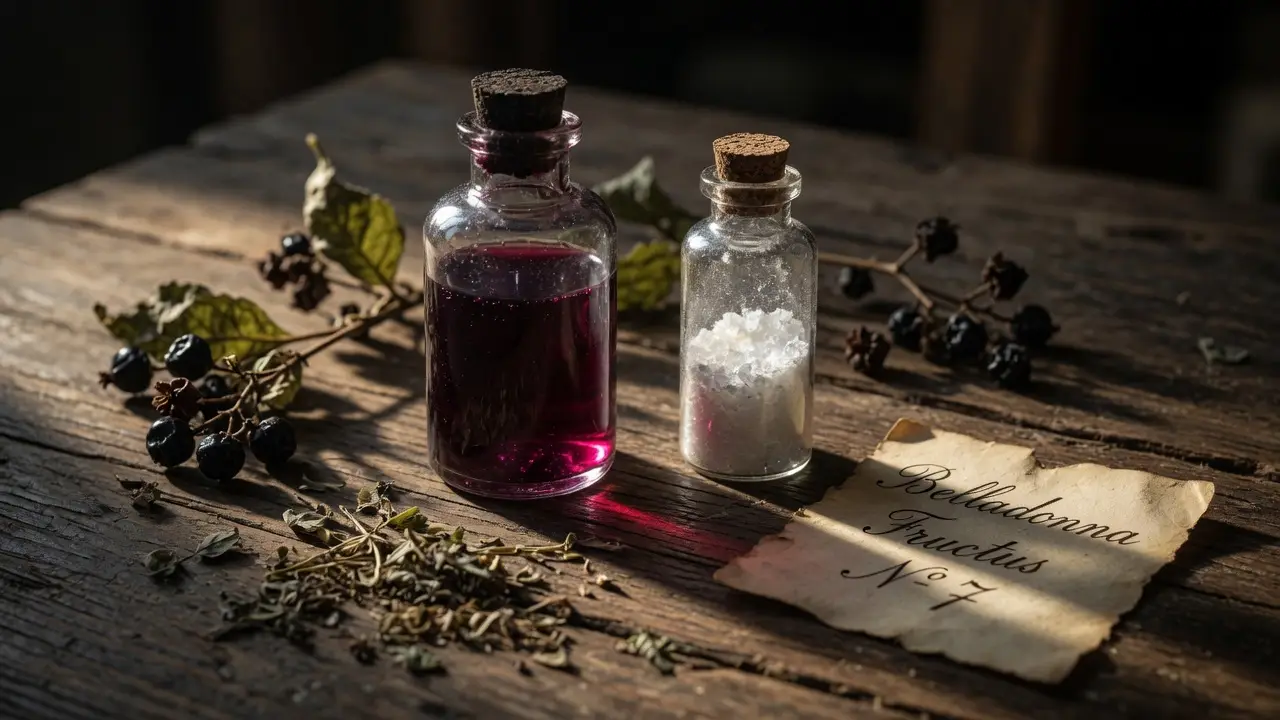
Arsenic trioxide, the most commonly used variant, was tasteless. Odorless. It dissolved easily into wine, soup, or sauce. In low doses, it produced symptoms so close to cholera or stomach fever that even trained physicians could not tell the difference. In the 15th century, Venetian poisoners had refined its use to such a degree that it was sold commercially under the name acqua toffana, a preparation attributed to a Sicilian woman named Giulia Tofana who reportedly supplied it to noblewomen looking to dispose of abusive husbands. The formula, according to later investigations, had been used in the deaths of over 600 people before Tofana was executed in 1659.
LESSER-KNOWN DETAIL
Pope Alexander VI (Rodrigo Borgia) was reportedly poisoned at a dinner he had arranged to poison someone else, both men accidentally drank from a bottle intended for a third guest.
What made arsenic so terrifying was its scalability. A large dose killed quickly and obviously. But a skilled poisoner didn’t use large doses, they used small ones, repeated over weeks or months. This micro-dosing strategy, which modern toxicologists now call “slow poisoning,” created a pattern of gradual organ deterioration that mimicked natural illness. The liver quietly failed. The kidneys degraded. The skin took on the waxy pallor of a man dying from the inside, which was exactly what was happening. A food taster consuming a micro-dosed dish might feel nothing unusual that evening. The monarch eating the same dish daily would be dead in a season.
Belladonna derived from Atropa belladonna, the deadly nightshade plant, worked differently. Its active compounds, atropine and scopolamine, targeted the nervous system with almost surgical precision. In high concentrations, it produced hallucinations, racing heartbeat, inability to swallow, seizure, and death. In smaller amounts, it caused dilated pupils, dry mouth, and confusion, which in a court setting might be attributed to wine or exhaustion. Renaissance Italian women famously used diluted belladonna as eye drops because the pupil dilation was considered beautiful, a detail that speaks to how casually lethal substances circulated in elite society.
For a food taster, the problem with both substances was the delay. Arsenic could take hours to register. A taster who consumed a modestly poisoned dish and showed no symptoms for ninety minutes gave the impression of safety. The monarch ate. By midnight, both of them might be dying from different doses of the same meal.
Join The Archive Briefing
Weekly dispatches. The history they didn't teach you — sourced, subverted, delivered to your inbox.
“There is no wound more invisible than the one dealt at table.”
Attributed to a Venetian court physician, circa 1520
The Human Shield: Who Were These People?
The mythology of the royal food taster tends toward the noble and the loyal. In reality, the position was rarely a prestigious one. The vast majority of those who served this function were drawn from the lowest rungs of the domestic hierarchy, scullery workers, kitchen boys, household servants who had no leverage to refuse.
In ancient Rome, the emperor’s food taster held the title praegustator, and the position did carry a degree of formalized status. Julius Caesar employed one. So did Claudius, though this proved inadequate, Claudius is widely believed to have been poisoned by mushrooms, a detail his praegustator either missed or was complicit in concealing. But the Roman model was an exception. Across most of Europe and Asia, the people doing this work were not celebrated retainers. They were, functionally, human biosensors.
The economic logic was brutal and uncomplicated. Poverty created a surplus of bodies willing to accept the risk. A servant family hoping to secure a position in a royal household could not easily decline when a child was assigned to the tasting role. Refusal meant dismissal. Dismissal meant destitution. The choice was not really a choice at all.
In the Ottoman court, the institution was more formalized, the çaşnigir was an official taster and food officer who served the sultan. But even within structured systems, the human reality remained the same: the person eating first was not the person anyone was trying to protect.
“He who tastes for the great ones earns nothing from their gratitude and everything from their fear.”
Anonymous court document, 15th-century France (translated)
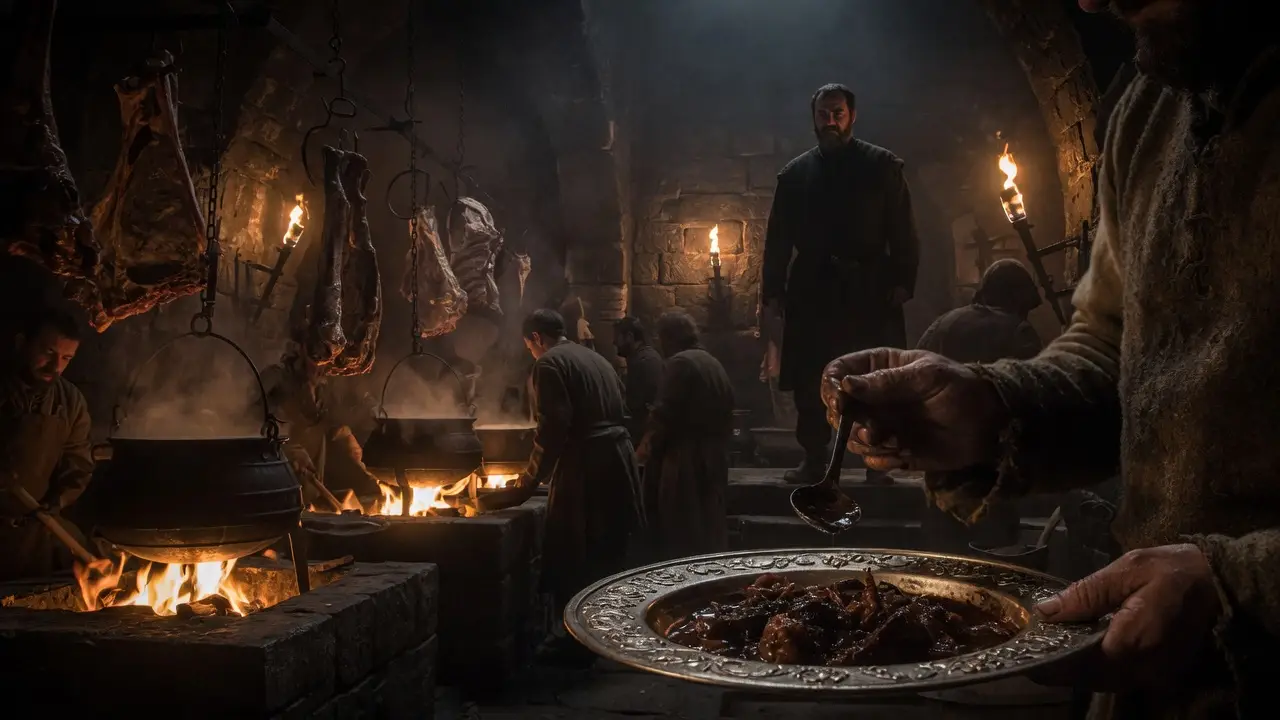
Beyond the individual tasters, royal kitchens developed elaborate procedural defenses. Dishes were prepared in sealed rooms. The number of people with access to any given ingredient was carefully controlled. In some courts, kitchen staff were required to live in semi-confinement for months, forbidden from leaving the palace grounds without supervision. The logic was containment: if no one could reach the kitchen from outside, no one could introduce poison from outside.
There was also an entire industry of detection tools, most of them useless. Unicorn horn, actually narwhal tusk, was believed to sweat or change color in the presence of poison. Royal families paid fortunes for pieces of it. Bezaor stones, calcified masses extracted from the stomachs of goats, were worn as amulets and dunked into food or drink. Emeralds were thought to crack when poison was near. Silver tableware was prized not just for status but because silver was believed to tarnish in the presence of arsenic (which it does, very slightly, under certain conditions, making it the one detection method with any partial chemical basis).
LESSER-KNOWN DETAIL
In ancient China, rhinoceros horn cups were believed to detect arsenic by fizzing or changing color when the poison was present. The science was nonexistent, but the cups sold for extraordinary sums.
None of these substitutes were reliable. The food taster remained the most effective instrument available, not because human physiology was a sensitive analytical tool, but because the consequences of a taster dying were immediate and observable in a way that a sweating narwhal tusk was not.
The Mind Inside That Body
Consider what it meant to hold this position for years.
Every morning, you woke knowing that the day’s work might kill you. Not in the abstract way a soldier accepts risk, but in the specific, chemical way of a man who must put an unknown substance in his mouth at the command of someone whose survival depends entirely on his own death being the test. The psychological framework required to function within that reality is not courage, it is a profound and probably necessary dissociation from the implications of what you are doing.
Modern psychology recognizes the dynamic. When survival is tethered to the welfare of a person who holds absolute power over you, the mind adapts. The taster’s loyalty to the monarch was not a sentiment freely chosen; it was structurally compelled. A taster who expressed reluctance, or who showed signs of psychological deterioration, was replaced. The incentive was to project calm, competence, and devotion, regardless of what was actually happening internally.
LESSER-KNOWN DETAIL
Mehmed II of the Ottoman Empire allegedly had his own brother strangled at age 3 partly out of fear of future poisoning conspiracies, demonstrating how poison fear shaped dynastic violence far beyond the dinner table.
Contemporary accounts rarely give us the inner lives of these individuals, because the people keeping court records were not interested in the psychological states of kitchen servants. But there are fragments. A French household document from around 1470 notes that one of the king’s tasters had become unable to eat without trembling and was “retired from service”, a phrase whose gentleness probably conceals something far less kind. An Italian source from the early 1500s mentions a taster who refused to eat a dish he claimed smelled wrong and was imprisoned for insubordination, the dish later confirmed safe.
The paranoia was not confined to the tasters. The entire palace kitchen existed within a surveillance architecture designed around the assumption that anyone, at any moment, might be acting against the monarch. Cooks reported on cooks. Stewards reported on stewards. In the court of Henry VIII, kitchen staff were subject to inspection and interrogation if any member of the royal household fell ill after a meal. The atmosphere was one of permanent suspicion in which everyone was simultaneously a potential threat and a potential informant.
“The kitchen is a battlefield more dangerous than any plain, for there the enemy has no face and the traitor breaks no law until he has already won.”
Anonymous English court document, estimated 16th century
When the Taster Actually Fell
The historical record contains remarkably few confirmed accounts of food tasters dying in the execution of their duties. This is not because the system worked perfectly, it is partly because the deaths of servants were rarely considered newsworthy enough to record in detail, and partly because the micro-dosing strategy made it impossible to attribute death directly to any single meal.
LESSER-KNOWN DETAIL
Charles II of England survived multiple suspected poisoning attempts; his personal physician kept detailed records of every meal the king consumed for the last three years of his life.
But the documented cases that do exist are instructive.
When a taster did show acute symptoms like convulsions, vomiting, respiratory distress, the medical response available to them was catastrophic by any standard. The dominant antidote of the era was theriaca, a compound preparation with roots in ancient Greek medicine that could contain anywhere from thirty to sixty ingredients, including opium, viper flesh, myrrh, and various animal products. It was prescribed for virtually every poisoning scenario and was effective against virtually none of them.
Physicians also employed induced vomiting, bloodletting, and the administration of milk or oil in an attempt to coat and neutralize the stomach lining. For arsenic in particular, the correct treatment, competitive inhibition with a chelating agent like dimercaprol, would not be developed until the 20th century.
LESSER-KNOWN DETAIL
Catherine de’ Medici reportedly brought a team of Italian perfumers and apothecaries to France when she married Henry II, widely suspected by contemporaries of being her personal poison laboratory, though historians debate this.
The contrast in care was stark. If the monarch showed signs of having consumed poison, the full resources of the court medical establishment mobilized immediately. Physicians were summoned. Antidotes were administered. The patient was moved to a comfortable room and monitored around the clock. If a taster collapsed, the primary concern was not the taster. It was finding out whether the food chain was compromised, containing the information, and securing a replacement.
A significant and underexplored footnote to this history involves a man named Mithridates VI of Pontus, a king so terrified of assassination that he reportedly spent years consuming small daily doses of various poisons, attempting to build tolerance. His method, mithridatism, as it came to be known, became legendary, though modern toxicology suggests his success was real only in very narrow circumstances (tolerance to certain alkaloid-based poisons is possible; arsenic tolerance via repeated exposure has some scientific basis).
He reputedly became so saturated with toxins that when his kingdom fell and he tried to kill himself with poison, he could not. His guards had to stab him to death instead. He never employed a food taster, which was either principled or reckless, depending on your interpretation.
“Against a determined enemy, no servant’s stomach is sufficient shield.”
Niccolò Machiavelli, in a private letter, date uncertain

The Legacy of the Poisoned Table
The tradition did not end cleanly. Pope Clement VII, who died in 1534, is believed to have succumbed to death caps, Amanita phalloides, possibly consumed over several days and either missed by his tasters or introduced in a quantity too small for acute symptoms. Napoleon Bonaparte’s death has generated centuries of debate: hair samples analyzed in the 20th century showed arsenic levels far above normal, leading some researchers to suggest chronic poisoning, though whether deliberate or environmental remains contested.
As late as the early 20th century, the formal role of royal food taster existed in some courts in diminished, ceremonial form. Today, those protecting heads of state rely on chemical analysis, sealed supply chains, and forensic toxicology , the same discipline that grew in part from centuries of trying to understand what was happening inside those servants who swallowed the unknown and waited.
LESSER-KNOWN DETAIL
The phrase “tasting menu” in modern high-end restaurants derives, at minimum terminologically, from this practice, a small irony that has been almost entirely forgotten.
The food tasters left almost nothing behind. No memoirs. No monuments. Their names, in most cases, are completely lost. They were instruments of survival in a world where survival at the highest levels required a category of people willing , or forced, to stand between power and its consequences.
That arrangement, stripped of its medieval context, remains recognizable. The expendable body placed between danger and authority, the coercion dressed as loyalty, the system that profits from the labor of people who have no real choice, these are not relics. They are structures. And the history of the royal taster is, among other things, a history of what those structures look like when they are never questioned.
Every great banquet casts a shadow. Somewhere just off the edge of the illuminated table, someone ate first.