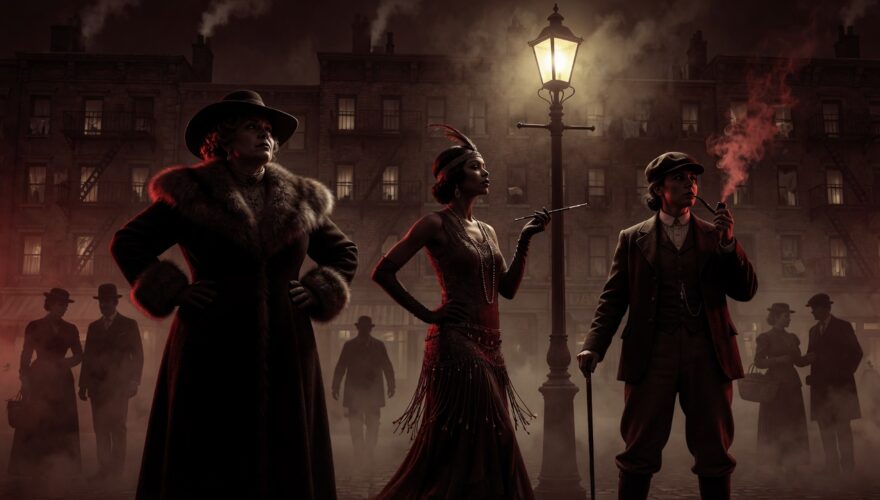
They built hierarchies, bribed judges, commanded armies of thieves, and died wealthy. History simply forgot to write them down.
This is the story of three women who ran criminal organizations with the kind of cold precision that most legitimate businessmen never achieved. They understood power, loyalty, leverage, and fear. They navigated systems designed to crush them and turned those systems into tools. And then, for one reason or another, history looked away.
The Woman Behind the Criminal Machine
In the winter of 1884, the most powerful crime boss in New York City sat in a Toronto hotel room and read the papers from home. Detectives had raided her warehouse. Her network of lawyers, judges, and police captains, every one of them purchased with her money had failed to protect her. The business she had built over thirty years, worth the equivalent of tens of millions in today’s money, was being dismantled, block by block. And yet Fredericka Mandelbaum did not panic. She poured herself a drink, lit a cigar, and began writing letters.
She had done it before. She would do it again. She always did.
History, of course, does not remember Fredericka Mandelbaum the way it remembers the men who tried to destroy her. We know the prosecutors. We know the detectives. We know the politicians who took credit for cleaning up New York. Mandelbaum herself, the woman who created the criminal ecosystem they all lived inside is a footnote in a footnote, buried so deep in the archive that most people have never heard her name.
She was not alone in that burial. History has a habit of erasing women from the underworld, not because those women did not exist, but because the underworld itself was considered a masculine space, and a woman who thrived inside it posed a category problem that polite society preferred not to examine too closely.
The Godmother of New York
Fredericka “Marm” Mandelbaum arrived in Manhattan in 1850, a German Jewish immigrant with almost nothing. Within a decade, she had opened a dry-goods shop on Clinton Street in Lower Manhattan that operated, by all external appearances, as a perfectly ordinary small business.
The basement told a different story.
Mandelbaum was a fence, someone who purchased stolen goods and sold them on, but she operated at a scale that no one in New York had ever attempted before. She did not buy the odd silver candlestick from a nervous pickpocket. She built a supply chain. She recruited the city’s most skilled thieves, organized them into specialized crews, and created an informal school in her back room where she trained young talent in the arts of safecracking, shoplifting, and confidence schemes. Some of her graduates became the most effective criminals in the country.
Join The Archive Briefing
Weekly dispatches. The history they didn't teach you — sourced, subverted, delivered to your inbox.
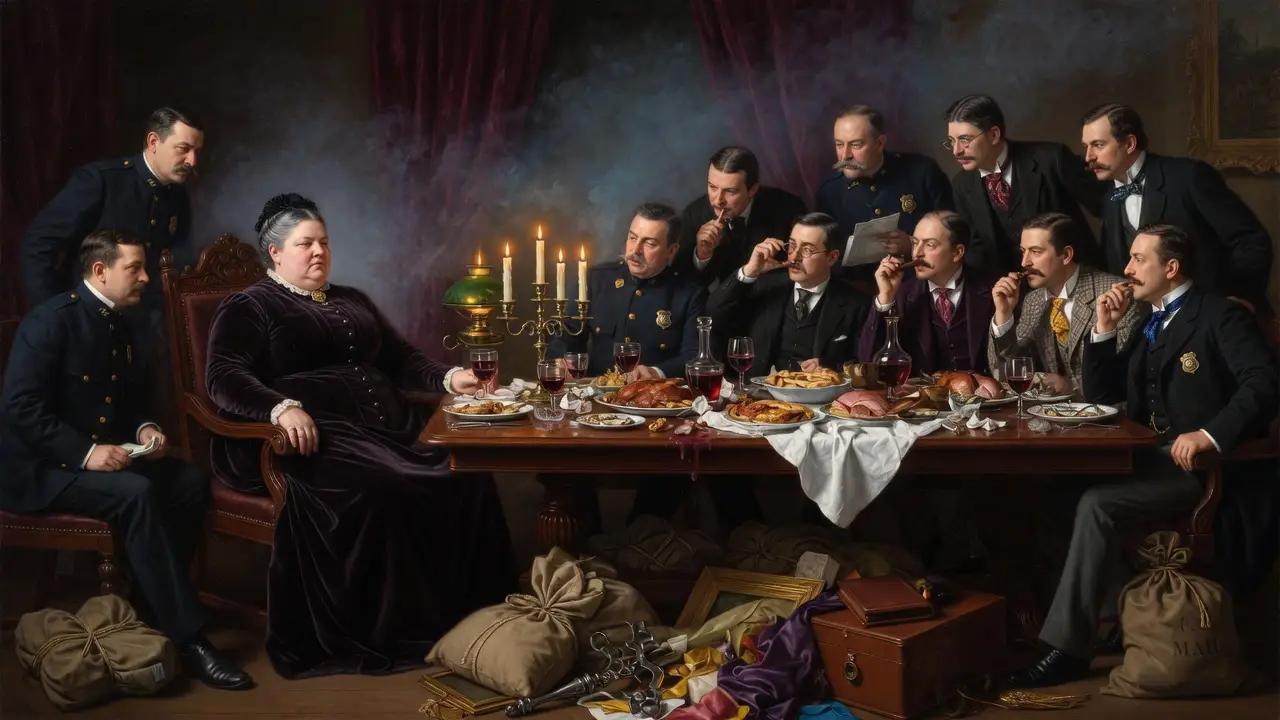
At her dinner parties, and they were genuine dinner parties, elaborate and lavish, attended by lawyers, police captains, and Tammany Hall politicians, she held court with the kind of relaxed authority that comes from knowing exactly how much every person in the room owes you. She paid bribes with the systematic efficiency of a utility company. She kept meticulous records. She never lost her composure in public, not once, not even when the New York Times began calling her “the chief of all criminals” in 1879.
She found that flattering.
Estimates of her total earnings during her career range as high as ten million dollars, roughly three hundred million in today’s terms. She laundered it through the shop, through real estate, through loans extended to other criminals who then worked within her network to repay the debt. She invented, largely on her own, the organizational structure that later generations would recognize as organized crime. There was no Mafia in New York in the 1860s. There was Marm Mandelbaum.
She was the nucleus and centre of the whole organization of crime in New York City, if not in the United States.
New York Times, 1884
When the law finally caught up with her, she did the one thing her system had not been built to survive: she vanished. She fled to Canada before the trial, taking a significant portion of her cash with her, and spent the rest of her life in Hamilton, Ontario, comfortable and unbothered. She died in 1894. The American prosecutors who had pursued her got nothing.
Queen of Harlem
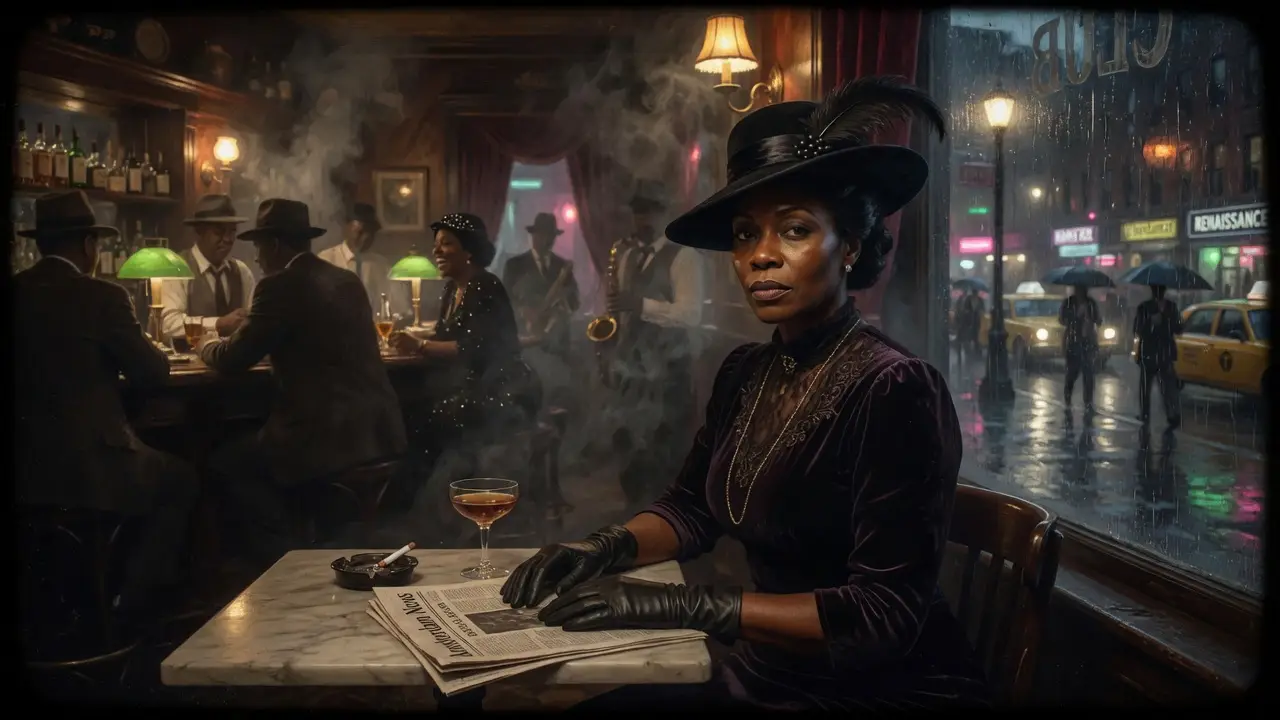
In the fall of 1929, a Martinique-born woman named Stephanie St. Clair took out a newspaper advertisement. Not to sell anything. Not to announce a business opening. She took out the advertisement to warn the white organized crime syndicates that were beginning to move into Harlem’s illegal lottery trade, known as the numbers, that she would not be moved out without a fight.
That took nerve. By 1929, men like Dutch Schultz were not accustomed to being defied by anyone, let alone a Black woman operating out of Harlem. St. Clair had been running the numbers in Harlem since the early 1920s, building a network of runners and collectors that covered much of upper Manhattan. She had accumulated real wealth, retained a team of lawyers, and cultivated relationships with community leaders who saw her as something other than a criminal, which in important ways, she was. The numbers provided economic opportunity to a neighborhood systematically excluded from legitimate financial systems. St. Clair employed dozens of people. She gave to charity. She was, by the standards of Harlem in 1929, an institution.
When Schultz moved to muscle her out, she fought back in ways that were both theatrical and effective. She testified against corrupt police officers who had taken bribes from Schultz’s people. She gave interviews. She wrote letters to newspapers under her own name, identifying by name the officers she claimed were on the mob’s payroll. It was an extraordinary act of public defiance from a Black immigrant woman in 1930s America, and it worked, at least long enough to embarrass the department into a brief investigation.
She could not hold Harlem forever. The Depression, the scale of the Italian-American syndicates, and the sheer financial power of the white mob eventually eroded her control. But she endured longer than anyone should have been able to, on terms entirely of her own choosing. She lived until 1969, watched over by neighbors who remembered what she had built, and was buried in Queens without a single mainstream obituary.
Moll Cutpurse and the Original Underworld
Go back further. Go back to London in 1600, to the narrow streets around St. Paul’s Cathedral, and you find a woman named Mary Frith who had been causing problems for authorities since adolescence.
Frith, who went by the alias Moll Cutpurse, began as a pickpocket. She had a talent for it, and more importantly, a talent for the organizational thinking that separated a skilled thief from a crime boss. By her thirties she had become the leading fence in London, operating a receiving house where stolen goods from across the city flowed in and clean money flowed back out. She was also, by several accounts, the person who taught and employed many of the capital’s most active thieves, making her structurally the same kind of hub that Mandelbaum would become two and a half centuries later.
What makes Frith particularly remarkable is her visibility. She did not hide. She dressed in men’s clothing, smoked a pipe in public, and performed at the Fortune Theatre, where she sang bawdy songs and announced, from the stage, that she would sleep with any man who could prove himself more of a woman than she was. She was hauled before religious courts, required to do public penance, threatened with prosecution at every turn. She shrugged at all of it.
She was so thoroughly embedded in the culture of her time that playwrights wrote about her while she was still alive. The Roaring Girl, a 1611 play co-written by Thomas Middleton and Thomas Dekker, put her on the London stage as a heroic figure. She reportedly attended opening night, sitting in the gallery with a pipe, watching actors play a version of herself while the crowd roared.
When she died in 1659, she left behind a will that instructed her executors to spend a portion of her estate on a party for her friends. Her autobiography, probably dictated and then embellished by a writer, was published shortly after. Then the 18th century arrived, the city changed, and Moll Cutpurse became a character in old plays rather than a woman who had genuinely dominated London’s criminal economy for thirty years.
The Shape of What Was Hidden
The erasure of these women is not accidental. It follows a consistent pattern: women who operated in criminal economies were frequently redefined by later historians as companions, wives, or accessories to male criminals, even when the record showed otherwise. Mandelbaum’s male associates were described as gang leaders; she was described as a shopkeeper. St. Clair’s political activism was framed as eccentricity. Frith’s real power was absorbed into theatrical legend.
The uncomfortable truth is that these women understood the mechanics of power more clearly than most of their male contemporaries. They built systems. They created loyalty through economics rather than violence alone. They adapted, negotiated, and survived in environments that should have destroyed them within weeks. They looked at a world built to exclude them and found the seams.
What history chose to remember instead was the men who occasionally arrested them.
I will fight them until I die or they do.” St. Clair reportedly said this of the syndicates moving into Harlem. She meant it. She outlived several of them.
Attributed to Stephanie St. Clair, circa 1931
That these women were criminals is not in question. They caused harm, operated through coercion, and enriched themselves at the expense of others in ways that carry real moral weight. But the historical record does not erase male criminals on moral grounds. It preserves them, studies them, and makes television series about them. The selective forgetting applied to women who held the same kinds of power is not a moral judgment. It is something else entirely.
It is the shape of what men decided the past was allowed to contain.
Aftermath
Fredericka Mandelbaum lived out her final decade in Canadian comfort, reportedly never expressing a single regret. The New York Police Department, which had spent years trying to convict her, could not touch her across the border. She died with money in the bank and her secrets intact.
Stephanie St. Clair spent her later years writing letters to newspapers still, always, writing letters about civil rights, about police corruption, about the particular texture of injustice she had spent a lifetime navigating. She never stopped fighting, even after there was nothing left to win.
Mary Frith’s grave in St. Bride’s Church in London was destroyed in the Great Fire of 1666, seven years after her death. There is no marker. There is no record of exactly where she is buried. The city she dominated for three decades burned up most of what remained of her.
And yet here they are. Still recognizable. Still, in whatever strange way history allows, present.
The archive tried to close over them, the way water closes over a stone. It did not quite manage it.