In the 19th century, medical schools created a desperate shortage of legal cadavers that drove body snatchers to raid freshly dug graves across Britain and America. Discover how this illicit trade in human remains transformed poverty-stricken criminals into professional Resurrection Men, pushed killers like Burke and Hare to commit murder for profit, and ultimately forced Parliament to rewrite the law in 1832. A dark chapter that still shapes medical ethics today.
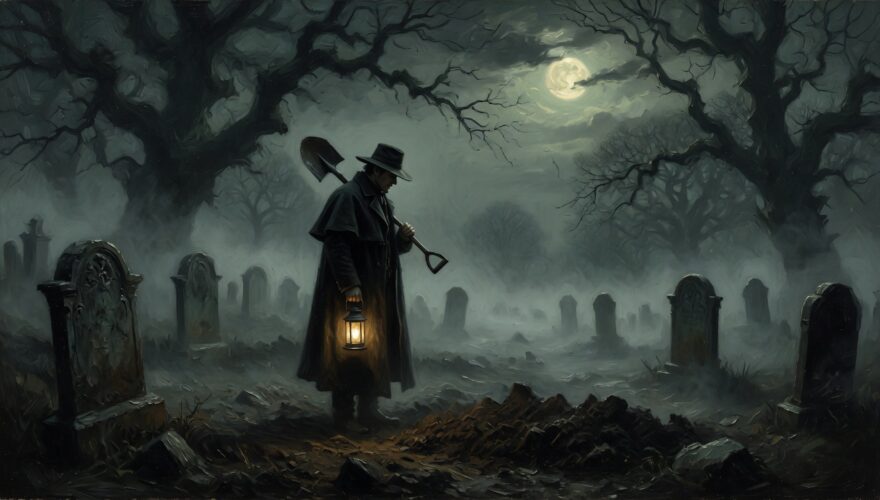
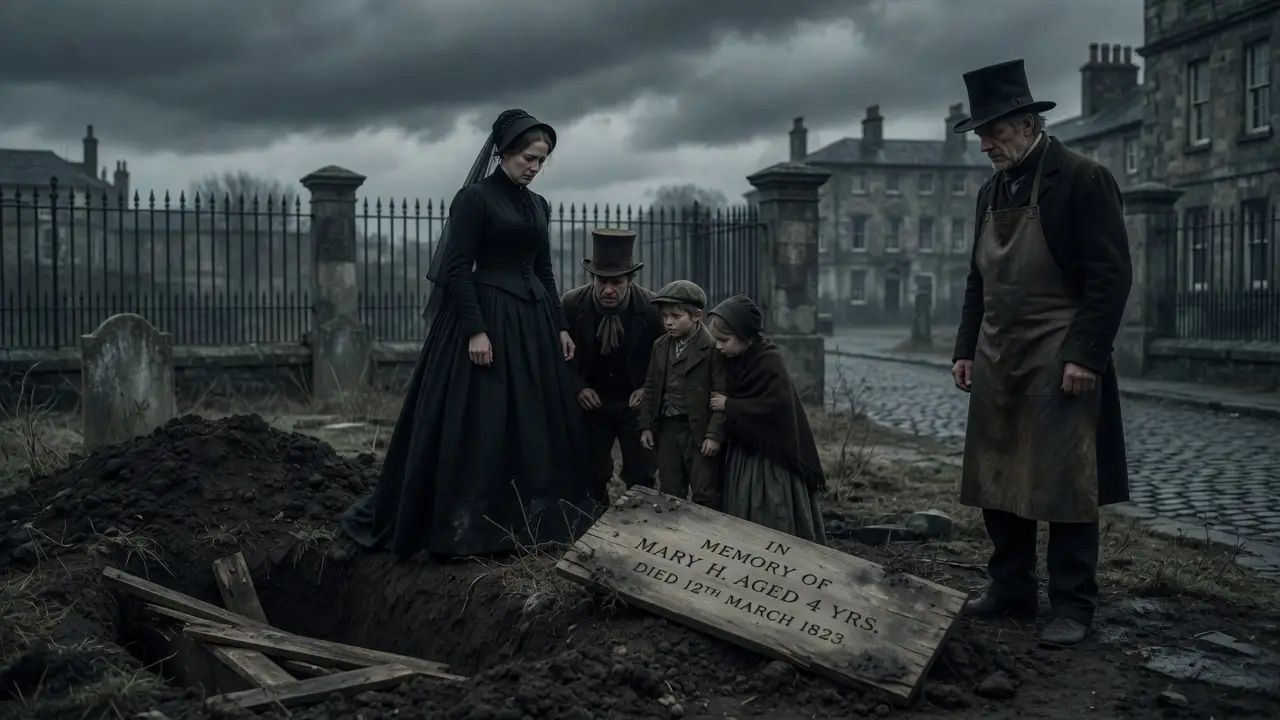
The sexton noticed the disturbed earth on a Tuesday morning. The grave was barely a week old, the soil still dark and loose, the wooden marker still fresh-cut. He called for the family. The mother arrived, shawl pulled tight against the November cold, and stood at the edge of that violated rectangle of ground without speaking. There was nothing left to say. Her son was gone.
Not taken by God. Taken by men with shovels and a sack and a buyer waiting at a medical school two miles away. This was not an isolated horror. In the early decades of the nineteenth century, it was a routine one.
The Market That Made Corpses Valuable
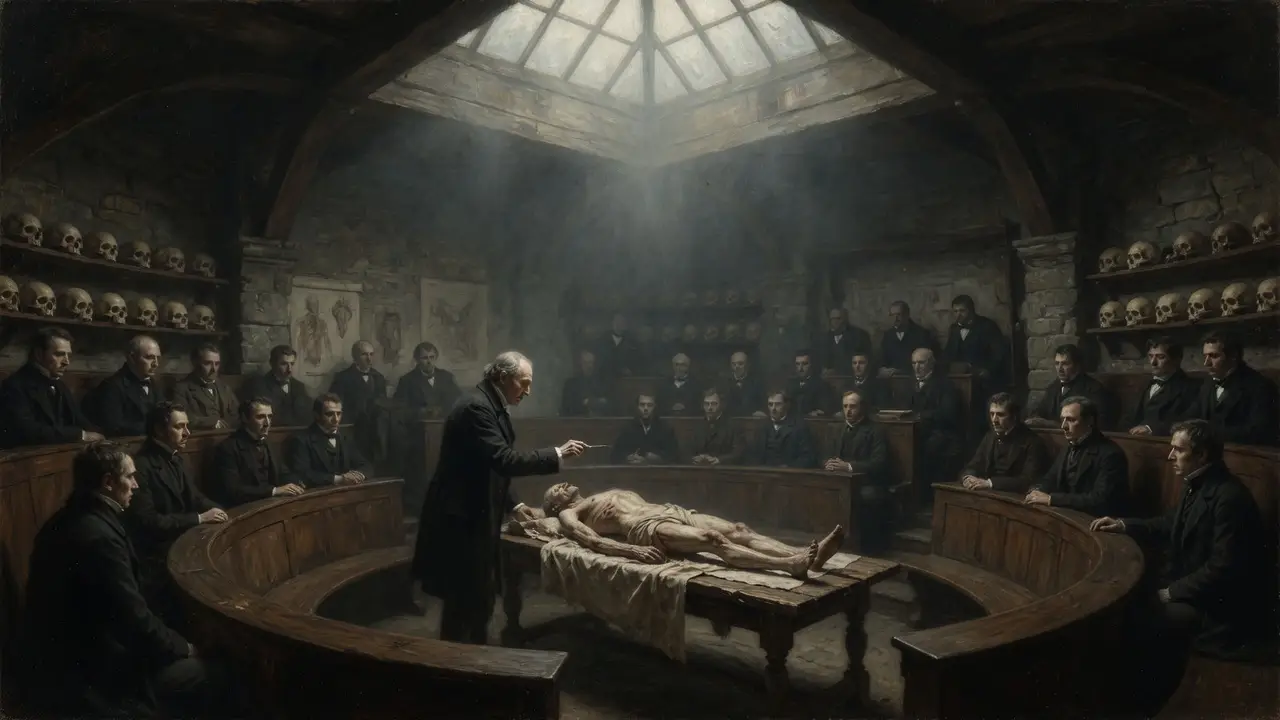
To understand how a body became currency, you have to understand what was happening inside Britain’s medical schools during this period. Anatomy was no longer fringe science practiced by lone eccentrics with candles and curiosity. It had become the cornerstone of modern medical education. Every surgeon who graduated had to have stood at a dissection table. Every physician who earned his license had to have seen the interior of a human being with his own hands.
The problem was the law.
“The body-snatchers, they have come, and made a snatch at me; it’s very hard them kind of men won’t let a body be.”
Thomas Hood, Mary’s Ghost, 1826
Legal cadavers in Britain came almost exclusively from the gallows. Executed murderers could be handed over to anatomists under the Murder Act of 1752, which had been designed as a dual punishment, death plus the posthumous humiliation of dissection. But executions, however frequent by modern standards, were not nearly frequent enough to keep pace with ballooning student enrollment. Edinburgh’s medical school alone drew hundreds of students annually by the early 1800s. London’s growing anatomy schools needed dozens of bodies per term. The math was impossible. Legal supply could not cover even a fraction of demand.
The result was predictable: a black market. And markets, once they exist, develop their own professionals.
The Men Who Worked the Churchyards
They called themselves Resurrection Men, and the name was only partly ironic. Their work was profane parody of sacred doctrine. Where scripture promised the risen dead, they delivered the stolen dead, wrapped in sailcloth, loaded into barrels or wooden crates marked as produce, and sold by the foot.
The leading London gang of the early nineteenth century was remarkably organized. Ben Crouch, Joseph Naples, and their associates kept detailed records of their trade, almost ledger-like in their precision. They divided territories, maintained relationships with anatomy school demonstrators, and charged accordingly. A fresh adult body could fetch between eight and twelve guineas at the height of the trade, roughly equivalent to what a laborer might earn in several months of legitimate work. Children were sold by the inch.
Join The Archive Briefing
Weekly dispatches. The history they didn't teach you — sourced, subverted, delivered to your inbox.
“We have a large class of men who are not accountable to the law; I mean the dissecting-room gentlemen.”
Thomas Wakley, founder of The Lancet, 1823
Technique mattered enormously. Amateurs dug from the head of the grave downward, which was slow and left obvious evidence. The professionals dug at the foot, only the top few feet, then reached a wooden board down and used iron hooks to drag the coffin toward them. The body was stripped from the coffin quickly, since clothing could be charged as theft under existing law while bodies technically could not, and bundled for transport. The whole operation, on a practiced night, could take under an hour. They replanted the disturbed earth and smoothed it as best they could.
Sometimes they folded the shroud back into the emptied box and lowered it again, so the grave would look undisturbed on casual inspection.
Sometimes the families only found out months later, by accident, when a student recognized a face on the dissection table.
The Weight of Fear
Public panic was not slow to follow. By the 1820s, newspapers were running regular accounts of violated graves, and the communities most targeted developed their own grim countermeasures. Watchmen were hired to sit overnight at fresh graves. Families took shifts themselves, camping in churchyards through winter nights with lanterns and fear. Iron mortsafes, essentially cages bolted into the ground around coffins, became an industry in themselves. The wealthy could afford them. The poor could not.
LESSER-KNOWN DETAIL
The American trade was equally brutal. Ohio, Virginia, and New York all had active Resurrection Men networks. In Baltimore, which became a major anatomy hub through Johns Hopkins’ predecessor institutions, Black burial grounds were targeted at vastly disproportionate rates. African American communities in the South documented systematic grave robbery of their cemeteries well into the 1880s, decades after the 1832 Act ended the British trade.
This was the ugliest dimension of the trade, and it went largely undiscussed at the time. Resurrection Men rarely targeted the crypts of the rich. They worked the common burial grounds of the laboring poor, where graves were shallow, watchmen were absent, and families could not pay for protection. The medical establishment’s need for bodies was, in practice, a need for the bodies of the poorest members of society.
Anti-dissection riots erupted across Britain and in several American cities. In New York in 1788, a crowd armed with clubs attacked the New York Hospital after a medical student reportedly displayed a dissected arm from a window, mocking passersby. The mob grew to several thousand. The militia was called. People died. The incident became known as the Doctors’ Riot, and it was only the most dramatic in a long series of confrontations between communities trying to protect their dead and institutions that had quietly decided those dead were a resource.
When Killing Became More Efficient Than Digging
The Resurrection Men had, up to a point, a rough internal logic. They were criminals, but they were not murderers. They took what was already dead. That distinction collapsed in Edinburgh in 1827.
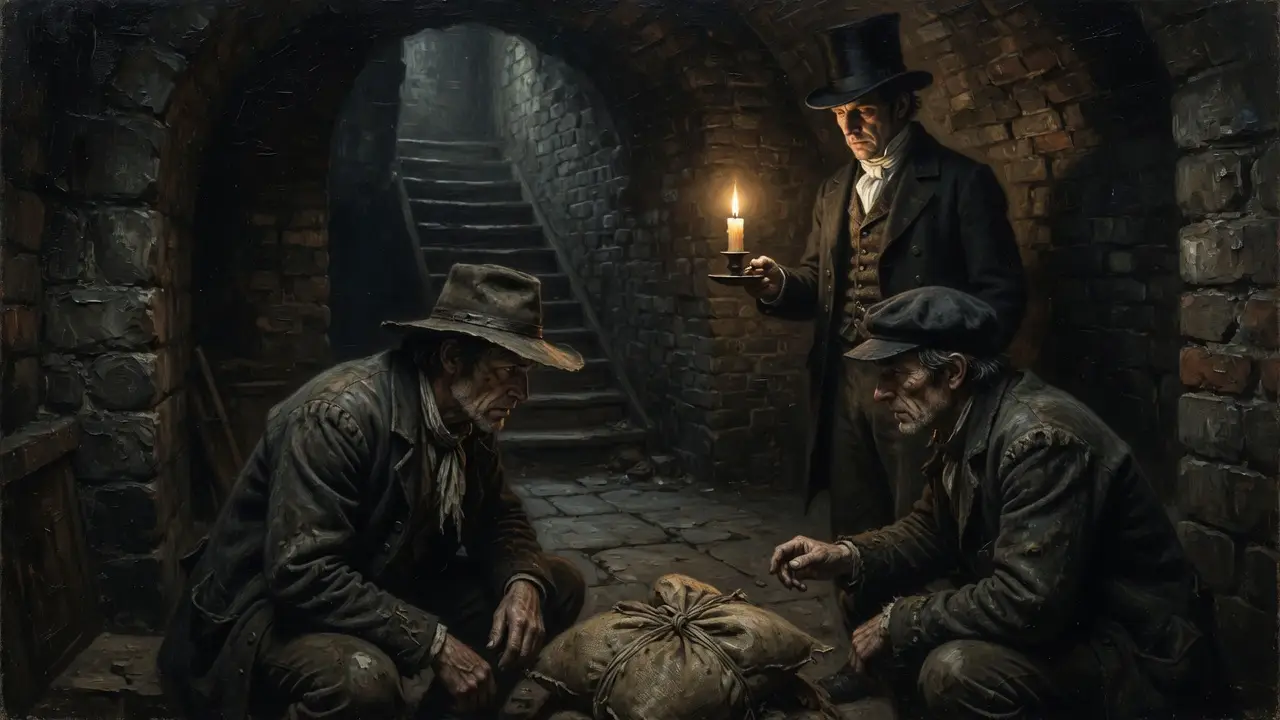
William Burke and William Hare ran a lodging house. When a tenant died owing rent, Hare had the practical idea of selling the body to Dr. Robert Knox, an eminent anatomist with an anatomy school on Surgeons’ Square who was known to pay well and ask few questions. The transaction worked. Knox paid seven pounds, ten shillings, no questions asked.
Burke and Hare, being practical men, noticed something the established Resurrection Men had overlooked. The problem with grave robbery was that bodies spent time in the ground. They decomposed. They were damaged, sometimes broken in the extraction process. Knox and men like him preferred fresh specimens. The fresher the better.
And fresh bodies did not require shovels.
“Burke’s the butcher, Hare’s the thief, Knox the boy that buys the beef.”
Edinburgh street rhyme, 1829
Over the course of approximately ten months in 1827 and 1828, Burke and Hare murdered sixteen people. Their method was suffocation, a deliberate technique that left no visible injury, no marks that might raise suspicion at the point of sale. The victims were carefully selected: travelers, strangers, individuals unlikely to be quickly missed. An Irish laborer. An elderly woman. A young woman with a mild intellectual disability who was known and liked in the neighborhood, whose murder was the one Knox’s students reportedly recognized and protested when she arrived on the table.
When the operation finally collapsed, Hare turned King’s evidence and walked free. Burke was hanged in January 1829 before a crowd of twenty-five thousand. His body was then handed over for public dissection.
Knox escaped prosecution, though his reputation never recovered. The public’s fury was directed partly at Burke, partly at a system that had created the conditions for men like him to profit.
The Law That Came Too Late
The Burke and Hare murders forced Parliament’s hand. Five years of debate, failed bills, public petitions, and committee hearings eventually produced the Anatomy Act of 1832, which transformed the legal landscape in ways that were both necessary and troubling.
The Act gave licensed anatomists access to unclaimed bodies from workhouses and hospitals, primarily the bodies of those who died in poverty and could not afford a burial. It effectively replaced the gallows-criminal supply with a pauper supply. The trade in grave-robbed bodies collapsed almost immediately, since why would a school pay for stolen goods when legal bodies were now available? The Resurrection Men, as an organized profession, vanished within a few years.
LESSER-KNOWN DETAIL
Burke and Hare sold some of their victims multiple times. Knox allegedly used some remains for teaching and then resold parts to other schools or practitioners, a secondary market within an already illegal one.
What replaced them was a system that many critics argued was simply a more orderly version of the same exploitation. The poor were still the source. The medical establishment still required bodies from the margins of society to educate its elite. The Act passed over the protests of working-class representatives who argued, not without evidence, that it created a two-tiered mortality in which only the destitute faced the dissector’s knife.
Their objection was not forgotten. It still surfaces whenever modern bioethics grapples with questions of consent, commodification, and whose bodies are considered most available for scientific use.
What the Ground Still Holds
Modern forensic excavations of nineteenth-century medical school sites have turned up disturbing evidence. Collections of bones with saw marks, incomplete skeletons, remains showing signs of repeated handling. In some cases, anatomized bodies were simply dumped rather than interred. The presumption was that the poor had no one to account to.
In 2019, construction work in Edinburgh uncovered skeletal remains near a former anatomy school site. They were not the last such discovery, and they will not be the last.
“The indecent exposure of the remains of the dead is not less revolting to the feelings of every man, than the violation of the living.”
The Times (London), editorial response to the Burke and Hare trial, 1829
The ethical frameworks that govern how medicine treats human remains today, informed consent, the right to refuse donation, the legal requirement that donated bodies be handled with dignity and returned after research, exist in direct response to what happened in the churchyards and the dissection rooms of the nineteenth century. The 1832 Act was not the end of the story. It was an early and flawed attempt to answer a question that society had been avoiding: who owns the dead, and what does that say about how we valued them when they were alive?
A question that, depending on which mass grave is being exhumed this decade, we are still trying to answer.