Napoleon wasn’t short. Cleopatra wasn’t Egyptian. Gladiators rarely died. Discover 50 historical myths that have shaped what we think we know, and what really happened.
Every schoolkid learns the same version of history. Columbus sailed west and proved the world wasn’t flat. Vikings charged into battle wearing horned helmets. Napoleon was a little man with a massive temper. Marie Antoinette sneered at the hungry poor from her gilded balcony and told them to eat cake.
The problem? Almost none of it happened that way.
We’ve been passing down the same comfortable fictions for generations, partly because myth is easier to remember than truth, and partly because the truth tends to be messier, stranger, and far less cinematic than the legend. The Romans weren’t quite what we picture. Neither were the samurai, the medieval peasants, the witch trial accusers, or the pirates.
What follows is a reckoning with fifty of the most stubbornly persistent historical myths — the kind that live in textbooks, movies, pub quizzes, and casual dinner-table conversation as if they were undisputed fact. Some of them are half-truths twisted out of shape over centuries. Others were invented whole cloth by someone with an agenda. A few were created by accident and never corrected.
None of them are quite true.
- 1 Part One: The Ancient World’s Greatest Fabrications
- 2 1. Romans Used the Vomitorium to Purge Between Courses
- 3 2. Cleopatra Was Egyptian
- 4 3. The Great Wall of China Is Visible from Space
- 5 4. The Pyramids Were Built by Slaves
- 6 5. Gladiators Usually Fought to the Death
- 7 6. The Trojan War Was Just a Myth
- 8 Part Two: The Viking Problem
- 9 7. Vikings Wore Horned Helmets
- 10 8. Vikings Were Uncivilized Brutes
- 11 Part Three: Medieval Life Was Not What You Think
- 12 9. Medieval People Thought the Earth Was Flat
- 13 10. Medieval People Never Bathed
- 14 11. Chastity Belts Were Medieval Contraptions
- 15 12. The Black Plague Was a Punishment from God (And Nothing Could Stop It)
- 16 Part Four: Famous People Who Weren’t Quite Famous for the Right Things
- 17 13. Napoleon Was Unusually Short
- 18 14. Marie Antoinette Said “Let Them Eat Cake”
- 19 15. Isaac Newton Discovered Gravity Because an Apple Hit His Head
- 20 16. Albert Einstein Failed Mathematics in School
- 21 17. Thomas Edison Invented the Light Bulb
- 22 18. Nikola Tesla Died Forgotten and Penniless
- 23 19. Nero Fiddled While Rome Burned
- 24 20. Rasputin Was Nearly Impossible to Kill
- 25 Part Five: Wars, Weapons, and the Fog of Military Mythology
- 26 21. Spartan Society Was Pure Warrior Culture
- 27 22. Samurai Were Paragons of Honor
- 28 23. Pirates Made People Walk the Plank
- 29 24. Ninjas Always Wore Black
- 30 25. The Charge of the Light Brigade Was a Heroic Victory
- 31 Part Six: The American Mythology Problem
- 32 26. The First Thanksgiving Was a Peaceful Celebration of Harmony
- 33 27. Abraham Lincoln Freed All the Slaves
- 34 28. Columbus Discovered America
- 35 29. George Washington Had Wooden Teeth
- 36 30. The Salem Witch Trials Involved Burning at the Stake
- 37 Part Seven: Science, Medicine, and What We Got Wrong About What They Got Wrong
- 38 31. We Only Use 10% of Our Brains
- 39 32. Blood Is Blue Inside the Body
- 40 33. Hair and Nails Keep Growing After Death
- 41 34. Carrots Improve Your Eyesight
- 42 35. Darwin Said We Descended from Apes
- 43 Part Eight: Cultural Myths That Shaped How We See the Past
- 44 36. King Tut’s Curse Killed the Archaeologists Who Opened His Tomb
- 45 37. Medieval Knights in Armor Could Barely Move
- 46 38. The Spanish Inquisition Was Uniquely Monstrous
- 47 39. King Richard III Murdered the Princes in the Tower
- 48 40. Frankenstein Is the Monster’s Name
- 49 Part Nine: Misconceptions About Misconceptions
- 50 41. “An Eye for an Eye” Means Total Revenge
- 51 42. The Colosseum Was Called the Colosseum by the Romans
- 52 43. Julius Caesar Said “Et Tu, Brute?”
- 53 44. The Great Fire of London Destroyed the City
- 54 45. The Pyramids Are Solid Stone
- 55 Part Ten: The Myths That Tell Us Something About Ourselves
- 56 46. The Dark Ages Were Dark
- 57 47. The Wild West Was Lawlessly Violent
- 58 48. The Guillotine Was Invented as an Instrument of Terror
- 59 49. The Titanic Sank Because of Captain Smith’s Recklessness
- 60 50. History Repeats Itself
Part One: The Ancient World’s Greatest Fabrications
1. Romans Used the Vomitorium to Purge Between Courses
This one has made it into more dinner party conversations than it deserves. The image is vivid: Roman aristocrats excusing themselves mid-feast to vomit in a dedicated chamber, then returning to the table for another round. It sounds decadent, appropriately disgusting, and entirely Roman.
Vomitoria were real. They just had nothing to do with vomiting. The word describes the wide passageways in amphitheaters and stadiums through which crowds were “disgorged” into their seats. Architecturally elegant, functionally efficient, and completely unrelated to feasting.
Did some Romans induce vomiting? Historical accounts suggest the practice existed among excess-obsessed elites. The philosopher Seneca complained about it in his letters. But a dedicated room for it? That’s pure fabrication, somewhere between misread Latin and wishful disgust.
Join The Archive Briefing
Weekly dispatches. The history they didn't teach you — sourced, subverted, delivered to your inbox.
“They vomit that they may eat, and eat that they may vomit.”
Seneca the Younger, Letters to Lucilius, c. 65 AD
2. Cleopatra Was Egyptian
She ruled Egypt. She dressed like the goddess Isis. She commanded the Nile and its riches. She was, by almost every visual representation we have, unmistakably Egyptian.
She was not Egyptian.
Cleopatra VII was Macedonian Greek, the last ruler of the Ptolemaic dynasty founded by one of Alexander the Great‘s generals. Her family had ruled Egypt for nearly three centuries and, in that time, almost none of them had bothered to learn the Egyptian language. Cleopatra was reportedly the first Ptolemaic ruler who actually did, which was considered remarkable enough to be noted by ancient historians.
The Ptolemies maintained Egyptian traditions as political theater. Cleopatra played the part brilliantly. But her bloodline traced back to the battlefields of Macedonia, not the banks of the Nile.
Cleopatra was also likely a polyglot who spoke nine languages, including Hebrew, Aramaic, and Ethiopian. Ancient sources suggest she was more compelling through conversation than appearance, a dangerous combination in a world that underestimated women.
3. The Great Wall of China Is Visible from Space
This claim gets repeated so often that it has taken on the authority of scientific fact. It isn’t true, and the math makes it embarrassingly clear.
The Great Wall averages between 4.5 and 9 meters wide. From low Earth orbit, roughly 400 kilometers up, that’s like trying to spot a human hair from two miles away. Astronauts have confirmed this repeatedly. Yang Liwei, China’s first man in space, specifically looked for the wall in 2003 and couldn’t find it.
The myth predates space travel by centuries. An 1932 edition of Ripley’s Believe It or Not was among the first to make the claim in print, inventing the “fact” decades before anyone could get up there to check.
4. The Pyramids Were Built by Slaves
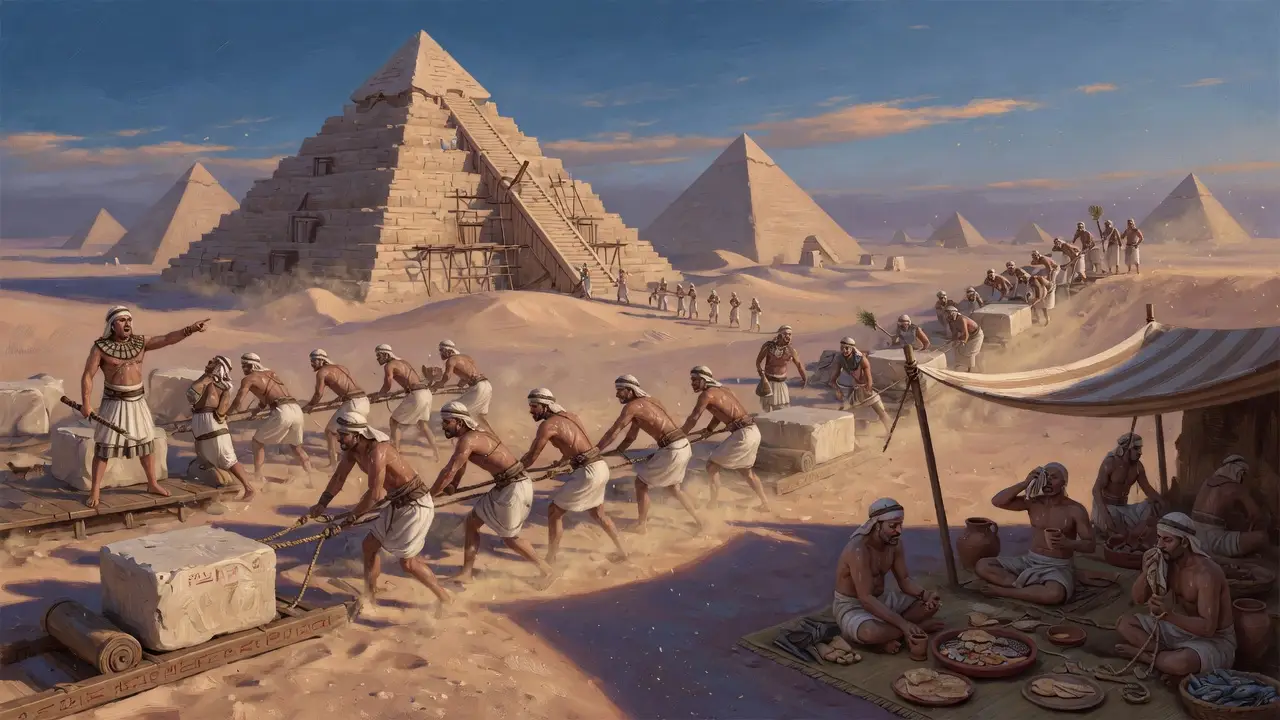
Hollywood planted this one deep. The image of Egyptian slaves, whipped and broken, hauling limestone blocks under a merciless sun is cinematic enough to outlast the evidence against it.
In the 1990s, archaeologists uncovered the workers’ village near Giza. What they found upended the slave narrative entirely. The builders were paid laborers, skilled workers who received medical care, ate beef (a luxury in ancient Egypt), and were buried with honor near the pyramids when they died. Their skeletons show signs of healed fractures, evidence of medical attention. They had a functioning hierarchy, organized work gangs, and a rotation system that gave workers time off.
One worker’s tomb inscription from the period reads: “Friends of Khufu”, a name given to the elite work gang, suggesting status and pride, not servitude.
The myth of slave builders was partly theological in origin, conflating the biblical story of Hebrew slaves in Egypt with the much older pyramid construction, which occurred roughly a thousand years before the Exodus narrative is set.
5. Gladiators Usually Fought to the Death
The crowd roars. Two men circle each other in the dust of the Colosseum. One falls. The crowd turns their thumbs down, always down and blood soaks the sand.
That’s the movie version. The business model of the Roman games told a very different story.
A trained gladiator was extraordinarily expensive. He required months of professional instruction, specialized food, and medical care that was among the best available in the Roman world. Killing him for one afternoon’s entertainment was, economically speaking, a catastrophic waste of money. Gladiatorial schools, ludi, invested heavily in their fighters, and arena organizers paid steep rental fees to use them.
Epigraphic evidence from gladiatorial records suggests that most bouts ended in submission rather than death. Fatalities occurred, certainly. But a skilled gladiator who survived multiple bouts could become enormously famous, something like a combination of professional athlete and celebrity. Graffiti at Pompeii records fan devotion that would look familiar to anyone who’s followed a modern sports team.
“The crowd demands that the losers who have fought well be saved. But no one asks that favor for those who have fought disgracefully.”
Cicero, Tusculan Disputations, 45 BC
The thumbs-down signal? Not confirmed by ancient sources either. The gesture’s meaning was likely reversed or misinterpreted over centuries of retelling.
6. The Trojan War Was Just a Myth
For centuries, scholars treated the Trojan War the same way they treated Atlantis: a compelling story, a masterpiece of ancient literature, and almost certainly fictional. Heinrich Schliemann changed that.
In 1870, following Homer’s Iliad as if it were a map, Schliemann began excavating at Hisarlık in modern-day Turkey. He found Troy, or rather, he found nine overlapping Trojan cities, each built on the ruins of the last. The layer archaeologists now call Troy VIIa shows evidence of violent destruction around 1180 BC, which aligns roughly with when the Trojan War was supposed to have occurred.
The war almost certainly wasn’t a ten-year siege over one beautiful woman. Trade disputes, territorial competition, and Bronze Age geopolitics were far more likely motivations. But a large-scale conflict between Greek forces and a city at the mouth of the Hellespont? The evidence says yes.
Homer compressed and mythologized. He didn’t invent wholesale.
Part Two: The Viking Problem
7. Vikings Wore Horned Helmets
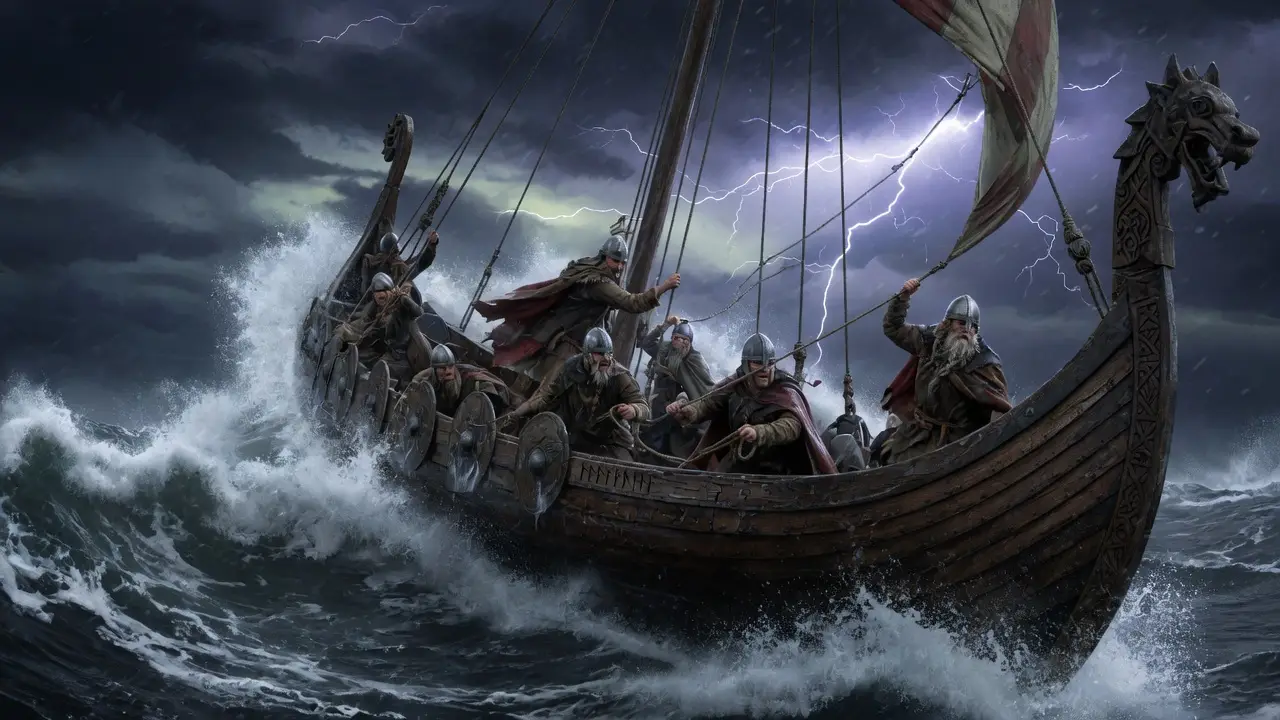
Only one Viking helmet has ever been found that is definitively from the Viking Age. It sits in the Museum of Cultural History in Oslo. It has no horns.
The horned helmet image comes primarily from a 1876 production of Wagner’s Der Ring des Nibelungen, where costume designer Carl Emil Doepler dressed the Norse gods in horned headgear to give them a suitably dramatic look. The image caught on, embedded itself in the European imagination, and became the default visual shorthand for “Viking” in art, advertising, and eventually Halloween costumes.
Actual Viking helmets were rounded iron or leather affairs, sometimes with a nose guard. Practical, unglamorous, and horn-free. Horns would have been a liability in close combat — something to grab, something to catch a sword stroke.
Horned ceremonial helmets did exist in Scandinavia, but they predate the Viking Age by over a thousand years, belonging to Bronze Age religious contexts rather than battlefield ones.
8. Vikings Were Uncivilized Brutes
Alongside the horned helmet myth runs a broader one: Vikings as pure destruction, raiders with no culture beyond pillaging monasteries and terrorizing coastlines.
The truth is considerably more complicated. Viking society had sophisticated legal codes. Iceland’s Althing, established around 930 AD, is one of the oldest functioning parliaments in the world. Vikings were accomplished traders who established routes stretching from Greenland to Constantinople. They founded Dublin. They reached North America five centuries before Columbus.
They were literate in their own tradition. The sagas they produced — complex narratives of family conflict, exploration, and fate — are among the great literary achievements of the medieval world.
Did they raid? Absolutely, and with devastating efficiency. But the monk-terrorizing marauder was one face of a civilization, not the whole portrait.
Part Three: Medieval Life Was Not What You Think
9. Medieval People Thought the Earth Was Flat
This is perhaps the most widespread myth about the Middle Ages, and it is entirely false.
Medieval scholars knew the Earth was spherical. They inherited this knowledge from the ancient Greeks, Pythagoras, Aristotle, Eratosthenes and accepted it without serious dispute. Thomas Aquinas discussed the Earth’s roundness in the 13th century. Dante structured the entire cosmology of his Divine Comedy around a spherical Earth. No educated person in medieval Europe believed the planet was flat.
The myth was popularized in the 19th century, partly by Washington Irving’s fictional biography of Columbus, which invented the charming story of Columbus battling flat-earthers before his voyage. What Columbus actually argued with his critics about was the size of the Earth, and his critics were right. Columbus significantly underestimated the Earth’s circumference. He reached the Americas by accident, expecting Asia.
“The Earth as a whole is a sphere… this is known from the evidence of the senses.”
Thomas Aquinas, Summa Theologica, c. 1274
10. Medieval People Never Bathed
The Middle Ages get an unfairly dirty reputation. The myth of the universally unwashed medieval peasant is contradicted by extensive historical evidence.
Bathhouses were common in medieval European towns. London had numerous public baths. Medieval medical texts repeatedly recommended regular bathing for health. Soap was manufactured and sold throughout the period. Personal hygiene manuals existed. Court etiquette demanded clean hands before and after meals. Travelers’ accounts from across Europe regularly describe bathing facilities.
The confusion likely stems from the later 17th and 18th centuries, when a paradoxical fashion emerged among European elites: the belief that water opened the pores to disease, and that thick layers of perfume over unwashed skin were preferable to actual washing. The truly filthy period of Western European history wasn’t the medieval era — it was the centuries closer to our own.
11. Chastity Belts Were Medieval Contraptions
The image of knights locking their wives into iron undergarments before riding off to the Crusades is vivid, sinister, and largely fictional.
No chastity belt has been found by archaeologists that dates to the medieval period with any reliability. The earliest ones that survive appear in museums are now believed by most historians to be 19th-century fabrications, made either as curiosities, satirical objects, or outright forgeries created to satisfy the Victorian appetite for sensational medieval “history.”
Medieval text references to chastity belts are extremely rare and often appear in satirical or farcical contexts, suggesting even contemporaries treated the idea as a joke rather than a real practice.
12. The Black Plague Was a Punishment from God (And Nothing Could Stop It)
Medieval people didn’t understand germ theory. They didn’t know what caused the Black Death that killed roughly a third of Europe’s population between 1347 and 1351. Many did attribute it to divine punishment. But the response to the plague was not simply resignation and prayer.
Remarkably sophisticated public health measures emerged during the plague years. Venice created the first formal quarantine system in 1377, requiring ships to anchor for 40 days before passengers could come ashore — the word quarantine comes from the Italian quarantina, meaning forty. Milan enacted aggressive isolation protocols that may have limited its death toll compared to other cities.
Physicians attempted treatment, however ineffectively. Cities recorded cause-of-death statistics. Authorities organized mass burials with efficiency and order.
The plague also produced one of the most radical social upheavals in European history. With a third of the labor force dead, surviving peasants suddenly had extraordinary bargaining power. Wages rose. Serfdom began its long decline. The demographic catastrophe cracked the feudal system at its foundation.
Part Four: Famous People Who Weren’t Quite Famous for the Right Things
13. Napoleon Was Unusually Short
Napoleon Bonaparte stood approximately 5’7″ in modern measurements. That was above average for a French man of his era.
The confusion stems from a unit problem. British propaganda depicted him as short, and the British cartoonists who savaged him in print, particularly James Gillray, exaggerated his stature for comic effect. The “Little Corporal” nickname was actually a term of affection from his troops, not a comment on his height.
There’s also the matter of French inches versus English inches. French records listed Napoleon’s height as approximately 5’2″, in French units, which were larger than English ones. When British commentators saw this figure, they converted it incorrectly and took it literally, cementing the short-Napoleon myth before anyone thought to check the math.
He was surrounded by very tall Imperial Guard soldiers whose minimum height requirement was 5’10”. Standing among them may have reinforced the visual impression of a small man, but by any objective measure, Napoleon was of perfectly ordinary stature for his time.
“History is a set of lies agreed upon.”
attributed to Napoleon Bonaparte, though the original source is disputed
14. Marie Antoinette Said “Let Them Eat Cake”
She never said it. The line first appears in Jean-Jacques Rousseau’s Confessions, written when Marie Antoinette was roughly nine years old. He attributed it to “a great princess” without naming her, and the sentiment predated her arrival in France entirely.
The quote attached itself to Marie Antoinette’s legend because she was a convenient symbol, foreign-born, extravagant, detached. The attribution made emotional sense even if it lacked factual basis. Ironically, historical evidence suggests Marie Antoinette was occasionally aware of and troubled by the suffering around her, and donated to poor relief efforts at Versailles. It didn’t save her from the guillotine, but it complicates the caricature.
15. Isaac Newton Discovered Gravity Because an Apple Hit His Head
Newton did not have an apple fall on his head. The story, as it exists in popular culture, never happened.
What likely happened: Newton, during a period of plague-enforced retreat to his family’s farm at Woolsthorpe in 1666, observed an apple falling from a tree. It prompted him to think about why the apple fell straight down rather than sideways, and whether the same force that pulled the apple could extend as far as the moon.
The story was told by Newton himself in old age, though accounts vary in their details. It was never described as an apple striking him. The apple story became dramatically embellished as it passed through multiple retellings, eventually acquiring the satisfying slapstick detail of a direct head impact.
The actual development of Newton’s theory of gravitation took years of mathematical work, not a single illuminating bonk.
16. Albert Einstein Failed Mathematics in School
Einstein was asked directly about this myth later in life and reportedly found it baffling. He had mastered calculus by age fifteen. He was, by all contemporary accounts, exceptional in mathematics from an early age.
The myth appears to originate from a misreading of the Swiss school grading system. In Swiss schools of Einstein’s era, a grade of 6 was the highest mark, not the lowest. When his transcripts were read by people unfamiliar with this system, his scores were misinterpreted as failing grades.
He did clash with authority. He did struggle with rote learning and found certain institutional structures stifling. But struggling with authority is not the same as failing mathematics. The myth endures because it offers comfort, the genius who couldn’t pass tests is an appealing archetype for anyone who has ever stared down a failing grade.
17. Thomas Edison Invented the Light Bulb
Edison did not invent the light bulb. He invented a commercially viable light bulb, which is a genuinely significant achievement but a meaningfully different one.
Humphry Davy demonstrated electric arc lighting in 1802. Warren de la Rue produced a working light bulb with a platinum filament in 1840. Joseph Swan developed a functional incandescent bulb in Britain in 1878, and Edison’s version appeared shortly after. Swan and Edison actually collaborated and co-held patents in the UK.
What Edison and his team at Menlo Park actually created was a system not just a bulb, but the generators, wiring, switches, and infrastructure needed to bring electric light into homes and businesses. The invention was the ecosystem, not merely the bulb. That’s a more impressive achievement than the popular myth, which makes it all the stranger that we reduced it to the simpler (and inaccurate) story.
18. Nikola Tesla Died Forgotten and Penniless
Tesla did die poor. He spent his final decade in a New York hotel room, increasingly isolated and in debt. This much is true.
Forgotten, however, is harder to argue. Tesla’s work was widely known and recognized during his lifetime. He received the Edison Medal, the highest honor in American electrical engineering in 1917. His disputes with Edison and Westinghouse were public and extensively covered in the press. He was famous enough that his eccentricities and pronouncements were regularly reported in newspapers.
He fell out of fashion after his death and was somewhat overshadowed by Edison’s more commercially successful legacy for several decades. But the narrative of the totally unrecognized genius erased by history is significantly overstated and the recent cultural rehabilitation of Tesla, while deserved, has introduced its own layer of mythologizing that isn’t always more accurate than what came before.
19. Nero Fiddled While Rome Burned
Nero wasn’t in Rome when the fire started in 64 AD. He was at Antium, roughly 35 miles away, and reportedly rushed back to the city to coordinate relief efforts and open his private estates to displaced citizens.
The fiddle wasn’t invented for another 1,500 years. If Nero played anything, it would have been the lyre, and contemporary accounts suggest he did compose and perform music, which made him an object of aristocratic contempt since musical performance was considered undignified for an emperor.
The image of Nero playing while his city burned was a piece of political damage control from his enemies. The Roman historian Tacitus, writing decades after the fire, acknowledges the disaster while noting the accusations against Nero without fully endorsing them. Later historians were less careful with the distinction.
The rumor that Nero started the fire himself to clear land for his massive palace complex persists but remains unproven. Tacitus also mentions that early Christians were blamed for the fire a persecution that, whatever its truth, reveals how politically charged the aftermath of the disaster was.
20. Rasputin Was Nearly Impossible to Kill
The story of Rasputin’s death has become one of history’s great thrillers: poisoned with enough cyanide to kill multiple men, shot multiple times, beaten, and finally drowned under the ice of the Neva River. The implication being that he was somehow supernatural in his resistance.
The account comes almost entirely from Felix Yusupov, the man who led the assassination. Yusupov told the story in his memoir, and historians have questioned it extensively. The forensic evidence from Rasputin’s autopsy doesn’t support the dramatic multiple-failure narrative. He was likely shot and died fairly conventionally.
Why would Yusupov embellish? Possibly because killing a simple peasant holy man was not particularly heroic. Killing a near-supernatural force who required multiple attempts was the kind of story that made the murder feel necessary and heroic rather than sordid.
Part Five: Wars, Weapons, and the Fog of Military Mythology
21. Spartan Society Was Pure Warrior Culture
Sparta produced excellent soldiers. It also produced art. Spartan poets competed at Panhellenic festivals. Spartan women had more legal rights and physical freedom than women in almost any other Greek city-state — they could own property, participate in athletics, and speak publicly. Spartan boys underwent the brutal agoge training system, yes, but that was one component of a society that also valued music, dance, and civic participation.
The “come back with your shield or on it” version of Sparta… pure, disciplined, stripped of everything soft, is largely a Roman-era romanticization and then a modern one. The Spartans also kept a population of enslaved people called Helots in conditions of extraordinary brutality. The Spartan state was not admirable. But it was more complicated than the recruitment poster legend suggests.
22. Samurai Were Paragons of Honor
Bushido, the “way of the warrior” code of samurai ethics is primarily a 19th-century construction. The text that articulates it most famously, Nitobe Inazo’s Bushido: The Soul of Japan, was written in 1900, during Japan’s Meiji modernization period, partially as a way of explaining Japanese character to Western audiences.
Medieval Japanese samurai were, like soldiers throughout history, capable of great courage and extraordinary cruelty. They committed brutal atrocities. They changed loyalties for political advantage. They engaged in behavior that would have appalled the romanticized Bushido ideal. The code they actually followed was more pragmatic and more violent than the philosophical framework attached to them retrospectively.
The samurai myth accelerated in the West through the influence of films and became entangled with a kind of noble-savage narrative that says more about Western anxieties about modernity than it does about actual Japanese history.
23. Pirates Made People Walk the Plank
The “walk the plank” execution method is overwhelmingly a literary invention. Extensive records of piracy in the Golden Age (roughly 1650–1730) contain almost no credible accounts of it. Pirates killed their victims in documented ways, they shot them, stabbed them, threw them overboard directly but the theatrical plank-walking scenario is nearly absent from contemporary sources.
The image appears in fiction throughout the 19th century and was cemented in the public imagination by J.M. Barrie’s Peter Pan. From there, it became so deeply associated with pirates that its fictional origin became irrelevant.
Real pirates were, by the way, often governed by surprisingly democratic internal codes. Pirate crews voted on destination and share of plunder, could vote to remove a captain, and sometimes had written articles of agreement that every crew member signed. Piracy was brutal and lawless by outside standards, but internally, pirate ships could function with more egalitarian structure than the naval vessels that hunted them.
24. Ninjas Always Wore Black
The image of the ninja, black-clad, masked, moving through shadows is almost entirely a theatrical invention from Japanese kabuki and Bunraku puppet theater, where stagehands dressed in black were used as a convention to indicate “invisible” figures. When ninja characters appeared, they wore the same black costume, creating the visual association.
Actual practitioners of ninjutsu, covert agents, spies, and assassins in feudal Japan reportedly wore clothing appropriate to whatever they were trying to do. Infiltrating a castle? They might dress as servants, monks, or merchants. Agricultural disguise was reportedly common. The point was not to look scary. It was to not be noticed.
A ninja in all-black stealth gear creeping through a moonlit courtyard would have been immediately obvious to anyone keeping watch.
25. The Charge of the Light Brigade Was a Heroic Victory
Tennyson’s poem made it glorious: “Into the valley of Death / Rode the six hundred.” But the Charge of the Light Brigade on October 25, 1854, was a military catastrophe caused by miscommunication, and everyone involved knew it.
A garbled order sent the Light Brigade charging directly into a Russian artillery battery that they were never intended to attack. Of the 670 men who charged, over 200 were killed or wounded in minutes. The French general observing the charge reportedly said: “It is magnificent, but it is not war.”
Tennyson’s poem, written six weeks after the event, celebrated the courage of the men who obeyed the order — which was real courage, since they charged knowing it was suicidal. But the poem’s structure transforms the catastrophic failure of British command into something noble, and the transformation stuck.
“C’est magnifique, mais ce n’est pas la guerre.”
General Pierre Bosquet, watching the charge, October 25, 1854
Part Six: The American Mythology Problem
26. The First Thanksgiving Was a Peaceful Celebration of Harmony
The 1621 harvest celebration between the Pilgrims of Plymouth Colony and the Wampanoag people was a real event. What it represented and what came after is the part the myth tends to leave out.
The Wampanoag were not invited guests at a feast. They arrived with 90 men, significantly outnumbering the Pilgrims, after hearing gunfire, likely concerned that the colonists were preparing for conflict. The three-day celebration that followed was more a diplomatic and military negotiation than a sentimental meal.
Within fifty years, the relationship between English settlers and the Wampanoag had collapsed into King Philip’s War (1675–76), one of the deadliest conflicts in American history relative to population. Wampanoag leader Metacom, called King Philip by the English, was killed and beheaded. His head was displayed on a spike in Plymouth for twenty-five years.
The sanitized Thanksgiving myth was largely consolidated in the 19th century, including Lincoln’s 1863 proclamation establishing it as a national holiday, at a moment when a unifying national story had obvious political utility.
27. Abraham Lincoln Freed All the Slaves
The Emancipation Proclamation of January 1, 1863, freed enslaved people in Confederate states that were in rebellion against the Union. It did not free enslaved people in border states that had remained in the Union, Kentucky, Missouri, Maryland, Delaware, because Lincoln needed those states and could not afford to alienate them.
The Proclamation was also a war measure rather than a moral declaration. As a presidential order, it would not have survived the end of the war without constitutional backing. It took the 13th Amendment, ratified in December 1865, to actually abolish slavery throughout the United States.
None of this diminishes Lincoln’s role in ending slavery. The Proclamation transformed the Union cause and made slavery the explicit center of the war in a way it hadn’t fully been before. But the popular notion that Lincoln signed a document and slavery ended is a compression that strips out the complexity, the delays, the exceptions, and the political calculation involved.
28. Columbus Discovered America
Columbus landed in the Bahamas in 1492. At the time, somewhere between 50 and 100 million people were already living across the American continents, having arrived tens of thousands of years earlier by crossing from Siberia to Alaska.
Five centuries before Columbus, Norse explorer Leif Eriksson established a settlement at L’Anse aux Meadows in Newfoundland — confirmed by archaeology in the 1960s. Vikings had “discovered” North America around 1000 AD.
Columbus himself never set foot on the North American mainland. His four voyages took him to the Caribbean, Central America, and the northern coast of South America. He died believing he had found a route to Asia.
The discovery myth serves a particular narrative about European history that, when examined, doesn’t quite hold together.
29. George Washington Had Wooden Teeth
Washington suffered from severe dental problems throughout his life, losing most of his teeth by his first presidential inauguration. He did wear dentures. They were not made of wood.
His dentures were constructed from a combination of human teeth (some his own, some purchased from enslaved people at Mount Vernon), animal teeth from hippopotamus and elephant ivory, cow and horse teeth, and metal alloys. The result was uncomfortable, painful, and affected his speech which is visible in many portraits where his face appears oddly stiff.
The wooden teeth myth may have originated from staining: ivory dentures absorb liquids and discolor over time to a brownish, wood-like hue. Someone seeing discolored ivory may have assumed it was wood. The actual materials, involving human teeth and hippopotamus ivory, are considerably stranger than the wooden legend.
30. The Salem Witch Trials Involved Burning at the Stake
Nineteen people were executed during the Salem witch trials of 1692. All nineteen were hanged. One man, Giles Corey, was pressed to death with heavy stones after refusing to enter a plea — a torture intended to compel him to stand trial. He reportedly responded to each demand with “more weight.”
Burning at the stake was associated with heresy trials in continental Europe and with some Scottish witch executions. In England and its American colonies, the standard execution method for convicted witches was hanging. The burning image, so cinematically powerful, belongs to a different legal tradition.
Altogether, more than 200 people were accused during the Salem hysteria. The causes remain debated: ergotism from contaminated rye, community tensions, land disputes, theological anxiety, and adolescent attention-seeking have all been proposed. The truth is probably all of the above operating simultaneously.
Part Seven: Science, Medicine, and What We Got Wrong About What They Got Wrong
31. We Only Use 10% of Our Brains
This one refuses to die. It surfaces in self-help books, motivational speeches, and the occasional blockbuster film (2014’s Lucy built its entire premise around it). Brain imaging has definitively buried it.
Modern neuroimaging shows activity across virtually all areas of the brain over the course of a day. Different regions specialize in different functions, and not all are active simultaneously — but there is no dormant 90% waiting to be unlocked. Damaging almost any part of the brain produces some form of cognitive or physical deficit. If 90% were unused, that wouldn’t be the case.
The myth’s origins are murky. It may have grown from a misquotation of William James, who wrote about humans failing to reach their full mental potential. It may have come from early neuroscience’s incomplete mapping of brain function. Whatever the source, it has proven remarkably impervious to the evidence against it.
32. Blood Is Blue Inside the Body
Human blood is never blue. The veins visible through skin appear blue or green, which is a trick of light absorption and skin thickness, blue light penetrates less deeply than red light, making the veins appear blue from the outside. The blood inside is either bright red (oxygenated) or dark red (deoxygenated).
The myth may have been reinforced by the convention in biology textbooks of coloring oxygenated blood red and deoxygenated blood blue to distinguish between the two systems. The color coding is a teaching device, not a description of reality.
Some animals do have blue blood, horseshoe crabs and octopuses, whose blood uses copper-based hemocyanin rather than iron-based hemoglobin. Human blood, in all its states, is simply different shades of red.
33. Hair and Nails Keep Growing After Death
They don’t. The appearance that they do comes from the shrinkage of skin after death, which draws back from nail beds and hair follicles, making both appear longer relative to the surrounding tissue. The body has stopped producing the cells needed for actual growth.
The myth likely persists because it offers the unsettling suggestion of continued biological activity after death, a liminal existence between alive and not. It appears in literature going back centuries, most famously in a 1929 essay by Erich Maria Remarque, and seems to satisfy some need for ambiguity around the moment of death.
34. Carrots Improve Your Eyesight
Carrots contain beta-carotene, which the body converts to vitamin A, which is essential for eye health. A severe vitamin A deficiency can cause night blindness. Correcting that deficiency with carrots does restore normal night vision.
So far, so accurate. But the popular extension that eating carrots beyond a baseline adequate intake will give you better-than-normal vision, or that they generally “improve eyesight”, has no scientific basis.
The extra layer of this myth is explicitly wartime propaganda. During the Second World War, Britain’s Royal Air Force was shooting down German aircraft with remarkable accuracy at night, thanks to newly developed radar technology. To hide the existence of radar from the Germans, British intelligence circulated stories about pilots’ extraordinary carrot-heavy diets. The Germans never fully bought it, but the carrot-eyesight connection embedded itself in public consciousness and never quite left.
35. Darwin Said We Descended from Apes
Darwin didn’t say humans descended from apes. He said humans and apes share a common ancestor, which is a meaningfully different claim.
Modern humans did not evolve from chimpanzees or gorillas. We share a common ancestor with them, from which both the human lineage and the great ape lineage diverged several million years ago. Current chimpanzees are our evolutionary cousins, not our grandparents.
Darwin himself was careful about this distinction. In The Descent of Man (1871), he discussed human evolution with notable caution and precision. The popular reduction to “descended from apes” is partly a misunderstanding and partly a deliberate distortion by evolution’s critics, who used it to make the theory sound more provocative and degrading than it is.
“We must, however, acknowledge, as it seems to me, that man with all his noble qualities… still bears in his bodily frame the indelible stamp of his lowly origin.”
Charles Darwin, The Descent of Man, 1871
Part Eight: Cultural Myths That Shaped How We See the Past
36. King Tut’s Curse Killed the Archaeologists Who Opened His Tomb
When Howard Carter and his team opened Tutankhamun’s tomb in November 1922, a local newspaper printed a warning allegedly inscribed inside: “Death shall come on swift wings to him that toucheth the tomb of a Pharaoh.”
The inscription did not exist. It was invented.
Lord Carnarvon, who funded the excavation, did die seven weeks after the tomb was opened — from an infected mosquito bite, not supernatural retribution. Of the 26 people who were present at the inner sanctum’s opening, most lived for decades afterward. Howard Carter himself survived another seventeen years.
The “mummy’s curse” narrative was partly the creation of Arthur Conan Doyle, who believed in spiritualism and suggested the deaths might be caused by “elementals” created by Tutankhamun’s priests. The press ran with it enthusiastically because it sold papers, and it has never entirely stopped selling.
37. Medieval Knights in Armor Could Barely Move
The image of a knight being craned onto his horse by mechanical hoist, unable to stand up once he’d fallen, is a persistent one. Period films sometimes show armored men moving like dressed-up refrigerators.
Tests on actual medieval armor, conducted by museum conservators and historical martial artists, tell a different story. A well-fitted suit of plate armor from the 15th century typically weighed between 15 and 25 kilograms, distributed across the body. Modern soldiers carry packs of comparable or greater weight routinely.
Knights trained in their armor from childhood. They could run, mount and dismount horses, roll on the ground, and execute athletic movements. Historical manuals of combat technique survive — the Fechtbücher, or “fighting books” and they show techniques including grappling, throws, and ground fighting, all requiring considerable mobility.
The crane-and-hoist story appears to come from a single account of an armored French knight being hauled onto a horse at the Battle of Agincourt, an elderly, specific exception that somehow became the general rule.
38. The Spanish Inquisition Was Uniquely Monstrous
“Nobody expects the Spanish Inquisition!” The Monty Python sketch crystalized a popular image: the Inquisition as the most brutal, the most sadistic, the most terrifying instrument of religious persecution in history.
The historical reality is more troubling in a different way. The Spanish Inquisition was genuinely cruel. It did torture. It did execute people. Its treatment of Jewish converts, Muslims, and accused heretics caused real suffering across generations.
But by the standards of 15th and 16th century judicial systems, secular as well as ecclesiastical it was not exceptionally brutal. Modern historical research, including extensive analysis of Inquisition records (which were meticulous), has revised the death toll figures dramatically downward. Historian Henry Charles Lea’s early estimates of hundreds of thousands of executions have been revised to approximately 3,000 to 5,000 over three and a half centuries of operation, horrifying, but far fewer than contemporaneous secular courts executed for ordinary crimes.
The Inquisition became a uniquely potent symbol of Catholic barbarism in Protestant historiography, which had obvious political reasons to emphasize its worst aspects and suppress comparative context.
39. King Richard III Murdered the Princes in the Tower
Richard III has been tried and convicted in the court of popular history, primarily on the testimony of Shakespeare’s villainous portrait and Sir Thomas More’s account, written during the reign of the Tudor dynasty that replaced Richard.
The Princes in the Tower, Edward V and his younger brother Richard disappeared in 1483. Someone murdered them. Richard III had obvious motive and opportunity as the boys’ uncle and the man who had declared them illegitimate. But direct evidence of his guilt has never been established.
Suspects with equal or greater opportunity included Henry Stafford, the Duke of Buckingham (who had his own claim to the throne), and Henry VII himself, who had strong reasons to ensure the princes would never resurface as Yorkist challengers to his new Tudor dynasty. Henry VII’s mother, Margaret Beaufort, was one of the most politically capable operators of the era and is sometimes named as a suspect.
Richard III had real political ruthlessness. He was not, however, tried on evidence, he was convicted by Tudor propaganda and never given the opportunity to respond. The case remains, by any honest assessment, unsolved.
40. Frankenstein Is the Monster’s Name
Mary Shelley’s 1818 novel is titled Frankenstein; or, The Modern Prometheus. Victor Frankenstein is the scientist. His creation is never given a name. It refers to itself in the novel, when it speaks at all, in terms that make clear it has no identity beyond what it has painfully constructed from its surroundings.
The monster-Frankenstein conflation happened quickly after the novel’s publication, accelerating through stage adaptations that found the nameless creature dramatically awkward. By the time Boris Karloff’s flat-topped, bolt-necked version appeared in 1931, the name had transferred completely.
The novel itself is considerably more sophisticated than the mythology. The creature learns to speak, read, and reason. It quotes Milton. It grapples with questions of creation and abandonment that are explicitly theological. The real horror of Shelley’s story is not a lurching monster — it’s a being of intelligence and feeling who is destroyed by the world’s refusal to see it as human.
Part Nine: Misconceptions About Misconceptions
41. “An Eye for an Eye” Means Total Revenge
The phrase from the Code of Hammurabi and later from Mosaic law, lex talionis, is almost universally misread as an endorsement of unlimited vengeance. In its original context, it was the opposite.
“An eye for an eye” was a limitation on punishment. Before codified law, an insult to a family could justify the slaughter of an entire rival family. Lex talionis said: the punishment must not exceed the harm done. One eye, not two. One tooth, not all of them. One life, not an entire lineage.
It was, in the context of its time, a moderating principle. The phrase has been quoted for millennia as justification for escalation while meaning precisely the opposite.
42. The Colosseum Was Called the Colosseum by the Romans
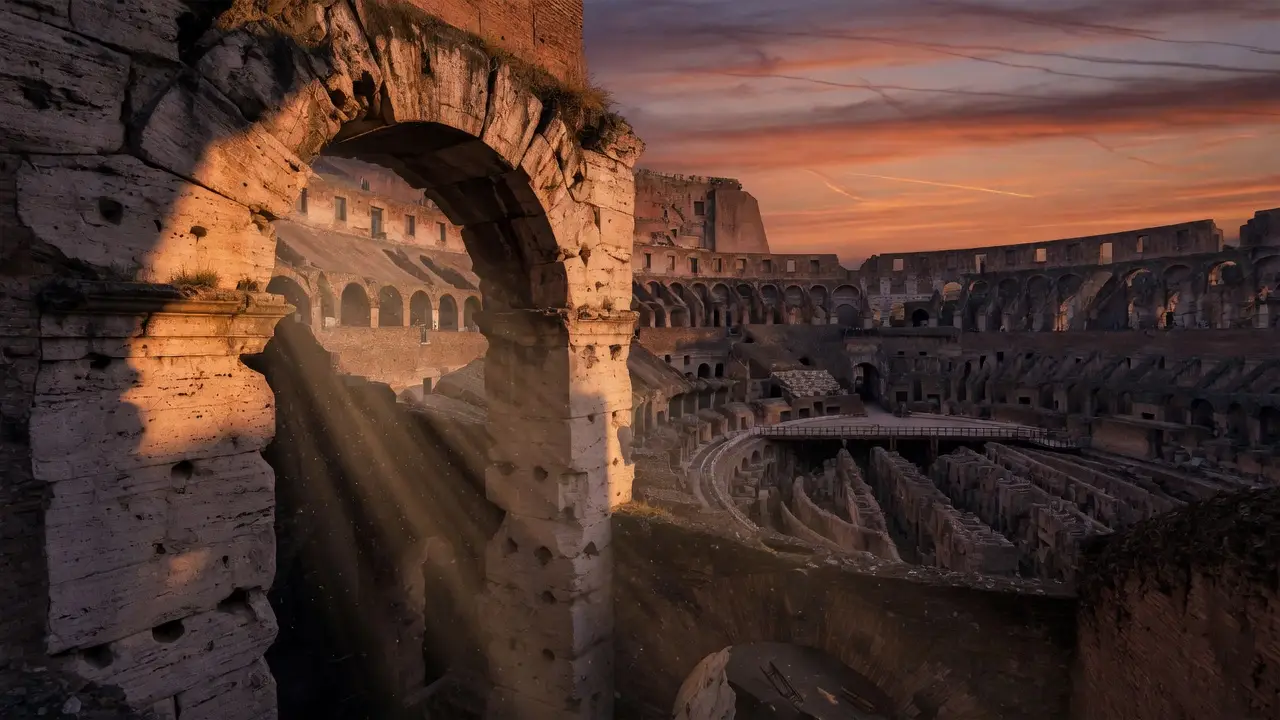
The Romans called it the Flavian Amphitheatre (Amphitheatrum Flavium), after the Flavian dynasty of emperors who built it. Construction began under Vespasian around 70 AD and was completed under Titus in 80 AD.
The name “Colosseum” came later, likely derived from a colossal statue of Nero that stood nearby. The name wasn’t in wide use until the medieval period. The building we call the Colosseum was simply not called that by the people who built it or cheered in it.
43. Julius Caesar Said “Et Tu, Brute?”
His last words were not recorded by anyone present. Ancient sources disagree on whether he said anything at all after being stabbed, he was attacked by twenty-three senators with daggers, which is not a situation that lends itself to composed final remarks.
Suetonius says Caesar may have quoted a line from a Greek play as Brutus approached him. Plutarch describes him pulling his toga over his face as he fell, choosing dignity over words. The Latin phrase belongs entirely to Shakespeare’s 1599 play, which was written more than 1,600 years after the assassination.
44. The Great Fire of London Destroyed the City
The Great Fire of 1666 was catastrophic: it burned for four days, destroyed roughly 13,200 houses, 87 churches, and most of the medieval city within the walls. Tens of thousands were left homeless.
And yet: the official death toll was six people. Six.
This figure is almost certainly incomplete, poor Londoners living in crowded conditions near the fire’s origin in Pudding Lane were less likely to be documented, and deaths from exposure and displacement in the aftermath may have gone uncounted. But the remarkably low recorded death toll suggests that despite the fire’s scale, London had time to evacuate. The fire spread quickly but not instantaneously, and most people got out.
The mythology of the Great Fire tends to emphasize total devastation. The reality of the rebuilding is equally striking: Christopher Wren designed 52 new churches in its aftermath, including St. Paul’s Cathedral, creating a skyline that defined London for centuries.
45. The Pyramids Are Solid Stone
The Great Pyramid of Giza is made of approximately 2.3 million stone blocks weighing an average of 2.5 to 15 tons each. It is solid stone.
But not all Egyptian pyramids were built this way. Several later pyramids were constructed with rubble fill and a stone casing, essentially a stone shell over a less impressive interior. These have not held up well over millennia; the pyramid of Meidum collapsed in antiquity, and several others deteriorated significantly. The outer casing of the Great Pyramid itself, once smooth, white Tura limestone that would have shone in the sun — was stripped away in the medieval period for construction in Cairo.
The pyramid we see today is the core minus its facing. It would have looked dramatically different to ancient Egyptians: a brilliant white geometric form visible for miles across the desert.
Part Ten: The Myths That Tell Us Something About Ourselves
46. The Dark Ages Were Dark
The term “Dark Ages” was coined by the 14th-century Italian scholar Petrarch, who used it to describe what he saw as a period of cultural decline between the fall of Rome and his own era. Humanist scholars picked it up enthusiastically, finding it useful for framing their own era as a rebirth.
The description has problems. The period between roughly 500 and 1000 AD produced Islamic scholarship that preserved and extended Greek scientific knowledge. Byzantine civilization maintained Roman traditions and produced extraordinary art. The Carolingian Renaissance created a flowering of manuscript production and architecture. Irish monasteries copied classical texts that might otherwise have been lost. China under the Tang dynasty was arguably the most sophisticated civilization on earth.
The “dark” label was always Eurocentric and always more about the disruption of Roman urban life in Western Europe than about actual intellectual stagnation. Modern historians have largely abandoned it.
47. The Wild West Was Lawlessly Violent
The mythology of the American West, gunfighters dueling at high noon, outlaws ruling frontier towns, blood in the streets has been so thoroughly elaborated by film and fiction that it operates as its own self-perpetuating reality.
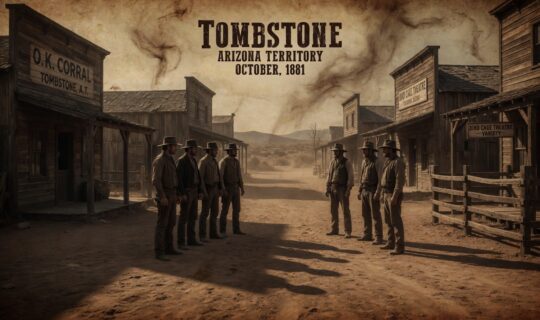
Statistical research on violence in the actual frontier West tells a different story. Historians Robert Dykstra and Roger McGrath have studied homicide rates in frontier towns and found them generally comparable to or lower than major Eastern cities of the same period. Most frontier towns enacted strict gun control ordinances, guns had to be checked at the edge of town or at the marshal’s office. The famous Tombstone, Arizona, confrontation known as the OK Corral gunfight occurred partly because Wyatt Earp was enforcing a local gun ordinance.
Famous gunfighters of the era had reputations that far exceeded their actual body counts. Wyatt Earp, one of the most mythologized lawmen of the era, participated in remarkably few gunfights over his long career. Billy the Kid’s documented kill count is disputed and certainly below the dozens attributed to him by legend.
48. The Guillotine Was Invented as an Instrument of Terror
The guillotine was designed as a humane reform.
Before its introduction during the French Revolution, execution methods varied dramatically based on the condemned’s social class. Nobles might be beheaded quickly. Commoners faced slower, more painful methods. Dr. Joseph-Ignace Guillotin proposed a standardized decapitation device in 1789 explicitly to make execution equal across classes and to minimize suffering.
The device was initially received with something close to approval from reformers. It became associated with terror because it was used during the Terror, the period of 1793–94 when approximately 17,000 people were officially executed and thousands more died in prison. The efficiency that made it humane in theory enabled mass executions in practice.
Guillotin himself was horrified by the association of his name with industrialized killing. He spent his later years lobbying unsuccessfully to have the device renamed. He died in 1814, unsuccessful.
49. The Titanic Sank Because of Captain Smith’s Recklessness
Captain Edward Smith received six iceberg warnings on April 14, 1912. He did not significantly reduce speed. The Titanic struck an iceberg at 11:40 PM and sank in under three hours.
The popular narrative positions Smith as recklessly ignoring warnings under pressure from White Star Line’s managing director J. Bruce Ismay, who allegedly wanted to reach New York early and generate publicity. Smith does bear responsibility — he was the captain, and the ship was moving too fast through known iceberg waters.
But the decision-making was not irrational by the standards of 1912. Transatlantic ships routinely maintained speed through ice warnings because the accepted practice was to post additional lookouts, not to slow down. The weather was unusually clear and calm, which was considered an advantage rather than a danger (calm water means no waves breaking against the base of icebergs, making them harder to spot at a distance). Smith followed standard procedure. Standard procedure was catastrophically wrong.
The deeper myth of the Titanic is the “unsinkable” designation. White Star Line’s promotional materials never used the word. Trade publications had described the Olympic-class ships using conditional language that was compressed and misquoted. “Unsinkable” entered the public consciousness; it never appeared in official White Star copy.
50. History Repeats Itself
The most persistent myth of all isn’t about a specific event or person. It’s about how history works.
“History repeats itself” is comfortable because it suggests the past is legible, that understanding it gives us prophetic tools for the future. Patterns do emerge. Human behavior has recognizable contours. But no historical event is truly repeated because no two moments share the same combination of technology, culture, economics, psychology, and chance.
The more accurate version, perhaps best expressed by Mark Twain (in a phrase he may not actually have said): “History doesn’t repeat itself, but it often rhymes.”
The myths we’ve explored in this article didn’t persist by accident. They survived because they satisfied something, a desire for simplicity, for moral clarity, for stories that fit neatly into what we already believe. Napoleon’s height made tyranny easier to understand. Marie Antoinette’s callousness made revolution feel inevitable. The noble savage Viking and the honorable samurai gave us archetypes we could use.
The truth behind the myths is messier, more human, and ultimately more interesting. The Roman who was too shrewd to waste his investment on a dead gladiator. The medieval scholar who knew perfectly well the Earth was round. The pirate who voted on his wages and signed a contract before going to sea.
History was made by people working with incomplete information, in complicated circumstances, under pressures we can barely reconstruct. They were neither the heroes nor the villains we needed them to be.
They were something more difficult and more real than that.