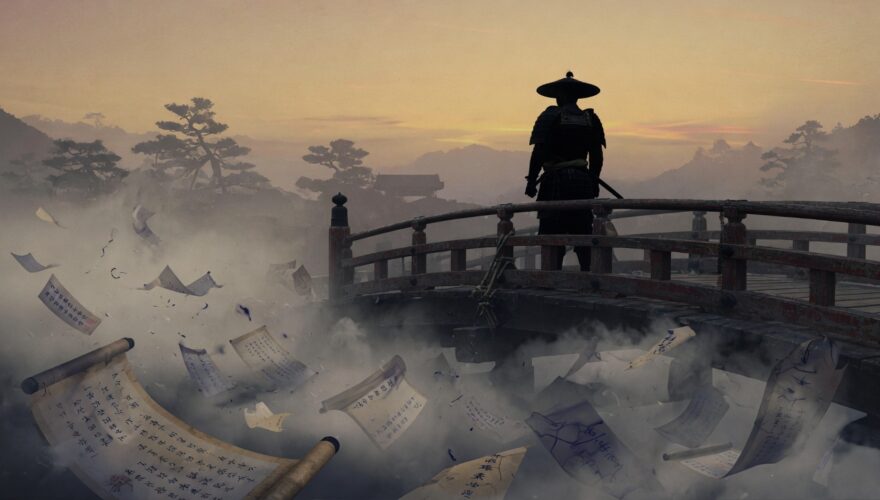
This is the samurai most of us were taught to believe in. Stoic. Deadly. Loyal beyond fear. A warrior bound by honor so deeply that betrayal was worse than death. A man who did not simply face death, but was expected to accept it with silence.
Now let’s take a look at the man who helped create that legend.
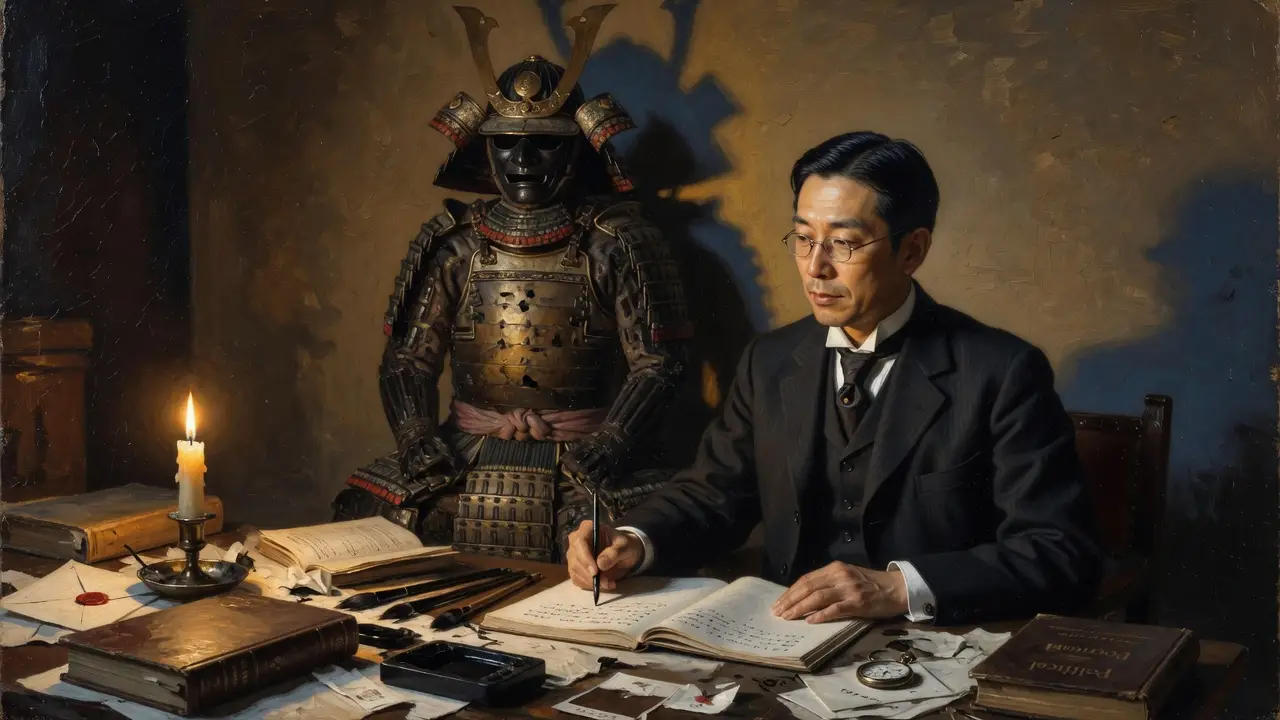
Not a battlefield samurai in armor, but a 19th-century academic in a Western-style suit, sitting at a desk in Tokyo, turning fragments of the past into a national myth.
His name was Nitobe Inazo. The year was 1900. And the samurai had been dead for over two centuries.
Bureaucrats With Swords
Here is the thing no one tells you about the samurai in their actual prime. They were not the brooding lone warriors of legend. By the Edo period (1603 to 1868), Japan had been at peace for so long that most samurai had forgotten what a battlefield felt like. They collected stipends from their lords. They argued about etiquette and rank. They wrote poetry. They got fat.
The Tokugawa shogunate had unified Japan under an iron bureaucratic grip, and in doing so, it had turned the warrior class into civil servants with decorative swords. Real samurai spent more time worrying about the proper way to fold a formal letter than about the proper way to kill a man. Dueling was largely banned. Mercenary violence was punished. The samurai caste existed mostly as a legal fiction, a hereditary class of administrators draped in military symbolism.
“The Way of the Samurai is found in death. When it comes to either/or, there is only the quick choice of death. It is not particularly difficult. Be determined and advance.”
Yamamoto Tsunetomo, Hagakure (c. 1716)
Confucian scholars of the era actually criticized samurai culture openly. Violence was seen as crude. The ideal man of the Edo period was educated, restrained, literary. The sword was a status symbol, like a luxury watch. It was not a lifestyle.
This was the reality of samurai life for roughly 250 years before the Meiji Restoration dismantled the entire feudal structure in 1868.
The Moment the Myth Was Born
When the Meiji government seized power, it did something radical. It abolished the samurai class entirely. Overnight, centuries of hereditary privilege vanished. Samurai lost their stipends, their right to carry swords publicly, their social status. Many were furious. Some revolted, most famously in the Satsuma Rebellion of 1877, where former samurai took up arms against the very modernizing government that had erased them. They were crushed by a conscript army of peasants with rifles.
Join The Archive Briefing
Weekly dispatches. The history they didn't teach you — sourced, subverted, delivered to your inbox.
The samurai were gone. But Japan still had a problem.
The Meiji government was sprinting to Westernize everything: the military, the legal system, industry, education. Foreign powers still treated Japan with thinly veiled condescension. The country needed an identity. It needed a story about itself, something ancient and noble that could stand proudly against European civilization and its own self-serving myths of chivalry and honor.
Enter Bushido.
A Myth Built to Order
The word “bushido,” meaning roughly “the way of the warrior,” appears almost nowhere in classical Japanese texts from the samurai’s actual era. Scholars have combed through period documents looking for it. It’s essentially absent. What samurai did follow were fragmented, often contradictory codes of conduct that varied by region, by lord, and by century. There was no unified warrior philosophy. There was no sacred text. There was certainly no single, crystalline code.
Nitobe Inazo changed all of that. A Christian convert educated at Johns Hopkins University, Nitobe wrote “Bushido: The Soul of Japan” not in Japanese but in English, specifically for a Western audience. He was, in the most literal sense, explaining Japan to foreigners. He framed bushido as Japan’s answer to European chivalry: a timeless moral code built on loyalty, honor, martial arts, ritual suicide, and self-sacrifice.
“Chivalry is a flower no less indigenous to the soil of Japan than its emblem, the cherry blossom; nor is it a dried-up specimen of an antique virtue preserved in the herbarium of our history.”
Inazo Nitobe, Bushido: The Soul of Japan (1900)
The book was a sensation in the West. Theodore Roosevelt reportedly bought dozens of copies and gave them to friends. It was translated into multiple languages. And then, critically, it was translated back into Japanese, where it was adopted wholesale by a government hungry for exactly this kind of mythological glue.
The Meiji state took Nitobe’s construct and weaponized it. Bushido was stitched into military education, state propaganda, and school curricula. By the time Japan went to war in the 20th century, bushido had been transformed into a state ideology, one that demanded absolute sacrifice in the emperor’s name. The samurai code that never really existed had become the foundation for modern Japanese militarism.
What the Real Samurai Actually Believed
The honest history is messier and more human.
Medieval samurai texts that do survive reveal warriors who were pragmatic, self-interested, and not particularly eager to die. “The Hagakure,” often cited as the definitive samurai text and the source of the famous line “the way of the samurai is found in death,” was written in the early 1700s by a retired samurai named Yamamoto Tsunetomo who had never fought in a single battle. It was a nostalgic lament, not a field manual. Yamamoto was mourning a martial culture he perceived as already lost, romanticizing a past he had never personally lived.
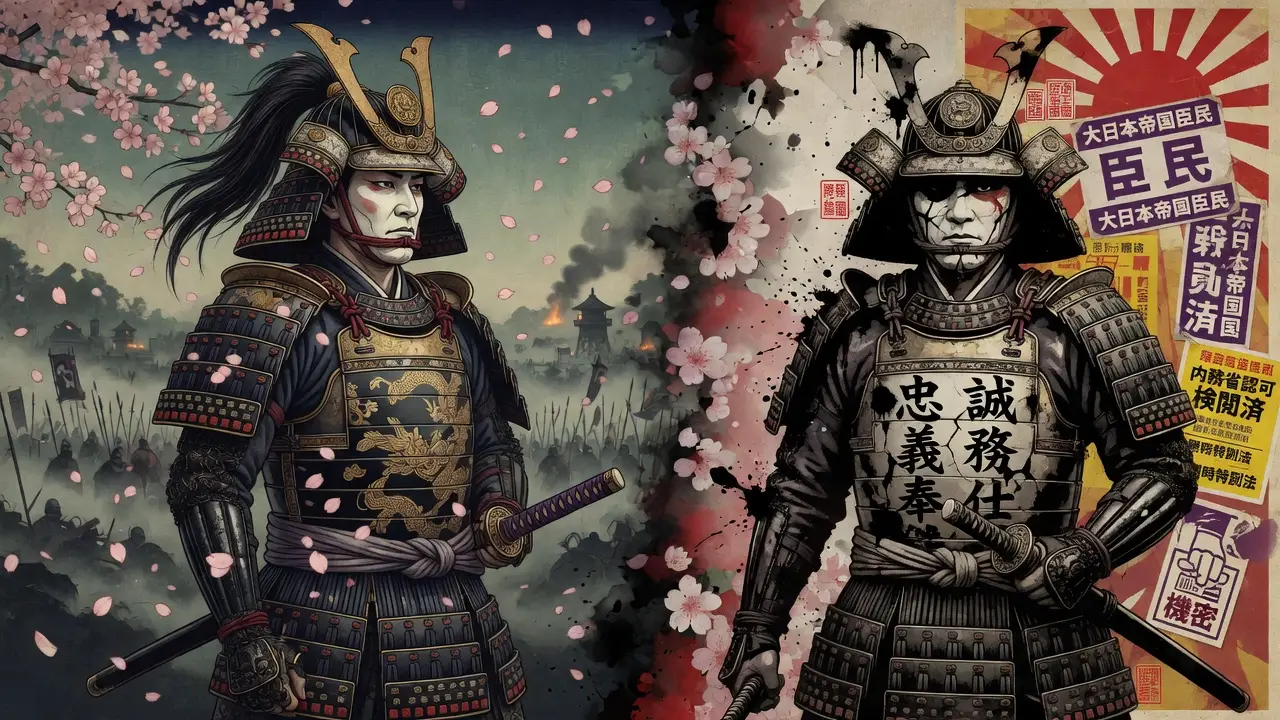
Even seppuku, the ritualized suicide so central to the popular image of bushido, was far less common than the legend suggests. It was performed in specific, formal contexts, often as an alternative to execution. Most samurai, given the choice between death and surrender, chose to live. The same as most people everywhere, in every era.
The loyalty that bushido celebrates was also deeply conditional in practice. Samurai changed allegiances. They negotiated. They betrayed their lords when it served them. The history of feudal Japan is thick with exactly the kind of self-interested political maneuvering that the bushido myth pretends never happened.
The samurai myth is not simply a historical curiosity. It is a case study in how nations manufacture identity, and how dangerous those manufactured identities can become once they calcify into ideology.
Japanese soldiers in World War II were sent to die under the banner of a code that was largely invented forty years before the war started. The kamikaze pilots who flew their planes into American warships believed they were honoring an ancient warrior tradition. They were actually honoring a Meiji-era marketing campaign.
Understanding that does not diminish their courage or their sacrifice. It simply reveals how completely a government can reshape reality through storytelling, and how ordinary people will die for a story if it is told convincingly enough.
The samurai were real. Their world was complex, brutal, and genuinely fascinating. But the Bushido they supposedly lived by? That was written after the fact, for an audience that needed heroes, by men who understood that every nation needs a mythology it can believe in.
The most powerful sword in Japanese history turned out to be a pen. And the man who wielded it was not a warrior at all.
He was a writer, sitting at a desk, in a Western suit, inventing the past.
“The way in which to preserve this independence cannot be sought anywhere except in civilization.” Fukuzawa Yukichi, Bunmeiron no Gairyaku (An Outline of a Theory of Civilization), 1875.