Wyatt Earp is one of America’s most mythologized figures, but behind the legend lies a far darker, more complicated man. Explore the real story of Tombstone’s most famous lawman, and decide for yourself: hero or killer?
The Dust Hasn’t Settled Yet
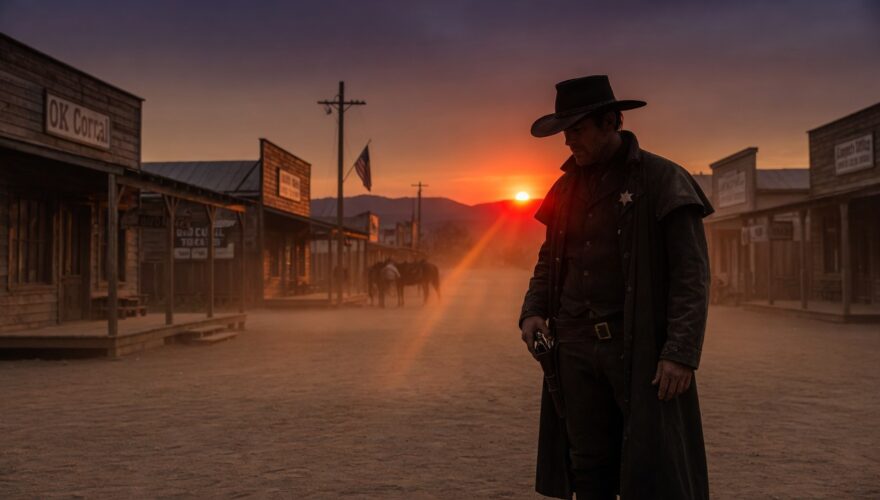
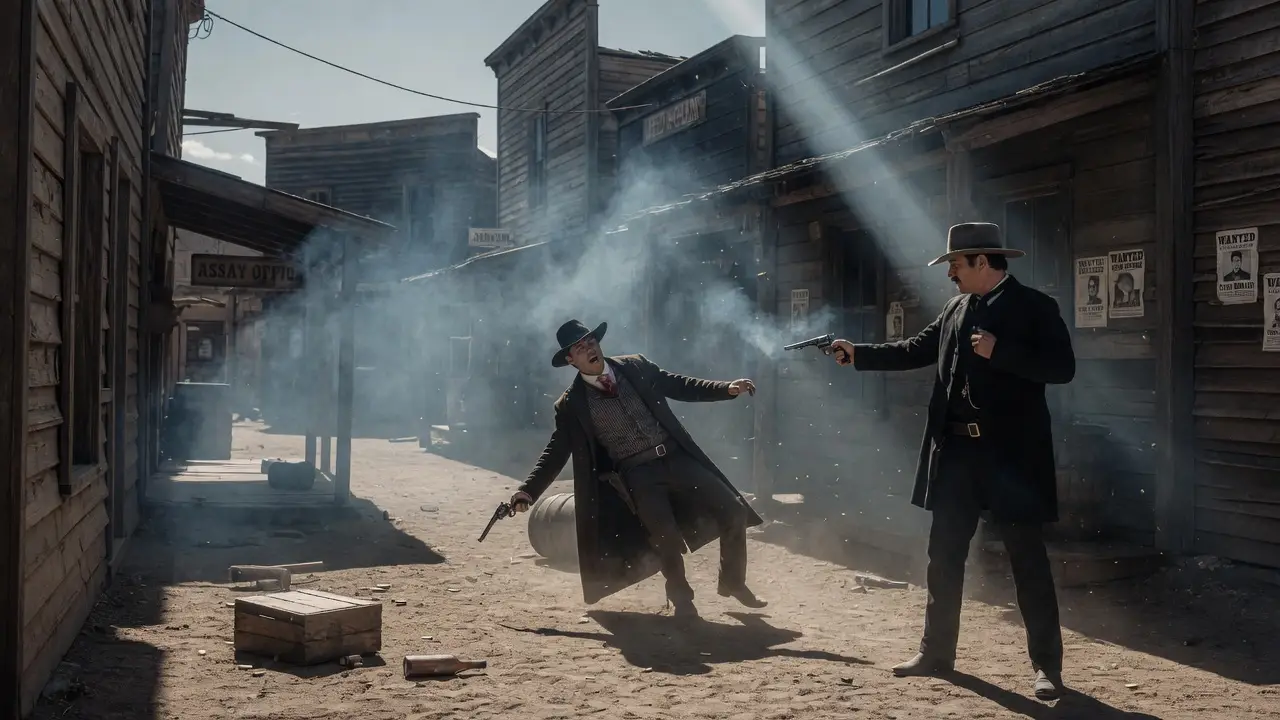
On the afternoon of October 26, 1881, in a narrow lot near Tombstone, Arizona, thirty shots were fired in roughly thirty seconds. When the smoke cleared, three men lay dying in the dirt. Wyatt Earp walked away without a scratch.
That gunfight, the one everyone calls the OK Corral even though it didn’t happen there, lasted less than a minute. But the argument it started has never really ended.
Was Wyatt Earp a lawman doing his job, holding the line between order and chaos on the most violent frontier in American history? Or was he an egotistical gunman with a badge who used the law as a weapon and got away with murder because he was better at politics than the men he killed?
A century and a half later, the question still cuts.
The Man Before the Myth
Wyatt Berry Stapp Earp was born in 1848 in Monmouth, Illinois, the third of five brothers, and spent his childhood being dragged westward by a restless father chasing opportunity across the frontier. By the time he was twenty, he had worked as a buffalo hunter, a railroad laborer, and apparently, briefly, a horse thief, for which he was arrested in Indian Territory in 1871.
That last part rarely makes it into the movies.
He drifted into law enforcement almost by accident, landing a deputy’s position in Wichita, Kansas in 1875, then moving to Dodge City, where he earned a solid if unglamorous reputation as a man willing to crack skulls to keep the peace. He wasn’t celebrated in his own time the way the dime novels would later suggest. He was a working cop in a cow town, and working cops in cow towns were not the stuff of legend.
Then came Tombstone.
Join The Archive Briefing
Weekly dispatches. The history they didn't teach you — sourced, subverted, delivered to your inbox.
“There is no Sunday west of Laramie, no law west of the Pecos, and no God west of El Paso.”
Frontier saying, widely attributed, origin disputed
In 1879, silver was pouring out of the Arizona desert, and Tombstone was erupting into one of the boomtowns that the West had a gift for producing: violent, wealthy, and utterly lawless beneath a thin crust of civilization. Wyatt arrived with his brothers, Virgil, Morgan, and James, and his friend Doc Holliday, a tubercular, alcoholic Georgian dentist who was arguably the most dangerous man in the group.
The Earps moved into Tombstone looking for money, not justice. Wyatt dealt faro in the gambling halls while Virgil took the town marshal’s job. What they found was the Clantons and McLaurys, a loose network of cowboys, ranchers, and rustlers who ran cattle across the Mexican border and resented everything the Earps represented.
Brotherhood, Badges, and Bad Blood
The tension between the Earps and the Cowboys, as the outlaw faction called themselves, wasn’t really about law and order. It was about territory, money, and the specific kind of masculine contempt that the frontier seemed to breed without effort.
Ike Clanton was loud-mouthed and cowardly. Tom McLaury was a rancher with legitimate grievances and an unfortunate tendency to associate with men who didn’t share them. Billy Clanton was nineteen years old. Frank McLaury had a reputation as a genuine gunfighter and knew how to use it.
The Earps and the Cowboys had been circling each other for months. There were threats, insults, and a confrontation the night before the gunfight in which Wyatt pistol-whipped Tom McLaury in the street, unprovoked by any weapon, according to witnesses.
Then came the morning of October 26th. By afternoon, Ike Clanton and Billy Claiborne had run. Frank McLaury, Tom McLaury, and Billy Clanton were dead. Virgil and Morgan Earp were wounded. Doc Holliday had a graze on his hip. Wyatt, again, walked away clean.
The inquest that followed was brutal. The Cowboys’ allies accused the Earps of murder in cold blood. Witnesses swore Tom McLaury was unarmed. Others swore he was reaching for a rifle on his horse. Tombstone’s judge ultimately cleared the Earps of wrongdoing, but the political battle behind that ruling was as dirty as anything that happened in that empty lot.
“The law is slow in this country, and I will not wait for it.”
Wyatt Earp, 1882, during the Vendetta Ride
The Vendetta Ride
If the gunfight made Wyatt famous, what came after it revealed something colder.
In December 1881, assassins shot Virgil Earp from the shadows, crippling his arm permanently. In March 1882, Morgan Earp was shot through a window while playing pool. He died on a billiard table within the hour.
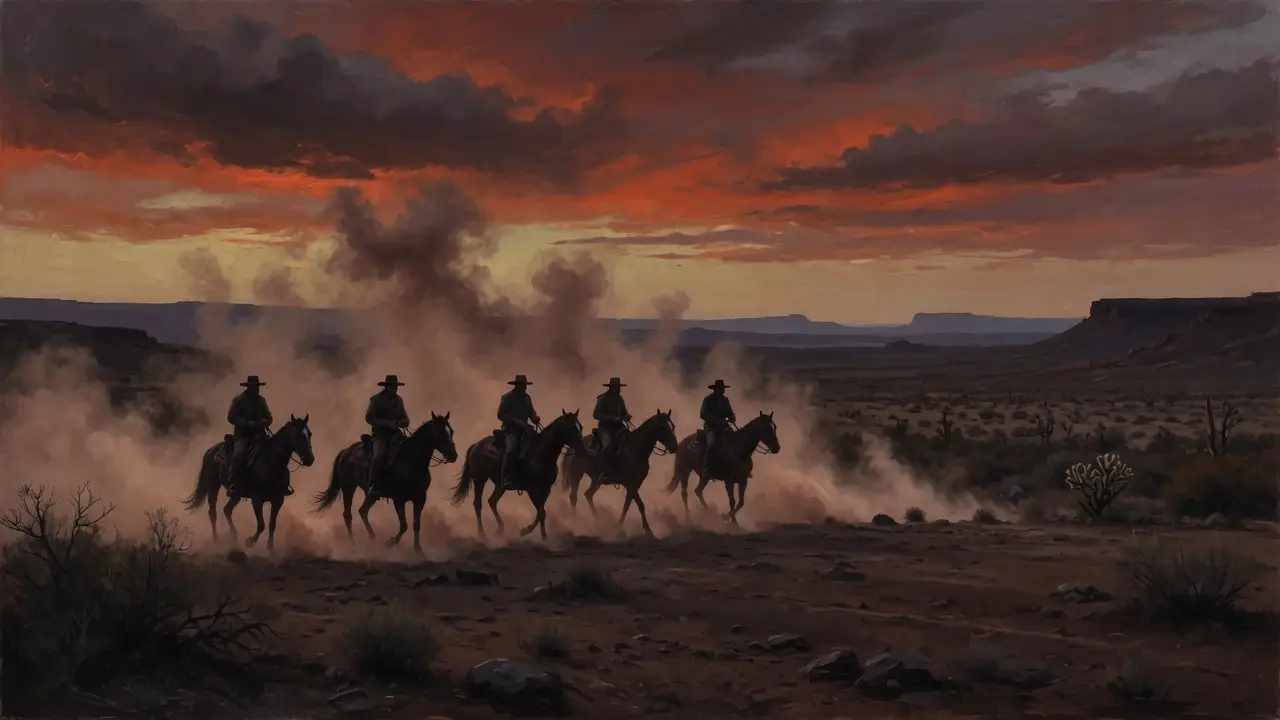
What Wyatt did next was not law enforcement. He deputized his own posse, called it a federal operation, and systematically hunted down and killed the men he believed were responsible. Frank Stilwell was shot at the Tucson train station with multiple wounds suggesting he was shot from close range after he fell. Florentino Cruz was killed in the hills. Curly Bill Brocius, a genuine outlaw and quite possibly the Cowboys’ most dangerous member, was shot dead at Iron Springs.
Wyatt Earp’s posse moved through Arizona like a verdict that had already been written. There were no trials. There were no arrests. There was just the sound of gunfire and men burying the dead.
Arizona’s governor declared Wyatt Earp an outlaw and tried to have him extradited from Colorado. The charges quietly disappeared. Wyatt spent the rest of his life moving between mining camps, gambling halls, and boxing venues, never quite returning to the frontier’s center of gravity again.
“Wyatt Earp is the most dangerous man I know.”
Doc Holliday, recounted by various contemporaries
Lesser-Known Details That Change the Picture
Most accounts of Wyatt Earp treat the gunfight as the story’s center. The margins are more interesting.
Wyatt was deeply invested, financially, in the outcome of Tombstone’s political future. He wanted the county sheriff’s job and saw the Cowboys as obstacles to that ambition as much as threats to the law. His feud with Sheriff Johnny Behan, who sided with the Cowboys and kept the position Wyatt wanted, colored every decision he made in that town.
Holliday’s role is consistently minimized. Contemporary accounts and later forensic reconstruction suggest Holliday may have fired the first shot and did most of the killing. Wyatt, who killed Frank McLaury, may have been tactically brilliant or simply lucky in his positioning.
Morgan Earp’s murder has never been definitively solved. The men Wyatt Earp killed during the Vendetta Ride were accused based largely on hearsay and personal loyalty. Whether they were truly responsible remains genuinely unclear.
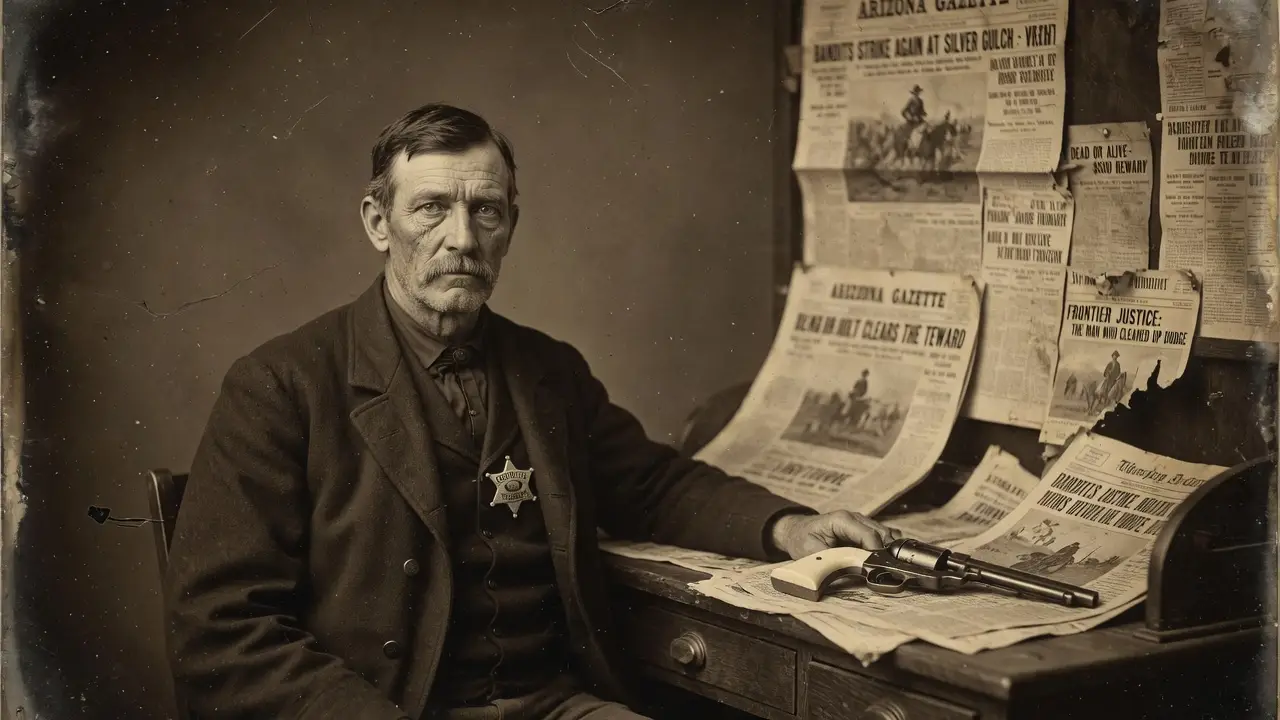
Wyatt lived until 1929. He was eighty years old when he died in a modest Los Angeles bungalow. He spent his final decade working with a writer named Stuart Lake on an autobiography that was, by any honest assessment, largely fabricated. That book, published posthumously as Wyatt Earp: Frontier Marshal, became the foundation of the legend. The man created his own myth, and the myth created the man the public wanted.
The Weight of the Legend
The Earp story doesn’t keep its grip on the American imagination because it’s a clean story. It keeps it because it’s not.
The frontier demanded violence and then prosecuted the men who were good at it. It created conditions where a man could not survive without a willingness to kill, and then asked that same man to uphold the law. The contradiction was structural, not personal.
Wyatt Earp was a product of that contradiction. He was capable of genuine courage and genuine cruelty, sometimes within the same hour. He believed in order but pursued it through means that had nothing to do with justice. He mourned his brothers and avenged them in ways that probably made him no different from the men he hunted.
Whether that makes him a hero depends entirely on what you think a hero is supposed to be.
The more honest question might be whether the line between lawman and killer was ever as clear as the legend required.
In Tombstone, in the fall of 1881, it almost certainly wasn’t.