History is comfortable calling some men monsters. It gives them nicknames, studies their childhoods, counts their victims, and turns their crimes into warnings. But the same history becomes much quieter when the killing was done under orders, inside offices, behind uniforms, with signatures at the bottom of the page.
This is the disturbing world where executioners, assassins, torturers, scientists, soldiers, and bureaucrats all begin to blur into one another. Not because every government employee was a serial killer, but because some states learned how to take the psychology of violence and wrap it in procedure, rank, legality, and national purpose.
The Man With the Clean Hands
In 1942, a soft-spoken SS officer named Walter Rauff sat behind a desk in Berlin and solved what his superiors called a “morale problem.” The killing squads operating on the Eastern Front were burning out. Not from guilt, exactly, but from the sheer physical exhaustion of shooting thousands of people at close range every single day. Rauff’s solution was elegant, in the bureaucratic sense of the word. He redesigned cargo vans so that exhaust fumes fed into the sealed rear compartment. The men doing the killing wouldn’t have to see anything anymore. They just drove.
Rauff never pulled a trigger. He died in Chile in 1984, a free man, tending his garden.
That image, a war criminal pruning roses in the Santiago sunshine, cuts to the heart of one of history’s most uncomfortable questions: what separates a serial killer from a government employee? The answer, it turns out, is almost entirely paperwork.
Licensed to Kill, Paid by the State
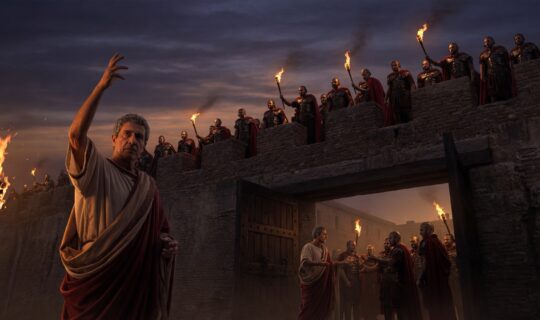
Governments have always needed people willing to do what ordinary citizens cannot stomach. The Romans had their carnifex, the public executioner, a man so contaminated by his work that Roman law prohibited him from living inside the city walls. He was essential. He was also untouchable, in the social sense. He lived outside, ate alone, and was paid in coins left on a stone so no one had to touch his hand.
That tension, between the necessity of the killer and the revulsion he inspired, runs through every civilization that ever organized itself into a state. Someone has to do it. And yet.
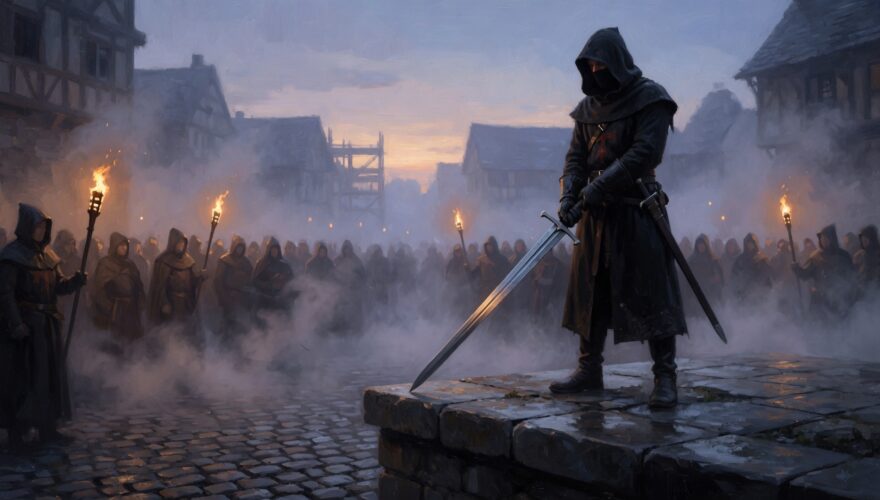
Medieval Europe refined the profession into something almost theatrical. The executioner wore a hood not to hide his identity (in smaller towns, everyone knew who he was) but to signal that he was performing a role, not an act of personal violence. He was the hand of the law. The hood was the costume that made the killing official. Remove the hood and you had a murderer. Keep it on and you had justice.
Charles-Henri Sanson served as Royal Executioner of France for decades, eventually operating the guillotine during the Terror with such mechanical regularity that he executed over 2,700 people in less than two years. He kept records. He was professional. He reportedly wept when he was ordered to execute Louis XVI, not from political sympathy but from the weight of what his hand was about to do. Then he did it anyway.
Join The Archive Briefing
Weekly dispatches. The history they didn't teach you — sourced, subverted, delivered to your inbox.
The state didn’t call him a killer. It called him a public servant.
The Quiet Professionals
Move forward a few centuries and the costume changes, but the role doesn’t.
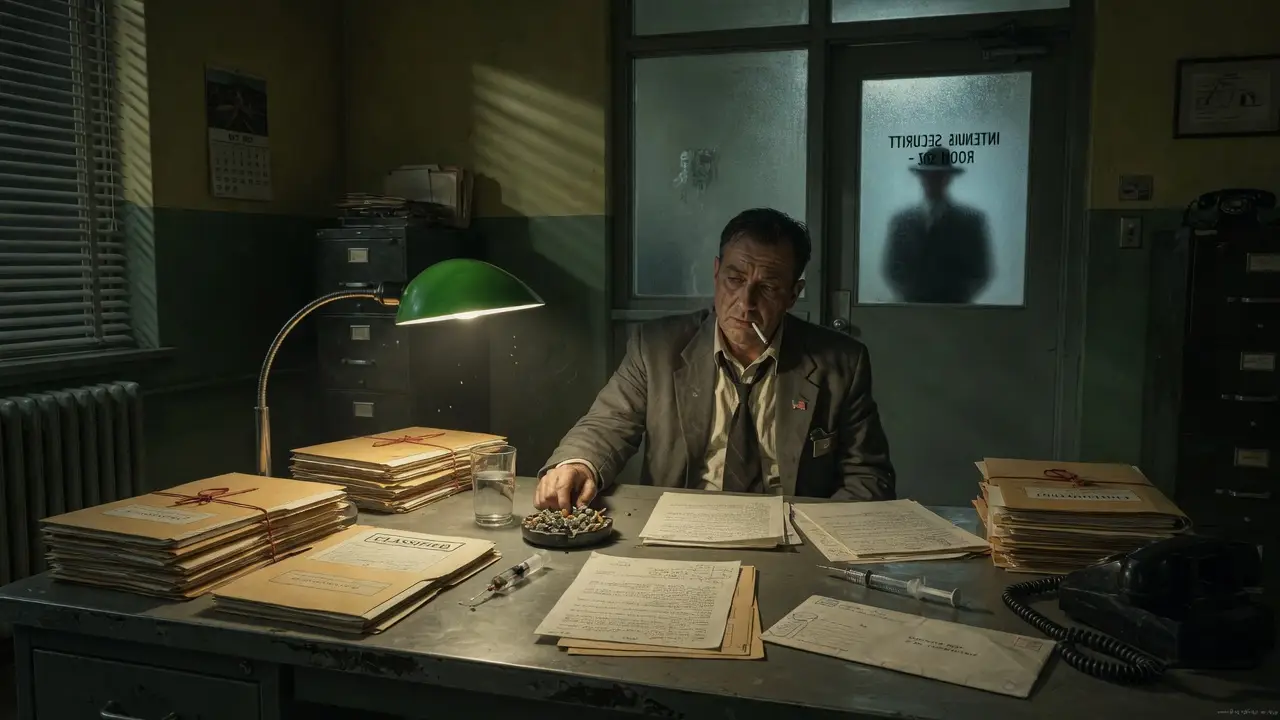
In the 1950s, the CIA developed a program so compartmentalized that most of its participants didn’t know its full name. What became known as MKULTRA explored, among other things, whether human beings could be psychologically conditioned to kill without retaining memory of the act. The program’s architects, men in suits with government clearances, oversaw experiments on unwitting subjects that included drugging, electroshock, sensory deprivation, and psychological torture. At least one man, Frank Olson, died under circumstances that remain disputed to this day. The scientists involved were not prosecuted. Most received promotions.
The Soviet Union ran a parallel operation called the Laboratory of Death, or simply “the Chamber,” a secret toxicology unit inside the NKVD tasked with developing poisons that left no forensic trace. Its director, Grigory Mairanovsky, personally administered lethal injections to prisoners in the name of research. He tested mustard gas, ricin, digitoxin, and cyanide compounds on living human beings. His reports read like pharmaceutical trial data. Clean. Measured. He signed each one.
When Stalin died, Mairanovsky was briefly imprisoned, not for the murders, but for political disloyalty. He was eventually released and died in 1964 with his pension intact.
What distinguished these men from Ted Bundy or John Wayne Gacy, beyond the letterhead on their orders, is genuinely difficult to articulate.
Where the Line Gets Drawn in Sand
Military history has always struggled with this boundary. The Spartan krypteia sent young men into the countryside each autumn with a specific mandate: kill helot slaves, particularly the strong ones, the ones who looked like they might lead a rebellion. This was framed as a rite of passage, a training exercise. In practice it was state-sponsored murder of an underclass, carried out by teenagers who were rewarded, not punished, for the body count.
The Mongol Empire operated on a different logic entirely. Genghis Khan’s generals were not encouraged to enjoy killing. They were required to be efficient at it. The psychological profiles of men like Subutai or Jebe, who destroyed entire cities with cold arithmetic, calculating civilian deaths as variables in a submission equation, suggest something more disturbing than bloodlust. They felt almost nothing. The empire needed that. It selected for it.
In 20th century Latin America, governments trained specialists at the School of the Americas in Fort Benning, Georgia. The curriculum included interrogation techniques that American law would classify as torture, techniques taught by American instructors to soldiers who then returned home to apply them in basements and rural police stations across Chile, Argentina, El Salvador, and Guatemala. The instructors filed their lesson plans. The students filed their reports. Thousands of people disappeared.
The paperwork survived. Most of the killers did too.
The Anatomy of Official Violence
What makes state-sanctioned killing psychologically distinct is not the act itself but the architecture surrounding it. Philip Zimbardo, whose Stanford Prison Experiment revealed how quickly ordinary people adopt violent roles when given authority, argued that institutions don’t just permit cruelty, they manufacture the conditions in which cruelty becomes not only possible but logical.
The torturer in a government black site is following orders. The executioner at a maximum security prison walks through a protocol so ritualized it feels almost liturgical. The drone operator at a Nevada air base triggers a missile strike on GPS coordinates and files a report before dinner. Each man has a chain of authority above him, a legal framework around him, and a professional identity that insulates the act from the self.
The serial killer has none of that scaffolding. He acts alone, from something internal, and he is rightly condemned as a monster.
But the men who designed the Phoenix Program in Vietnam, which resulted in the assassination of over 20,000 suspected Viet Cong operatives, many of them civilians identified by unreliable informants, those men held press conferences. They briefed senators. They received commendations.
The Ones Who Couldn’t Come Back
History is not short on men who did the state’s killing and paid for it privately, long after the state stopped paying them.
Vietnam veterans who participated in covert operations described psychological landscapes that had no civilian equivalent. There was no language for what they had done. PTSD as a diagnosis didn’t formally exist until 1980. Before that, the men who came home with something broken in them were called unstable, or weak, or were simply not talked about.
Some of the most chilling testimony from Nazi war crimes tribunals came not from the architects but from the low-level operatives, the men who had actually fired the weapons, buried the bodies, kept the lists. Many described a moment of dissociation early in their service, a psychological wall that went up between the self and the act. After that wall, killing became administrative. That dissociation, clinically speaking, is one of the defining traits used to profile serial killers.
The state builds that wall deliberately. It trains men to construct it. Then, when the war ends, it tells them to take it down and go home to their families.
Some could. Some couldn’t. A few, unbounded from the institutional context that had made their violence legitimate, became something the state itself then had to manage.

The question at the center of all this is not really about individual psychology. It’s about collective moral accounting.
Every society decides, usually without ever stating it plainly, which killing it will authorize and which it will criminalize. Those decisions are rarely about the act itself. They are about who benefits, who ordered it, and whether the paperwork is in order.
Charles-Henri Sanson was a public servant. Walter Rauff was a war criminal. The difference between them is not the number of people they killed, or the manner of killing, or even the presence of personal malice. The difference is which side of history’s judgment their governments ended up on.
And history, it turns out, is written by the people who kept their hands clean.
The man with the garden in Santiago knew that. He watered his roses every morning, and no one came for him.