Las Vegas wasn’t invented by the Mob, but organized crime turned it into a global empire. Explore how mob families, hidden casino owners, skimming operations, and Teamsters pension money built the Strip, and how the FBI finally brought it down.
- 1 The Mob Didn’t Build Las Vegas.
- 2 A City Built Before They Arrived
- 3 An Open City in the Desert
- 4 Bugsy Siegel and the Myth of the Flamingo
- 5 Front Men, Hidden Hands
- 6 The Pension Fund That Poured Concrete on the Strip
- 7 The Skim: How You Steal From Your Own Casino
- 8 Operation Strawman and the Federal Reckoning
- 9 What Was Left When the Smoke Cleared
- 10 Las Vegas In Today’s World
The Mob Didn’t Build Las Vegas.
It just made it bleed money. On the night of June 20, 1947, Bugsy Siegel sat in the living room of his girlfriend’s Beverly Hills home, reading the newspaper. Within seconds, a high-powered rifle fired through the window. Several shots struck Siegel, and by the time anyone reached him, he was dead. Three hundred miles away, in the gleaming hotel he had helped build from the Nevada desert, men connected to organized crime had already moved in and taken over operations before his body was cold. No funeral. No delay. Business as usual.
That moment tells you everything you need to know about Las Vegas and the Mob. Not a city born from crime. Not a dream conjured by criminals. But a machine that criminal organizations recognized, moved into, and milked with brutal efficiency. The neon lights were already burning. The Mob just figured out how to skim the heat.
A City Built Before They Arrived
Las Vegas existed long before anyone in Chicago or New York started paying attention. The Union Pacific Railroad had turned it into a waystation as early as 1905. The construction of the Hoover Dam in the 1930s brought tens of thousands of workers, money, and demand. And then, in 1931, Nevada did something no other state had done: it legalized gambling across the board.
That decision was the open door. The city grew fast through the 1930s and into the 1940s. Downtown casinos, motels, and makeshift resort hotels lined Fremont Street. Small operators, local businessmen, and a handful of colorful entrepreneurs were building something real. The Strip, that stretch of highway south of the city limits, was just beginning to take shape.
“I don’t want to talk about my past. I’d rather talk about what I’m doing.”
Moe Dalitz, to a Las Vegas reporter, deflecting questions about his Cleveland background
But there was a problem none of them could solve. Banks wouldn’t touch casinos. Traditional lenders viewed the industry as a liability, too risky, too legally fragile, too dependent on the kind of people who did not show up in respectable financial portfolios. Capital was scarce. The men who ran Las Vegas in the early 1940s needed money they couldn’t get from Wall Street.
That gap was exactly what organized crime was made for.
An Open City in the Desert
By the mid-1940s, law enforcement pressure was tightening on illegal gambling operations across the country. Illegal casinos in Ohio, Missouri, and New York were getting raided, shuttered, or politically inconvenient. The men running those operations looked west and saw something remarkable: a place where gambling was not only legal but barely regulated, where cash moved in industrial quantities, where a remote desert location made quiet conversations easier, and where no single crime family had claimed exclusive territory.
Investigators and historians have described Las Vegas in this era as an “open city,” meaning multiple organized crime factions could operate there without any one family controlling the whole operation. The Chicago Outfit, the Cleveland Syndicate, figures tied to New York, Kansas City, and Milwaukee all found their way to the Nevada desert. The city wasn’t divided up like Chicago or New York. Everyone got a piece.
Join The Archive Briefing
Weekly dispatches. The history they didn't teach you — sourced, subverted, delivered to your inbox.
LESSER-KNOWN DETAIL
Howard Hughes, who bought several Las Vegas hotels and casinos in the late 1960s, was actually welcomed by some Nevada officials because his purchases displaced mob-connected operators with a legitimately wealthy (if deeply eccentric) businessman.
That arrangement suited everyone. The Mob wasn’t trying to run Las Vegas. It was trying to profit from Las Vegas. And profit, it turned out, was almost automatic.
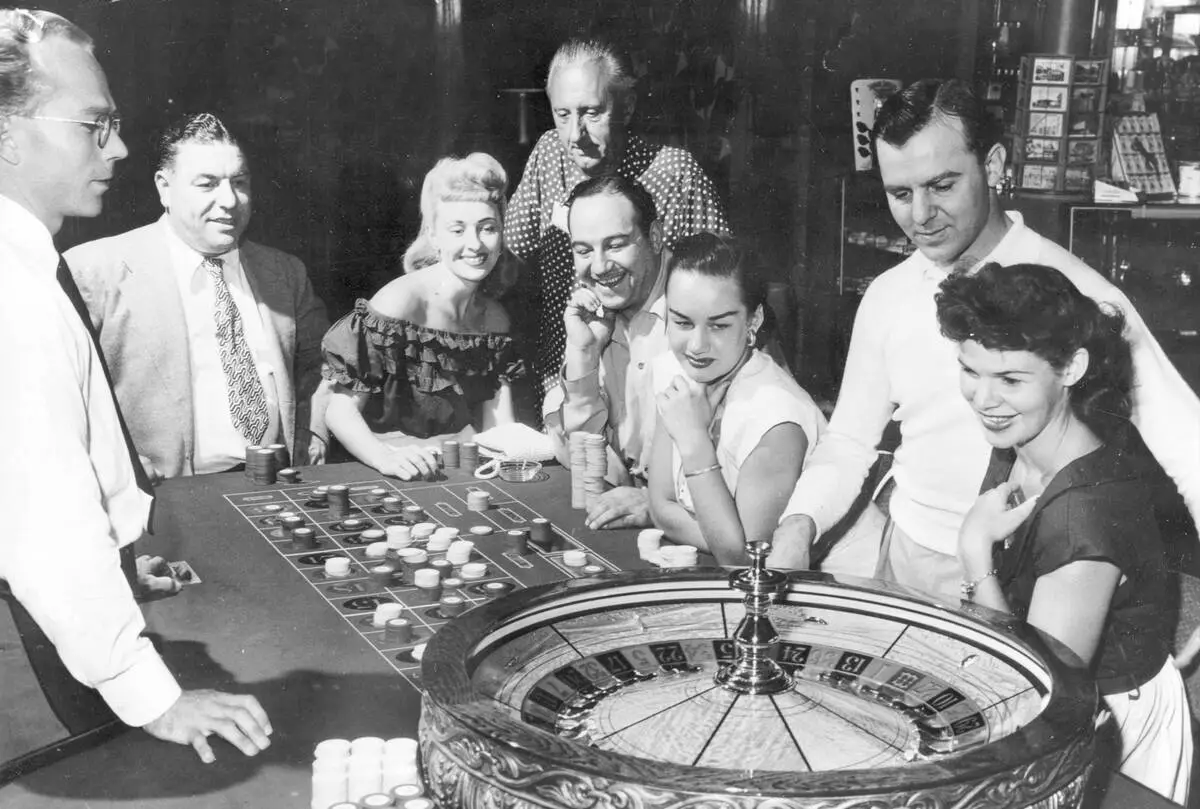
The mathematics of a casino favor the house on every spin, every hand, every roll. Customers came by the thousands, tourists from across the country drawn by a combination of glamour, escape, and the simple human hope of winning money. Every dollar they lost fed a system that was already tilted toward the people running the games.
Bugsy Siegel and the Myth of the Flamingo
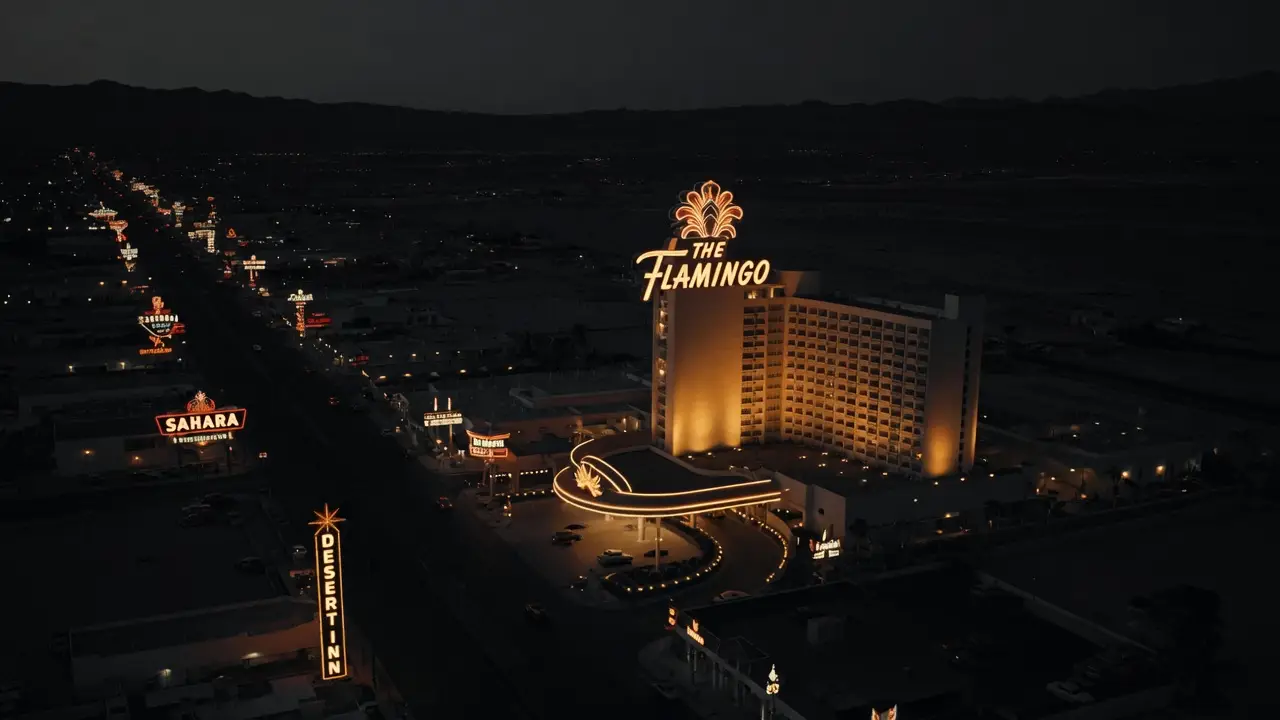
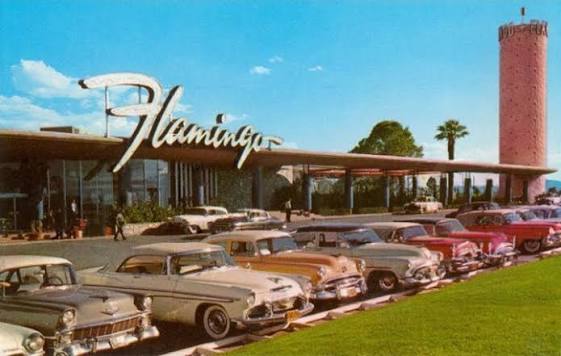
Benjamin Siegel had been a killer, a bootlegger, and a charming sociopath since his teenage years in New York. By the mid-1940s, he was the Mob’s man in Los Angeles, managing operations and connections on the West Coast. He became involved in the Flamingo project in 1945, not as its originator but as the man who took it over and turned it into an obsession.
The Flamingo had been started by a businessman named Billy Wilkerson, the founder of the Hollywood Reporter, who ran out of money and found himself needing investors he probably shouldn’t have trusted. Siegel entered, connected to Meyer Lansky and the broader national syndicate, and transformed the project. He wanted the hotel to be something no one had seen in the desert: genuine luxury. A place where Hollywood stars would actually want to spend their time. Where the rooms were good enough that wealthy guests didn’t feel they were slumming.
“I never trusted anybody. Not even myself.”
Benjamin Siegel
The construction cost spiraled, reportedly from an initial budget of around $1.5 million to over $6 million. The syndicate money behind Siegel grew restless, then furious. There were accusations that Siegel and his girlfriend, Virginia Hill, were skimming construction funds and hiding them in Swiss bank accounts.
The Flamingo opened on December 26, 1946, in the middle of a rainstorm, with a roster of Hollywood celebrities who showed up out of loyalty to Siegel. The casino lost money the first weeks. Siegel scrambled. He made adjustments, closed briefly, reopened in March 1947, and by spring the hotel was actually turning a profit.
He never collected it. By summer, he was dead.
His murder has never been officially solved. The syndicate’s patience had simply run out.
LESSER-KNOWN DETAIL
The FBI’s 1979 raid on the Tropicana was prompted in part by a tip from inside the casino industry, suggesting that the era’s informant culture was beginning to erode the loyalty that had kept the skim secret for decades.
But the legend that followed him outlasted everything. The Flamingo became the template: a luxury resort in the Nevada desert, tied to celebrity, to glamour, to money, and to the constant knowledge that someone dangerous was watching the numbers.
Front Men, Hidden Hands
The machinery behind the glamour was invisible by design.
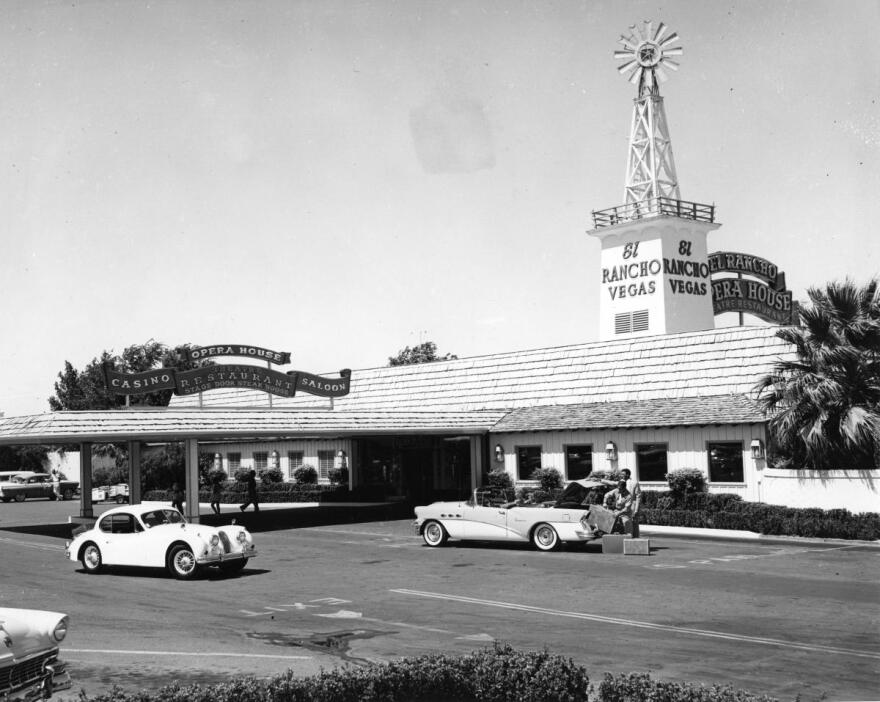
Nevada required casino operators to hold licenses. The Mob could not exactly walk in and apply. So they didn’t. Instead they installed front men: presentable businessmen, sometimes lawyers or local figures, whose names appeared on the paperwork while the actual controlling interests remained in the shadows. These arrangements worked because the Nevada Gaming Commission’s oversight, for much of the 1950s, was not particularly aggressive.
“Las Vegas is the only place I know where money really talks, it says goodbye.”
Frank Sinatra, in various interviews during the Rat Pack era
The Desert Inn is a useful example. On paper, the operation was linked to Moe Dalitz, a man who had built his fortune in bootlegging and illegal gambling in Cleveland and Detroit. Dalitz was sophisticated enough to function in the legitimate world, and he did. He eventually became something of a civic figure in Las Vegas, donating to charities, developing real estate, cultivating the image of a businessman who had simply been in the right place. But his Cleveland connections and his history were known to anyone paying attention.
The Tropicana told a different story. When New York gangster Frank Costello was shot outside his apartment building in May 1957, police found a slip of paper in his pocket. On it were figures that appeared to correspond exactly to the Tropicana’s earnings. Costello survived the shooting, but the paper made clear what law enforcement already suspected: that mob-connected figures held hidden interests in major Las Vegas casinos, interests that never appeared on any official document.
This was not incidental. It was the whole system.
The Pension Fund That Poured Concrete on the Strip
If organized crime needed a legal vehicle to funnel money into Las Vegas construction, it found one in the most unlikely place: a retirement fund for truck drivers.
The Teamsters Central States Pension Fund, administered in part through the influence of Teamsters president Jimmy Hoffa and his associate Allen Dorfman, became what many federal investigators later described as the Mob’s bank. Between 1958 and 1977, the fund made nearly $250 million in loans to casino developers, many of them with documented organized-crime connections.
The logic was almost poetic in its cynicism. Banks wouldn’t lend to casinos. The Mob needed casinos built. The Teamsters pension fund had enormous capital sitting idle. Workers across the country paid dues into that fund every week, trusting that their retirement money was being carefully managed.
Instead, it was financing the construction of Las Vegas.
“We’re bigger than U.S. Steel.”
Meyer Lansky, on the scale of organized crime’s financial operations
Hotels and casinos that would define the Strip for a generation were built, expanded, or refinanced with that money. Hoffa was convicted of jury tampering in 1964 and fraud in 1967 before disappearing in 1975. Dorfman was indicted multiple times and eventually murdered in a Chicago parking lot in 1983, just before he was scheduled to be sentenced for a bribery conviction. The pension fund’s exposure gradually came to light through federal investigation, though the full scope of what had been done with workers’ retirement money took years to unravel.
The Strip exists, in part, because blue-collar workers’ futures were used as construction loans for a city built on gambling.
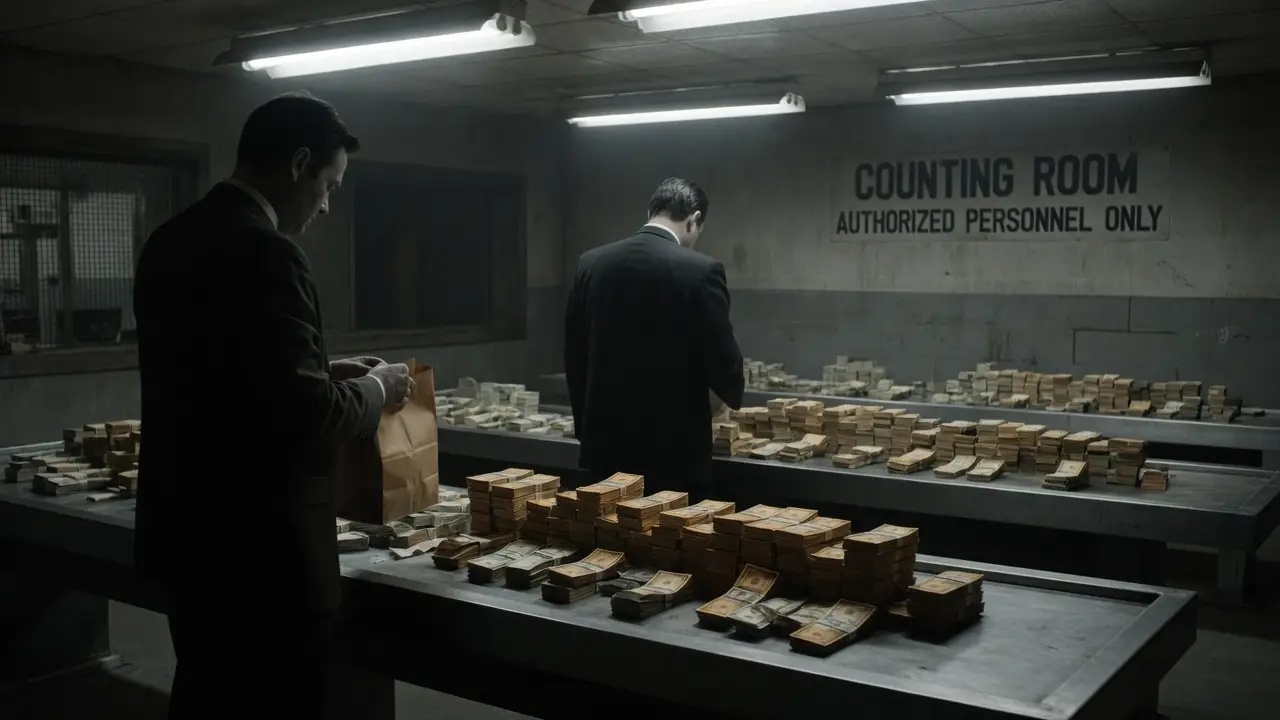
The Skim: How You Steal From Your Own Casino
The genius of the skim was its simplicity.
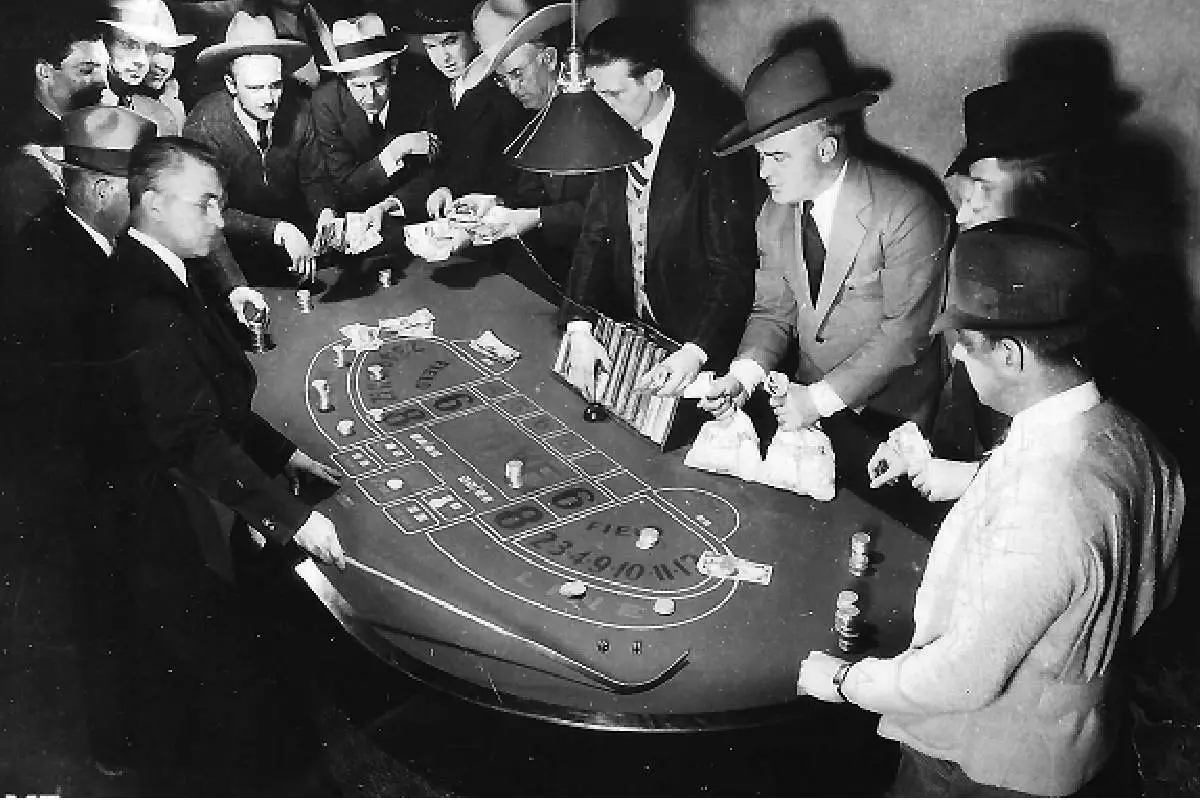
Every day, casino customers lost money at the tables. That cash was collected and brought to the counting room, where it was supposed to be tallied, recorded, and eventually reported to the state for tax purposes. The skim happened before the official count. Before the cameras, before the forms, before anyone wrote anything down. Cash was removed from the stream first, divided into envelopes or paper bags, and sent to mob bosses in Chicago, Kansas City, Cleveland, wherever the controlling interest lay.
The casino reported lower revenue. Taxes were paid on a smaller number. And the difference traveled out of Nevada in ways that rarely left a paper trail.
“The mob’s biggest mistake was making Las Vegas too desirable.”
From a 1980s FBI agent’s report summary, quoted in subsequent journalism on Operation Strawman
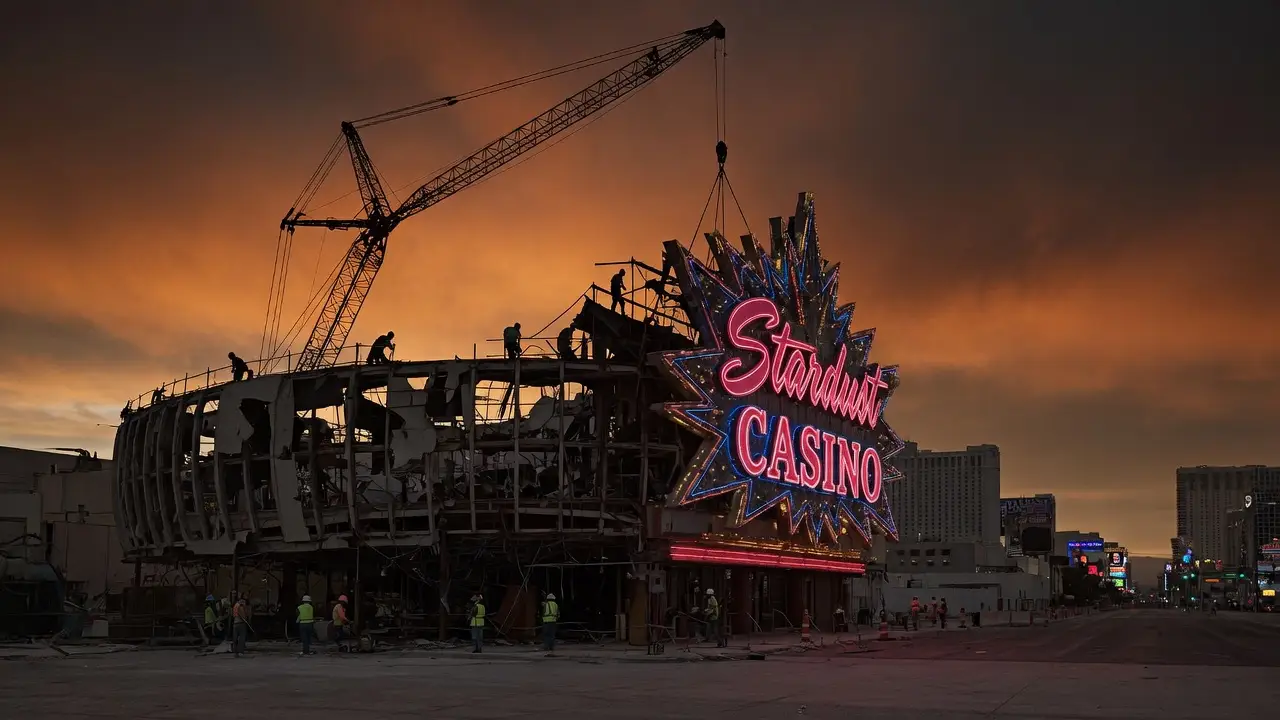
The Stardust became one of the most famous examples. For years, the casino’s actual take was believed to be substantially higher than what appeared in official records. Cash moved through a system of trusted couriers, and portions of it ended up in the hands of Midwestern crime families who never set foot behind the counting room door.
The mechanics required trust, discipline, and the right personnel. A counting room full of people who were afraid of the men giving the orders was, practically speaking, a perfect accounting system. Nobody misreported. Nobody shorted the envelope. The consequences of doing so were well understood.
<h3″>Frank Rosenthal, Tony Spilotro, and the Beginning of the End
By the 1970s, the Chicago Outfit’s man in Las Vegas was Frank “Lefty” Rosenthal, a gambling expert and sports bettor who ran the Stardust and several other casinos through a series of nominally legitimate positions. Rosenthal had no license. He couldn’t get one. So he worked around the edges, holding titles that didn’t technically require Gaming Commission approval while functionally controlling operations.
His counterpart was Anthony Spilotro, a Chicago Outfit enforcer sent to Las Vegas to protect the Mob’s interests on the ground. Spilotro was not interested in subtlety. He ran a burglary ring, intimidated witnesses, and brought a level of violence to Las Vegas that made everyone nervous, including the people he was supposed to be protecting.
The two men’s world is now mostly remembered through Martin Scorsese’s film Casino, which used their lives as source material. But before Hollywood got to them, federal investigators spent years building the case that would eventually collapse the whole operation.
LESSER-KNOWN DETAIL
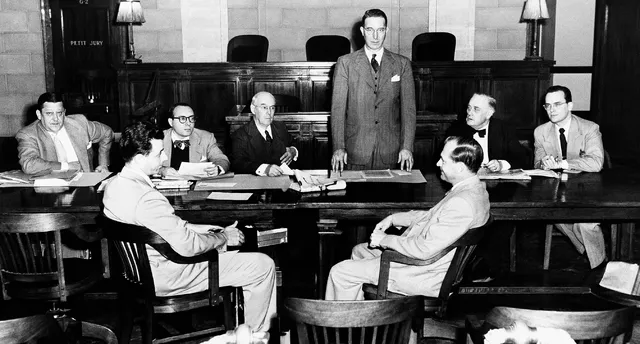
Virginia Hill, Siegel’s girlfriend, testified before the Kefauver Committee investigating organized crime in 1951. When asked why so many men lavished gifts and money on her, she replied: “I’m the best damn piece that ever lived.” The room was, by most accounts, briefly silenced.
Rosenthal survived a car bombing in 1982. He left Las Vegas soon after. Spilotro was murdered by the Chicago Outfit in 1986, beaten to death in a basement in Indiana.
What brought both men down wasn’t rival gangsters. It was paperwork.
Operation Strawman and the Federal Reckoning
The FBI’s Operation Strawman and related investigations through the late 1970s and early 1980s methodically documented what had been happening in Las Vegas for thirty years. Hidden ownership. Skimming operations. Pension fund corruption. Mob-connected licensees. The evidence accumulated in ways that Nevada’s own regulators had either missed or chosen not to see.
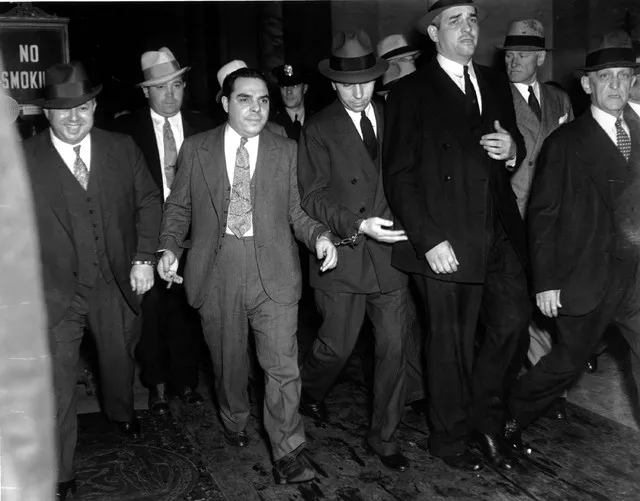
In 1985 and 1986, federal prosecutors brought cases that resulted in convictions across multiple cities. Frank Balistrieri, the Milwaukee boss, was convicted in connection with skimming more than two million dollars from Las Vegas casinos. Kansas City figures went down on similar charges. The indictments named the casinos, the mechanisms, and the networks that had connected a remote Nevada city to crime families in half a dozen American cities.
LESSER-KNOWN DETAIL
The Desert Inn’s golf course, built partly to attract wealthy guests, was where Howard Hughes was living as a recluse when he eventually bought the hotel in 1967, because the management wanted him to vacate his rooms for high-rollers and he chose to purchase the building instead.
At roughly the same time, corporations began moving into Las Vegas in ways that changed the economics entirely. Howard Hughes had already demonstrated that legitimate capital could enter the casino business. By the 1980s, publicly traded companies were acquiring properties and bringing with them accountants, compliance departments, and the scrutiny that comes with having shareholders. Modern surveillance technology made counting rooms visible in ways they hadn’t been before. Regulators, pushed by federal pressure, started actually looking.
The combination was lethal to the old system. The Mob’s methods depended on darkness. Once the lights came on, the whole apparatus became visible, and it collapsed.
What Was Left When the Smoke Cleared
The irony at the center of this story is that the Mob was too good at what it did.
By pouring money into casinos, building connections between the desert and Hollywood, manufacturing the mystique of danger and luxury, organized crime helped create something that became genuinely valuable. And genuinely valuable things attract institutional money, legal scrutiny, and the kind of corporate management that has no patience for envelopes of cash leaving through the back door.
The men in the shadows built a stage. Once the show was big enough, they could no longer afford to run it. The corporations that replaced them didn’t bring charm or danger or the kind of wild energy that made Las Vegas what it was. They brought spreadsheets, background checks, and publicly audited financial statements.
Las Vegas today is a different kind of machine, bigger, more regulated, and far more profitable than anything the Mob ever controlled. The casinos where millions of dollars were skimmed now have surveillance systems that track every chip, every transaction, every movement. The Teamsters pension fund is gone as a vehicle for underworld financing. The counting rooms are wired.
The Mob helped build the fantasy. It just didn’t survive long enough to enjoy it.
Las Vegas In Today’s World
Las Vegas remains the clearest case study in how illegal money can seed a legitimate industry, and how that industry can eventually regulate itself clean without fully acknowledging how it was built. Every major modern casino resort sits on ground that was in some way shaped by the decisions, the capital, and the infrastructure that mob-connected figures put in place between 1945 and 1980. The architecture of the city, its labor culture, its entertainment industry connections, its hospitality economy, all of it bears the fingerprints of that era.
LESSER-KNOWN DETAIL
Skim money was sometimes transported in ordinary grocery bags on commercial flights by men listed as regular passengers. The simplicity of the method is part of why it worked for so long.
More broadly, the Las Vegas story is about what happens when legal markets are underserved by legitimate capital. The banks wouldn’t lend to casinos. The Mob would. That gap created a dependency that lasted decades and cost workers, taxpayers, and the state of Nevada enormously. The lesson isn’t that criminals are clever. It’s that legal vacuums get filled by whoever is willing to walk in.