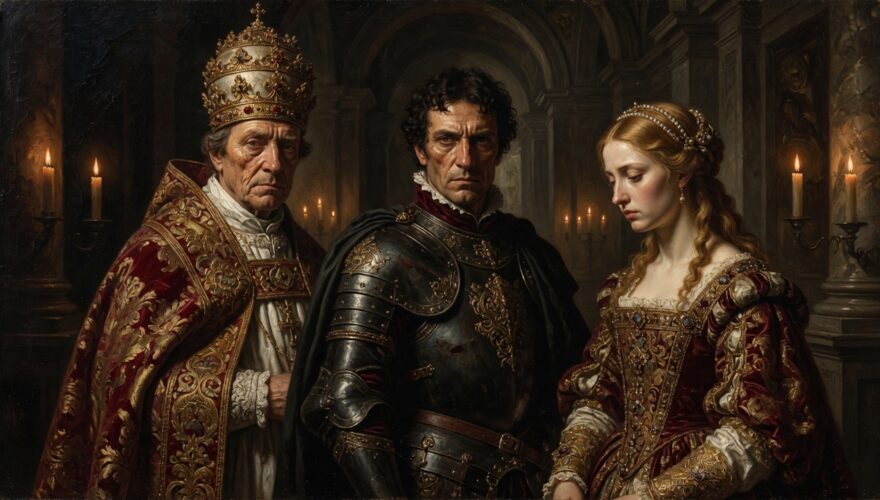
The Borgias were accused of poison, incest, and murder. But the real story is darker and more interesting: a Spanish family that turned the Vatican into a dynastic power machine. The true story.
A pope who openly acknowledged his illegitimate children. A son who quit the cardinalate to become the most feared military commander in Italy. A daughter whose name became synonymous with poison, seduction, and murder across five centuries of European imagination.
And the real question, the one that makes the Borgias genuinely fascinating: were they actually the most dangerous family in history, or were they simply the most successfully slandered?
The answer is probably both. The Borgias were dangerous. They were also the target of one of the most effective propaganda campaigns the medieval world ever produced. Understanding which crimes were real and which were invented tells us something far more interesting than a simple villain story ever could.
- 1 The World That Built Them
- 2 Rodrigo Borgia: The Pope Who Made the Vatican a Family Business
- 3 Cesare Borgia: The Prince Before The Prince
- 4 Lucrezia Borgia: Used, Blamed, and Misremembered
- 5 The Poison That Was Never Found
- 6 The Real Power: When the Sacred Becomes a Business
- 7 The Spanish Problem: Outsiders in a City of Wolves
- 8 When the Machine Broke
- 9 What the Borgias Actually Left Behind
The World That Built Them
Before we condemn the Borgias, we need to understand what Italy looked like when they arrived.
Renaissance Italy was not a unified country. It was a collection of competing city-states, each ruled by noble dynasties, merchant oligarchies, or powerful Church figures who behaved like monarchs. Milan, Venice, Florence, Naples, the Papal States: each was its own political creature, constantly negotiating, allying, and betraying its neighbors. The French invaded in 1494. The Spanish were expanding their influence across the Mediterranean. Mercenary armies called condottieri fought for whoever paid them this season, and hired themselves to the other side the next.
The papacy was not just a religious institution. It was a political power in the middle of this battlefield, controlling territory in central Italy, commanding armies, negotiating with kings, and distributing wealth and influence through ecclesiastical appointments. Whoever sat on the throne of Saint Peter controlled enormous leverage over European politics. The position had always attracted men who wanted power as much as they wanted God.
By the time Rodrigo Borgia entered the Church hierarchy, corruption was not a scandal. It was the infrastructure. Offices were sold. Nepotism was standard. Illegitimate children were poorly kept secrets. The Borgias did not invent any of this. They simply became the era’s most visible, most hated, and most remembered practitioners of it.
Rodrigo Borgia: The Pope Who Made the Vatican a Family Business
He was born in the Kingdom of Valencia in 1431, into a family that already had one pope in its recent history. His mother’s brother, Alfonso de Borja, had become Pope Calixtus III, and the moment that happened, Rodrigo’s career trajectory changed completely.
Join The Archive Briefing
Weekly dispatches. The history they didn't teach you — sourced, subverted, delivered to your inbox.
He was brought to Rome, given a first-class legal education, and then handed church offices the way other families handed their sons military commissions. By his mid-twenties he was a cardinal. By his mid-thirties, he was Vice-Chancellor of the Holy Roman Church, one of the most powerful administrative positions in Catholicism. He held that office for thirty-five years under five different popes, accumulating wealth, influence, relationships, and strategic knowledge that no one in Rome could match.
LESSER-KNOWN DETAILS
The gathering where Alexander VI fell ill in August 1503 was hosted by Cardinal Adriano Castellesi. Multiple guests became sick. The most credible explanation remains a malarial fever, but the coincidence of timing, a Borgia pope collapsing at a cardinal’s dinner, generated speculation that has never entirely stopped.
He also had a long relationship with a woman named Vannozza dei Cattanei that produced at least four children: Giovanni, Cesare, Lucrezia, and Gioffre. This was scandalous even by the Church’s forgiving standards of the time. A cardinal was not supposed to father children publicly. But Rodrigo was never particularly embarrassed about it. He acknowledged his children. He advanced them. He planned around them.
In 1492, the same year Columbus landed in the Caribbean and changed the shape of the world, Rodrigo Borgia was elected Pope Alexander VI. The conclave was widely suspected to have involved substantial bribes. One Roman cardinal wrote that Alexander had distributed offices, abbeys, and promises of cash to secure his votes. He probably had. He had been doing exactly this kind of political maneuvering for decades. Buying a papal election was simply the largest transaction in a life full of them.
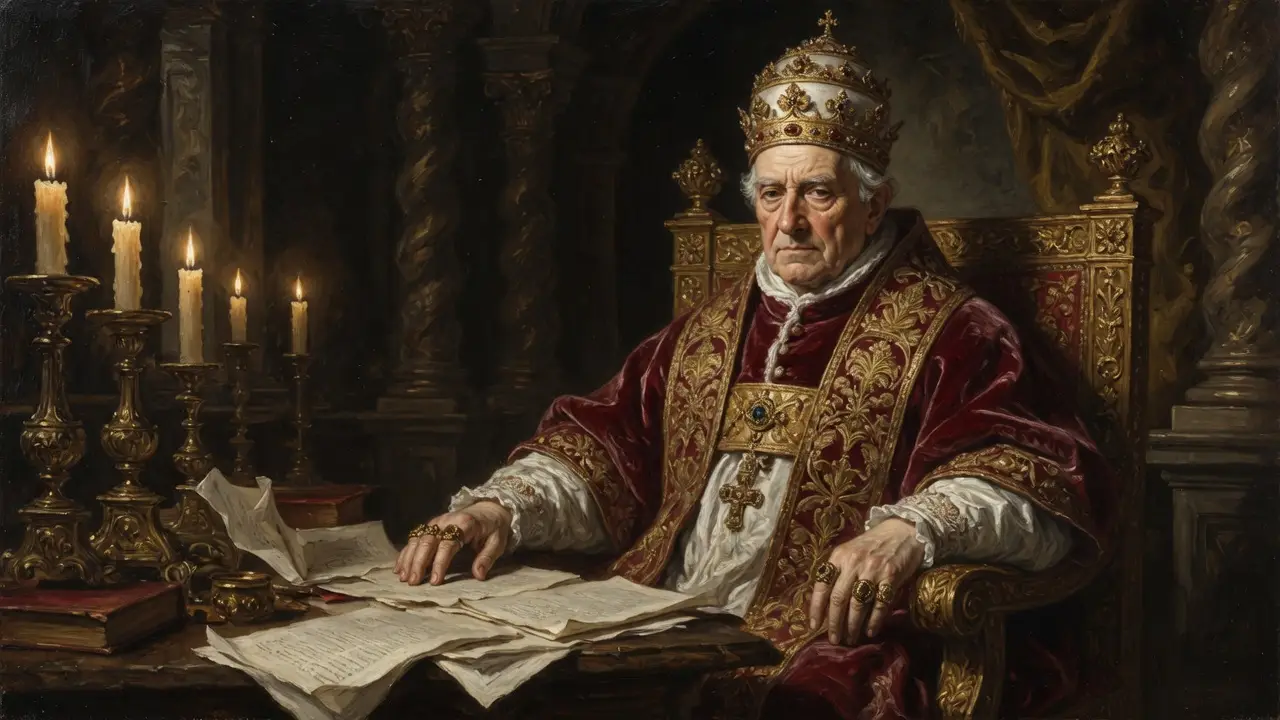
As pope, he pursued an agenda that was almost entirely dynastic. He wanted the Borgia family to be the defining power in Italian politics. He arranged strategic marriages for his children. He handed church offices and military commands to Giovanni and Cesare. He made Lucrezia’s marriages serve his diplomatic goals. He used excommunication and spiritual authority as political leverage, threatening rulers who opposed him and rewarding those who aligned with Borgia interests.
The theologian and reformer Girolamo Savonarola famously called him out directly, denouncing the Rome of Alexander VI as a city of spiritual rot. Alexander eventually had him arrested, tried, and executed in 1498. Critics of Church corruption did not last long when Rodrigo Borgia was pope.
What Alexander VI understood better than almost anyone was that the papacy was not just a spiritual office. It was a resource. Wielded correctly, it could make your family untouchable. He wielded it with precision and without apology for eleven years.
Cesare Borgia: The Prince Before The Prince
Of all the Borgias, Cesare is the one who most deserves the word “dangerous” in a purely operational sense.
He was born around 1475, the second of Rodrigo’s sons and, by most accounts, the most gifted. Physically striking, intellectually sharp, and possessed of the kind of cold political instincts that made contemporaries uneasy even when they admired him, he was initially pushed toward a church career. At seventeen he was a bishop. At eighteen he was a cardinal. His father needed ecclesiastical cover in the college of cardinals.
But Cesare hated it. He was not built for altar and vestment. He was built for horses and armies and the particular thrill of political crisis. In 1498, after his brother Giovanni was murdered, Cesare made a move almost without precedent: he resigned his cardinalate. The Church did not do refunds on that kind of appointment. Cesare did not care. He had somewhere more interesting to be.
He allied himself with Louis XII of France, who had his own territorial ambitions in Italy and needed Italian partners. Cesare got a French title and a French bride. France got Borgia support for their Italian campaigns. It was a transaction, exactly the kind he would repeat throughout his career.
“He is indeed, as they say, more feared than loved.”
Niccolo Machiavelli, about Cesare Borgia, in a diplomatic dispatch from the Romagna, 1502
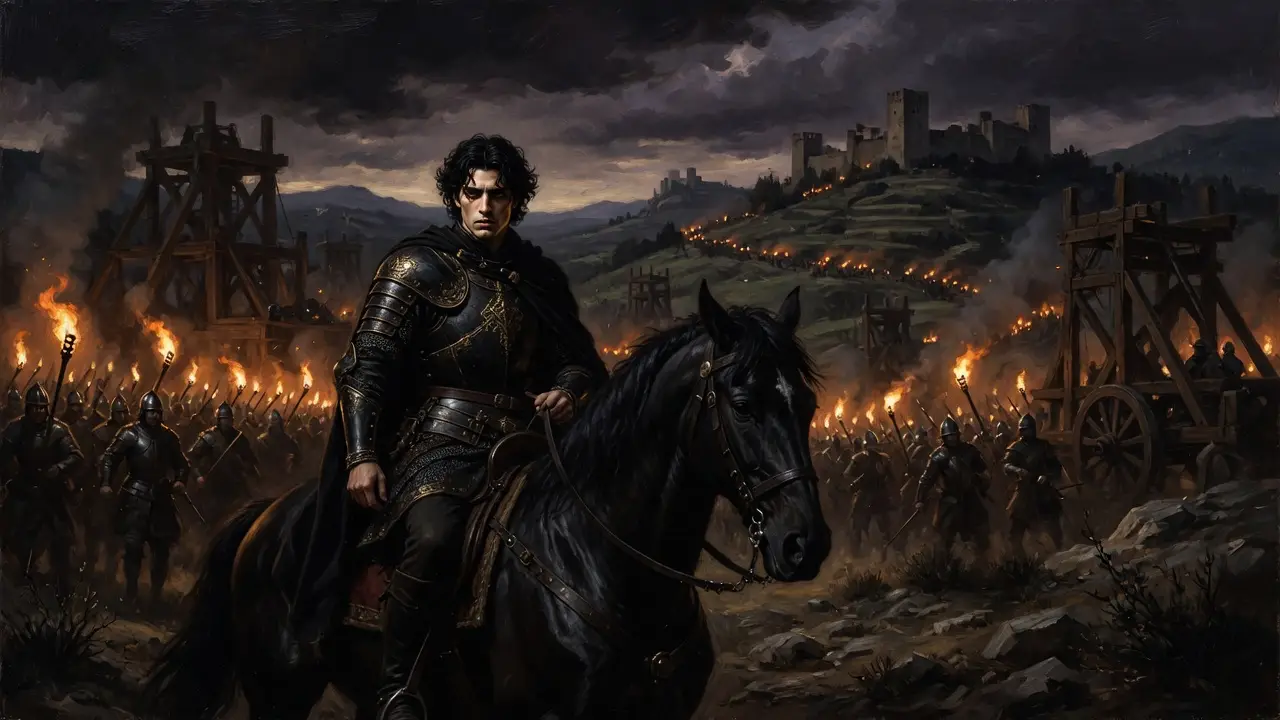
What followed was a series of military campaigns across central Italy that became the stuff of nightmare for the petty lords of the Romagna region. Cesare moved fast, faster than his enemies expected. He negotiated when negotiation served him and attacked when attack was cheaper. He used fear strategically. Lords who resisted found their cities besieged. Lords who surrendered too slowly found their capitulation terms significantly worse than those offered to men who had moved quickly.
He had a method. He appointed governors to administer conquered territories, some of them capable men, some of them deliberately brutal. His most famous governor, Remirro de Orco, was given essentially unlimited authority to impose order in the Romagna through whatever means he found necessary. When the region was pacified and Remirro’s brutality had made him hated, Cesare had him executed in the public square, his body cut in two pieces, displayed as a message to anyone who wondered who was really in charge.
Niccolo Machiavelli watched all of this. The Florentine diplomat encountered Cesare during his campaigns and corresponded with him. What he saw was a man who understood that power was not a moral question but a practical one. That effective rulers were not constrained by the expectations others placed on them. That cruelty deployed surgically was less damaging to a state than cruelty allowed to fester into chaos.
LESSER-KNOWN DETAILS
When Rodrigo was being elected pope, Cesare allegedly dressed as a courier to move through Rome undetected and monitor the political situation. He was seventeen.
When Machiavelli later wrote what became The Prince, readers recognized Cesare in its pages. Machiavelli never named him as the model, but the description of the ideal new prince, adaptive, ruthless, willing to be feared while managing not to be hated, reads like a portrait of the man Cesare was becoming before everything collapsed.
And he was becoming something extraordinary: a prince with a real territorial base. By 1502 he controlled most of the Romagna and was negotiating for more. He was thirty years old. His father was pope. There was a genuine possibility that Cesare Borgia would carve out a permanent secular kingdom in central Italy, something no Borgia had held before and something that would have fundamentally changed the map of the peninsula.
Then his father died.
Lucrezia Borgia: Used, Blamed, and Misremembered
In most versions of the Borgia story, Lucrezia is the femme fatale. The poison princess. The woman who wore a hollow ring filled with deadly powder and stirred it into wine when her father or brother decided someone needed to die.
Almost none of it is supported by evidence. The real story of Lucrezia Borgia is more uncomfortable than the legend, and more interesting.
She was born in 1480, the only daughter among Rodrigo’s acknowledged children. From the time she was a small child, she was a diplomatic asset. Her first betrothal was arranged when she was ten. It was broken off when her father’s political needs shifted. Her second was also cancelled for similar reasons. She finally married at thirteen, to Giovanni Sforza of Pesaro, a match designed to strengthen ties with the Sforza dynasty of Milan.
When that alliance became politically inconvenient, Alexander VI had the marriage annulled. The grounds were non-consummation. Giovanni Sforza, humiliated, insisted this was false and circulated stories that Alexander had wanted Lucrezia for himself. Whether he believed this or said it out of spite is unknowable. It became one of the foundational rumors of the Borgia legend regardless.
Her second marriage, to Alfonso of Aragon, seems to have been the one she actually wanted. Contemporary accounts describe the two as genuinely fond of each other. Alfonso was young, handsome, and politically useful as a tie to Naples.
LESSER-KNOWN DETAILS
During Cesare’s military campaigns, Alexander VI actually appointed Lucrezia as acting governor of Spoleto in 1499. A woman governing a papal territory was extraordinary for the period. She handled it without incident and apparently with competence.
In 1500, he was attacked on the steps of Saint Peter’s Basilica by unknown assailants, stabbed multiple times and left for dead. He survived the initial attack. Lucrezia reportedly nursed him through weeks of recovery, refusing to leave his side. Then, once he had nearly recovered, he was strangled in his sickroom by agents working for Cesare.
The motive was almost certainly political. Naples had shifted in strategic importance, and Cesare needed freedom to maneuver with France, who were Naples’s enemies. Alfonso of Aragon had become inconvenient, so Alfonso of Aragon died.
What Lucrezia thought of this is not recorded. She had no power to prevent it, no political standing to demand justice, and no realistic option except grief followed by compliance with whatever her father decided to do with her next.
Her third marriage was arranged with Alfonso d’Este of Ferrara. The Este family was not thrilled: marrying into the Borgia family carried reputational costs, and they negotiated hard. Lucrezia went to Ferrara in 1502 and spent the rest of her life there.
Here is where the legend and the historical record diverge most dramatically. In Ferrara, Lucrezia was not a poisoner or a political schemer. She was a duchess, a patron of art and literature, a correspondent with poets, and by most contemporary accounts a capable administrator and a popular figure at court. She died in 1519, thirty-nine years old, after a difficult childbirth.
The poison stories followed her to Ferrara and have followed her ever since. But they belong mostly to the pamphlets of her enemies, not to any documented crime.
The Poison That Was Never Found
The Borgias and poison are inseparable in the popular imagination. There is supposedly a specific Borgia poison called cantarella, described in various sources as a white powder with a delayed action that allowed the poisoner to be safely elsewhere when the victim died. It was said to have been deployed with a hollow ring, in wine, on documents, anywhere a Borgia wanted someone dead.
The problem is that cantarella has never been definitively identified. Its chemical composition was described differently by different sources. Some historians believe it may have been arsenic, which was genuinely available and genuinely used in Renaissance Italy. Others think the cantarella legend grew in the fertile soil of Borgia enemies who had every reason to attribute every suspicious death in Rome to the family that everyone already suspected of everything.
Deaths in Renaissance Italy were frequent, often unexplained, and routinely suspected to be political murders. When powerful men died suddenly, poison was a reasonable first assumption because it was a real tool that real people used. But not every death required Borgia involvement. The family accumulated so much suspicion that their name became attached to deaths that may have had nothing to do with them.
What is documented is that the Borgias were willing to use violence. Cesare’s murder of Alfonso of Aragon is not seriously disputed. The campaign of political intimidation he ran through central Italy involved real deaths. Alexander VI’s use of excommunication and political pressure to destroy opponents was real.
But the full mythology of the poison hollow ring, the deliberate mass poisoning at banquets, the cantarella distributed as a family specialty: this is where history shades into legend, and where the enemies of the Borgias did their most effective work.
The Borgias did not need to poison everyone they touched. Their enemies did something almost as effective: they poisoned the family name.
The Real Power: When the Sacred Becomes a Business
Strip away the poison myths and the incest rumors and what remains is genuinely frightening.
The Borgias were dangerous because they had access to the most powerful institution in the Western world and they used it as a private instrument. Alexander VI controlled the College of Cardinals, which meant he controlled future papal elections. He controlled church appointments across Europe, which meant he could make men rich or break their careers. He controlled the diplomatic relationships between the papacy and every Catholic monarch in Christendom. He had an army. He could impose interdicts that placed entire territories outside the sacraments of the Church.
All of this he used for one purpose: the advancement of his family.
He sold church offices, something called simony, which was already technically forbidden and already widely practiced. Under Alexander, the scale intensified. Bishoprics and cardinalates were distributed based on political usefulness rather than theological qualification. The wealth flowing into Borgia coffers was immense.
“He sold the keys, the altar, Christ himself.”
Epitaph attributed to Jacopo Sannazaro, written after Alexander VI’s death
He used the Church’s marriage annulment authority as a political tool. Lucrezia’s marriages were contracted and dissolved to serve his diplomatic needs. The spiritual machinery of Catholicism became a means of managing alliance structures.
He gave Cesare command of the papal military forces to pursue what was nominally a campaign against rebellious papal vassals but was functionally a Borgia land-grab in central Italy. He granted Cesare the title Duke of Valentinois, a French appointment engineered through the French alliance, and then opened papal territories to support his military campaigns.
What Alexander VI did was demonstrate, in the most visible possible way, that sacred authority could be thoroughly privatized. That the Church, the institution that claimed to be the mediating structure between God and humanity, could be run like a family firm.
This is why reformers who came after Alexander VI had such potent material to work with. The Protestant Reformation gathered force in the early sixteenth century partly because the abuses of Alexander’s reign were so well documented and so extreme. Critics like Savonarola before and Luther after had an easy target. The Borgias did not cause the Reformation. But they handed its architects an almost perfect argument.
The Spanish Problem: Outsiders in a City of Wolves
Part of what made the Borgias such effective targets for reputation destruction was that they were foreigners.
Rome’s powerful families, the Orsini, the Colonna, the Della Rovere, had been fighting over influence in the city for generations. A Valencian family arriving and taking the papacy itself was an insult that went beyond politics. It was cultural. Anti-Spanish feeling was intense among the Italian nobility, and when Rodrigo Borgia became Alexander VI, the knives came out.
Giuliano della Rovere, who would later become Pope Julius II and become one of the Borgias’ most powerful enemies, fled Rome when Alexander was elected and spent years at foreign courts working against Borgia interests. He was ambitious, bitter, and influential, and he had access to the kind of platform that could shape how posterity remembered things.
The pamphlets and pasquinades circulated in Rome during Alexander’s pontificate were vicious. The accusations of incest, poisoning, and debauchery found their way into the writings of humanist scholars and eventually into the historical record. Some were based on real scandals. Some were invented. Many were exaggerations of things that were merely corrupt rather than uniquely monstrous.
LESSER-KNOWN DETAILS
After Cesare’s death in the ambush near Viana, his armor was stripped from his body by his attackers before anyone realized who he was. He was found naked and unidentified in a ditch. A soldier recognized him by a scar.
After Alexander died and Julius II eventually took the throne, the official Church establishment had every reason to blacken the Borgia legacy as thoroughly as possible. It made the new order look better by contrast, and it addressed the political resentments that had been building since 1492.
The black legend around the Borgias was not entirely manufactured. But it was carefully maintained by people who benefited from their villainy.

When the Machine Broke
In August 1503, both Alexander VI and Cesare fell severely ill at approximately the same time, shortly after a dinner at the vineyard of a cardinal. Rodrigo Borgia died within days. Cesare survived but was incapacitated for weeks at exactly the moment when his survival required action.
The cause of their illness has never been definitively established. Malaria was endemic in Rome during summer months. Some historians believe they were both struck by a particularly virulent fever that hit several others who attended the same gathering. The ever-present Borgia poison narrative has led some writers to speculate that someone finally managed to turn their own weapons against them.
What is certain is that Rodrigo’s death triggered an immediate political earthquake. The cardinals whose appointments had served Borgia interests scattered to protect themselves. Julius II, after a brief intervening papacy, took control and made clear that the era of Borgia dominance was finished.
“Men sooner forget the death of their father than the loss of their patrimony.”
Niccolo Machiavelli, The Prince
Cesare, weakened and without papal backing, found that the alliances he had built in the Romagna began dissolving almost immediately. Lords he had conquered returned to defiance. The French connection became unreliable as French interests in Italy shifted. He was eventually captured by the Spanish, escaped, and fled to the kingdom of Navarre, where his brother-in-law ruled.
He died in an ambush near Viana in March 1507. He was thirty-one years old. He had been a cardinal, a duke, the most feared military commander in Italy, and for one brief moment, a man who seemed capable of reshaping the entire political structure of the Italian peninsula. At his death he held nothing.
The machine that Alexander had built was an extraordinary structure, but it had one catastrophic design flaw. It was built around a single man sitting on the throne of Saint Peter. When that man died, everything that depended on him began dismantling itself at speed.
What the Borgias Actually Left Behind
The Borgias did not found a dynasty. Their territorial gains dissolved. Their political project failed. Cesare died young and militarily broken. Lucrezia became a footnote to her first life and a duchess in her second. The family name became byword and warning.
But they left something behind that persists in ways their actual crimes never could.
They demonstrated the full potential of institutional capture. Not the petty corruption of a judge taking a bribe or a bishop selling a small appointment. The comprehensive privatization of the most powerful institution in the medieval world. They showed what could be accomplished when someone with sufficient skill, sufficient ruthlessness, and sufficient patience sat at the top of a sacred hierarchy and simply decided to use it as personal infrastructure.
Every subsequent conversation about the relationship between institutional authority and private interest, about whether powerful organizations can be trusted to govern themselves, about what happens when the people running a sacred institution treat it as a resource: the Borgias illustrated all of it in real time, in public, in a way that their contemporaries could not ignore and history has never forgotten.
“O Alexander, because you sold what rightfully should have been given free, what you sold in life, you lose in death.”
Pasquinade (anonymous political satire) circulated in Rome following his death
They were not the most dangerous family because they killed the most people. Other dynasties killed more. They were dangerous because they revealed something uncomfortable about power itself: that sacred authority, properly managed, could be made to serve entirely secular ends, and that a sufficiently determined family could make even God’s representative on earth look like a crime boss.
Five centuries later, when we look at institutions that have been captured by private interests and used against their stated purposes, we are still looking at something the Borgias invented at scale. Their name became poison. But the lesson they taught about power turned out to be permanent.