The Taiping Rebellion killed up to 30 million people between 1850 and 1864, making it one of history’s deadliest conflicts, yet it barely appears in Western history books. Discover why this catastrophic Chinese civil war was erased from global memory, and why that erasure still matters.
The Man Who Believed He Was the Brother of Jesus
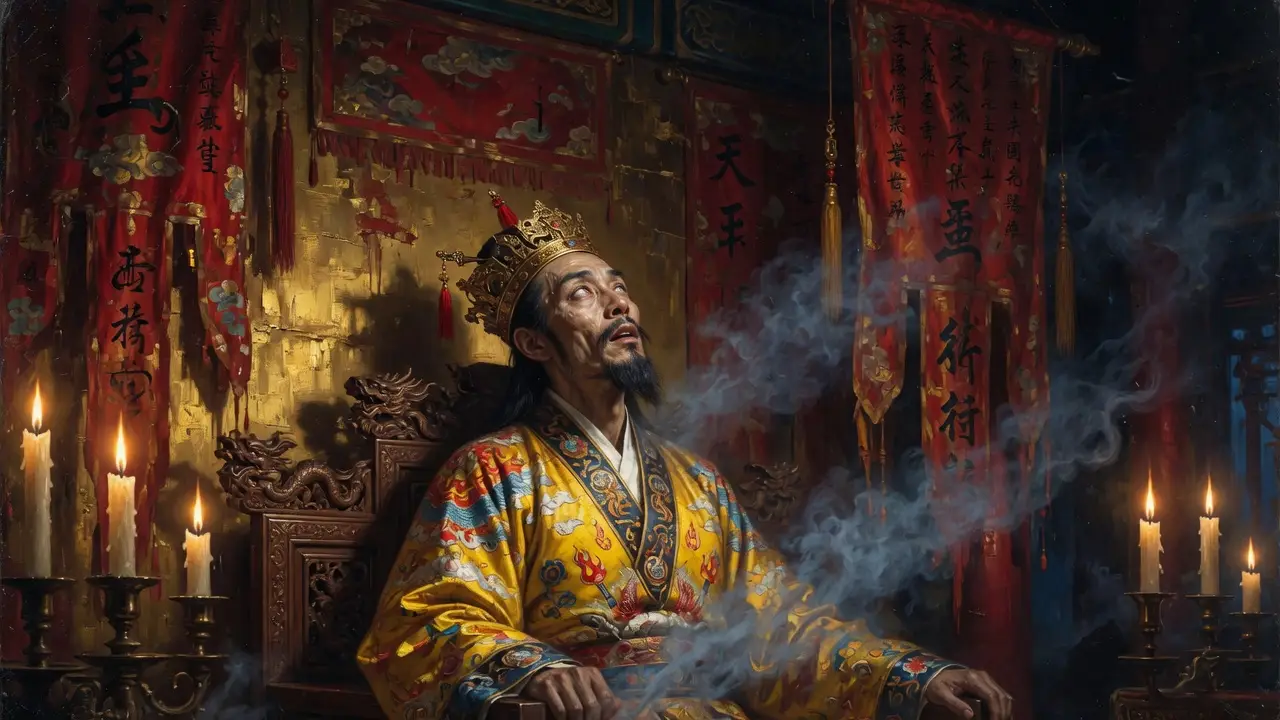
In the summer of 1837, a young Chinese scholar named Hong Xiuquan failed the imperial civil service exam for the third time. The humiliation broke something in him. He fell into a fever for forty days, and when he finally emerged, he told his family he had ascended to heaven, met God the Father, and received a divine mission. His older brother, he claimed, was Jesus Christ.
Nobody took him seriously at first. Then he started preaching. Then people started listening. Within a decade, this failed bureaucrat from a poor Hakka family in Guangdong Province had assembled the most lethal revolutionary army the world had seen since Napoleon.
What followed was not a peasant revolt quickly stamped out by imperial forces. It was a fourteen-year civil war that consumed southern China like fire through dry grass, displaced hundreds of millions, and left a death toll that historians still struggle to quantify, somewhere between 20 and 30 million people. More than the entire military and civilian death count of the First World War. More than the Holocaust. More than almost any single conflict in recorded human history, save the Second World War.
And most people in the Western world have never heard of it.
A Dynasty Already Rotting from Within
To understand why the Taiping Rebellion was possible, you have to understand what China looked like in 1850. The Qing Dynasty, ruled by ethnic Manchu emperors, had been visibly weakening for decades. The Opium Wars had cracked the empire’s self-image open. Britain had forced China to trade in opium at gunpoint, and the Qing court had lost… humiliatingly, decisively. The treaties that followed carved out foreign concessions in Chinese cities and stripped the dynasty of the moral authority it had always used to justify its rule.
Meanwhile, floods along the Yellow River had displaced millions in the north, and famine stalked the south. The population had grown faster than the land could support. Taxes were crushing. The imperial examination system, which had been the only real path to social mobility for centuries, was a brutal lottery that most men failed their entire lives.
Hong Xiuquan was one of them. But unlike most men who failed the exam and went home to farm, he had a vision. He had read a Christian missionary pamphlet, and after his breakdown, he became convinced it explained everything he had seen in his fever dream. He was the Son of God. He had a mandate. And there were millions of desperate, hungry, humiliated people ready to believe him.
Join The Archive Briefing
Weekly dispatches. The history they didn't teach you — sourced, subverted, delivered to your inbox.
The Kingdom of Heavenly Peace
By 1851, Hong had gathered tens of thousands of followers, primarily from Hakka communities who were already marginalized within Chinese society. He declared the Taiping Tianguo, the Heavenly Kingdom of Great Peace, with himself as the Heavenly King. His followers called themselves the God Worshippers. They banned opium, alcohol, gambling, and foot binding. They declared men and women equal before God. They organized into strict military units where discipline was enforced with the kind of biblical severity you would expect from someone who genuinely believed he was operating on divine orders.
They were also extraordinarily effective soldiers.
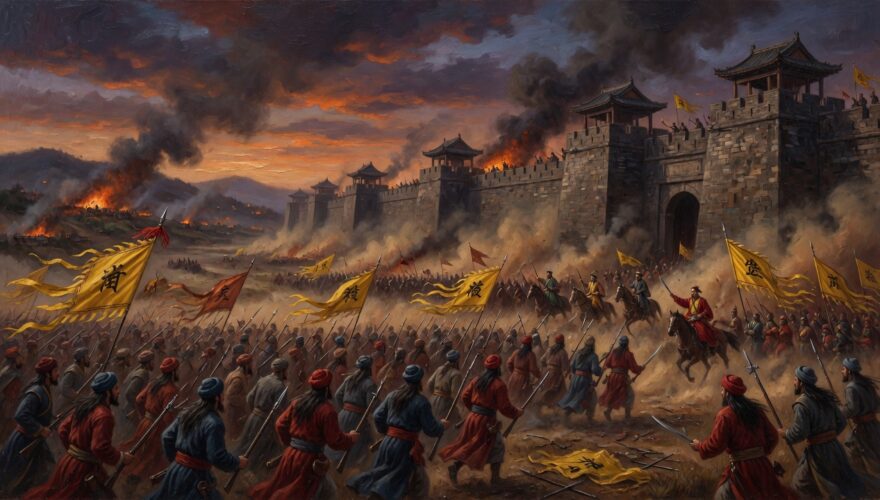
The Taiping army swept north and east through the provinces of Guangxi, Hunan, and Hubei with a momentum that seemed to confirm Hong’s divine mandate to his followers. In March 1853, they captured Nanjing, one of China’s great ancient capitals, and renamed it Tianjing, the Heavenly Capital. Hong’s kingdom now controlled a vast swath of the most economically productive land in China.
For a moment, the Qing Dynasty genuinely appeared to be finished.
“The Taiping troops were unlike any the dynasty had faced. They fought with the certainty of men who believed they were personally protected by God.”
Augustus Lindley, British merchant and Taiping sympathizer, writing in Ti-ping Tien-kwoh (1866)
A Revolution That Ate Itself
What happened inside the Heavenly Capital over the following decade is one of the stranger and darker chapters of the nineteenth century. Hong Xiuquan increasingly withdrew from governance, leaving real power to a rotating cast of competing kings. His original co-leader, Yang Xiuqing, claimed he could channel the voice of God the Father directly, giving him a theological authority that outranked even Hong himself. In 1856, Hong had Yang and thousands of his followers massacred in what became known as the Tianjing Incident. It was the beginning of the end.
The internal purges gutted the Taiping military leadership. The kingdom that had seemed unstoppable now turned its violence inward. Commanders who had won extraordinary victories against imperial forces were executed on the orders of a paranoid, increasingly erratic Heavenly King who spent most of his time in his palace surrounded by a harem of concubines, composing theological poetry.
Meanwhile, the Qing Dynasty had found its own answer to the crisis: a brilliant, pragmatic Han Chinese general named Zeng Guofan, who built a regional army called the Xiang Army that was loyal to him personally rather than to the corrupt imperial bureaucracy. He understood that the Qing couldn’t win with the forces it had. So he built new ones.
“Zeng Guofan was perhaps the most important Chinese figure of the nineteenth century, and in the West, almost nobody knows his name.”
Jonathan Spence, historian and author of God’s Chinese Son (1996)
Foreign Guns and the Death of a Kingdom
The final act brought Western powers directly into the war, though not in the way Hong had hoped. He had expected Christian nations to recognize him as a brother in faith and support his revolution against a pagan dynasty. Instead, Britain and France, who had just finished extracting profitable concessions from the Qing government, decided that a stable, if weakened, Qing court was a better trading partner than a theocratic rebel state run by a man who thought he was the son of God.
An American mercenary named Frederick Townsend Ward organized the “Ever Victorious Army,” a force of Western-trained Chinese soldiers that fought alongside Qing forces. After Ward was killed in battle in 1862, command passed to a British officer named Charles Gordon, who would later become famous, and then infamous, as “Chinese Gordon” and, eventually, as the man who died at Khartoum. Gordon was a complicated, deeply religious figure who found himself fighting against a movement that claimed to be Christian. He did it anyway, and he was good at it.
LESSER-KNOWN DETAILS
The Taiping government was, in many respects, strikingly progressive for its time. It formally prohibited foot binding, established rules against buying and selling women as wives or concubines, and appointed women to military commands. Female Taiping soldiers fought in segregated units and participated in the siege and capture of Nanjing.
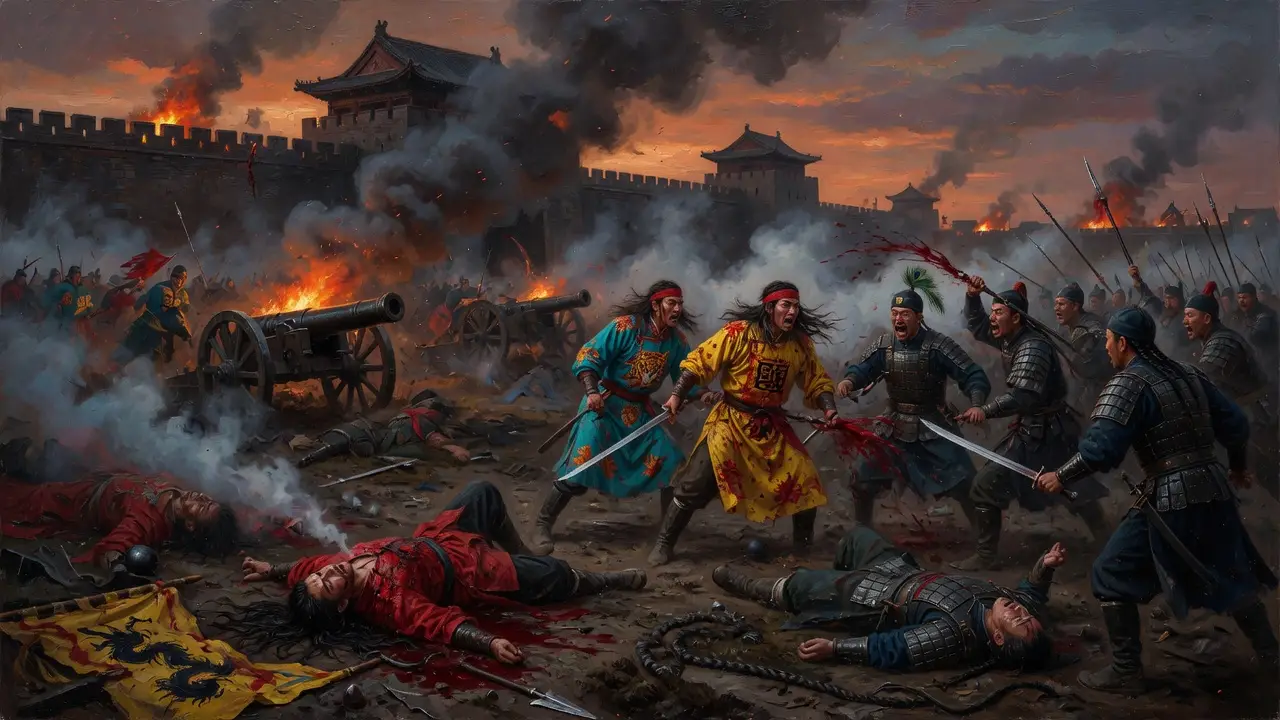
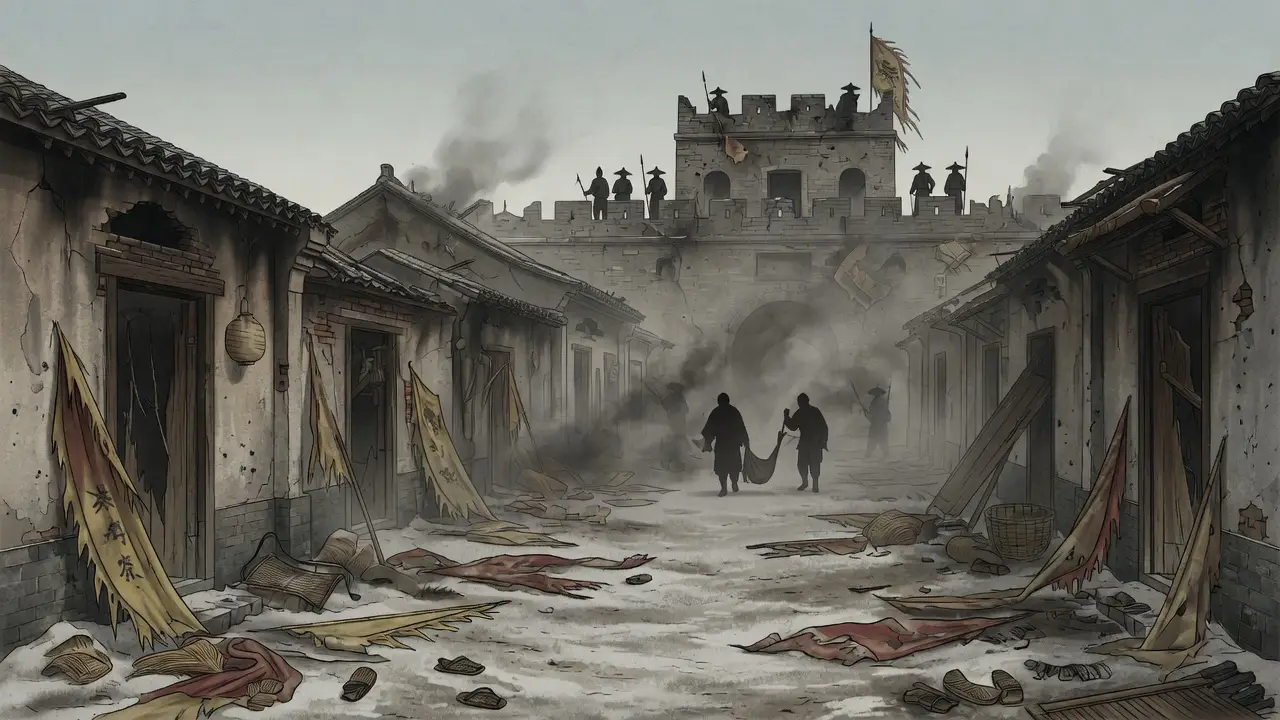
By 1864, the Heavenly Capital was under siege. Hong Xiuquan, by then probably mentally broken, refused to eat and reportedly told his starving followers to eat “sweet dew” from the weeds growing in the city streets. He died in June 1864, probably from food poisoning, though suicide has never been fully ruled out. The city fell weeks later. The Qing army and their allies carried out a massacre of the remaining Taiping forces and civilians that contemporary accounts describe as methodical and merciless.
“The city was a charnel house. The streets were so thick with the dead that passage was impossible without walking upon them.”
A European correspondent in Nanjing, summer 1864
Hong’s nine-year-old son and designated successor was captured and publicly executed. The Heavenly Kingdom of Great Peace ceased to exist.
Thirty Million Dead, and Silence
The death toll from the Taiping Rebellion came not just from combat. It came from famine engineered by sieges and scorched-earth tactics, from epidemic disease spreading through displaced populations, from mass executions of suspected Taiping sympathizers, and from the complete collapse of agricultural production across entire provinces. Some areas of Zhejiang and Anhui lost more than half their total population. Cities that had been prosperous trade hubs were reduced to ghost towns.
And then, remarkably, the story largely vanished.
Part of this is structural. The Qing Dynasty had no interest in commemorating a near-death experience that had exposed every weakness of their rule. The story of a man who claimed to be the brother of Jesus and nearly brought down the empire was not the kind of history the court wanted taught in schools. The rebels were dismissed as the “Long-Haired Bandits” in official history, and the official record was curated accordingly.
“The Taiping movement represents the most formidable rebellion that has ever menaced any established government.”
The Times of London, 1853
Western historians, for their part, were more interested in the parts of the story where Western actors appeared, the Opium Wars, the treaty ports, Gordon’s military adventures. The Taiping Rebellion itself was treated as context, backdrop, prologue to the “real” story of Western engagement with China.
There is also something subtler at work. The history that gets preserved, taught, and commemorated is not simply the history of the most significant events. It is the history that serves the interests of those who control the telling. The Taiping Rebellion didn’t fit cleanly into Western narratives of Chinese history as a place of ancient stasis finally disrupted by modern contact. It was too vast, too indigenous, too complicated, and ultimately too devastating to be folded neatly into a story that ended with Western power as the protagonist.
The Calculus of Memory
Every culture has a hierarchy of catastrophes it chooses to remember, and the logic of that hierarchy is worth examining. The Holocaust has museums, memorials, and mandatory curriculum in schools across the Western world. The First World War has a hundred years of literary commemoration. These are not arbitrary choices, they reflect the cultures that control the global production of historical memory.
The Taiping Rebellion sits outside that frame. It happened in China, to Chinese people, driven by Chinese political and social dynamics, resolved by Chinese military and political actors. It has no Western nation at its center as either hero or villain. The Western figures who appear in the story (Ward, Gordon), are supporting characters, mercenaries for hire.
The Nanjing Massacre of 1937, in which Japanese forces killed hundreds of thousands of Chinese civilians, is considerably better known in the West than the Taiping Rebellion, partly because it occurred within living memory, partly because it involved Japan (a country that became central to Western strategic concerns), and partly because it fits into the larger narrative framework of World War Two, which is perhaps the most thoroughly documented conflict in human history.
The Taiping Rebellion offers none of those narrative anchors. It is simply what it is: one of the deadliest catastrophes in human history, rooted in a collision of desperate poverty, religious vision, political dysfunction, and the slow collapse of a dynasty that had ruled the most populous country on earth for two centuries.
The Long Shadow
The Taiping Rebellion did not end with the fall of Nanjing. Its reverberations shaped everything that followed in Chinese history. The Qing Dynasty survived, but it never recovered its authority or its confidence. The regional armies that had defeated the Taiping, including Zeng Guofan’s Xiang Army and Li Hongzhang’s Huai Army, became the real power centers of the late Qing period, prefiguring the warlordism that would tear China apart after 1912.
LESSER-KNOWN DETAILS
The Taiping movement had its own translated Bible, its own hymns, and its own theological innovations. Hong Xiuquan removed the second commandment (against graven images), which he considered superseded by direct revelation. He added his own name, and his elder brother Jesus’s name, to the Lord’s Prayer. Western missionaries who encountered Taiping theology were uniformly horrified.
Mao Zedong, who grew up hearing about the Taiping from older generations, considered Hong Xiuquan a forerunner of the communist revolution, a peasant who had risen against a corrupt ruling class and come agonizingly close to transforming China. Mao’s own Long March, his years of guerrilla warfare, his eventual capture of Nanjing in 1949, all of it echoes, consciously or not, the Taiping arc.
The suffering encoded in those fourteen years did not simply disappear when the soldiers died and the records were suppressed. It settled into the landscape, into the demographics, into the institutional paranoia of a dynasty that had barely survived and a country that would spend the next century trying to understand what had broken and how to fix it.
What Gets a Museum
There is a Taiping Heavenly Kingdom History Museum in Nanjing today. It is housed in a palace that was once part of Hong Xiuquan’s compound. It draws visitors, but it remains largely unknown outside China. There are no major Western museums dedicated to the rebellion. No prestige television documentaries. No acclaimed novels in English about Hong Xiuquan that have entered the mainstream literary canon.
The absence is not accidental, and it is not merely a product of linguistic or geographic distance. It reflects a deeper truth about how history functions: not as a record of what happened, but as a selection, made by the powerful, of what is worth remembering.
“We cannot calculate what the Taiping might have become, had the Western powers chosen differently.”
Franz Michael, historian, The Taiping Rebellion (1966)
Thirty million people. Fourteen years. One of the most radical social experiments of the nineteenth century, driven by a man whose theology was bizarre and whose instincts were sometimes genuinely progressive. A war that reshaped a country of four hundred million people and set the stage for every major Chinese political transformation that followed.
The least we can do is know it existed.