In September 1950, San Francisco became an unwitting laboratory. A U.S. Navy ship quietly sprayed bacteria into the air to see how a biological attack might spread through a major American city. Nearly 800,000 people were never warned. Soon after, a rare infection appeared, one man was dead, and the truth stayed buried for 26 years. This is the true story of Operation Sea-Spray.
The City Had No Idea
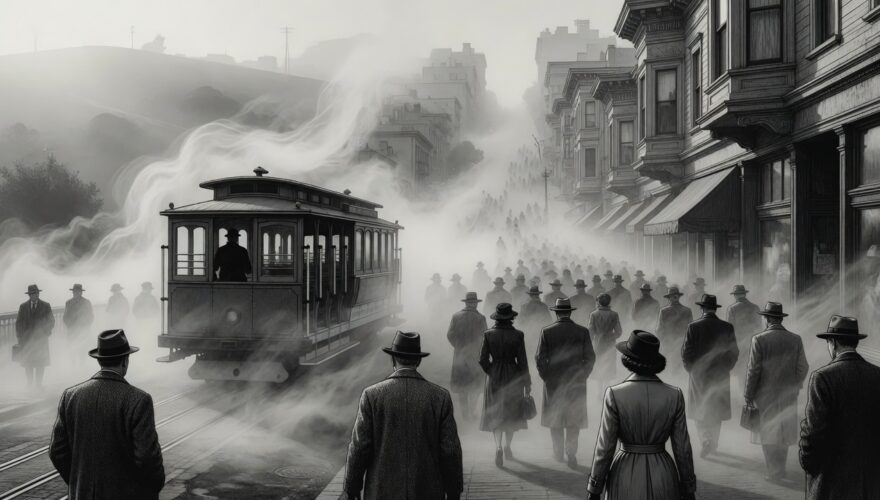
On the morning of September 26, 1950, San Francisco woke up to what it always woke up to: fog rolling in off the bay, the smell of salt and diesel from the docks, the clang of cable cars making their first runs up the hill. Fishermen were already out. Longshoremen were punching in. Children were heading to school with their lunch pails.
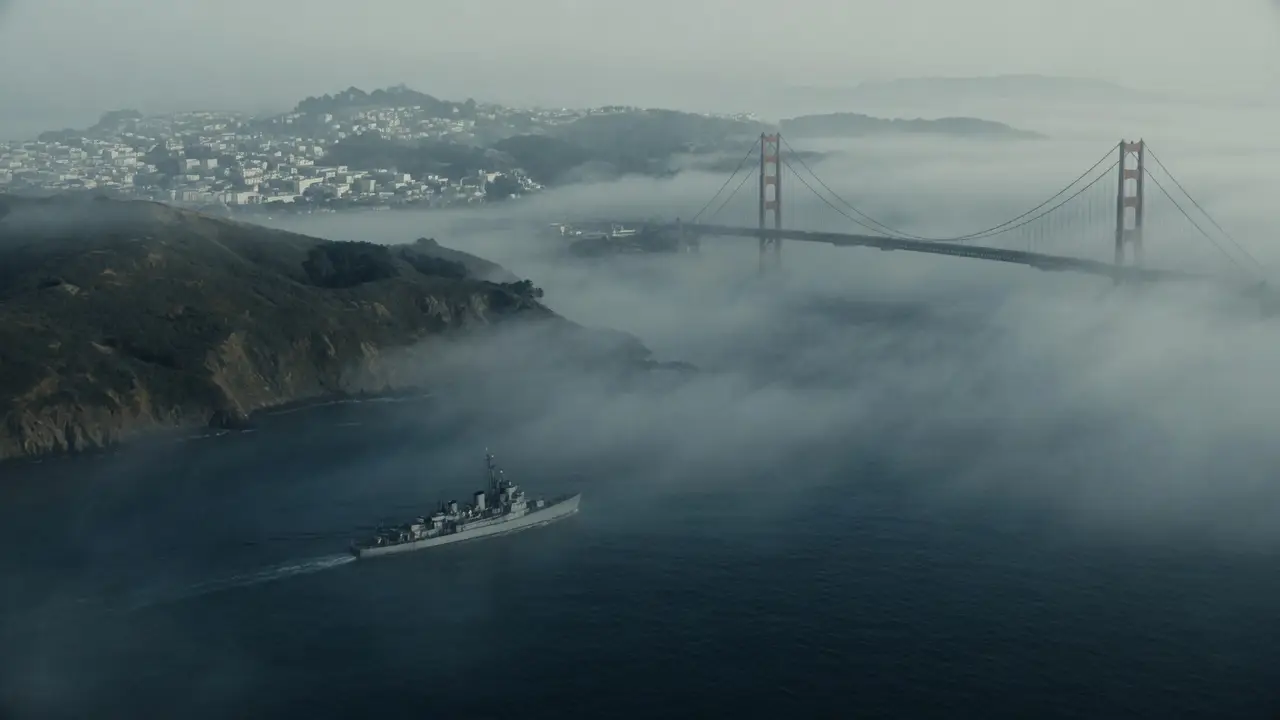
Nobody noticed the Navy vessel gliding offshore. Nobody noticed the hoses.
For six days, a United States military ship cruised the coastline and pumped massive quantities of aerosolized bacteria directly into the sea winds. The fog carried it inland. The morning breeze distributed it across neighborhoods. Eight hundred thousand people inhaled it in their kitchens, their offices, their hospital rooms, their beds. Not one of them was warned. Not one of them consented.
The government called it a national security exercise. History calls it Operation Sea-Spray. And the story of what happened next took more than two decades to reach the public.
Why San Francisco Was the Perfect Target
The military didn’t choose San Francisco by accident. The city is a microbiologist’s dream or nightmare, depending on which side of the hose you’re standing on.
The geography is almost tailor-made for dispersal testing. The bay creates a natural wind funnel. The famous morning fog doesn’t just sit on top of the city, it penetrates it, threading through valleys and neighborhoods in predictable patterns. The dense population meant the experiment would generate rich, statistically meaningful data. And the port infrastructure made it easy to launch a covert maritime operation without attracting attention.
“The Army’s tests were designed to determine the vulnerability of American cities to covert biological attack. The citizens of those cities were not informed.”
Senate subcommittee report summary, 1977
During the early Cold War, military planners had become obsessed with a specific scenario: what would happen if the Soviet Union launched a biological attack on a major American coastal city? Could they do it from a ship offshore? How far inland would the agents travel? Which neighborhoods would absorb the heaviest concentration? Could the government even detect it?
San Francisco, with its unique topography and reliable fog cycles, was essentially a ready-made laboratory. The only variable the military decided wasn’t worth considering was the 800,000 people living inside it.
Join The Archive Briefing
Weekly dispatches. The history they didn't teach you — sourced, subverted, delivered to your inbox.
The Bacteria They Called “Harmless”
The agent chosen for the operation was Serratia marcescens, a rod-shaped bacteria that produces a distinctive red pigment. Military researchers selected it because they believed it was a safe simulant, a stand-in for genuinely dangerous pathogens that would mimic biological dispersal patterns without killing anyone.
The red pigment was the point. It made the bacteria easy to track. Military monitoring teams had set up secret collection stations throughout the city, on rooftops, in parks, in undisclosed locations across multiple neighborhoods. As the ship sprayed offshore, these stations quietly measured how deeply the bacteria had penetrated the urban environment, how far it had traveled, and how much of it residents were breathing in on a typical morning.
“We were not testing to hurt people. We were testing to understand how a real attack might unfold so we could protect people.”
Paraphrased position of Army spokesmen during congressional inquiries, late 1970s
The classified data they collected was detailed, methodical, and comprehensive. The internal reports read with the clipped detachment of a laboratory log, not the record of a covert operation conducted against an unsuspecting civilian population. One Army study from the period described the ideal biological warfare scenario as achieving “maximum coverage of the target with minimum quantities of agent.” San Francisco had just become the target.
LESSER-KNOWN DETAILS
The monitoring stations the military used across San Francisco were disguised and operated without the knowledge of local health authorities, city government, or the state of California.
What military planners either didn’t know or chose not to prioritize was that Serratia marcescens, while genuinely rare as a cause of serious illness in healthy individuals, is a different proposition entirely in vulnerable patients. The elderly. The immunocompromised. People already fighting illness in hospital beds.
The Outbreak With No Explanation
Within days of the Operation Sea-Spray, Stanford University Hospital began seeing something unusual.
Patients were developing infections caused by Serratia marcescens, a bacteria so rarely associated with hospital outbreaks that most physicians at the time had never seen a case. Suddenly there were eleven of them. Staff were baffled. The bacteria was turning up in urinary tracts, in bloodstreams, in places it had no business being.
One patient wouldn’t survive it.
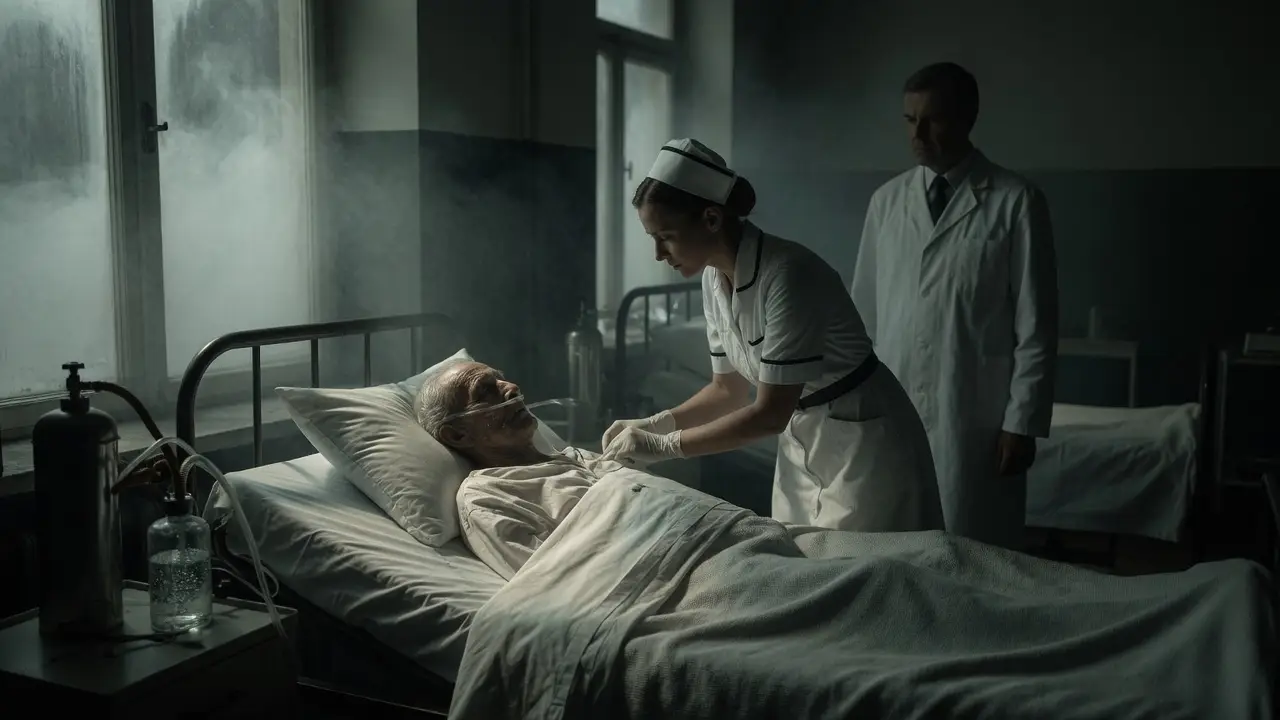
Edward Nevin was a 75-year-old retired pipefitter who had been admitted to the hospital for a pre-existing urological condition. He was already vulnerable when the bacteria reached him. What followed was a progressive, brutal infection that spread to his heart valves, causing bacterial endocarditis, a life-threatening condition where bacteria colonize the lining of the heart itself. He was ill for three weeks. On October 1, 1950, he died.
“Serratia marcescens was considered a non-pathogenic organism at the time. What we did not fully appreciate was what it could do in compromised patients.”
Army internal review language, declassified 1977
The connection between Nevin’s death and the offshore military operation would not be made public for more than a quarter century. The hospital treated the outbreak as a mysterious cluster. The military filed its reports, noted the dispersal data, and classified everything.
The experiment had already been running for days when the hospital cases appeared. It continued anyway.
Twenty-Six Years of Silence
The files stayed buried until 1976, when a Senate subcommittee investigating the CIA’s domestic activities stumbled onto something broader, a decades-long pattern of covert government testing on American citizens, often without their knowledge or consent.
The Army, it emerged, had conducted over 200 open-air biological and chemical tests between 1949 and 1969, targeting cities including St. Louis, Minneapolis, and Winnipeg, Canada. San Francisco and Operation Sea-Spray were among the most significant.
LESSER-KNOWN DETAILS
Operation Sea-Spray was not an isolated event. It was part of a broader program called Project SHAD (Shipboard Hazard and Defense), and related tests were conducted on U.S. military personnel aboard ships without their full informed consent as well.
Investigative reporting in the late 1970s brought the specifics into sharper focus. When the story finally broke publicly, the reaction was immediate outrage, followed by the grinding frustration of watching the legal system struggle to hold anyone accountable.
In 1981, Edward Nevin’s grandson filed suit against the federal government. The family argued that the military’s covert bacterial spraying had directly caused his grandfather’s death. The case made it to federal court. The judge acknowledged the facts weren’t really in dispute. The government had conducted the experiment. The bacteria had spread. Nevin had died from that exact bacteria.
The court ruled in favor of the government anyway, citing sovereign immunity, the legal doctrine that shields the state from certain lawsuits. The judge concluded that military decisions made in the interest of national security, even ones that caused civilian deaths, were not subject to review by the courts.
The Nevin family received nothing.
The Defense They Never Had to Fully Justify
The government’s position throughout the legal proceedings was essentially this: the Cold War was real, the Soviet biological threat was real, and some degree of secret domestic testing was a reasonable and necessary response to an existential national security challenge.
It’s worth sitting with that argument for a moment, not because it’s satisfying, but because it was effective. The doctrine of sovereign immunity meant the military never had to fully defend the ethics of what it had done in open court. It never had to explain why informed consent was impossible. It never had to account for Edward Nevin.
“The doctrine of sovereign immunity is not a moral verdict. It is a legal one.”
Federal judge’s clarifying note in the 1981 Nevin ruling
What declassified documents do show is that internal reports from the period treated the civilian population of San Francisco with the same analytical distance you’d apply to a sample in a controlled environment. The city’s residents appear in the records as data points, as dispersal targets, as variables in an equation about wind speed and aerosol density and coverage efficiency.
That bureaucratic detachment is, in some ways, the most disturbing element of the entire operation. It wasn’t conducted by people who thought of themselves as villains. It was conducted by people who thought they were doing their jobs.
The Unseen Threat
What Operation Sea-Spray demonstrated, and what made it so valuable to military planners, was how easily a biological agent could blanket a modern city without triggering any visible alarm.
No explosions. No incoming aircraft. No warning sirens. Just wind, and fog, and particles too small to see or smell, moving through streets and into lungs on a perfectly ordinary Tuesday morning.
That vulnerability hasn’t disappeared. If anything, the same urban density and infrastructure that made San Francisco an ideal test site in 1950 describes nearly every major city in the world today. Subway systems, shared air conditioning units, crowded transit corridors, high-density residential buildings, all of it creates the same dispersal conditions the Navy was exploiting offshore seven decades ago.
“The most dangerous biological weapon may not be the one that kills everyone. It may be the one that no one notices until the data is already collected.”
Cold War-era biodefense policy paper, author redacted
Modern biosurveillance systems are vastly more sophisticated than anything available in 1950. Genomic sequencing can identify unusual pathogens in hours rather than weeks. Environmental monitoring networks exist in major cities that didn’t exist then. But the fundamental exposure window, the gap between the moment of release and the moment of detection, remains a serious and studied vulnerability in national security planning.
The 2001 anthrax letter attacks demonstrated exactly this. Even with modern infrastructure, it took weeks to fully understand what had been released, where it had gone, and who had been exposed.

No Questions Answered
What Operation Sea-Spray leaves behind isn’t just a historical grievance. It’s a framework question that cuts directly into every conversation about biosecurity, government authority, and the limits of what states can justify in the name of public protection.
The military’s argument was that testing secretly was necessary because testing openly would defeat the purpose and create public panic. There’s a logic to that position. There’s also a straight line from it to Edward Nevin dying in a hospital bed while the classified reports noted the bacteria’s dispersal efficiency with clinical satisfaction.
In 2026, the same tension lives inside “dual-use” research, the category of biological science where the same knowledge that enables vaccine development, pandemic response, and disease surveillance also enables weaponization. Gain-of-function research. Pathogen enhancement studies. The science is real, the benefits are real, and so is the potential for catastrophic misuse by state actors or non-state groups who understand what that research unlocks.
LESSER-KNOWN DETAILS
The Army didn’t just test in open air. Similar covert tests were conducted in the New York City subway system in the 1960s, where researchers released aerosol tracers to study how quickly they spread through underground transit infrastructure.
Every government that conducts this research makes the same implicit argument the 1950 military planners made: that the security benefits justify a level of secrecy the public would not endorse if it understood what was happening.
The question of where that line sits, between legitimate protection and the systemic betrayal of the people the state is supposed to defend, is not a historical question.
San Francisco’s fog carried it straight into the present.