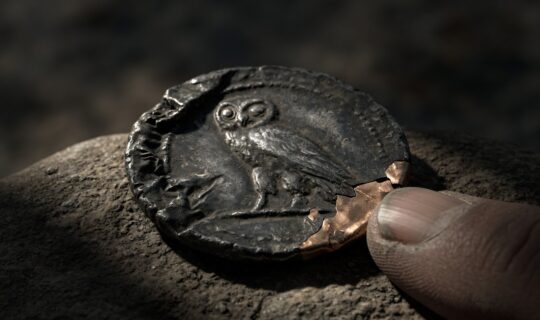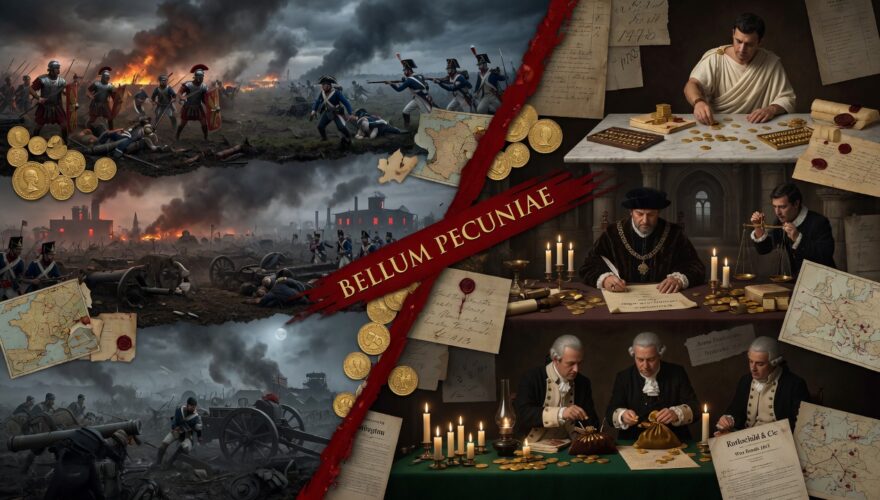
The battle had not even begun, and already someone was getting rich.
In the summer of 1815, as exhausted French soldiers marched toward Belgium for what would become the Battle of Waterloo, merchants in London were quietly buying government bonds. Bankers tracked troop movements like gamblers watching horse races. Shipbuilders worked through the night. Grain prices climbed before a single cannon fired. Across Europe, men who would never smell gunpowder prepared to profit from the chaos.
Wars are often remembered through heroes, flags, and battlefields. History books celebrate generals and mourn the dead. But behind every famous conflict sits another story, colder and less visible. A story about money.
Empires do not march on glory alone. They march on loans, contracts, taxes, shipping routes, and raw materials. Every great war in history has created an economy of desperation where governments spend recklessly, industries explode with demand, and ordinary people pay the price.
The battlefield is only the surface. Underneath it lies a machine.
- 1 Ancient Rome: Conquest as Business
- 2 The Crusades: Holy War as Commercial Opportunity
- 3 The Rise of Banking and National Debt
- 4 Information as Currency: The Rothschild Legend
- 5 The Thirty Years’ War: Economic Catastrophe and Famine
- 6 Bankers Who Bet on Both Sides
- 7 Piracy and Privateers: Outsourced Violence
- 8 The American Civil War: Profiteers and Corruption
- 9 World War I: The Industrial Scale of Destruction
- 10 Oil: The Blood of Victory
- 11 World War II: The Arsenal of Democracy and the Economics of Looting
- 12 The Cold War: The Military-Industrial Complex
- 13 The Hidden Economy of Modern War
- 14 The Uncomfortable Truth
Ancient Rome: Conquest as Business
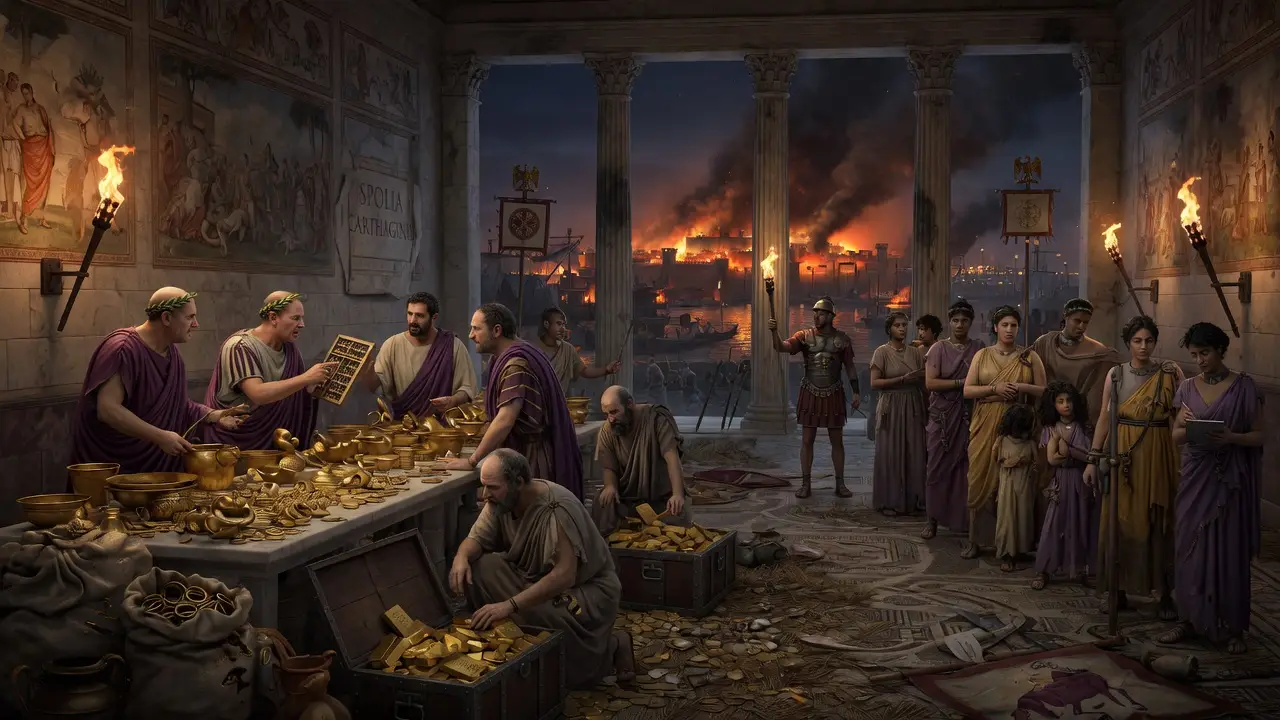
Ancient Rome understood this better than most. Roman legions conquered vast territories, but conquest itself became a business. Victorious generals returned with slaves, gold, livestock, and captured land. Entire fortunes rose from war spoils. Senators invested in military campaigns the way modern investors buy stocks.
When Rome destroyed Carthage in 146 BC, the city burned for days. Survivors were sold into slavery by the tens of thousands. Wealth poured into Roman markets. Traders, landowners, and politicians all took their cut. For Rome’s elite, expansion was not just patriotic. It was profitable.
The Crusades: Holy War as Commercial Opportunity
Centuries later, during the Crusades, the pattern returned in a different form. European knights marched east under the banner of faith, but merchants followed close behind. Italian trading powers like Republic of Venice transformed war into commercial opportunity. Venetian ships transported crusaders across the Mediterranean for enormous fees. Ports changed hands. Trade routes opened. Spices, silk, and precious goods flowed back into Europe.
One Venetian official reportedly joked that holy wars were “good for business.” He was not entirely wrong.
Join The Archive Briefing
Weekly dispatches. The history they didn't teach you — sourced, subverted, delivered to your inbox.
Then came the age of gunpowder and empire.
By the 17th century, wars had become astonishingly expensive. Cannons, muskets, and massive navies drained royal treasuries. Kings could no longer fund conflicts with plunder alone. They needed credit.
That changed everything.
The Rise of Banking and National Debt
The rise of modern banking is deeply tied to war. Governments borrowed heavily from wealthy financiers who expected repayment with interest. The national debt became a weapon. Countries capable of raising more money could fight longer wars.
Britain mastered this system better than anyone. During the Napoleonic Wars, the British government borrowed on a scale the world had never seen. Taxes surged. Banks expanded. Factories thrived producing uniforms, rifles, boots, sails, and gunpowder.
Meanwhile, ordinary workers often starved under rising food prices.
Information as Currency: The Rothschild Legend
The economist and politician David Ricardo made a fortune trading government bonds during the conflict. The famous Rothschild banking family built influence across Europe by financing wartime governments and moving information faster than their rivals. According to legend, Nathan Rothschild learned of Napoleon’s defeat at Waterloo before the British government itself.
Whether exaggerated or not, the story captured a brutal truth. In wartime, information becomes currency.
The Thirty Years’ War: Economic Catastrophe and Famine
One of the darkest examples came during the Thirty Years’ War in the 17th century. What began as a religious conflict slowly turned into an economic catastrophe that consumed central Europe. Armies often could not pay their soldiers, so they simply allowed them to loot villages for survival. Entire towns were stripped bare. Farmers abandoned fields. Trade collapsed. Famine followed close behind disease. Historians estimate that some German regions lost nearly a third of their population. For many civilians, the greatest threat was not the enemy army itself, but the endless hunger that war created.
Bankers Who Bet on Both Sides
There were also men who built private empires from conflict alone. During the Hundred Years’ War, wealthy Italian banking families financed kings on both sides while carefully protecting their own fortunes. If one ruler lost, another still owed them money. War became less about loyalty and more about risk management. The battlefield decided crowns, but bankers often survived regardless of who wore them.
Piracy and Privateers: Outsourced Violence
Even piracy was deeply connected to wartime economics. In the 16th and 17th centuries, governments frequently hired private captains known as privateers to attack enemy ships. Men like Francis Drake were celebrated as patriots in England and condemned as pirates in Spain. Captured treasure fleets carried silver, spices, silk, and gold across oceans. A single successful raid could make investors unimaginably wealthy overnight. Behind the patriotic language sat a simple reality. Governments outsourced violence because it was cheaper and profitable.
The American Civil War: Profiteers and Corruption
The American Civil War revealed another side of the hidden war economy. Factories in the North roared with production while financiers on Wall Street speculated wildly. The Union printed paper money on a massive scale. Inflation spread across the Confederacy so severely that ordinary Southerners sometimes carried baskets of cash just to buy bread.
And then there were the profiteers.
Unscrupulous contractors sold the Union Army rotten food, weak mules, defective rifles, and boots that disintegrated in rain. One congressional investigation uncovered uniforms made from recycled rags that fell apart after days in the field.
Soldiers died wearing someone else’s corruption.
World War I: The Industrial Scale of Destruction
But no conflict exposed the industrial scale of wartime economics more clearly than World War I.
Europe entered the war in 1914 expecting a quick victory. Instead, nations vanished into a furnace of steel and debt. Entire economies reorganized around destruction. Civilian factories became weapons plants overnight. Women entered industrial labor in enormous numbers as millions of men disappeared into trenches.
The war consumed everything. Coal. Iron. Oil. Horses. Wheat.
Oil: The Blood of Victory
Especially oil.
By the early 20th century, military planners realized that modern war depended on fuel. Tanks, trucks, battleships, and aircraft could not move without it. Control over oil fields became a strategic obsession that would shape global politics for generations.
A French senator warned during the war, “Oil is the blood of victory.”
He was right.
World War II: The Arsenal of Democracy and the Economics of Looting
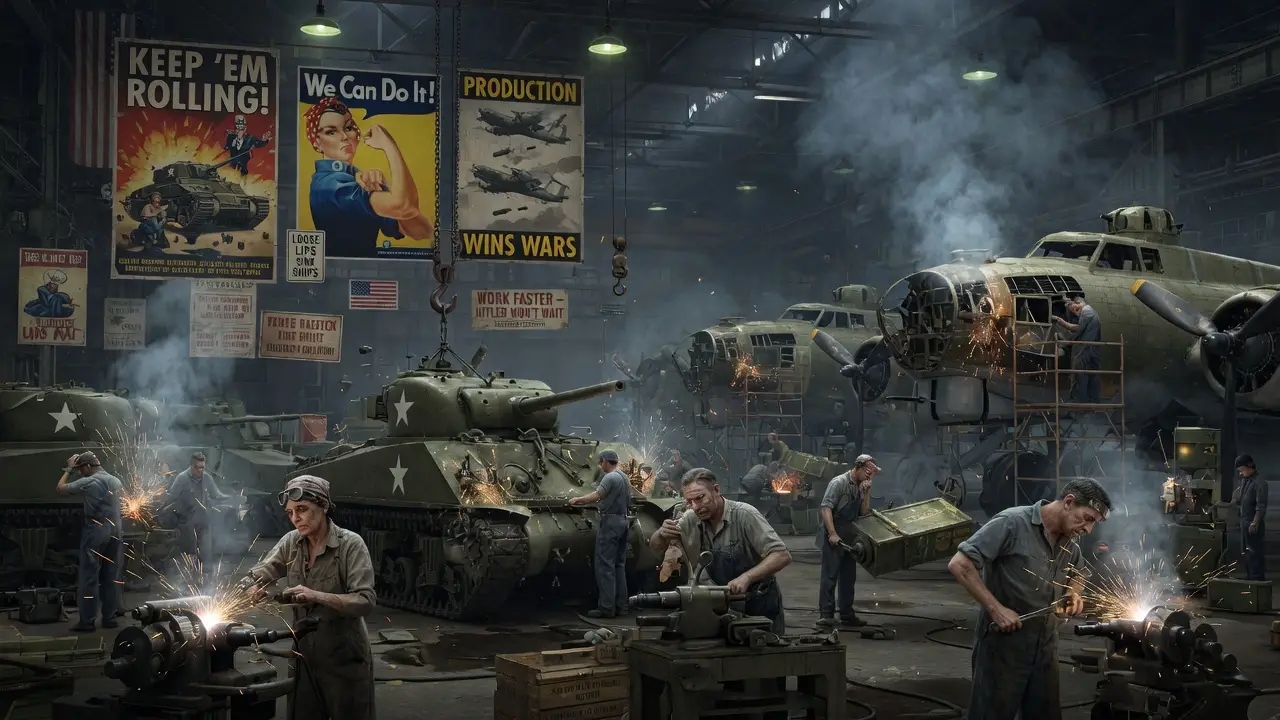
By World War II, the economic machinery behind war had become almost unimaginable in scale. The United States transformed into what President Franklin Roosevelt called the “Arsenal of Democracy.” Automobile factories stopped producing cars and began building bombers and tanks instead. Companies grew rich on military contracts. Scientific research accelerated at terrifying speed.
The war ended the Great Depression in America, but at an enormous human cost across the globe.
At the same time, Nazi Germany looted occupied Europe with ruthless efficiency. Gold reserves vanished. Artworks were stolen. Factories were stripped. Millions of forced laborers were exploited to keep the German war machine alive.
Even concentration camps became tied to industrial production.
War had evolved into a complete economic ecosystem.
The Cold War: The Military-Industrial Complex
Then came the Cold War, where open battle often gave way to something quieter but equally profitable. Arms manufacturers thrived as nuclear tensions escalated between the United States and the Soviet Union. Defense spending became permanent. Entire regions depended economically on military contracts.
In 1961, outgoing U.S. President Dwight D. Eisenhower issued a chilling warning about the “military industrial complex.” He feared the growing alliance between governments, armies, and private industry could push nations toward endless conflict.
Few listened closely enough.
The Hidden Economy of Modern War
Today, the hidden economy of war still shapes the world. Rare earth minerals drive geopolitical tensions. Cyber warfare creates billion dollar security industries. Private military contractors operate in conflict zones once dominated solely by national armies. Oil pipelines, shipping lanes, and semiconductor supply chains quietly influence foreign policy decisions.
Modern wars may look different, but the machinery underneath remains familiar.
The Uncomfortable Truth
Every missile fired represents contracts signed. Every invasion disrupts markets somewhere. Every sanction creates winners alongside losers.
The uncomfortable truth is that war has always been more than violence. It is also business.
Not because soldiers want it to be. Not because civilians choose it. But because conflict creates opportunity for those positioned far from the front lines.
And while history remembers the men who fought, it often forgets the people counting profits in distant rooms lit far from the sound of gunfire.
The cannons thunder for a few years. The money moves for decades.