Six centuries of genuine multi-ethnic, multi-religious administration followed by one of history’s most documented genocides. What changed, and why.
The Day Constantinople Fell, and Nobody Ran
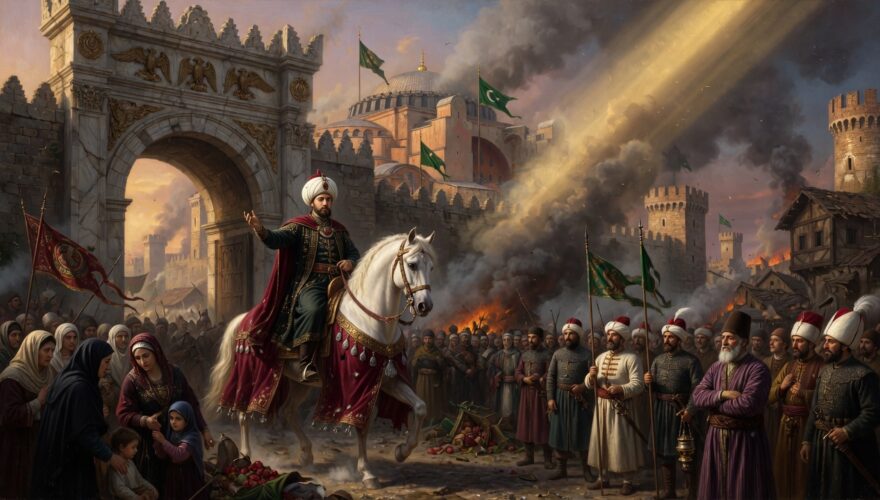
May 29, 1453. Ottoman soldiers pour through the breached walls of Constantinople. The Byzantine Empire, eleven centuries old, dies in a single morning. Churches go silent. The last emperor, Constantine XI, is dead somewhere in the chaos, his body never positively identified.
What follows should be, by every historical precedent of the time, a massacre. That’s what conquerors did. That’s what the Crusaders had done in this very city in 1204, slaughtering Orthodox Christians with a particular enthusiasm that still makes medieval historians wince.
Instead, Sultan Mehmed II rides to the Hagia Sophia, dismounts, and reportedly pours a handful of dirt over his turban in an act of humility before God. He then issues a proclamation: the city’s remaining Greek Christian population will be protected. Their churches, with one significant exception, are theirs to keep. Their Patriarch will govern them. Their laws, for matters within their own community, will stand.
He was twenty-one years old.
This moment, repeated in different forms across six centuries and three continents, is what made the Ottoman Empire something genuinely unusual in the history of world power.
An Empire Built on Managed Difference
The Ottomans governed, at their peak, somewhere between 15 and 30 million people spread across Anatolia, the Balkans, the Arab world, North Africa, and the Caucasus. They spoke dozens of languages. They worshipped in mosques, churches, and synagogues. They were Turks, Greeks, Armenians, Arabs, Jews, Slavs, Kurds, and Albanians.
Holding this together was not an accident. It was policy, and it had a name: the millet system.
Under the millet framework, non-Muslim communities were recognized as self-governing legal entities. The Greek Orthodox millet, the Armenian millet, the Jewish millet. Each had its own courts for personal law, its own religious leadership with genuine civil authority, its own schools, its own hospitals. The Ottoman state extracted taxes and maintained order. Everything else, within reason, it left alone.
Join The Archive Briefing
Weekly dispatches. The history they didn't teach you — sourced, subverted, delivered to your inbox.
This was not tolerance born from indifference. It was a deliberately engineered system, and it worked with a sophistication that Christian Europe, still burning heretics and expelling Jews, couldn’t come close to matching.
The Jews Europe Rejected, the Ottomans Welcomed
In 1492, Ferdinand and Isabella of Spain signed the Alhambra Decree. Two hundred thousand Jews were ordered out of the country. Many were robbed, many died in transit, and many ended up stateless in a Europe that had no interest in hosting them.
Sultan Bayezid II sent ships.
He dispatched his fleet to the Spanish coast to transport Jewish refugees to Ottoman territory, reportedly remarking that the Spanish monarchs were impoverishing their country while enriching his. He welcomed them into Thessaloniki, Istanbul, Bursa, and Safed. They brought printing presses, trade networks, medical knowledge, and textile industries. Thessaloniki, in particular, became so thoroughly Jewish in character that it functioned as one of the most important centers of Sephardic culture in the world, a distinction it held for four hundred years.
“You venture to call Ferdinand a wise king, he who has impoverished his own country and enriched ours.”
Bayezid II on welcoming the expelled Jews of Spain (1492)
These weren’t reluctant refugees tolerated at arm’s length. Jewish physicians served at the Ottoman court. Jewish financiers structured state loans. Donna Gracia Nasi, one of the wealthiest and most powerful businesswomen of the sixteenth century, operated her banking empire out of Istanbul with the explicit protection of the Sultan.
The Janissaries, the Devshirme, and the Complexity of Power
The Ottoman tolerance narrative gets complicated, and it should. No honest account of the empire omits the devshirme, the system by which Christian boys, primarily from the Balkans, were periodically conscripted by the state. Taken from their families, converted to Islam, and trained for military or administrative service, they became Janissaries, the elite infantry corps that formed the backbone of Ottoman military power, or bureaucrats who could rise to the very top of the imperial hierarchy.
By the standards of the modern world, this was coercion. A child removed from his village by state force is not a free participant.
But the history is more layered than it first appears. Janissaries could accumulate wealth and power on a scale unavailable to almost anyone else in the empire. Grand Viziers, the empire’s chief ministers, often came from this system. The Albanian Ibrahim Pasha, the Croat Sokollu Mehmed Pasha, men of conquered Christian stock who rose to govern an empire of millions. Some Balkan Christian families reportedly bribed officials to have their sons selected. Some petitioned for inclusion when initially passed over.
The devshirme was, simultaneously, a tool of imperial extraction and a ladder out of provincial poverty. Reducing it to one or the other falsifies the record.
What Made It Work: Pragmatism Over Purity
The Ottoman system worked, in large part, because it wasn’t ideologically pure. It wasn’t a utopian vision of human brotherhood. It was a practical recognition that a multiethnic empire, held together by armies and trade and bureaucracy, could not afford the luxury of religious uniformity.
The Sunni Muslim establishment remained the dominant force. Non-Muslims paid the jizya, a poll tax. They faced certain professional and legal restrictions. Conversion to Islam was encouraged and, in the right circumstances, rewarded. The system was not equality.
LESSER-KNOWN DETAILS
Greek Orthodox Christian clergy collected Ottoman taxes in many Balkan regions, functioning as de facto Ottoman administrators within their communities.
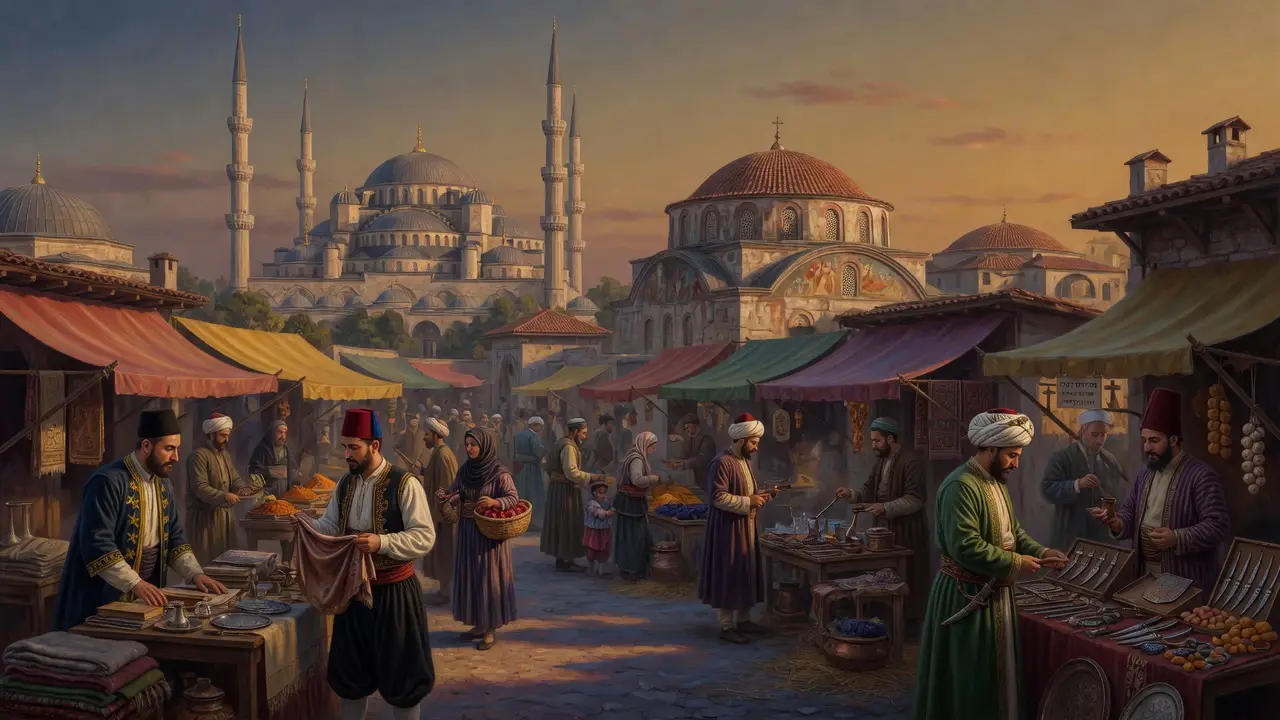
But it was functional coexistence on a scale almost without parallel in the pre-modern world, and it produced a genuinely cosmopolitan culture. Ottoman Istanbul at its height was a city where you could walk from a Greek neighborhood to a Jewish quarter to an Armenian district within minutes. Where mosques, churches, and synagogues stood close enough that their prayers overlapped in the air. Where the palace kitchens employed cooks from across the known world because the Sultan’s table demanded diversity.
The Long Unraveling
The first serious fractures appeared in the eighteenth century. The empire began losing territory to resurgent European powers, particularly Russia and Austria. Each military defeat cost land, population, and the tax revenues that made the whole system function. Every treaty brought more Christians out from under Ottoman governance and into new nation-states, weakening the remaining empire’s Christian communities by association in the eyes of an increasingly anxious Muslim majority.
“Here one sees with one’s own eyes that all races of men can live under the same sky.”
Edmondo de Amicis
The French Revolution did something the Ottomans hadn’t anticipated: it exported nationalism. Before nationalism, an Orthodox Christian in the Balkans might think of himself primarily as a subject of the Sultan, a member of the Greek millet, a resident of Thessaloniki. Nationalism told him to think of himself as Greek, and Greeks, by definition, should rule themselves. The Balkans spent the better part of the nineteenth century answering that question with artillery.
Each Balkan war, each Christian nationalism movement, each European power interfering on behalf of Ottoman Christians, reinforced a creeping paranoia inside the Ottoman state. The logic ran something like this: minority communities, particularly Christians, were vectors of European infiltration. Their loyalty was suspect. Their existence was a strategic liability.
This was the ideological rot that would eventually become catastrophic.
Three Men and an Ideology That Rewrote Everything
By the early twentieth century, the empire was in genuine crisis. It had lost the Balkans. It had watched its North African territories absorbed by European colonial powers. It entered the First World War on the losing side, struggling to hold together what remained.
Power had shifted from the old Ottoman dynastic system to a new faction: the Committee of Union and Progress, the Young Turks. Three men sat at the core of this movement, Enver Pasha, Talaat Pasha, and Cemal Pasha. They were modernizers, nationalists, and, in their emergency wartime logic, willing to do things the old empire would never have systematically done.
LESSER-KNOWN DETAILS
During the Spanish Inquisition, Sephardic Jews in Ottoman territory reportedly sent letters back to Spain warning other Jews not to fear the Turks, describing Ottoman cities as places of genuine safety.
The Ottoman millet tradition had been built on the concept of a multi-communal imperial state. The Young Turk vision was something different: a Turkish national state, with a Turkish Muslim identity at its core. The non-Muslim communities that had been assets under the old system became, under this new logic, threats. Competitors. Fifth columns waiting for the right European signal to fragment what remained of the empire from within.
The Armenian community, concentrated in eastern Anatolia and with cultural ties to Russia, the empire’s enemy in the war, became the focal point of this paranoia.
1915: When the System Collapsed Into Something Unrecognizable
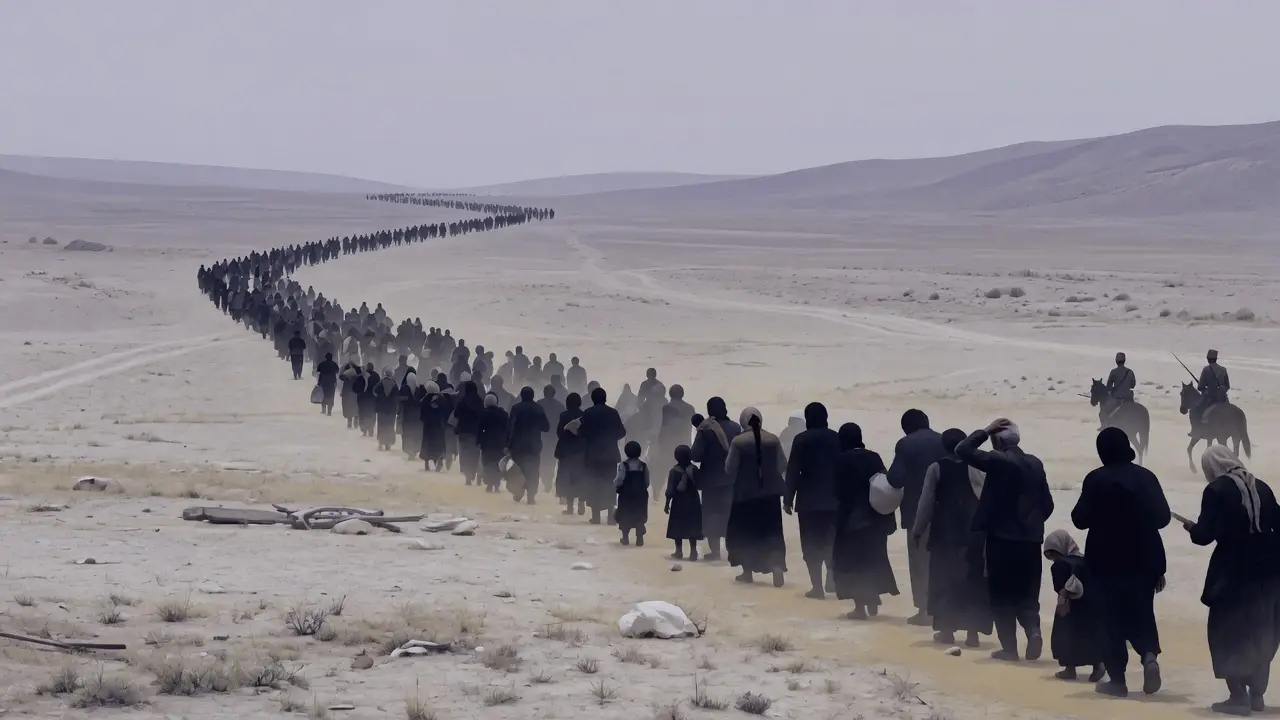
The deportation orders went out in April 1915. Armenian men were typically separated first, taken under guard and shot in groups outside their towns. Women, children, and the elderly were marched into the Syrian desert. The official rationale was wartime relocation, a security measure. The actual mechanics were mass murder.
Hundreds of thousands of people, the scholarly consensus now places the figure between 600,000 and 1.5 million, died in forced marches, in mass shootings, in deliberate starvation, and in violence carried out by both state security forces and irregular Kurdish militias unleashed for the purpose.
American Ambassador Henry Morgenthau Sr., watching it unfold from Istanbul, eventually confronted Talaat Pasha directly. Talaat reportedly told him: “We have already disposed of three-quarters of the Armenians in Turkey.”
“When the Turkish authorities gave the order for these deportations, they were merely giving the death warrant to a whole race.”
American Ambassador Henry Morgenthau Sr.
The ambassador described Talaat as speaking about this the way a businessman might describe an unfortunate but necessary restructuring.
The same period saw massive violence against Greek and Assyrian Christian populations in Anatolia. The empire that Mehmed II had built on managed coexistence was now performing what later scholars would call the first genocide of the twentieth century.
How Do You Hold Both Things at Once?
This is the historical question that resists easy resolution, and it should.
The Ottoman system was not, at its best, a myth. The tolerance was real. The Jewish refugees from Spain built real lives in Thessaloniki. The Greek Orthodox Patriarchate in Istanbul survived under Ottoman protection for four centuries. The Armenian community produced poets, financiers, architects, and imperial officials who served the Sultan with genuine loyalty. A small but telling detail: the Ottoman court’s chief architects for much of the classical period were members of the Armenian Balyan family. They built mosques. They built palaces. The empire was in their hands and their craft.
And then, within the span of a generation, the state that had protected their grandparents ordered their extermination.
What changed was not Turkish character. What changed was the structure of power and the ideology that controlled it. Multiethnic empire, when it worked, worked because pragmatism kept ideology in check. Nationalism, combined with military catastrophe and wartime emergency, replaced pragmatism with purity. The categories that had been administrative, Greek millet, Armenian millet, became existential. You were no longer a subject category to be managed. You were an enemy category to be eliminated.
LESSER-KNOWN DETAILS
Mehmed II spoke six languages, including Greek, and maintained a personal interest in Greek philosophy and Byzantine history.
The lesson isn’t that tolerance is fragile, though it is. The lesson is that systems of coexistence don’t protect themselves. They require active political will, leadership that resists the appeal of simple enemies, and institutions strong enough to survive ideological capture.
The Ottomans, at their best, had all three. At their worst, they had none.
The Ruins That Still Speak
The Armenian Apostolic churches that still stand in eastern Turkey, many now converted to mosques, some to museums, some simply abandoned and slowly returning to stone, are not monuments to Ottoman brutality alone. They are, first, monuments to five centuries in which Armenian life in Anatolia was possible, even prosperous. The brutality at the end doesn’t erase what came before. It complicates it.
Today, as states across the world navigate the same tensions between majority identity and minority rights, between national security and community coexistence, the Ottoman story functions as something more than history. It is a pressure test. An X-ray of what happens when a society that learned to live with difference decides, under sufficient pressure, that it no longer can.
Six hundred years of coexistence didn’t make the genocide impossible. But it also wasn’t nothing.
The question worth sitting with is this: what, exactly, was the price of losing it?