The census was never just counting people. From Roman tax collectors to Ming Dynasty surveillance registers, discover the dark history of how rulers used population records to extract wealth, fill armies, and control empires, and why that logic hasn’t changed.
The history of the census is, at its core, the history of the relationship between individuals and states. Every time a government has wanted to expand its reach, extract resources, or exercise control over a population, the first tool it has reached for is the ledger. Knowing who you are is the beginning of everything they can do to you, and everything they can do for you.
- 1 When the Knock Came at the Door
- 2 The First Accountants Were Tax Collectors
- 3 Rome Perfects the Instrument
- 4 China’s Iron Arithmetic
- 5 The Colonial Census as a Tool of Domination
- 6 Numbers in the Service of War
- 7 What Happened When You Disappeared From the Count
- 8 The Technology Changes; the Appetite Doesn’t
- 9 The Ledger That Never Closes
- 10 Why This Still Resonates
When the Knock Came at the Door
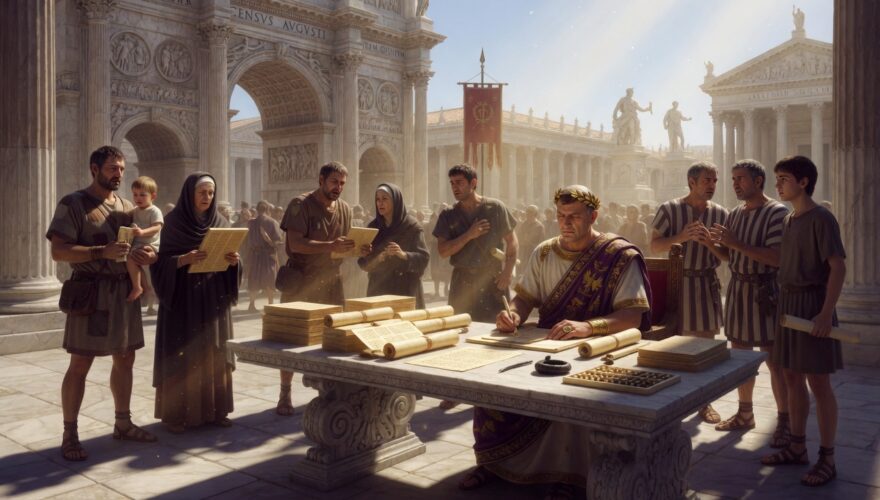
The Roman official didn’t need to be polite. He arrived with a stylus, a wax tablet, and the full weight of imperial authority behind him. He wanted names. Ages. Occupations. Property values. He wanted to know exactly who lived in your house, how many animals you owned, and whether your sons were old enough to carry a sword.
You answered. Everyone answered.
This was the census, and it had nothing to do with curiosity.
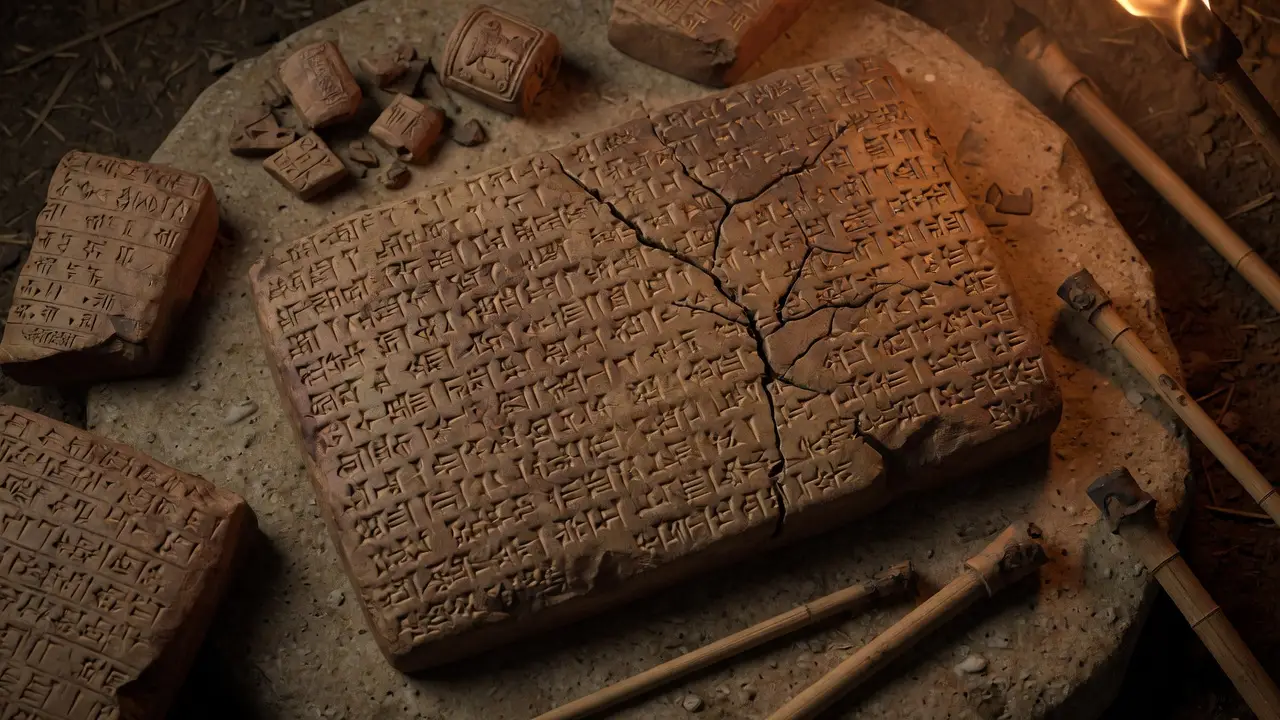
From the moment the first ancient bureaucrat scratched the first name onto the first clay tablet, counting people was always about something harder and more consequential than population statistics. It was about extracting resources. Filling armies. Projecting power across vast, ungovernable distances. The census was the machinery of domination, and rulers understood this with absolute clarity even when their subjects did not.
The First Accountants Were Tax Collectors
Long before Rome, before Greece, before any civilization that schoolchildren read about, the people of ancient Mesopotamia were already counting. The Sumerians of Lagash conducted surveys of their population around 3800 BCE, producing records of households, livestock, land, and labor that archaeologists have been piecing together for over a century.
These were not neutral documents. They were the foundation of tribute.
LESSER-KNOWN DETAILS
The Mesopotamian scribes who falsified records were among the first documented cases of administrative corruption. Clay tablets from Ur show erasures and corrections that indicate census data was manipulated to reduce tax burdens, a problem that Sumerian administrators tried to address with increasingly elaborate verification systems.
Every bushel of grain, every head of cattle, every able-bodied man who could dig an irrigation channel or haul a stone was a resource to be catalogued and, eventually, claimed. The scribes who kept these records occupied a peculiar position in society: they were servants of the state, but they wielded a quiet and terrible power. What they wrote down determined what you owed. What they left out sometimes meant survival.
Join The Archive Briefing
Weekly dispatches. The history they didn't teach you — sourced, subverted, delivered to your inbox.
Egypt refined this system into something formidable. Pharaohs ordered regular surveys not out of administrative tidiness but because the labor demands of empire were constant and enormous. The pyramids did not build themselves. The canals did not dig themselves. Someone had to know which villages had surplus labor, which regions could absorb heavier taxation, and which populations were growing fast enough to provide future conscripts. The census answered all of these questions at once.
Rome Perfects the Instrument
No civilization weaponized the census more effectively than Rome. The word itself comes from the Latin censere, meaning to assess or to tax, and the Romans were admirably honest about this in a way that modern governments rarely are.
Every five years, Roman censors took stock of the entire citizen population. You declared your name, your family, your property, and your wealth. From this, the state determined your tax burden, your military obligations, and your social rank. The census wasn’t a passive count. It was a performance of submission, a moment in which every Roman citizen acknowledged, in writing, that the state had a legitimate claim on his life and his money.
Refusal had consequences. Roman law allowed censors to sell non-compliant citizens into slavery. In practice this rarely happened, but the threat was always present, embedded in the architecture of the process itself.
The census is the foundation of peace, order, and good government.”
Servius Tullius, sixth king of Rome
The Romans also used the census as a tool of provincial administration, which is why the Gospel of Luke places the birth of Jesus against the backdrop of a census ordered by Caesar Augustus requiring everyone to return to their ancestral home to be registered. Whether or not this account is historically precise, the scene it describes was real enough: millions of ordinary people disrupting their lives because a distant emperor needed numbers.
LESSER-KNOWN DETAILS
The Roman census included a ritual purification ceremony called the lustrum, conducted by the censors at the end of each census cycle. This gave the process a religious dimension, linking civic identity to divine sanction and making non-compliance feel like something close to sacrilege.
Augustus himself boasted in his autobiography that he had conducted three censuses during his reign and counted over four million Roman citizens. He meant it as a measure of his power. He was right.
China’s Iron Arithmetic
While Rome was refining its methods in the west, China was developing parallel systems of staggering sophistication.
The Han Dynasty, which ruled from 206 BCE to 220 CE, produced what historians consider one of the earliest large-scale censuses ever completed. The 2 CE census recorded approximately 57.6 million people across the empire, broken down by household and age. For comparison, that was roughly half the world’s population at the time living within a single administrative system.
But it was the later Ming Dynasty that demonstrated just how far census-taking could be pushed as an instrument of social control. Emperor Hongwu, who founded the Ming in 1368, introduced the lijia system: a hierarchical registration scheme that grouped households into units of ten and one hundred, each responsible for the tax obligations and moral conduct of its members. Every ten years, inspectors produced new Yellow Registers naming every household, every individual, and every piece of taxable property in the empire.
This was surveillance at a scale that would have impressed any modern government. The registers ran to thousands of volumes. They were stored in a dedicated archive in Nanjing. They were the bones of the entire Ming fiscal and military apparatus.
If you weren’t in the register, you didn’t officially exist. Which meant you paid no taxes, but it also meant you had no legal rights, no protection under the law, and no way to travel, trade, or hold property without risk of arrest.
The Colonial Census as a Tool of Domination
The arrival of European colonial powers in Asia, Africa, and the Americas introduced the census to a darker purpose: the administrative production of racial hierarchy.
British India offers the clearest case. Pre-colonial India had caste, of course, but it was a fluid and regionally varied system, more complex and contested than any outsider account acknowledged. When the British began conducting systematic censuses of India from the 1870s onward, they imposed rigid categorical boundaries on this complexity. Every person was assigned a single, fixed caste identity that would appear in official records and shape their legal status, their access to employment, and their treatment by colonial courts.
The census didn’t just count the Indian population. It created a bureaucratic version of Indian society that served British administrative needs and, in doing so, hardened social divisions that had previously been negotiable.
“Caesar Augustus issued a decree that a census should be taken of the entire Roman world. This was the first census that took place while Quirinius was governor of Syria.”
Luke 2:1-2
The same dynamic played out across Africa, where colonial census-takers classified ethnicity with a precision that bore little relationship to how people actually identified themselves. These categories, once inscribed in official registers, became the foundations for differential taxation, forced labor quotas, and, in some cases, the ethnic antagonisms that would explode into violence long after the colonial powers departed.
Rwanda is the most devastating example. The Belgian administration’s insistence on categorizing every person as either Hutu or Tutsi, and issuing identity cards that cemented this classification, created the bureaucratic scaffolding that made the 1994 genocide administratively possible.
The census had become a weapon.

Numbers in the Service of War
Conscription has always been one of the census’s primary purposes, even when official descriptions of the process dressed it up in more palatable language.
The Domesday Book, commissioned by William the Conqueror in 1085, is often described as a survey of English land ownership, which is accurate as far as it goes. What it was doing, more urgently, was telling William exactly what his newly conquered kingdom was worth, who owned what, and how many fighting men he could extract from it if another invasion threatened. The Domesday survey was completed in roughly a year, an astonishing administrative feat for the eleventh century, because William needed the information fast.
LESSER-KNOWN DETAILS
The Domesday Book has never been out of legal use. English courts cited it as a source of evidence in land disputes as recently as the nineteenth century, making it one of the longest-continuously-used legal documents in history.
The Ottoman Empire ran a parallel system called the tahrir, a cadastral survey that recorded population, land, and income across newly conquered territories. The Ottomans conducted these surveys not out of academic interest but because they needed to know, within months of conquest, how much they could tax each province and how many soldiers each district could supply. The tahrir registers are among the most detailed administrative documents to survive from the pre-modern world, and they are essentially war planning documents.
“There was no single hide nor a yard of land, nor indeed one ox nor one cow nor one pig which was left out, and not put down in his record.”
The Anglo-Saxon Chronicle, on the Domesday survey, 1085 CE
Even the United States census, designed by men with Enlightenment ideals about representative democracy, had military conscription baked into its logic from the beginning. The three-fifths compromise that counted enslaved people as three-fifths of a free person for the purposes of congressional apportionment was not, in the end, about political philosophy. It was about power, numbers, and which states got more of it.
What Happened When You Disappeared From the Count
The census’s power wasn’t only in what it recorded. It was in what happened to people who fell outside it.
Jewish communities in medieval Europe were frequently subjected to special census regimes separate from the general population surveys. These registers served a dual purpose: tracking a taxable minority and maintaining the administrative architecture of exclusion. Being counted separately meant being governed separately, which in practice meant being governed worse.
In the Ottoman system, non-Muslim populations paid the jizya, a poll tax that required its own registration process. The tax wasn’t just revenue. It was a marker, a formal acknowledgment of subordinate status encoded into the fiscal system itself.
“To know the land is to hold the land.”
Ottoman administrative principle referenced in Ottoman fiscal documents
In colonial Latin America, indigenous populations were registered in padrones that determined their mita obligations, the system of forced labor that sent men to die in silver mines at Potosí and mercury mines at Huancavelica. The padrones were updated regularly because the death rates were high and the labor quotas were relentless. Counting people was inseparable from consuming them.
The Technology Changes; the Appetite Doesn’t
The twentieth century brought the census into its most dangerous territory.
The Nazi regime’s persecution of Jewish Germans was made administratively feasible by the meticulous population records of the Weimar Republic and by the 1933 census that the Nazis conducted specifically to identify Jews, Roma, and other targeted populations with statistical precision. IBM’s punch card technology processed this data at scale, turning demographic information into deportation lists.
Cambodia under the Khmer Rouge took a different approach: they destroyed the records. If the census could be used to identify enemies, then eliminating the census, and with it any documented identity from the old regime, could erase the past entirely. People who couldn’t prove a peasant background were vulnerable to execution. The absence of documentation became a death sentence.
The lesson that runs through both examples is the same: the census is never just counting. It is always deciding who counts.

The Ledger That Never Closes
Every government that has ever aspired to control a large population has understood, instinctively, that knowledge is the prerequisite for power. Before you can tax someone, you have to find them. Before you can conscript them, you have to count them. Before you can exclude or target them, you have to define and record them.
The census made all of this possible, from Lagash to London, from the Han plains to the Mississippi Delta.
“We must make a count of the people before we can make a government of the people.”
British colonial administrative correspondence, India, 1870s
Today, the principle is unchanged even as the instruments have evolved. Digital identity systems, national databases, and biometric registries do everything the Roman censors did, only faster and with fewer wax tablets. The state still wants to know your name, your address, your income, and your status. The questions have been refined. The architecture of extraction has not.
What has changed is the scale of what gets recorded and who gets to see it. What has not changed is the oldest truth of bureaucratic power: a government that knows you is a government that has leverage over you.
The knock at the door has just gone digital.
Why This Still Resonates
The power dynamic embedded in census-taking has never disappeared. It has simply migrated. Modern biometric databases in India, social credit systems in China, and the aggregated data profiles built by private companies and shared with governments represent the same fundamental transaction: your identity is recorded, categorized, and made available to those who govern you.
That tension, between the census as administrative necessity and the census as instrument of power, remains live. It shapes immigration enforcement, tax law, military drafts, and civil rights litigation in every country on Earth.
The names on those ancient tablets are gone. The logic that put them there is not.