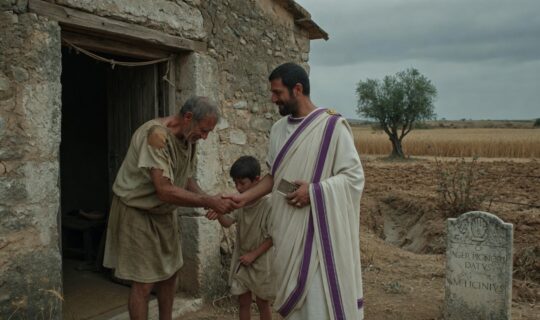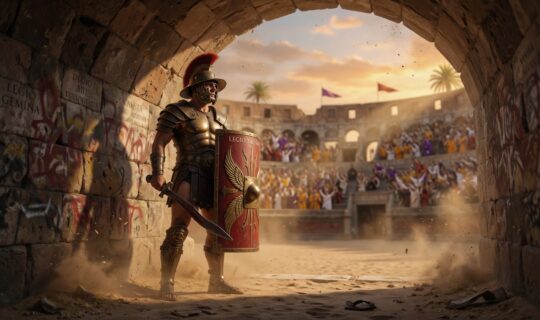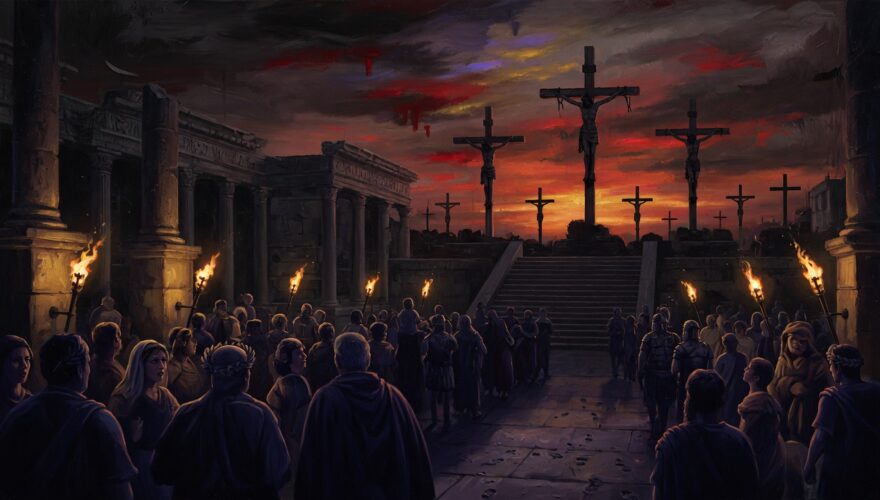
Before the first axe fell, the crowd already knew what was happening. That was the point. Every execution in history was, above all else, a performance. The scaffold was a stage, and the condemned was the message.
In 212 BC, a Roman soldier found the mathematician Archimedes kneeling in the dirt, tracing geometric figures in the sand. “Do not disturb my circles,” the old man reportedly said. The soldier killed him on the spot. That death was quick, almost accidental. Most deaths ordered by states, empires, and tyrants throughout history were anything but. They were deliberate, drawn out, and designed with an almost architectural precision. They were meant to be watched.
What follows is not a catalogue of horrors for shock value. It is something more uncomfortable than that: an honest reckoning with what these methods reveal about the societies that invented them, and the chilling logic that drove perfectly rational men to build machines of suffering.
- 1 The Theater of Terror
- 2 Scaphism: When Cruelty Becomes Art
- 3 The Brazen Bull and the Geometry of Suffering
- 4 Lingchi: A Thousand Cuts and the Language of Law
- 5 The Rack, the Pear, and the Economics of Confession
- 6 Hanging, Drawing, and Quartering: The Mathematics of Dismemberment
- 7 The Guillotine: When Execution Became Enlightened
- 8 What about today?
The Theater of Terror
Every civilization that has ever existed has grappled with one immovable problem: how do you control people who outnumber you? The answer, repeated across millennia with remarkable consistency, was fear. Not fear whispered in private, but fear turned into public spectacle.
The Romans did not crucify people because it was the most efficient way to kill them. It was among the slowest. A man could survive three days on a cross, his body slowly suffocating under its own weight each time his legs gave out, only to push himself up again for one more breath. Roman authorities chose this method for conquered peoples and slaves because the visibility of the agony was the punishment. You saw it from the road. You passed it on your way to market. Death, stripped of all dignity, became a warning addressed to the living.
The scaffold is not merely a place of execution. It is a place of instruction. The condemned teaches, through suffering, what the state will not permit.
Michel Foucault, Discipline and Punish, 1975
This dynamic, power converting a human body into a public lesson, defined execution across virtually every culture on earth. It explains methods that otherwise seem incomprehensible in their excess.
Scaphism: When Cruelty Becomes Art
The ancient Persians, according to the Greek historian Plutarch, invented a method called scaphism for enemies they wanted to make an example of. The condemned was stripped naked and strapped between two boats fitted together like a shell, with his head, hands, and feet protruding from holes in the sides. He was force-fed milk and honey until he developed a violent, purging diarrhea, and then the mixture was applied to his exposed skin, face, and eyes.
The boat was then placed on a stagnant pond.
Insects came. They bred in the accumulated filth. They ate into the flesh while the man was still alive. He could not move, could not escape. The one recorded account of this punishment describes a man surviving for seventeen days. Whether that is accurate or mythologized matters less than what the method communicated: that the Persians had a surplus of patience when it came to making a point.
Join The Archive Briefing
Weekly dispatches. The history they didn't teach you — sourced, subverted, delivered to your inbox.
Scaphism is documented only once in ancient sources, in Plutarch’s account of the execution of Mithridates, a soldier who killed Cyrus the Younger in 401 BC. The method’s historical authenticity remains debated, but ancient Persian law records confirm elaborate punishments for treachery against the royal house.
The Brazen Bull and the Geometry of Suffering
Around 570 BC, a Sicilian metalworker named Perillos approached the tyrant Phalaris of Akragas with what he believed was a masterpiece. He had crafted a hollow bronze bull, life-sized and anatomically precise, with a system of tubes running from its interior to the nostrils. A condemned person would be locked inside. A fire would be lit beneath the belly. As the bronze heated, the tubes would convert the screaming into something resembling the bellow of an actual bull.
Phalaris, the story goes, was so revolted by Perillos’s enthusiasm for his own invention that he placed Perillos inside it first.
The Brazen Bull endures in history because it represents something uniquely disturbing: the application of engineering genius to the problem of suffering. It was not improvised cruelty. It was designed cruelty. Someone sat down and thought carefully about acoustics. Someone solved the problem of how to make horror sound like nature.
Lingchi: A Thousand Cuts and the Language of Law
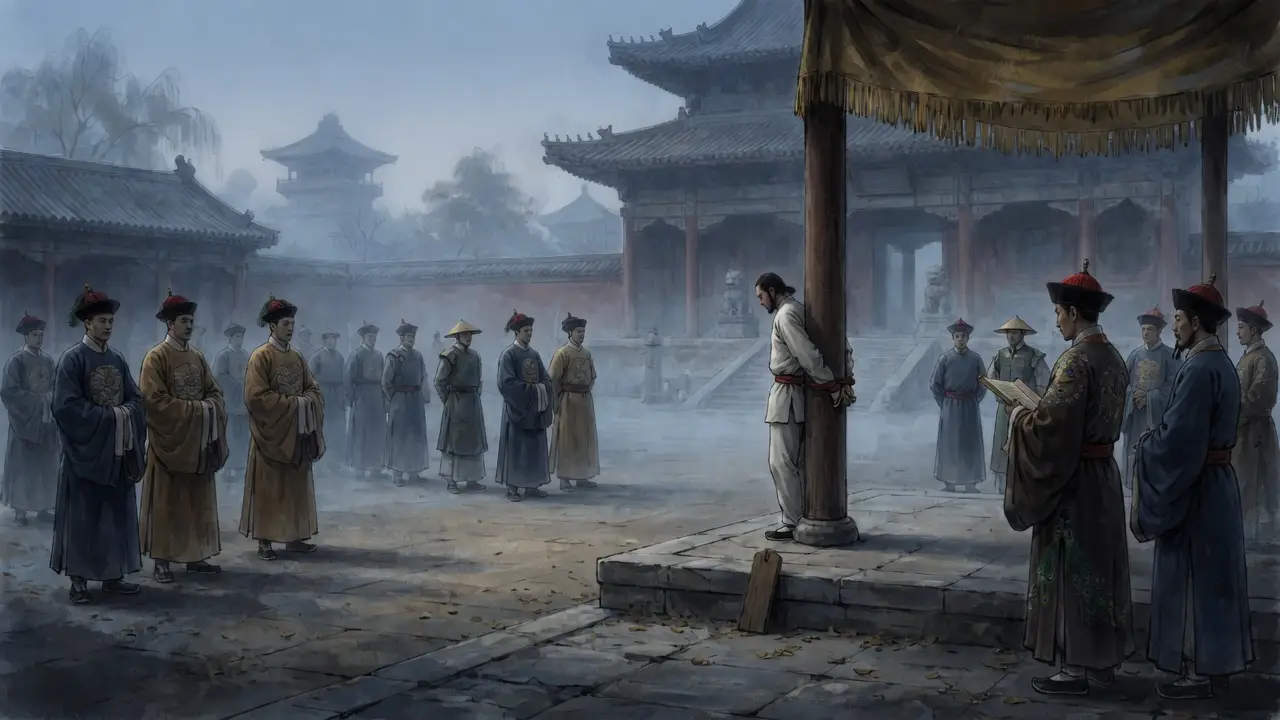
In imperial China, the most severe sentence a court could impose was death by lingchi. The translation, “slow slicing” or “death by a thousand cuts,” only approximates what the punishment actually involved. Carried out by trained executioners who could extend the process across hours, it was considered the appropriate punishment for the worst crimes: treason, parricide, killing one’s master.
The method functioned within a highly sophisticated legal and philosophical framework. Chinese imperial law operated on a principle of proportional retribution calibrated by social hierarchy. The greater the disruption to the cosmic and social order, the greater the punishment required to restore balance. Lingchi was not savagery. It was, in the minds of those who ordered it, a precise legal instrument.
In 1905, a French officer photographed the lingchi execution of a man convicted of murdering a child. Those photographs later reached Europe, where they were studied by intellectuals including Georges Bataille, who wrote extensively about them. The West’s encounter with the images produced something revealing: not simple revulsion, but a troubled fascination that Bataille connected to the deep human entanglement of suffering and transcendence.
The Chinese government abolished lingchi in 1905, one year after those photographs were taken. Whether global attention accelerated the abolition is a question historians still debate.
The Rack, the Pear, and the Economics of Confession
Medieval Europe’s torture chambers were not random horror shows. They were, in a perverse way, legal institutions. Under Roman-derived law, a confession was considered the queen of evidence. Without a confession, certain convictions were legally impossible regardless of what witnesses said. Torture was therefore not extrajudicial but codified into law, subject to rules about who could be tortured, for how long, and under what circumstances.
The rack, which slowly stretched a body by pulling the limbs in opposite directions, was designed to cause maximum pain with minimal permanent damage so the victim could still stand trial. The pear of anguish, a hinged metal device inserted into an orifice and expanded by a screw mechanism, served a dual purpose: it inflicted pain and, if used in the mouth, physically prevented screaming.
These devices existed because a system had concluded that truth lived inside the body and could be extracted by force. The logic was not evil in the minds of its practitioners. It was epistemological. It was a theory of knowledge.
When you understand that these men believed they were not torturing but rather unlocking the truth that guilt had buried, everything becomes more disturbing, not less.
Henry Charles Lea, A History of the Inquisition of the Middle Ages, 1888
Hanging, Drawing, and Quartering: The Mathematics of Dismemberment
England’s punishment for high treason was so elaborate that it constituted its own ceremony. The condemned was hanged until nearly dead, then cut down, then emasculated, then disemboweled with his organs burned before his eyes while he still lived, then beheaded, then cut into four quarters. The pieces were distributed to different cities as warning, the head displayed on a spike above London Bridge.
This was not impulsive violence. It was policy. The body, after the act of treason, legally ceased to belong to the traitor. It became the property of the Crown to be dealt with as the Crown saw fit. The dismemberment was also theological: it was a denial of resurrection, because in medieval Christian belief, the body had to be whole to rise. The state was not merely killing you. It was attempting to destroy you in the afterlife as well.
William Wallace, the Scottish nationalist, was hanged, drawn, and quartered in London in 1305. His head was placed on London Bridge, and his limbs sent to Newcastle, Berwick, Stirling, and Perth. The English government’s intent was to demonstrate that resistance would be unmade and scattered. Instead, the execution transformed Wallace into the most enduring symbol of Scottish resistance in history.
The Guillotine: When Execution Became Enlightened
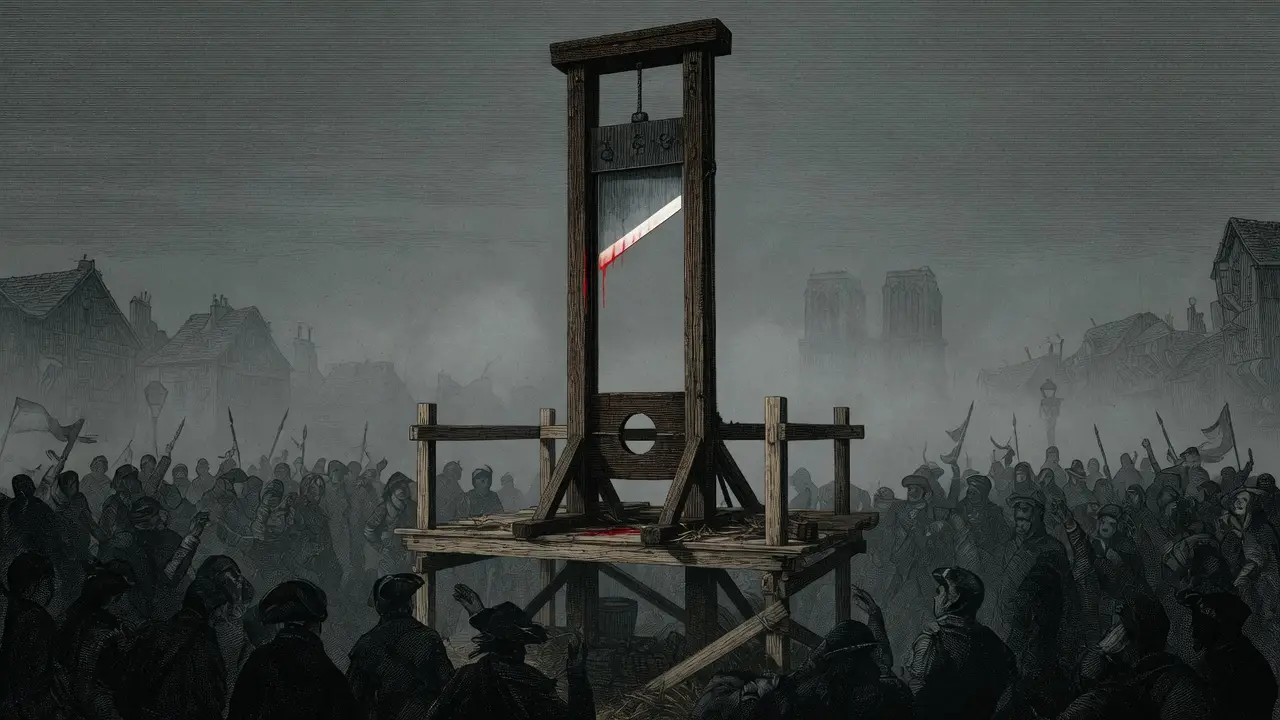
In 1789, a French physician named Joseph-Ignace Guillotin stood before the National Assembly and proposed something radical: that all executions, regardless of the condemned person’s social class, should be carried out the same way. Quickly. Painlessly. Humanely.
The device named after him, though he did not actually design it, was the Enlightenment’s attempt to apply reason to death. The blade fell from a fixed height, severing the head in a fraction of a second. It was efficient, egalitarian, and consistent. A nobleman died the same way as a peasant.
What the Enlightenment did not anticipate was the speed at which its humane invention would be industrialized. During the Reign of Terror from 1793 to 1794, the guillotine in Paris executed over 2,600 people. Crowds gathered to watch. Families brought children. Vendors sold programs. The machine meant to remove barbarism from execution had instead made mass execution frictionless.
France used the guillotine until 1977. The last person executed by it was a Tunisian immigrant convicted of murder. His execution was private, unseen, at six in the morning. When the news leaked out months later, France was horrified. By then, the horror had nothing to do with the blade. It had everything to do with the fact that a human being had been killed by the state at all.
What about today?
The United States still executes people. So do 55 other countries. The methods have changed: injections instead of fire, gas instead of the sword. But the architecture of state execution, the condemned body, the watching witnesses, the official witnesses, the witnesses required by law to observe, remains structurally identical to what it was in Rome, in Tang Dynasty China, in Tudor England.
What changes is the discomfort. Modern executions are designed to look peaceful, the condemned lying on a table, eyes closed, surrounded by equipment that resembles a hospital room more than a gallows. We have not abolished the spectacle. We have simply made it uncomfortable to watch, which may be the most revealing thing of all.
Every generation believes it has outgrown the barbarism of the one before it. Every generation is partially right. The mistake is believing the process is finished.
Somewhere between Akragas and Huntsville, Texas, between the Brazen Bull and the lethal injection table, the question has never actually changed. It is just harder now to pretend we do not hear it.