When people talk about corporate greed, they tend to reach for Rockefeller or Carnegie. Monopolists. Cutthroats. Men who crushed competitors and bought politicians. But those men operated inside legal systems, however corrupted. They faced lawsuits, Senate hearings, and journalists with printing presses.
Go back further, and you find something far darker. Men who did not merely bend the law. Men who were the law.
The Merchant Who Could Starve a Kingdom
In the early 13th century, a group of German merchants did something that no modern corporation has ever managed: they made an entire kingdom beg.
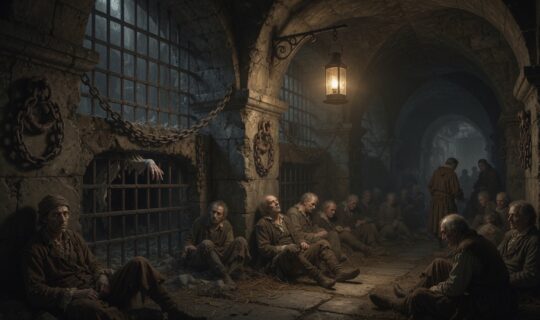
The Hanseatic League began as a loose brotherhood of traders from Lubeck, Hamburg, and Bremen. By the 1300s, it had metastasized into a commercial empire spanning 200 cities, controlling the flow of salt, herring, timber, and grain across northern Europe. They had their own fleets. Their own courts. Their own prisons.
When England’s King Edward IV defaulted on trade agreements in 1468, the League did not file a complaint. They blockaded English ports. They seized English merchant ships. They cut off the fish supply to a population that relied on salted herring as a dietary staple. Within two years, Edward capitulated and signed the Treaty of Utrecht, which handed the Hanseatic League even greater privileges than they had held before.
No taxes on their goods in England. Exemption from local customs duties. The right to maintain their own fortified trading compound in London, called the Steelyard, where English law did not fully apply.
They had broken a king through logistics.
The League operated through what historians now call “commercial warfare,” a phrase that makes it sound almost civilized. It was not. Members who violated League pricing agreements were expelled from the network, which was effectively a death sentence for any merchant’s livelihood. Towns that sheltered defectors were blockaded. Competitors who grew too powerful found their warehouses mysteriously burning.
No court ever held the League accountable. They were the court.
Join The Archive Briefing
Weekly dispatches. The history they didn't teach you — sourced, subverted, delivered to your inbox.
The Banker Who Owned the Holy Roman Emperor
Jakob Fugger did not look like the most powerful man in Europe. He wore plain dark clothes, kept careful accounts, and attended Mass regularly. But in 1519, when Charles I of Spain wanted to become Holy Roman Emperor Charles V, it was Fugger who made it happen and Fugger who sent him a letter afterward to make sure he understood the terms.
“It is well known,” Fugger wrote to the new emperor, “that your Imperial Majesty could not have gained the Roman Crown without my aid.”
He was not wrong.
“It is well known and clear as day that Your Sacred Majesty could not have gained the Roman Crown save with mine aid, as I can attest with documentary proof.”
Jakob Fugger, in a letter to Holy Roman Emperor Charles V, 1523
The Fugger banking dynasty of Augsburg had spent a century becoming indispensable to the Catholic Church and the Habsburg family simultaneously. They financed papal indulgence campaigns. They collected tithing revenue from across Europe and transferred it to Rome. They held the mortgages on vast stretches of land in Hungary and Tyrol. When they moved into silver and copper mining, they did not hire workers so much as own them, employing tens of thousands under conditions that made the medieval serfdom they were supposedly replacing look generous by comparison.
The mercury and silver mines at Almaden and Schwaz killed men in their thousands. Lung disease, cave-ins, poisoning from ore smelting. Jakob Fugger knew this. His correspondence reveals a man of extraordinary intelligence and complete emotional detachment. Workers were a line item.
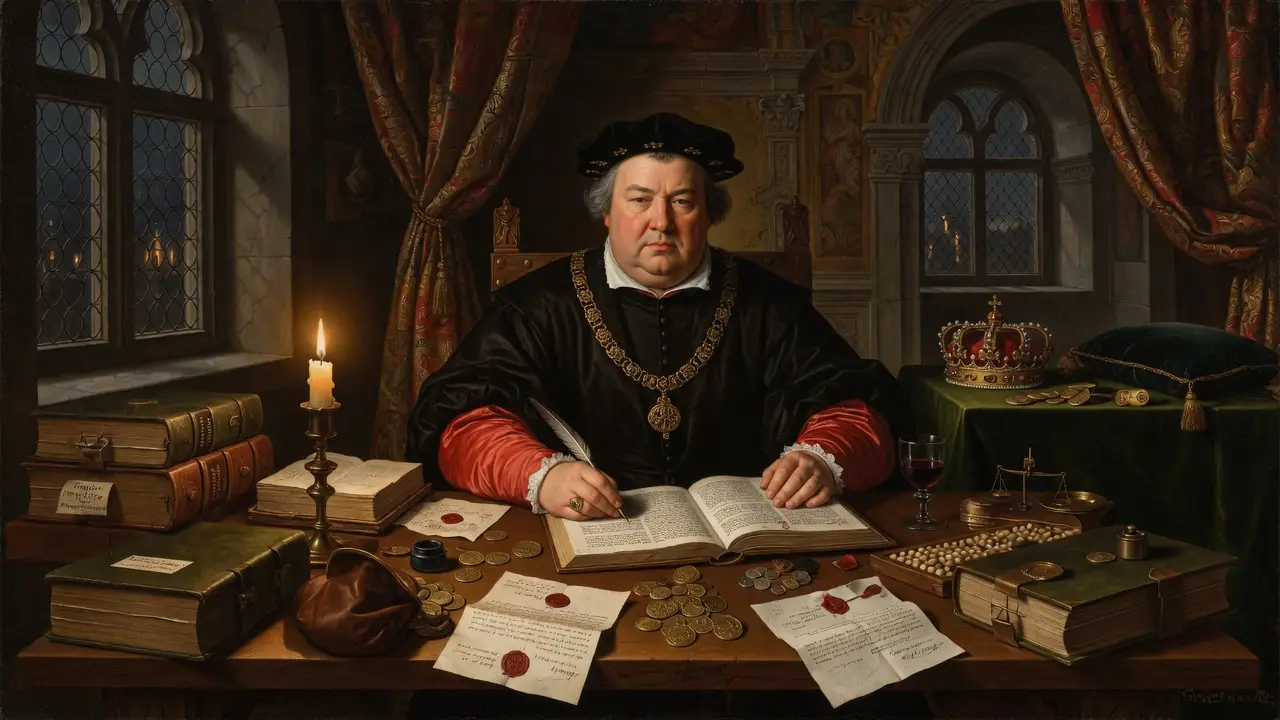
What made the Fuggers truly exceptional in the history of ruthless commerce was their mastery of what modern economists call regulatory capture. They did not fight the Church, they financed it. They did not oppose the monarchy, they funded its wars. In return, they extracted privileges that competitors could not touch. They held monopolies on mercury production in a world where mercury was essential for refining silver. They controlled the silver supply for the Habsburg mints. They charged interest in an era when usury was technically a mortal sin, having purchased theological interpretations that declared their specific form of lending acceptable.
When Charles V eventually defaulted on his debts to the Fugger house, they lost significant capital. But for three generations before that, they had operated as the invisible sovereign of European finance, answerable to no court, no guild, and arguably no God.
The Company That Massacred an Island for Nutmeg
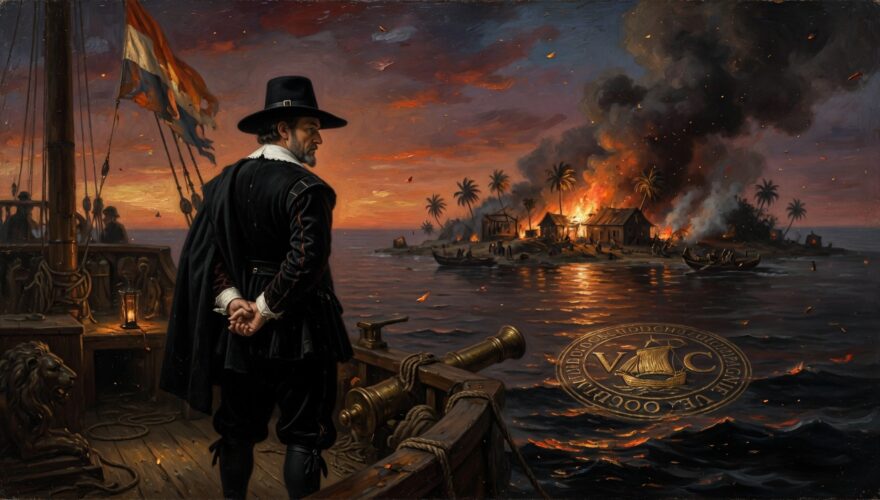
In 1621, Jan Pieterszoon Coen, the Governor-General of the Dutch East India Company, solved a business problem with a genocide.
The Banda Islands in the eastern Indonesian archipelago were the only place on earth where nutmeg grew. Nutmeg, at that time, was worth its weight in silver. European demand was insatiable. And the indigenous Bandanese people had a frustrating habit of selling their spice to the highest bidder, which was economically rational but commercially inconvenient for the VOC.
Coen’s solution was methodical. He dispatched a fleet, deployed Japanese mercenaries, and oversaw the systematic killing or expulsion of virtually the entire Bandanese population. Estimates suggest somewhere between 13,000 and 15,000 people lived on the islands before 1621. Within five years, fewer than 1,000 remained.
The VOC then repopulated the islands with Dutch colonists, called perkeniers, and forced enslaved laborers to work the nutmeg groves under strictly controlled conditions. They set the global price for nutmeg. They burned crops if supply exceeded their target. They executed traders caught selling to non-VOC buyers.
This was not an aberration. This was the business model.
“We cannot make war without trade, nor trade without war.”
Jan Pieterszoon Coen, in a letter to the VOC directors (Heeren XVII), 1614
The VOC, the Vereenigde Oost-Indische Compagnie, chartered in 1602, was history’s first publicly traded company and also its most violent early multinational. It held the power to wage war, negotiate treaties, establish colonies, and mint its own coins. Its shareholders in Amsterdam received dividends. They did not ask where the money came from, and the company did not volunteer the information.
At its peak, the VOC operated 150 merchant ships and 40 warships, employed 50,000 people, and maintained a private army of 10,000 soldiers. It was less a company than a sovereign state that paid dividends.
Coen was recalled to the Netherlands once, reprimanded mildly, and sent back to the East Indies as Governor-General a second time. He died in office in 1629. The VOC outlasted him by 168 years, collapsing finally in 1799 under debt and administrative rot.
The Banda Islands never fully recovered their population.
The Guild Masters Who Decided Who Ate and Who Starved
Medieval merchant guilds are often imagined as quaint associations of craftsmen protecting their trades. That image is approximately as accurate as imagining the Mafia as a fraternal organization for Italian-Americans.
The great merchant guilds of Florence, London, and Bruges operated as closed monopolies, controlling entry into every lucrative trade by controlling who could practice it. The London Merchant Staplers held the exclusive right to export English wool to the Continent for over a century, a monopoly so total that English wool producers had no alternative but to sell through them, at prices the Staplers set.
The Arte di Calimala in Florence controlled the import and finishing of fine Flemish cloth. Membership was inherited or purchased at prohibitive cost. Non-members caught trading in their designated goods faced not just fines but public humiliation, confiscation of all assets, and banishment from the city. The guild’s enforcement agents operated with no judicial oversight. Their decisions were effectively final.
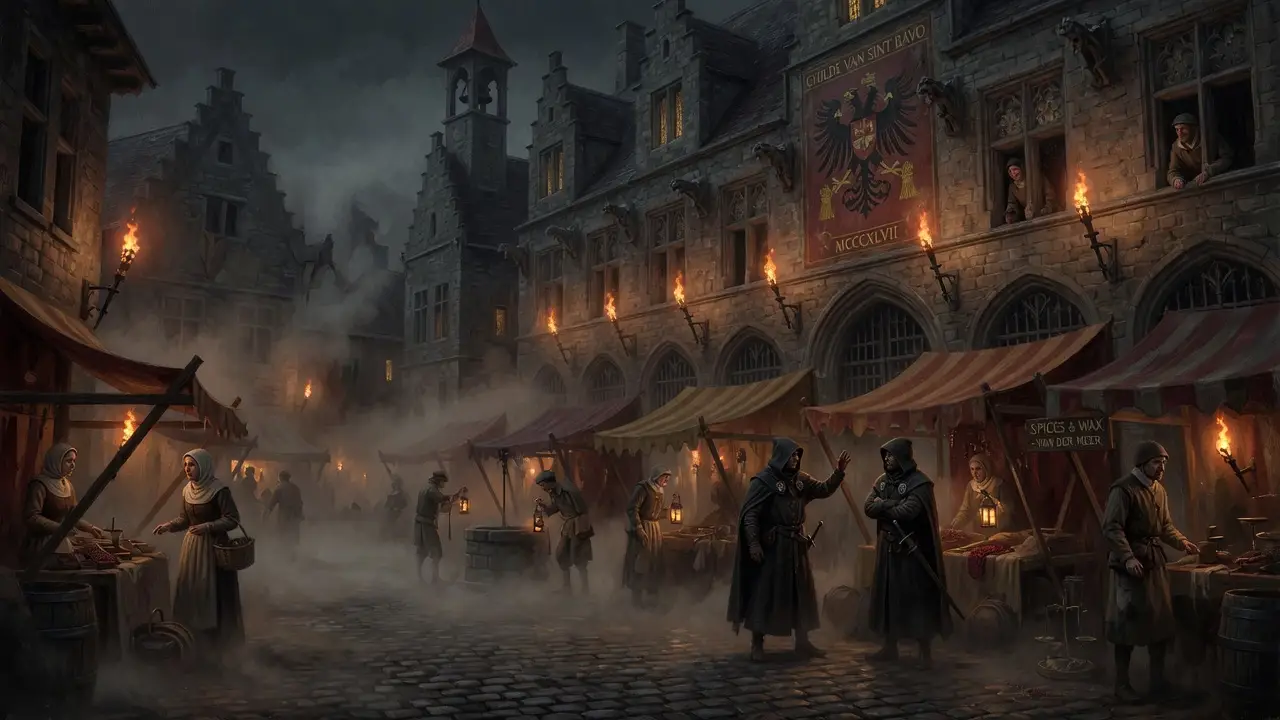
Beneath the merchant guilds sat the craft guilds, and beneath those sat the laborers, the ciompi in Florence, the journeymen in England, men who could spend their entire lives working in an industry and never legally reach the status that would allow them to run their own shop. When the Florentine wool workers revolted in 1378, demanding guild representation and economic rights, the merchant class responded with the swift, organized brutality of people who had been planning for exactly this scenario. The revolt was crushed. Its leaders were executed. The rules tightened.
What made guild power extraordinary was its invisibility to outsiders. There were no formal decrees announcing a monopoly. There were simply the rules, enforced by men who knew everyone in town and held everyone’s debts.
It is tempting to read these histories as curiosities, relics of a pre-legal world that modern regulation has made impossible. That comfort deserves scrutiny.
The VOC’s structure, a company with sovereign powers operating in territories with limited legal accountability, is not merely historical. The logic of a business entity that can operate in jurisdictions where its home country’s laws do not reach, that can structure its governance to minimize accountability, that can employ private security to enforce contracts that no court has validated, that logic did not disappear with the Age of Sail.
What changed is the vocabulary.
“We must ever observe this rule: to sell more to strangers yearly than we consume of theirs in value.”
Thomas Mun, director of the English East India Company
The Hanseatic League called it trade privilege. The VOC called it charter rights. The Fuggers called it contractual arrangement. The guilds called it custom and regulation.
Every era finds new words for the same old architecture: power concentrated in private hands, insulated from accountability, extracting value from those with no alternative but to comply.
The robber barons at least had antitrust hearings. The men who came before them had nothing of the sort.
History’s most ruthless businessmen were not unusual men corrupted by greed. They were ordinary men operating inside systems that made their choices not just possible, but profitable, legal, and widely admired. That is the detail most people prefer not to examine. Because the system did not produce monsters. It produced winners.
And the winners wrote the histories, balanced the ledgers, and funded the churches that absolved them.