Ancient Rome housed nearly a million people, and tens of thousands of them had nowhere to sleep. Here’s how the Roman state actually responded: the grain dole, veteran colonies, aqueducts, and the patron-client system that held a civilization together longer than anyone had a right to expect.
A City on the Edge
In 44 BC, the year Julius Caesar was assassinated, Rome held somewhere between 800,000 and one million people within its walls. It was the largest city the Western world had ever produced, and it stank. Not just from the tanneries along the Tiber or the garum vendors on the Via Sacra, but from something older and harder to wash away: desperation. Tens of thousands of people lived without permanent shelter, sleeping in the covered porticos of temples, beneath the arches of aqueducts, or crammed into the ground floors of insulae so structurally unsound that the upper tenants sometimes woke to find the building had tilted overnight.
Rome was, by every measure, a humanitarian crisis wrapped in marble.
What’s remarkable isn’t that the crisis existed. What’s remarkable is how Rome responded to it. Not with charity, but with systems. Brutal, politically motivated, sometimes exploitative systems that nonetheless worked well enough to stop a city of a million people from tearing itself apart.
How You Ended Up on the Street in Rome
The path to destitution in ancient Rome was shorter than most people assume. A drought in Egypt disrupted grain shipments. A fire consumed an insula block and left four hundred families without a roof. A soldier completed his twenty-year military service and returned to find his ancestral farmland absorbed by a wealthy senator’s latifundium. Debt was the single most efficient engine of poverty the ancient world ever built, and Roman law handled defaulting debtors with a brutality that makes modern bankruptcy law look compassionate.
What Rome produced, then, was a permanent underclass the Romans called the capite censi, literally, “those counted by head. They were seen as citizens so poor they had nothing to offer the state but their bodies. By the late Republic, this group numbered in the hundreds of thousands. They clustered in the city’s most dangerous districts: the Subura, the Aventine’s crowded lower slopes, the riverbank settlements along the Tiber where flooding was a seasonal guarantee.
They were Roman citizens. They had legal rights, including the most politically potent right in the ancient world: the right to vote. And Rome’s governing class knew it.
The Grain Dole: Not Charity, but Control
The annona, Rome’s grain supply system, is often described as welfare. It was never that simple.
The frumentatio, the formal grain distribution program, began as a political weapon. In 123 BC, the tribune Gaius Gracchus introduced subsidized grain sales for Roman citizens, undercutting the market price. His opponents immediately understood what he was doing: buying loyalty from the urban poor. They weren’t wrong. But what began as a electoral tactic evolved, over two centuries, into something more structurally serious.
Join The Archive Briefing
Weekly dispatches. The history they didn't teach you — sourced, subverted, delivered to your inbox.
“What does it profit a man to endure the cold of early morning, to stand wedged in a crowd, only to receive a basket worth perhaps a hundred quadrantes?”
Juvenal, Satires, Book I
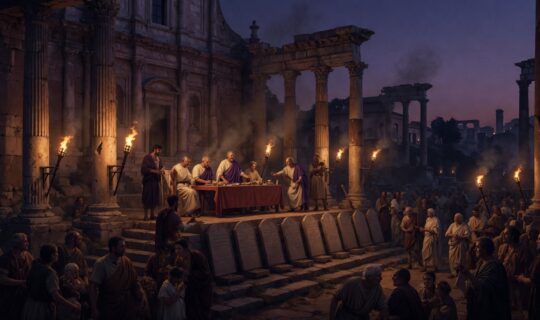
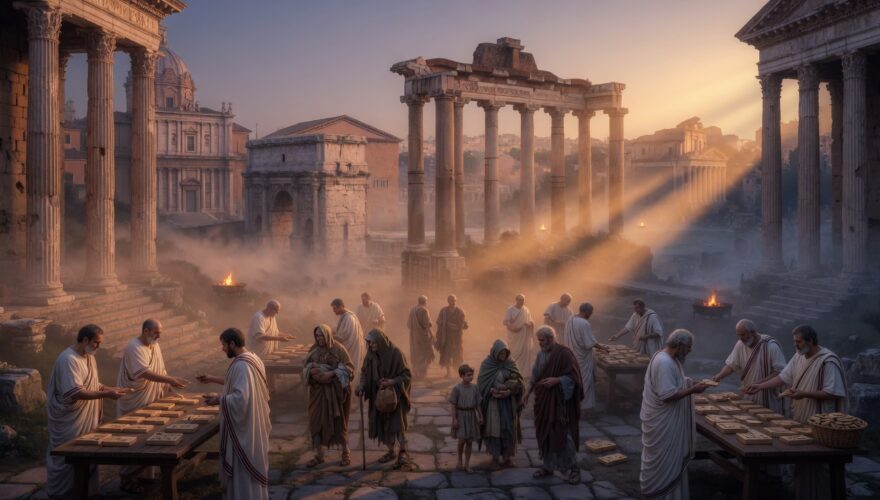
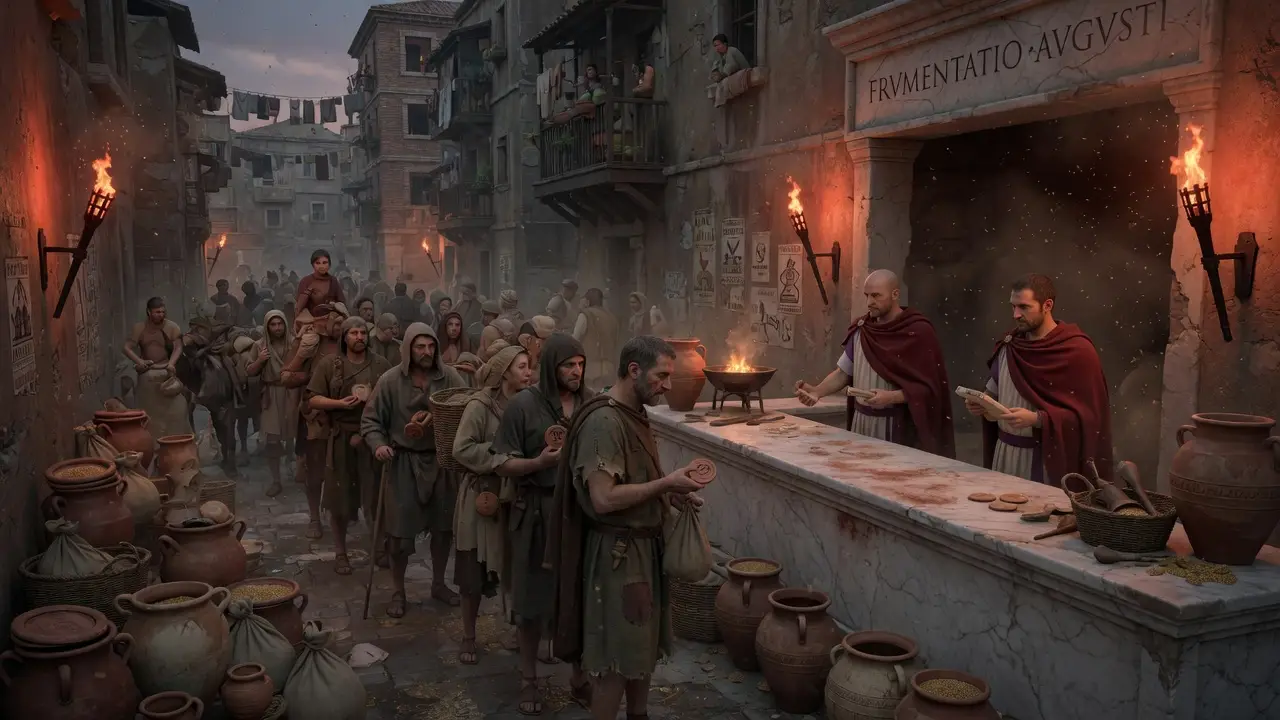
By the time of Augustus, roughly 200,000 adult male citizens received a monthly grain allocation entirely free of charge. The distribution points, initially temporary, eventually permanent marble structures called horrea were spread across the city’s fourteen administrative regions. Recipients held wooden or terracotta tokens stamped with their allocation number and distribution point. Lose the token, lose your grain. The system was bureaucratic long before bureaucracy became fashionable.
The annona didn’t eliminate homelessness or hunger. It was never designed to. What it did was establish a floor below which Roman society would not permit its citizens to fall — at least not visibly, not violently. The free grain allocation represented roughly half the caloric needs of a single adult. It wasn’t enough to live on comfortably. It was precisely enough to keep a man alive and insufficiently enraged to riot.
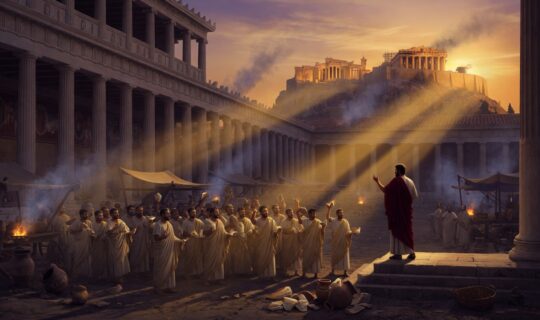
“The Roman people have been tamed and quieted by two things above all: grain distributions and public shows,” wrote the poet Fronto in the 2nd century AD. He wasn’t offering praise. He was describing a mechanism.
The Invisible Architecture of Roman Poverty Management
What most people miss about Roman social policy is how much of it operated through infrastructure rather than direct aid.
The aqueducts are the most famous example. By the early imperial period, Rome had eleven major aqueducts delivering over a billion liters of water daily into the city. The wealthy had private connections piped directly into their domus. The poor relied on public fountains and there were thousands of them, one roughly every eighty meters in the densest neighborhoods. Clean water, free and constant, didn’t solve poverty. But it kept typhoid from becoming a quarterly event.
LESSER-KNOWN DETAILS
The tessera frumentaria was the wooden token used to collect grain, but a black market for these tokens thrived. Citizens who died left tokens that were fraudulently used by others, sometimes for years. The Roman administration knew this was happening and seems to have tolerated a certain level of it as a passive form of expanded distribution.
The thermopolia served a similar function, though privately. These were the ancient equivalent of street food counters, their L-shaped stone counters with embedded ceramic jars still visible today at Pompeii. Poor Romans didn’t cook at home, most didn’t have homes with kitchens, and open fires in insulae were a catastrophic fire risk. The thermopolia sold hot food for a few copper coins, and in some neighborhoods, benefactors or political candidates paid for free distributions from these counters. Food, warmth, community, and a reason not to revolt, all served from the same counter.
The baths, too. The thermae charged admission, but the price was kept deliberately, almost absurdly low, a fraction of a copper coin. Emperors periodically made them free entirely. Bathing wasn’t a luxury in Rome; it was social infrastructure. The baths were where you heard news, conducted business, and felt, at least briefly, like a citizen rather than a body sleeping under a portico.
Veterans and the Colonial Solution
The most structurally ambitious thing Rome ever did for its displaced population had nothing to do with food.
By the late Republic, Rome faced a problem unique to successful empires: it had too many veterans. Men who had served twenty years in the legions returned home to find the Republic had no particular plan for them. Their land was gone. Their skills were military. Their patience was limited and their weapons were close at hand.
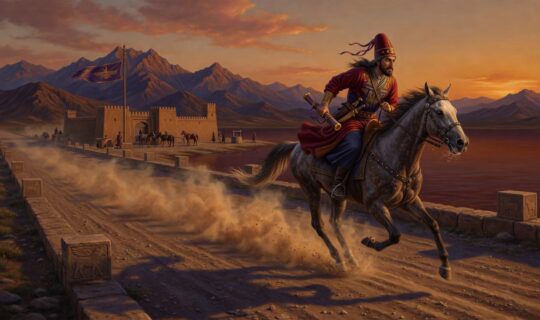
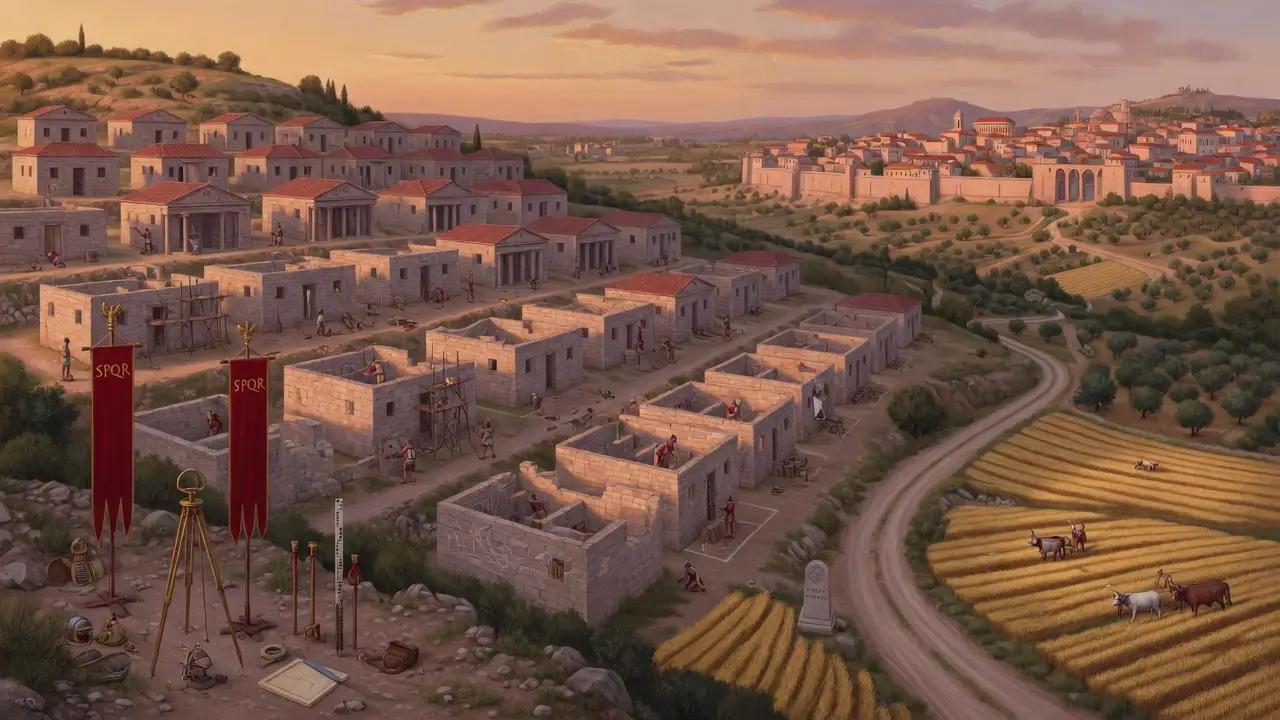
The Roman answer was the colonial system. Beginning under the Gracchi and accelerating under Julius Caesar and Augustus, Rome established coloniae, planned settlements in conquered territories where veterans received land grants, building materials, and legal status as Roman citizens in a new community. These weren’t charity. Veterans were expected to farm their land, defend the settlement, and serve as cultural anchors of Roman civilization in newly conquered regions.
“The state provides for the poor only enough that the poor cannot provide against the state.”
Tacitus, Annals
The scale was extraordinary. Caesar alone settled over 80,000 veterans and urban poor in colonies across Spain, Gaul, North Africa, and the eastern Mediterranean. Augustus continued this systematically, establishing colonies from Hispania to Syria. The figures ancient sources provide, sometimes 100,000 settlers in a single wave, are almost certainly exaggerated, but the underlying reality wasn’t: Rome was exporting its poverty problem and calling it an empire.
It worked. Not perfectly, not humanely in every case, the indigenous populations of these territories rarely volunteered their land enthusiastically. But for the Roman state’s core problem of managing a vast urban underclass prone to political manipulation and occasional violence, the colonial program was genuinely effective.
The Insulae: When Housing Policy Fails in Real Time
For those who stayed in Rome, housing remained a catastrophe.
The insulae were multi-story apartment buildings, some reaching six or seven stories, that housed the majority of Rome’s non-elite population. They were built fast, built cheap, and built with the specific intention of extracting maximum rent from minimum investment. Augustus capped their height at 70 feet. Nero, after the Great Fire of 64 AD, imposed stricter building codes requiring fire-resistant materials and mandatory access to common water sources.
These regulations were enforced approximately as reliably as you’d expect in a city where the fire brigade was initially a private service operated by a man named Marcus Licinius Crassus, who would dispatch his teams to burning buildings and offer to buy the property from the desperate owner at a catastrophically low price before agreeing to put out the fire.
The insula market was controlled by wealthy Romans who sublet floors through layers of middlemen, driving rents to levels that consumed 25 to 30 percent of a laborer’s daily wage, a ratio that would be recognizable in any major city today. Cicero, who owned several insulae himself, complained that two of his buildings had partially collapsed, then added, in a letter that reads with a certain breathtaking candor: “Even the mice have moved out.”
The Patron-Client System: Rome’s Shadow Welfare State
Behind every formal policy was an informal one, and for millions of Romans, the patronus-cliens relationship was the actual safety net.
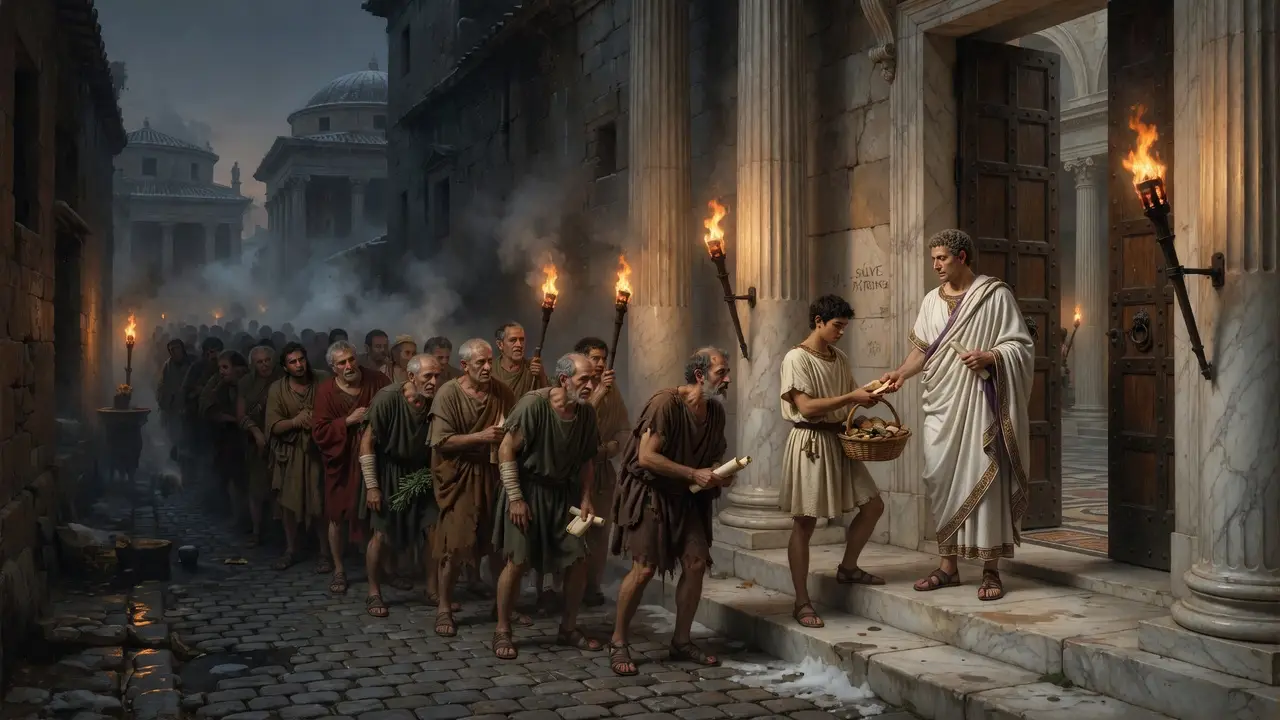
A Roman patron provided his clients with legal representation, career introductions, gifts of food and money on festival days, and crucially, the sportula, a daily gift of food or its cash equivalent distributed each morning to clients who arrived at the patron’s house for the salutatio, the morning greeting ritual. A powerful senator might have hundreds of clients, and the sportula became so normalized that satirists like Juvenal wrote extensively about the indignity of standing in line in the cold dawn, waiting for a basket of scraps from a man who would never learn your name.
LESSER-KNOWN DETAILS
When Rome’s covered porticoes filled with the homeless at night, city authorities periodically attempted to clear them. These efforts usually lasted until a politically significant holiday, after which the porticoes would fill again. Some temples officially prohibited sleeping on their premises; many did not enforce this, especially in winter.
“What does Rome offer you?” Juvenal wrote in the early 2nd century AD. “A meager dole, a patron’s cold greeting, and the noise.”
It was transactional, humiliating, and deeply hierarchical. It was also the closest thing most poor Romans had to a social support system that responded to individual need rather than bureaucratic category.
The Turning Point: When the System Almost Broke
The system’s genuine stress test came not from peacetime poverty but from military disaster.
In 9 AD, three Roman legions under Publius Quinctilius Varus were annihilated in the Teutoburg Forest by Germanic tribes under Arminius. Roughly 20,000 men died. The veterans who survived other campaigns and returned to Rome in the years following found a city shaken and an emperor, Augustus, who reportedly wandered his palace shouting “Varus, give me back my legions!” The colonial program stalled. Land grants dried up. The urban poor swelled.
Augustus survived the crisis politically by understanding something that most leaders of collapsing systems miss: the problem wasn’t the poor. The problem was the absence of systems credible enough to absorb their desperation. He accelerated public building programs, expanded the Praetorian Guard’s presence in the city to deter the kind of street-level violence that historically preceded larger uprisings, and reorganized the grain dole bureaucracy to reduce corruption in distribution.
LESSER-KNOWN DETAILS
Rome’s port city of Ostia held massive grain warehouses (horrea) as strategic reserves against supply disruptions. The praefectus annonae, the official in charge of the grain supply, was one of the most powerful administrators in the empire because everyone understood that whoever controlled the food supply controlled the city.
He also, notably, staged games. Lots of games. The ludi were not simply entertainment, they were a public demonstration that the state was still functioning, still present, still capable of delivering spectacle. A government that can fill the Circus Maximus with 250,000 screaming spectators is a government that still has control of the city’s nervous system.
What Actually Worked, and Why That’s an Uncomfortable Answer
Historians often debate which Roman social programs were “successful,” and the debate usually founders on the question: successful for whom?
The grain dole worked, in the sense that Rome never experienced the kind of mass starvation that periodically devastated other ancient cities. The veteran colonies worked, in the sense that they absorbed hundreds of thousands of potentially violent men and converted them into productive settlers. The aqueducts and public baths worked, in the sense that they gave Rome’s poor access to clean water and social space that reduced disease and social isolation.
What none of these systems did was address the structural causes of poverty. Debt remained crippling. The latifundia system continued consuming small farms. Slavery suppressed wages for free laborers in every skilled trade. The insulae kept burning.
Rome managed its homeless crisis the way a skilled politician manages a scandal: not by solving it, but by keeping it below the threshold of ungovernability. For five centuries, more or less, it worked. The bread was real. The water was real. The land grants were real. The circuses were real.
And the poverty never went away.
The Lesson That Keeps Getting Learned Too Late
Rome’s social programs collapsed not because they were poorly designed, but because they became financially unsustainable at the same time the empire’s territorial expansion, the engine that funded everything, began to stall. By the 3rd century AD, emperors were debasing the currency to pay for the grain dole. Colonies in the provinces were producing fewer tax revenues as local elites absorbed them. The patron-client system atrophied as the senatorial class’s wealth contracted.
What Rome built, in the end, was a system exquisitely dependent on perpetual growth. The moment that growth stopped, the floor that had kept millions of people from absolute destitution began to crack.
Cities that have lasted, and cities that have fallen, have often done so along exactly this line. The infrastructure holds until the money does. The grain dole runs until the grain stops. The housing codes apply until the inspectors are underpaid.
Two thousand years later, we are still building the same systems, having the same arguments, and making the same political calculations about how much it costs to keep a city from burning itself down.
The answer, it turns out, has always been: slightly less than it would cost to rebuild it from ash.