The medieval peasant is one of history’s most consistently misrepresented figures. Mention the Middle Ages and the image arrives almost automatically… a bent, exhausted wretch grinding out a brutal existence from gray dawn to gray dusk, all for the privilege of handing most of it to a lord who barely acknowledged his existence. The “dark ages” narrative demands a suffering peasant. It makes the modern world feel like a rescue.
But the data (what little survived) tells a different story. Historians like Juliet Schor, who excavated labor patterns in her landmark 1991 book The Overworked American, and later researchers like economists at Oxford and Cambridge, found something genuinely startling when they began counting medieval working days. The average English agricultural laborer in the 13th and 14th centuries worked, by best estimates, somewhere between 150 and 180 days per year. The rest was, in various degrees, not work.
That’s fewer working days than a modern full-time employee logs in six months.
“They dance, they play, they sing… and the lord who interrupts their Sabbath earns God’s wrath before his own profit.”
Attributed to a Benedictine monk, Speculum Morale, c. 1300
The Man Who Stopped Working in October
In the autumn of 1247, somewhere in the English countryside, a peasant named Aldric finished his harvest. The grain was threshed, the fields stripped bare, the root vegetables buried in straw against the coming frost. And then… he stopped. Not because he was lazy. Not because he was sick. Because the Church said so, the village custom said so, and every rhythm of the natural world agreed: the work was done. Until spring cracked the earth open again, Aldric’s time was largely his own.
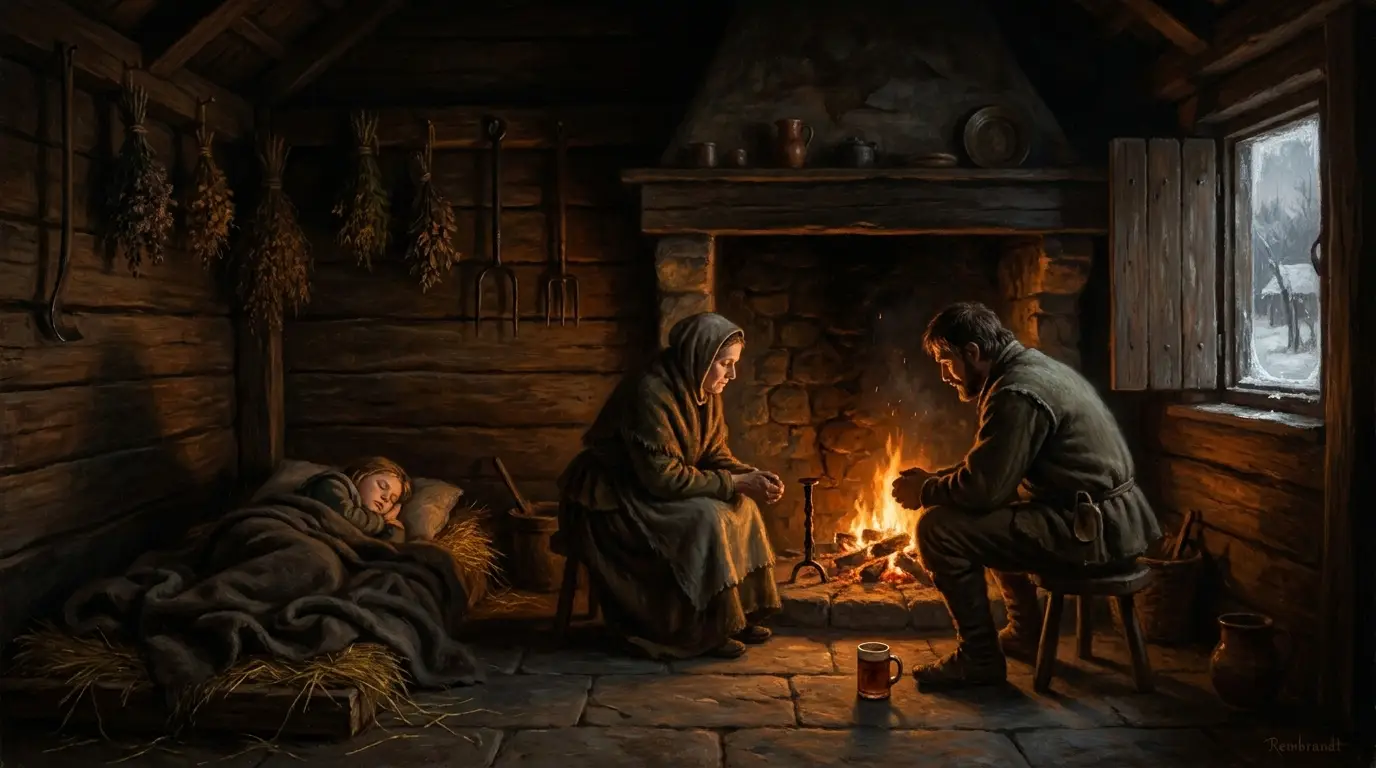
He would feast on Saint Crispin’s Day. He would sleep past dawn without guilt. He would drink ale (thin, yes, but plentiful) and sit beside a fire while the fields rested beneath snow. He had no email. No quarterly targets. No performance review.
He had something most people reading this article do not: genuine, structured, socially enforced leisure.
Saints, Seasons, and the Sacred Calendar
The mechanism wasn’t charity. It wasn’t weakness. It was the Catholic Church.
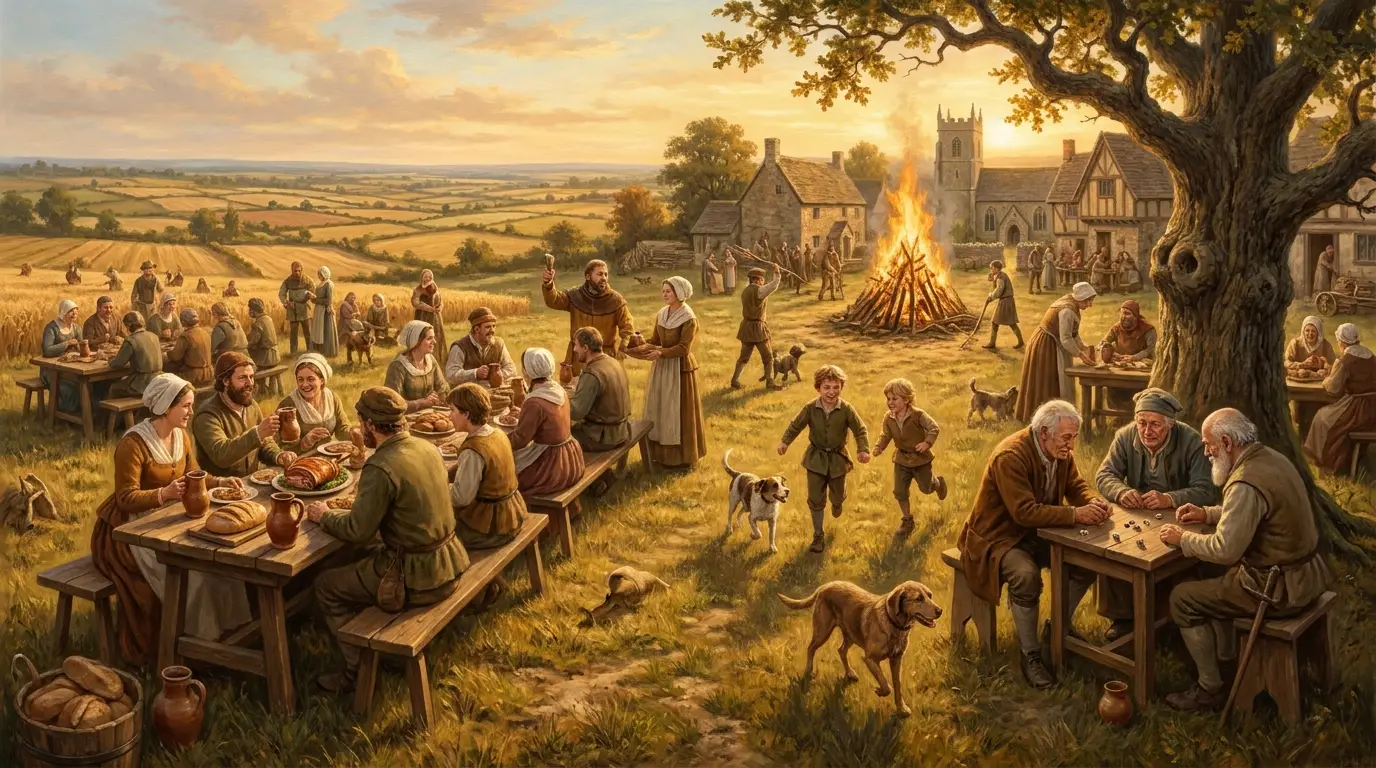
The medieval liturgical calendar was a dense forest of feast days, saint’s days, holy obligations, and religious festivals, and most of them came with a prohibition on what the Church called “servile work”, the kind of hard, contracted labor that defined peasant life. By some estimates, the medieval English calendar contained between 40 and 60 saints’ days on top of Sundays, meaning roughly a third of the year was legally and spiritually protected from ordinary toil.
“Six days shalt thou labor, and do all thy work: but the seventh day is the Sabbath.”
Deuteronomy 5:13, the scriptural foundation for enforced rest, cited continuously throughout medieval Church law
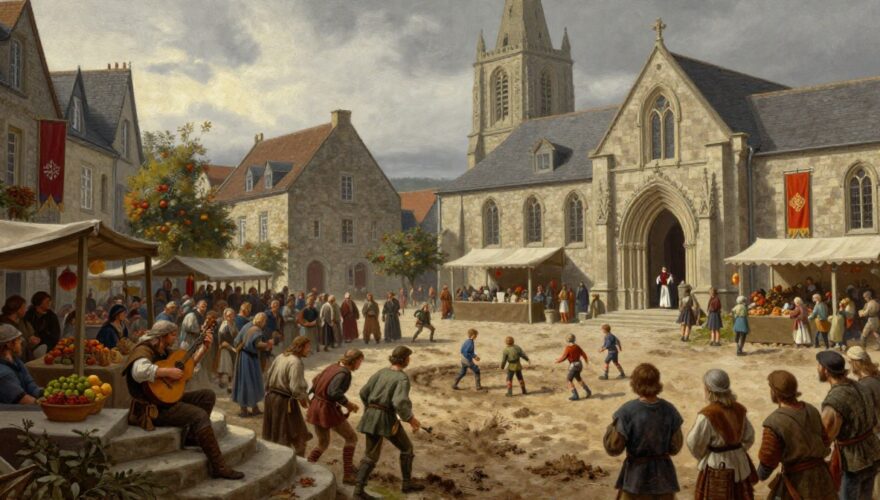
Saint Swithin’s Day in July. The Feast of the Assumption in August. All Saints in November. Each one arrived with ritual, with communal gathering, with food and drink and noise. The village didn’t just pause… it celebrated. And in a world without weekends as a concept, these holy interruptions were the architecture of rest.
Join The Archive Briefing
Weekly dispatches. The history they didn't teach you — sourced, subverted, delivered to your inbox.
The Church hadn’t designed it purely out of generosity. There was theology baked into it: labor was a consequence of the Fall, and God had commanded rest. To work on a feast day was not just antisocial, it was sinful. One 12th-century English priest recorded the case of a miller who kept his wheel turning on the Feast of the Nativity of the Virgin. His neighbors, according to the chronicle, didn’t merely disapprove. They were horrified. The man was working against God’s own calendar.
What Rest Actually Looked Like
It would be wrong to romanticize this. Medieval leisure wasn’t a spa day. Rest in a drafty one-room house shared with livestock was rest in only the technical sense. Winters were brutal, food was monotonous, life expectancy was short. The peasant who stopped working in October wasn’t exactly kicking back in comfort.
But something real was happening in the gaps between labor. Village ales, communal drinking events organized around specific saints’ days, were genuine social institutions. People drank, argued, played, danced, and conducted the informal business of community life. Sports that we might recognize, faintly: football matches so violent and chaotic they once caused the Bishop of Exeter to formally ban them near his cathedral in 1314. Archery competitions. Wrestling. Dice games that technically broke canon law and were technically played anyway, by nearly everyone.
There were also longer stretches of enforced seasonal stillness that had nothing to do with religion. Winter simply prevented agricultural work. Plowing required unfrozen ground. Planting required planting season. In between, labor could be light (mending tools, tending animals, small domestic tasks) or in genuinely fallow periods, nearly nothing at all. A day’s work in January looked nothing like a day’s work in June. The year breathed in and out, and so did the people living inside it.
“The laborer is worthy of his hire, and worthy also of his rest.”
Paraphrased from Luke 10:7, commonly invoked in medieval estate negotiations
Historians have also documented what’s called “Saint Monday”, a working-class tradition, particularly among craftsmen and artisans, of simply not working on Monday. It wasn’t official. No Church calendar authorized it. It persisted because workers had enough collective bargaining power in their local guilds to make it stick. Monday was the hangover from Sunday, and the hangover was respected.
The Turning Point Nobody Voted For
This rhythmic, seasonal relationship with labor did not survive contact with capitalism.
The shift was gradual at first, and then, by the 18th century, violent. As textile mills and factories drew workers from fields into buildings, the organic calendar of agricultural life, its saints, its seasons, its silences, became economically inconvenient. Factory owners needed consistent output. Feast days were not output. Saint Monday was not output. Winter slowdown was not output.
In England, the number of official public holidays was deliberately and systematically reduced. By the 1830s, the Bank of England observed 47 holidays per year. By 1834, Parliament had hacked that to four. Not by accident. Not by necessity. By intention, and by the logic of industrial production, which required that human time be turned into a raw material like coal or cotton.
Workers who had inherited centuries of customary rest found that inheritance stripped away within a generation. A peasant from 1300 dropped into a Victorian cotton mill would not have recognized the labor regime as anything but extraordinary cruelty.
The Hours That Never Made It Into History Books
There are details in the medieval record that historians rarely lead with because they complicate the standard narrative too much.
One: medieval laborers’ contracts often specified not just what work would be done, but what breaks would be taken. In some English estate records, workers were entitled to rest periods during harvest, and those breaks were written down, legally, because violating them was a breach of contract.
“After the feast of Saint Michael, no man should be compelled to plow.”
From a 13th-century English manorial court record, Lincolnshire
Two: sleep patterns were different. Before artificial lighting standardized the waking day, most Europeans slept in two separate shifts, what historians call “first sleep” and “second sleep”, with an hour or two of wakefulness in between for prayer, sex, conversation, or quiet reflection. The idea of a single uninterrupted eight-hour block is a modern invention. The medieval night contained a pocket of conscious time that belonged to no one.
Three: the concept of “wasting time” had no real moral weight in pre-industrial Europe. The phrase itself, as a term of condemnation, barely existed. Time was not yet understood as a commodity that could be squandered. That framing arrived with the clock, the factory, and the wage.
The Uncomfortable Mirror
None of this means medieval peasants had it better. They didn’t. Infant mortality, plague, famine, and the casual violence of feudal hierarchy made their lives genuinely hard in ways that no amount of saints’ days could fully offset.
But something was lost in the transition to industrial and then post-industrial labor that we have never fully recovered or even properly named. The medieval calendar treated rest as sacred… not as a reward for productivity, not as a battery recharge before the next sprint, but as something intrinsically human and intrinsically valuable. The Church encoded it. The village enforced it. The seasons confirmed it.
We now live in an economy that has dismantled every version of that structure and replaced it with the promise that we can opt into leisure once we’ve earned enough. But enough keeps moving. The average full-time American worker logs over 1,800 hours per year. The average medieval English peasant, by the best available estimates, worked between 1,200 and 1,500.
We work more than serfs. We’re just doing it with better shoes.
“Rest is not the enemy of work. It is the condition of it.”
Thomas Aquinas, Summa Theologica, 13th century