Medieval people survived not by luck but by building systems: agricultural calendars, food preservation, community networks, herbal medicine, and inherited knowledge passed down through generations. Discover how ordinary men and women in the Middle Ages endured famine, plague, war, and winter in ways that shaped the modern world.
- 1 The Year Could Kill You
- 2 Survival Began With the Seasons
- 3 Bread Was Life, and Everything Else Came After
- 4 Community Was Not Support. It Was Infrastructure.
- 5 The Church Was an Institution Before It Was a Feeling
- 6 Medicine Was Limited, but Not What People Think
- 7 Homes Were Designed to Keep You Alive
- 8 Clothing Was Shelter You Wore
- 9 War Came for Ordinary People Too
- 10 The Black Death and What People Did With Terror
- 11 Knowledge Lived in People, Not in Books
- 12 They Built Something Worth Understanding
The Year Could Kill You
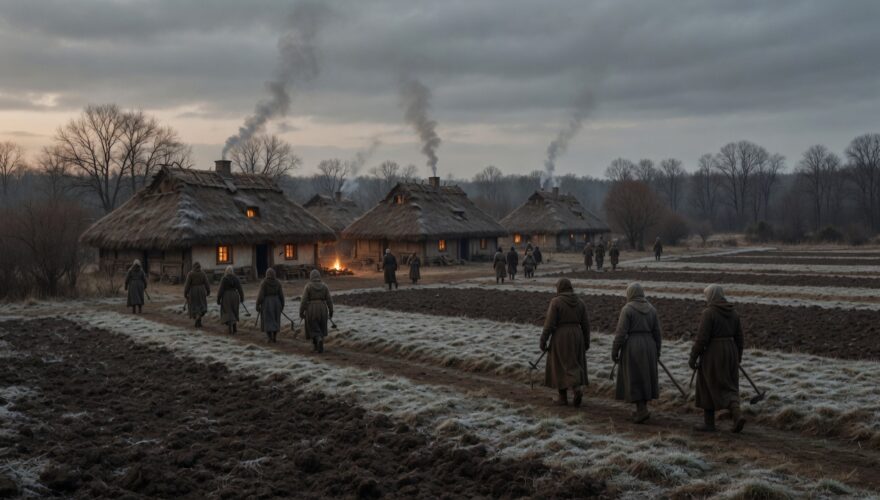
The frost came early that autumn. Not a hard freeze, just enough to blacken the last of the grain still standing in the field. For a peasant family in fourteenth-century England, that meant one thing: the math no longer worked. The stored food would not last until spring. The question was not whether someone in the village would starve. The question was who.
This was the reality of medieval survival. Not a romantic landscape of castles and candlelight, but a grinding, daily negotiation with cold, hunger, disease, and violence. Medieval people did not simply endure. They built systems, inherited knowledge, formed obligations, and developed instincts refined over generations. They survived because they understood something that most modern people have never had to learn: that life is fragile, and that keeping it requires constant, deliberate effort.
Survival Began With the Seasons
The medieval year did not run from January to December in any meaningful sense. It ran from planting to harvest, from abundance to scarcity, from hope to fear and back again.
Spring was the most dangerous season, not autumn. By March and April, the stores laid up the previous autumn were running thin. Bread was scarce. Bodies were already weakened by months of cold and inadequate food. Then came the labor: plowing, sowing, preparing the fields while still half-starved. Peasants planted rye, wheat, barley, and oats into soil they had worked for generations, reading the earth the way a physician reads a patient.
Summer demanded everything. Animals needed tending. Weeding was constant. Hay had to be cut and dried for winter fodder. Children worked. Old people worked. The fields owned the daylight hours, and daylight was not wasted.
“The belly rules the mind.”
Attributed to Spanish proverb, in circulation by the medieval period
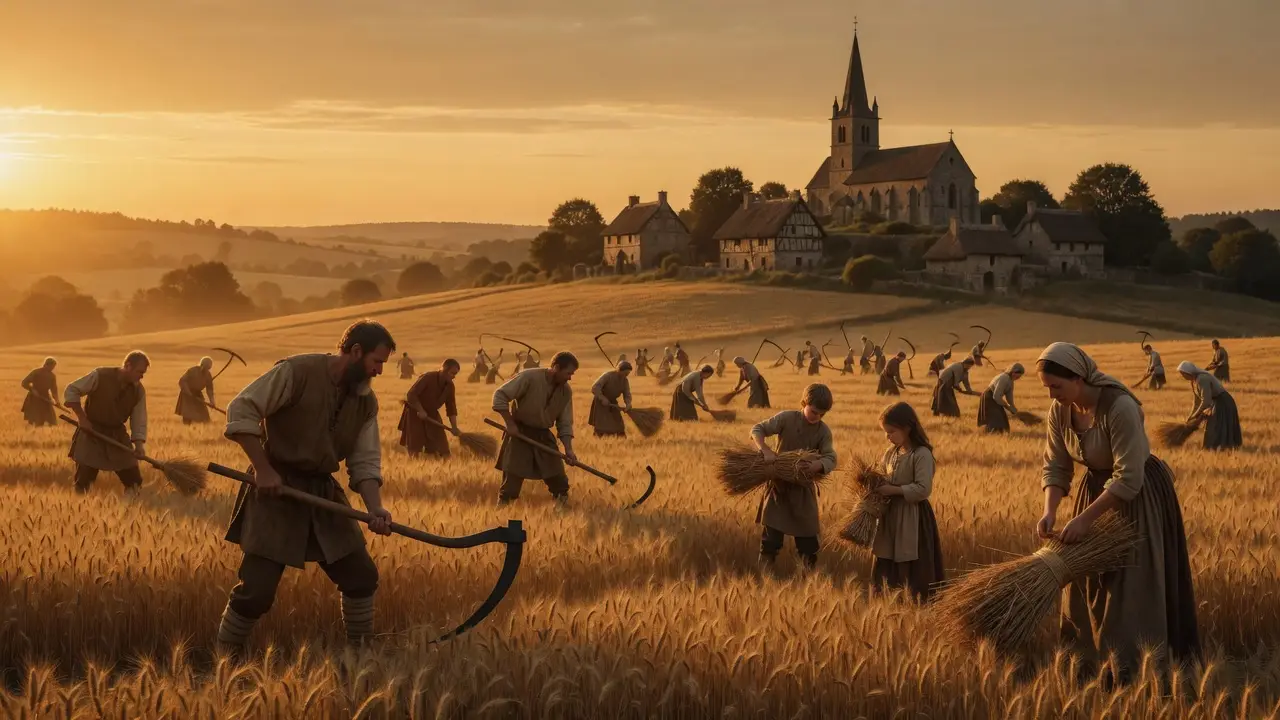
Autumn was the fulcrum of the year. The harvest determined whether a family lived or suffered. Neighbors harvested together because it had to be done fast, before rain ruined the grain. The mood of an entire village could swing in a week depending on what came out of the ground.
Then winter descended. Food was rationed. Animals were slaughtered in November because there was not enough fodder to carry them through to spring. The meat was salted, the fat rendered. Candles were expensive. Darkness came early. People waited.
A failed crop was not an inconvenience. It was a death sentence delivered slowly. The great famine of 1315 to 1322 killed millions across Europe, not because no one tried to help, but because consecutive years of failed harvests overwhelmed every survival system people had built. Villages collapsed. People ate seed grain, which meant next year’s crop would fail too. Hunger came first, then disease moved through bodies too weakened to resist. Historians sometimes call it the first horseman: famine always rode ahead of the others.
Join The Archive Briefing
Weekly dispatches. The history they didn't teach you — sourced, subverted, delivered to your inbox.
Bread Was Life, and Everything Else Came After
Ask what a medieval peasant ate and the honest answer is: bread, pottage, ale, and whatever else could be produced, traded, foraged, or preserved.
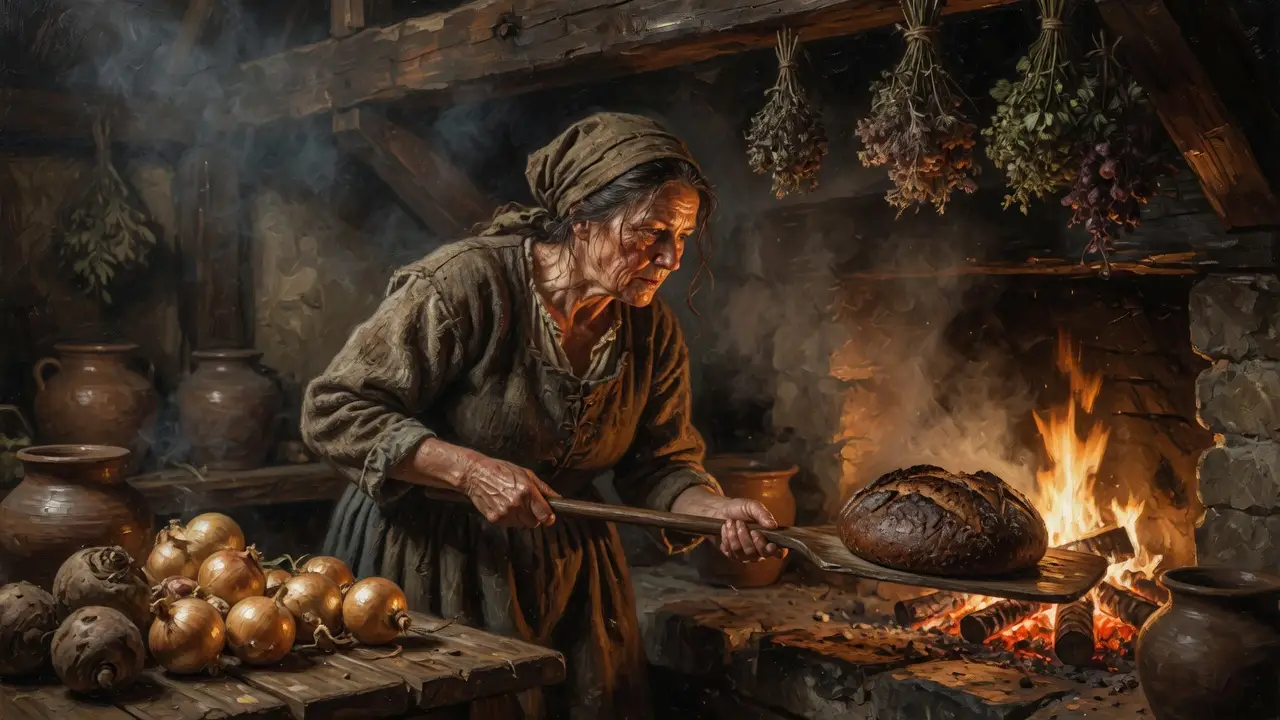
Bread was not a side dish. It was the meal. Dark, dense, sometimes adulterated with cheaper grains or even sawdust in desperate times, it made up the majority of a peasant’s daily calories. The type of bread you ate told people immediately where you stood in the world. White bread made from refined wheat was noble food. The poor ate maslin, a mix of wheat and rye, or rye alone. During a bad winter, barley bread. During famine, things no one wanted to talk about later.
Pottage was what filled the gaps. A thick, long-simmered stew of whatever was available: peas, beans, leeks, onions, cabbage, herbs, the occasional scrap of bacon or salt pork. It was not exciting food, but it was caloric, warm, and it could feed many mouths from a single pot. Some version of pottage sat over a fire in nearly every peasant home every day of the year.
“When the stomach is empty, the brain will not work.”
Paraphrased from monastic writings on fasting and cognitive capacity.
Ale was not a luxury. Water from wells and rivers in medieval settlements was frequently contaminated, and people understood from experience, if not from germ theory, that drinking it made you ill. Ale was safer, mildly caloric, and available everywhere. Women brewed it at home. Children drank weak versions of it. It was part of the daily food supply, not a vice.
Meat was expensive and infrequent for most people. Pork was the most common because pigs could be fattened on scraps and woodland forage. Chickens provided eggs, which were more valuable than the bird itself. Cows were work animals first. You did not eat your plow.
LESSER-KNOWN DETAIL
The Great Bovine Mortality of 1319 and 1320, following the Great Famine, killed approximately 60 to 70 percent of cattle across parts of England and continental Europe, removing not just food but plow animals, which made recovery nearly impossible for years afterward.
Preservation was a science. Salt was so valuable it functioned almost like currency. Fish and pork were heavily salted and stored in barrels. Meat was smoked over fires to slow decay. Fruit and vegetables were dried or pickled in vinegar and brine. Fermentation was understood practically, if not chemically: sauerkraut, preserved vegetables, fermented grain. Medieval people could not explain why it worked, but they knew that it did, and they staked their lives on that knowledge every winter.
A noble’s table was a different world. Roasted meats, spiced sauces, game birds, imported spices, pastries, and wine. Not because nobles were simply greedy, though some were, but because the ability to eat extravagantly was itself a form of power. The feast was a performance of security. It announced that this lord had enough to waste.
Community Was Not Support. It Was Infrastructure.
Surviving alone in the medieval world was almost impossible. This is not sentiment. It is logistics.
A single family could not plant, harvest, build, repair, and defend itself without neighbors. The village operated on a web of mutual obligation that had no formal contract but was enforced by something more powerful: the knowledge that next year, you might be the one who needed help.
Harvesting was communal labor. Mills were shared because no peasant family could afford to build one. Ovens were often communal too, since maintaining a large baking oven required fuel and structure that made individual ownership impractical. Common grazing land allowed families with small landholdings to keep animals they otherwise could not sustain.
“He who has health has hope, and he who has hope has everything.”
Medieval Arab proverb
Kinship networks extended this outward. Cousins, in-laws, godparents: these relationships were not just social. They were insurance. If one family’s harvest failed, kin in another village might provide enough to survive the gap. Marriage strategies were often explicitly about building these safety networks across distances.
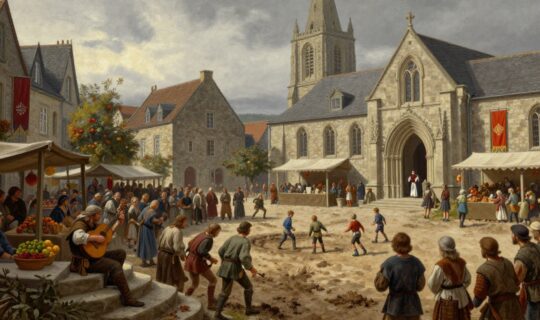
The Church added another layer. Monasteries provided food to the hungry at their gates. Many maintained hospitals, called infirmaries, where travelers and sick people could find shelter and basic care. Guilds in towns provided members with support during illness and paid for their burial when they died. The poor laws that emerged in later centuries grew directly from these existing informal systems.
Isolation was not solitude. It was danger. A family cut off from its community, whether through conflict, disease, or displacement, lost access to the entire network that kept survival possible. This is why excommunication was treated as one of the most severe punishments the Church could deliver. It was not just spiritual exclusion. It was social death.
The Church Was an Institution Before It Was a Feeling
The medieval Church is often reduced in popular imagination to superstition and Latin chanting. This misses almost everything that mattered about it for ordinary people.
The Church was the largest landowner in Europe. It ran the most sophisticated charitable and medical network on the continent. It maintained libraries, copied manuscripts, and preserved what medical knowledge survived from antiquity. And through its rhythms of feast days and fast days, it regulated the food calendar of an entire civilization.
Fasting was not purely spiritual. Mandatory fish days, which fell on Fridays and often on Wednesdays and Saturdays as well, drove the fishing industry and shaped entire economies. The preserved fish trade, particularly the cod and herring fisheries of the North Sea and North Atlantic, fed much of Europe through its winters. The Church, in mandating abstinence from meat, inadvertently built the infrastructure of the fish supply chain.
“A good harvest makes a short winter.”
Northern European proverb
Feast days served the opposite function. They were points of communal abundance deliberately distributed through the year, moments when lords were expected to feed their tenants, when food was shared across social lines, when communities reaffirmed their cohesion. The calendar of saints was also a calendar of eating.
Monasteries were trauma centers and research institutions simultaneously. Monks copied Hippocrates and Galen. Monastery gardens cultivated medicinal herbs with systematic precision. The infirmary at a large abbey was among the best medical facilities available anywhere in medieval Europe, and its doors were open to travelers and the sick.
Church bells were one of the most important pieces of public infrastructure in a medieval town. They marked the hours when clocks did not exist. They warned of fire, flood, or enemy approach. They gathered people for worship, for community decisions, for emergencies. The sound of bells reaching across fields was, in a literal sense, the sound of civilization holding together.
Medicine Was Limited, but Not What People Think
The myth that medieval medicine was pure superstition has persisted long past the evidence. The truth is more complicated and more interesting.
Medieval healers operated within a theoretical framework, humoral medicine inherited from the Greeks, which was often wrong about causes but not entirely useless in practice. The four humors, blood, phlegm, yellow bile, and black bile, were believed to govern health. Imbalance caused illness. Restoring balance was the goal. The treatments that followed from this theory were sometimes harmful, bloodletting being the most famous example, but many were not.
“The physician heals, nature makes well.”
Medieval Latin aphorism from medical school traditions at Salerno.
Herbs formed the backbone of practical medicine and many of them worked. Willow bark, which contains compounds related to aspirin, was used for pain and fever. Honey was applied to wounds and genuinely inhibits bacterial growth. Garlic was used as an antimicrobial and garlic contains allicin, which is genuinely antimicrobial. Wine and vinegar were used to clean wounds. These were not magical interventions. They were empirical ones, refined over centuries of observation.
Midwives managed childbirth, which was among the most dangerous events in a medieval life. Barber-surgeons set bones, extracted teeth, performed minor surgeries, and amputated limbs when necessary. Monastery infirmaries kept written records of treatments and outcomes. This was, in its limited way, evidence-based practice.
Some treatments were dangerous. Mercury for syphilis. Bloodletting for fever. Cauterization of wounds with boiling oil or hot iron. But even these were not random cruelty. They reflected the best reasoning available with the knowledge at hand.
LESSER-KNOWN DETAIL
In some parts of medieval Europe, communities maintained what were called common stores, collective grain reserves held in a shared building that could be drawn upon during shortage. These were early versions of famine relief systems.
The honest assessment is this: medieval medicine could not stop plague, could not prevent most infections, and could not perform surgery safely by modern standards. But people tried. They used what they had. And sometimes, enough to matter, it worked.
Homes Were Designed to Keep You Alive
A medieval peasant home was not a comfortable place. It was engineered for survival under difficult conditions, and almost every feature served a function.
Timber frames and wattle and daub walls, a mixture of woven sticks packed with clay, mud, and straw, were cheap, relatively quick to construct, and could be repaired by the family that lived in them. Thatched roofs were excellent insulators when maintained. Stone was used where it was available and affordable, more durable but harder to work with.
The hearth sat at the center of the main room, and often there was no chimney. Smoke rose and distributed through the interior, eventually escaping through gaps in the thatch or a small hole in the roof. The smoke-filled air was unpleasant and damaging to lungs over decades, but it also killed insects and parasites in the thatch above. It was an accidental preservative that extended the life of the roof.
LESSER-KNOWN DETAIL
Medieval shoes were often made reversible, with the stitching placed inside so the shoe could be flipped when one side wore through. Nothing was wasted.
Animals were sometimes kept in an adjacent section of the same structure, separated by a partial wall. This was not primitive ignorance. The animals generated heat, and that heat helped warm the living space in winter. The smell was significant, but medieval people’s tolerance for smell should not be judged by modern standards. They had no reference point for anything different.
Sleeping was communal. Family members slept together for warmth. Straw mattresses, wool blankets, and heavy woolen clothing worn to bed were standard. Cold was not a minor discomfort. Hypothermia was a real winter risk, particularly for the elderly and the very young.
The house was built for cold. Every gap plugged, every body a source of heat, every animal a radiator. It was not luxury. It was a calculated response to the climate.
Clothing Was Shelter You Wore
This point deserves more weight than it usually receives. For most of human history, clothing was not primarily about appearance. It was about staying alive.
Wool was the survival fiber of the medieval world. It retains heat even when wet, which matters enormously in northern European climates where cold rain is the rule rather than the exception. It can be felted, woven, and layered. It resists fire better than linen or cotton. Almost every peasant’s outer garment was wool, and almost every peasant who could afford a decent woolen cloak was significantly more likely to survive a harsh winter than one who could not.
Linen served as the inner layer, worn directly against the skin. It was easier to wash than wool and more comfortable. The combination of linen undergarment and wool outer layers was the standard solution for managing body temperature in a world without central heating.
LESSER-KNOWN DETAIL
Some monastic libraries maintained what were effectively recipe collections for treating specific symptoms, compiled over generations of medical observation. These manuscripts were among the most practical documents in existence.
Clothing was expensive relative to income. A good cloak represented weeks of labor or a significant portion of a family’s annual surplus. Garments were repaired obsessively, patched, altered, passed down, and eventually repurposed as rags or stuffing. Nothing was discarded while it retained any function.
Hoods, caps, and coats were not fashion accessories. They were heat management. A significant portion of body heat is lost through the head. Hoods that could be pulled close, tied, or wrapped around the face were standard across social classes. Shoes and boots were status items, but also protection against the cold and wet ground. Going barefoot in an English winter was not a lifestyle choice. It was an injury risk and a health risk.
The medieval wardrobe of a working person was small, functional, layered, and treated with the care you would give any piece of survival equipment.
War Came for Ordinary People Too
History tends to record the movements of armies. It records sieges, battles, and the fates of kings. It records far less often what happened to the village that sat between two advancing forces, or the farm that was stripped by soldiers foraging for food, or the family that fled into the forest and did not come back.
Ordinary people were the primary victims of medieval warfare. Armies fed themselves from the countryside, which meant systematically plundering civilian food supplies. Burning crops was a recognized military tactic, used deliberately to deny resources to the enemy and to break the economic base of the opposing lord. The people who had planted those crops and depended on them for survival were not the intended target. They were simply in the way.
Castles and town walls existed partly for the nobility but also, in theory, offered refuge to local populations during raids. In practice, access to those walls was controlled, and peasants who could not pay or who arrived too late often found themselves outside when the gates closed.
The response of ordinary people to the threat of violence was pragmatic. Food was hidden. Valuables were buried. At the approach of an army, some fled to forests or marshes. Others paid whatever was demanded in tribute or ransom for their village. The protection money that lords charged their peasants was, in a grim sense, a form of insurance premium. Whether it paid out depended entirely on whether the lord was willing and able to actually provide protection.
Wars between nobles were experienced by commoners as weather. Something that came from a distance, destroyed without explanation, and eventually passed.
The Black Death and What People Did With Terror
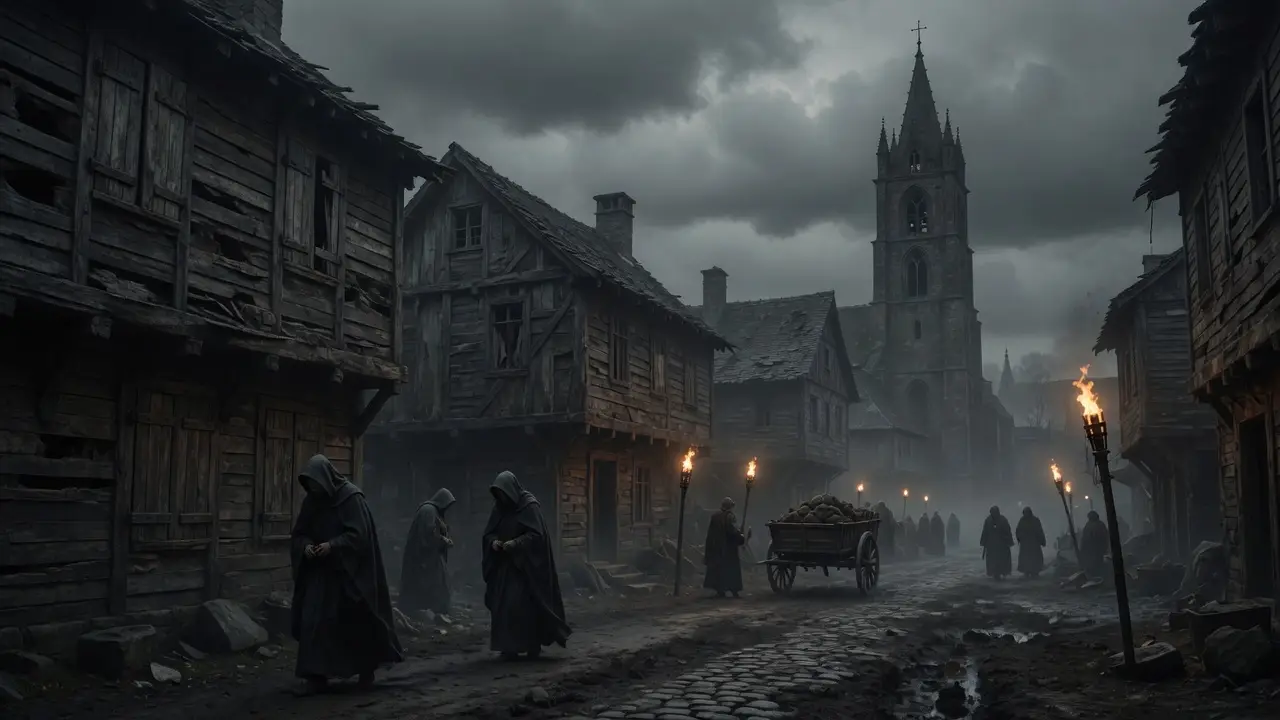
The plague arrived in Europe in 1347 and within four years had killed somewhere between a third and half of the entire population. Nothing in recorded European history comes close to this scale of death.
Medieval people did not understand contagion in the modern sense. They had no concept of bacteria or viruses. Explanations ranged from corrupted air, called miasma, to divine punishment to the alignment of planets. The Jewish communities of Europe were subjected to horrific scapegoating and massacres, blamed for a catastrophe that was killing them as thoroughly as everyone else.
But beneath the wrong theories were real survival behaviors. Some cities attempted quarantine, isolating incoming ships and refusing entry to travelers from infected areas. People fled infected towns, which spread the disease further but also saved some of those who left early. Strong-smelling herbs and fires were burned in streets, based on the miasma theory, but also providing some reduction in insect vectors. Bodies were buried quickly, which was the right thing to do even if the reasoning was wrong.
LESSER-KNOWN DETAIL
The word quarantine comes from the Italian quarantina, meaning forty days, derived from the period that Venetian authorities required ships to wait offshore before docking during the plague years of the fourteenth century.
The survivors inherited a changed world. With so many dead, land was available that had not been available before. Labor became scarce, which gave surviving peasants bargaining power they had never possessed. Wages rose in many regions. The rigid hierarchy of the feudal system, already under pressure, began to crack. Some historians trace a direct line from the Black Death to the social and economic transformations of the following century.
Death on that scale does not just traumatize. It restructures. The survivors rebuilt, but they rebuilt something different from what had existed before.
Knowledge Lived in People, Not in Books
The overwhelming majority of medieval people could not read. The knowledge that kept them alive was not stored in libraries. It lived in memory, in habit, in the hands of the people who used it every day.
A medieval peasant knew which plants in the local hedgerows were edible and which were poisonous. They knew which mushrooms could be eaten and which would kill you before morning. They knew the signs in cloud formations and wind direction that suggested incoming weather. They knew which field had drained poorly for three generations and would flood again. They knew the paths through the forest that led to the nearest market and the ones that did not lead anywhere useful.
This knowledge was passed from parent to child, from master to apprentice, from experienced midwife to the next generation of healers. It was refined over lifetimes and centuries. It contained errors, certainly. But it also contained an enormous amount of accurate, hard-won, practical information about survival in a specific place and a specific climate.
A peasant who could brew ale, bake bread, preserve meat, repair a plow, care for a sick animal, sew a wound, read the sky for rain, and navigate the local landscape without a map was not ignorant. They were the product of an incredibly sophisticated informal education system optimized for keeping human beings alive in difficult conditions.
This is what gets lost when we look at the medieval world from a distance. We see the things they got wrong: the bad medicine, the superstition, the violence, the injustice. We see less clearly what they got right: a way of organizing knowledge, community, and effort that kept people alive for a thousand years in circumstances that would defeat most modern people within a week.
They Built Something Worth Understanding
Medieval survival was not luck. It was architecture. The seasons shaped when you worked and what you ate. The community determined whether you made it through a crisis. The Church organized charity, medicine, and time itself. The knowledge you carried in your hands and your memory was the most valuable thing you owned.
These systems were imperfect. They failed often enough that we still have records of the famines and plagues and wars that broke through them. But they were real, they were sophisticated, and they were built by ordinary people trying to solve the oldest problem in human experience.
The next time you eat bread that someone else baked, take medicine someone else researched, and sleep in warmth provided by infrastructure someone else built, you are living inside a system that those medieval peasants would have recognized immediately. The form has changed. The principle has not. Survival has always been a collective project. It still is.