- 1 The Word That Began as an Insult
- 2 Who the Hashshashin Really Were
- 3 Hasan-i Sabbah and the Fortress of Alamut
- 4 The Fida’is: Devotion Mistaken for Mind Control
- 5 The Paradise Garden Story: Medieval Mythmaking at Its Finest
- 6 Marco Polo and the Legend That Wouldn’t Die
- 7 The Crusader Imagination and the “Old Man of the Mountain”
- 8 What They Actually Did: Political Murder as Survival Strategy
- 9 How Propaganda Became the Word “Assassin”
- 10 The Myth Was More Powerful Than the Knife
The Word That Began as an Insult
Picture the moment the word enters history. Not as a whisper in a mountain fortress. Not as a code name passed between killers. It enters history as a slur, hurled by enemies who hated what they could not understand and feared what they could not defeat.
“Hashishiyya.” Rabble. Moral degenerates. Low-class troublemakers.
That is what the Nizari Ismailis were called by their Sunni rivals in the medieval Islamic world. And that insult, stripped of its original context and carried westward by Crusaders who barely understood what they were fighting, would eventually become one of the most powerful words in the English language. Today, we use it to describe any political killer. We say it casually, unaware that we are repeating a piece of medieval propaganda so effective it outlasted the civilization that invented it.
The word “assassin” was not born from a drugged army of killers loyal to a mountain sorcerer. It was born from fear, political rivalry, and the slow, distorting drift of a foreign insult across centuries and languages.
The real story of the Hashshashin is darker than the legend. Just not in the way anyone expected.
Who the Hashshashin Really Were
To understand the Nizari Ismailis, you have to understand how fractured the medieval Islamic world was. This was not a monolith. It was a constellation of competing dynasties, theological fault lines, and brutal power struggles that outsiders, particularly European Crusaders, almost entirely failed to grasp.
The Nizaris were a branch of Ismaili Shiism, itself a minority tradition within an Islamic world largely dominated by Sunni rulers. In the late eleventh century, following a succession dispute over the Fatimid caliphate in Cairo, the Nizari community found itself politically and militarily isolated, marked as heretics by the powerful Seljuk Turks who controlled much of the central Islamic heartland.
They had no vast armies. They could not compete on an open battlefield. So they adapted.
What emerged was something that their enemies struggled to classify: a scattered but cohesive network of mountain fortresses, a sophisticated theological tradition, and a strategy of surgical political violence aimed not at random terror but at specific figures whose deaths could shift power, send messages, or buy time for survival.
Join The Archive Briefing
Weekly dispatches. The history they didn't teach you — sourced, subverted, delivered to your inbox.
They were not, at their core, a cult of killers. They were a minority religious community fighting to stay alive against much larger opponents, using the only weapons that gave them leverage.
Hasan-i Sabbah and the Fortress of Alamut
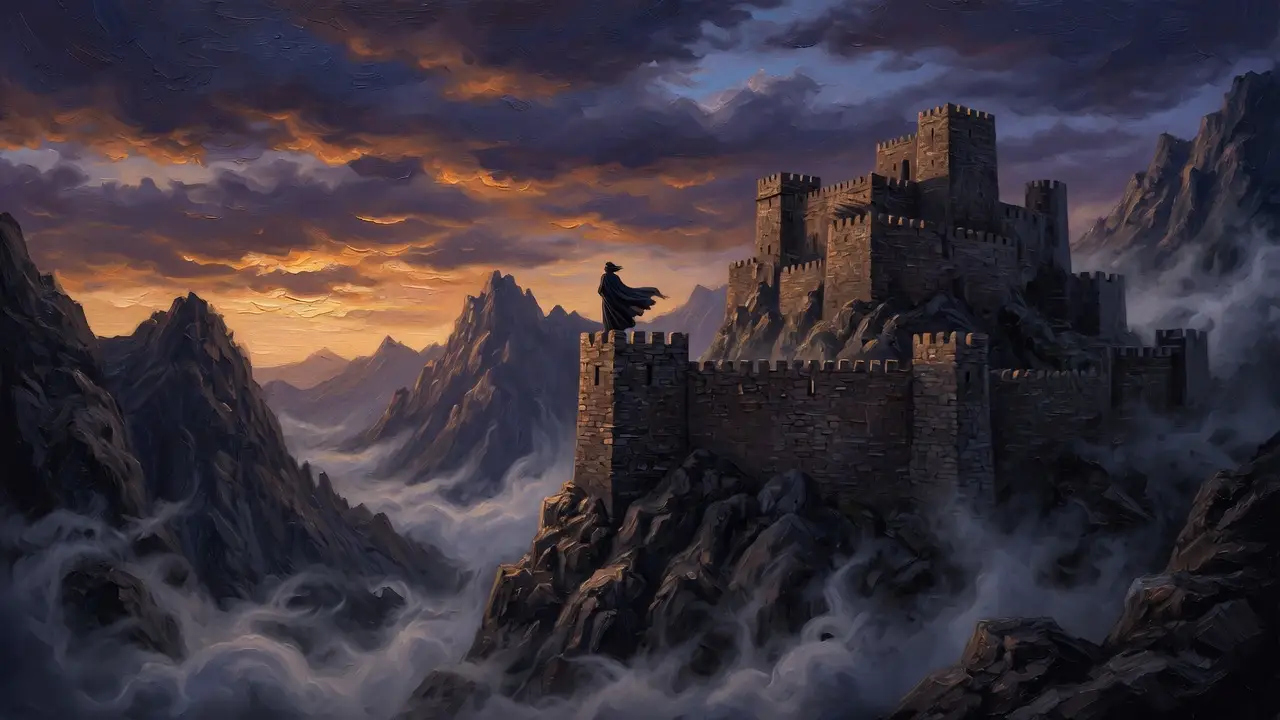
In 1090, a man named Hasan-i Sabbah seized a fortress called Alamut, perched in the Alborz mountains of northern Iran. The castle sat in a narrow valley at roughly 2,100 meters elevation, surrounded by terrain that made conventional military assault nearly suicidal. It was, in every practical sense, the perfect stronghold for a community that needed defense more than expansion.
Hasan-i Sabbah was not the theatrical villain that later legends required him to be. Contemporary sources and modern scholarship describe him as a disciplined, ascetic religious leader and political organizer. He is said to have lived an extremely strict life at Alamut, rarely leaving, and is reported to have had his own son executed for drinking wine. Whatever one makes of his methods, this was not a man in the business of sensual indulgence.
The chronicler Ibn al-Athir wrote that the vizier’s death was like “an earthquake that shook the foundations of the Seljuk state.”
On the killing of Nizam al-Mulk (1092)
From Alamut, Hasan built what historians now recognize as a kind of proto-state: a network of fortresses spread across Persia and Syria, linked not by territory but by a shared theology and a shared survival instinct. For decades, this network defied the Seljuks, negotiated with Crusaders, and managed to make itself expensive enough to attack that many enemies simply looked elsewhere.
The fortress fell to the Mongols in 1256, its library burned, its garrison massacred. By then, the legend had already begun to take on a life entirely separate from the reality.
The Fida’is: Devotion Mistaken for Mind Control
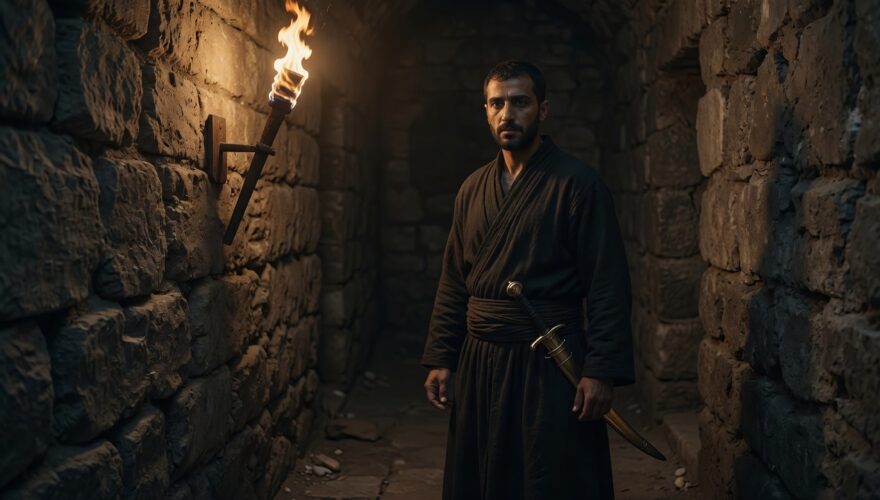
The killers themselves were called fida’is, from an Arabic root meaning devotion or self-sacrifice. They were not anonymous drones. They were trained operatives who often spent years embedded in a target’s circle before acting, sometimes posing as servants, scholars, or merchants. When they struck, they typically used daggers and made no attempt to escape. Many were captured and killed immediately afterward.
This is what baffled and horrified the outside world. Not just that they killed, but that they appeared to embrace death as part of the mission.
In a medieval world where most political violence was carried out by mercenaries who expected payment and survival, the fida’is represented something psychologically alien: men who seemed to walk deliberately toward their own deaths. Enemies who could not comprehend this level of commitment reached for the only explanations available to them.
Drugs. Supernatural compulsion. A hidden paradise promised to those who died in service.
The myth of hashish explained what outsiders found psychologically unbearable. Because if these men were not drugged, they would have to be understood on their own terms, as people with beliefs and grievances and a context that made their sacrifice coherent. That was a far more uncomfortable explanation.

The Paradise Garden Story: Medieval Mythmaking at Its Finest
Here is the famous version. A young recruit is given a powerful drug, carried unconscious into a secret garden hidden somewhere in the mountains. He wakes surrounded by flowing water, ripe fruit, wine, music, and women. After days in this artificial paradise, he is drugged again, removed, and brought before the master of the fortress. He is told: this is what awaits you in death. Obey, kill for us, die if necessary, and you will return there.
The story is irresistible. It has everything: mystery, sensuality, psychological manipulation, and a villain with a machinery of deception so elaborate it reads like theater.
The problem is that modern scholarship finds almost no credible support for it.
“Nothing is true, everything is permitted.”
Hasan-i Sabbah
Farhad Daftary, a leading authority on Ismaili history at the Institute of Ismaili Studies in London, has argued extensively that the hashish-and-garden narrative was largely a European fabrication or, at minimum, a legend so embellished during its westward journey that it bears little resemblance to whatever kernel of reality, if any, it grew from. The term hashishiyya itself, as Daftary and others have noted, was most likely used as a pejorative by Sunni enemies of the Nizaris, meaning something closer to rabble or people of disreputable habits, not literal hashish consumers. The Europeans who encountered the word did not have the cultural context to understand the insult and simply took the drug meaning at face value.
The paradise garden was not proof of how the Nizaris operated. It was proof of how badly their enemies needed an explanation for something they could not otherwise process.
Marco Polo and the Legend That Wouldn’t Die
Marco Polo did not invent the Assassin mythology, but he enshrined it. Writing in the late thirteenth century, after Alamut had already been destroyed by the Mongols, he included in his famous travels a vivid account of the Old Man of the Mountain and his secret garden of paradise, describing the hashish inducement and the elaborate deception used to manufacture willing killers.
LESSER-KNOWN DETAIL
The actual Nizari community today, the Ismaili Muslims led by the Aga Khan, numbers in the millions globally and is one of the most philanthropically active Muslim communities in the world. The distance between the “Assassins” of legend and their actual theological descendants is almost impossible to overstate.
Polo’s account was not eyewitness reporting. He was describing events and places he had not personally witnessed, drawing on stories that had circulated for generations and grown more elaborate with each retelling. By the time his version entered the European imagination, the legend had reached, as the Institute of Ismaili Studies puts it, its culmination, a fully developed narrative that collapsed a complex religious and political community into a single sensational story about a mountain sorcerer and his drugged army of death.
Polo was a brilliant and often accurate observer of the world he traveled. But on the Nizaris, he was retelling a campfire story and presenting it as documentary record. And because he was Marco Polo, the campfire story became history.

The Crusader Imagination and the “Old Man of the Mountain”
The Syrian branch of the Nizaris, operating in the mountainous region of present-day western Syria, had direct contact with the Crusader kingdoms in ways the Persian branch never did. The leader most associated with this period was Rashid al-Din Sinan, known to the Crusaders as the Old Man of the Mountain. He governed the Syrian Nizari community from roughly 1162 to 1193, navigating with extraordinary skill a brutal political environment that included the Crusaders, the Zangid dynasty, and eventually Saladin’s expanding Ayyubid state.
LESSER-KNOWN DETAIL
The Nizaris are known to have sent threatening letters to enemies alongside a dagger left in their bedchamber, with the message: the next delivery will not be a letter. Several Crusader and Sunni rulers reportedly woke to find such daggers pinned to their pillows. They paid tribute rather than risk what came next.
Sinan was, by any honest account, a remarkable political operator. He played competing powers against each other, extracted concessions from those who feared him, and managed to keep his community intact through decades of regional upheaval. He allegedly sent agents to kill both Conrad of Montferrat, a Crusader leader, and engaged in negotiations with Saladin that are still debated by historians.
What the Crusaders encountered in Sinan was a tactician who understood leverage and information in ways that their own military culture was poorly equipped to decode. Their response was to mythologize him. The Old Man of the Mountain became a figure of almost supernatural menace in Crusader chronicles, his followers described as automaton killers who obeyed without question and feared neither pain nor death.
Sinan was real. The supernatural obedience machine was a story they told themselves to make sense of a man who outmaneuvered them repeatedly.
What They Actually Did: Political Murder as Survival Strategy
The Nizaris did kill. This is not in dispute. They targeted Seljuk viziers, Crusader commanders, rival religious leaders, and figures whose deaths removed threats or created political opportunities. Some of their most famous targets include Nizam al-Mulk, the powerful Seljuk vizier, killed in 1092, widely attributed to a Nizari fida’i, and the Crusader Conrad of Montferrat, whose death in 1192 remains one of medieval history’s most debated political murders.
But the targets were chosen carefully. Each killing was a calculated political act, not random terror. The message was the knife, and the message was always the same: we cannot fight you on the battlefield, but we can reach you anywhere.
LESSER-KNOWN DETAIL
Saladin, one of the most militarily formidable rulers of the medieval period, is said to have slept in a specially constructed wooden tower after an alleged Nizari attempt on his life, surrounded by guards, trusting no one.
This is why the legend grew so outsized. A faction that lacks conventional military power but can reliably kill specific people in specific places represents a different kind of threat, one that destabilizes the psychological certainty of rulers. It is not surprising that those rulers, and those who wrote about them, responded by constructing an explanation that turned the Nizaris into something inhuman: drugged, deceived, mindlessly obedient. The alternative was acknowledging that the fida’is were rational actors who believed deeply in what they were doing, which made them considerably more frightening.
How Propaganda Became the Word “Assassin”
The chain of transmission goes something like this. “Hashishiyya” begins as a Sunni slur against a Shia minority. It enters Crusader vocabularies through rough translation and cultural static. It passes into Italian as “assassino” through trade routes and port cities. By the time it settles into medieval European languages, the original context, the internal politics of medieval Islam, the sectarian conflict, the economic grievances behind the term, has been completely lost.
What remains is the sound of the word and the story that has grown around it. A story of drugs and gardens and obedient killers and a mysterious mountain master.
By the fourteenth and fifteenth centuries, “assassin” no longer meant a member of any specific group. It had become a general word for a professional killer, a murderer for hire. The word had escaped its history entirely.
William of Tyre (c. 1180s) described the Assassins as “a people without law” who killed at the command of their master “without hesitation, not fearing death.”
Today, we use it for hired guns in thriller novels, for characters in video games, for political killers of any ideology or era. We use it without a trace of awareness that we are speaking a medieval Arabic insult that European travelers mistranslated and sensationalized and turned into legend.
Language does not forget where it comes from. It just stops caring.
The Myth Was More Powerful Than the Knife
What survives of the Hashshashin tells us less about who they were and more about who was afraid of them, and why, and what stories people tell when they encounter something they cannot explain within their own framework.
The fida’is were not drugged automatons. They were people who believed their actions served a theological and political purpose larger than their individual lives. That is not exotic or alien. That is a recognizable human thing, found in countless revolutionary movements, religious traditions, and resistance communities throughout history. It becomes strange and monstrous only when viewed from the outside, by people with no framework for understanding it.
LESSER-KNOWN DETAIL
The Nizaris operated an extensive library at Alamut that was reportedly one of the finest in the Islamic world. When the Mongols destroyed the fortress in 1256, the historian Juvayni was permitted to enter before the burning and selected texts he wanted preserved. What was lost is unknown.
The myth of the Hashshashin was constructed to make them monstrous. It succeeded beyond anyone’s expectation. The word “assassin” is now embedded in a dozen languages, used billions of times a year, carrying none of the weight of what it originally meant.
The mountain fortresses are ruins. The Nizari Ismaili community still exists, now led by the Aga Khan, a figure of global humanitarian work rather than political violence. The theology Hasan-i Sabbah defended from his cold fortress has survived into the present century.
But the legend, the drugs, the garden, the obedient killers, that endures too. It endures because the myth did exactly what propaganda is designed to do: it replaced a complicated human community with a simpler, more frightening story, and that story turned out to be so good that no one ever really needed the truth.