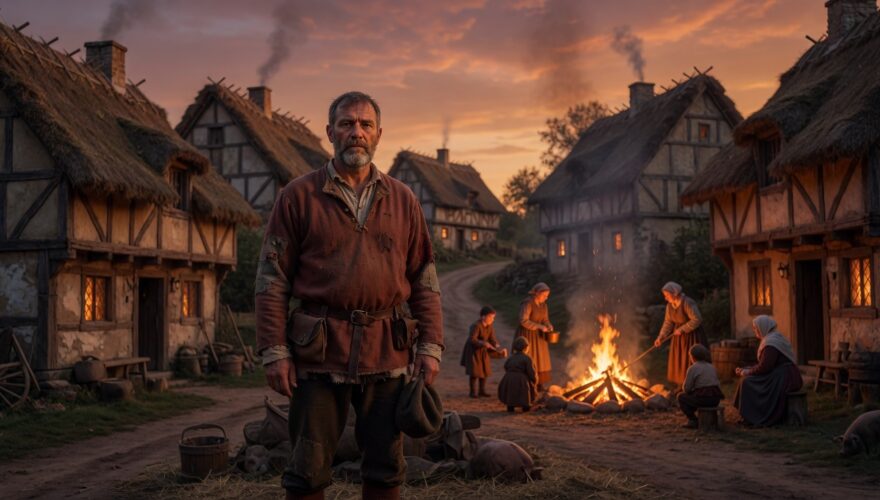
Close your eyes and picture a medieval peasant.
You see it immediately. A hunched figure in dirty rags, trudging through grey mud under a grey sky, starving, illiterate, terrified of everything from the local lord to the shape of a cloud. A life so short and so brutal that death was probably a relief. No rights. No joy. No future.
Now open your eyes, because almost none of that is accurate.
The “Dark Ages” is one of history’s most successful lies. Not a lie told by any single person with a specific agenda, but something more insidious: a myth built slowly, layer by layer, by Renaissance scholars who needed the past to look dim so their own era could shine brighter. They named an entire period of human civilization “dark” and the name stuck, long after the evidence stopped supporting it.
What actually happened between the fall of Rome and the rise of the Renaissance is far stranger, more complicated, and more human than the textbook silhouette suggests.
Who Invented the Dark Ages
In the 14th and 15th centuries, Italian humanists like Petrarch decided that history moved in a clean arc: the glory of ancient Rome, then a long collapse into barbarism, then their own brilliant rebirth. It was a useful story. It made them the heroes of civilization’s return.
Petrarch himself called the centuries after Rome’s fall a time of darkness. He needed that contrast. Without the shadow, there was no Renaissance dawn.
The problem is that the people actually living in those centuries didn’t experience their lives as a pause in human progress. They were building cathedrals that still stand. Developing legal systems. Running long-distance trade networks that connected England to the Middle East. Writing philosophy, music, and literature that would survive a thousand years.
Darkness is relative. And it tends to be declared by whoever controls the narrative afterward.
Join The Archive Briefing
Weekly dispatches. The history they didn't teach you — sourced, subverted, delivered to your inbox.
The Calendar of Rest
Here is a fact that tends to surprise people: medieval peasants had more days off than the average modern worker.
The Catholic Church mandated the observance of saints’ days, and in any given year there were somewhere between 80 and 115 of them, depending on the region. Add Sundays, and you’re looking at roughly 150 days per year during which labor was either prohibited or heavily reduced. That’s not counting the longer seasonal breaks around planting and harvest windows.
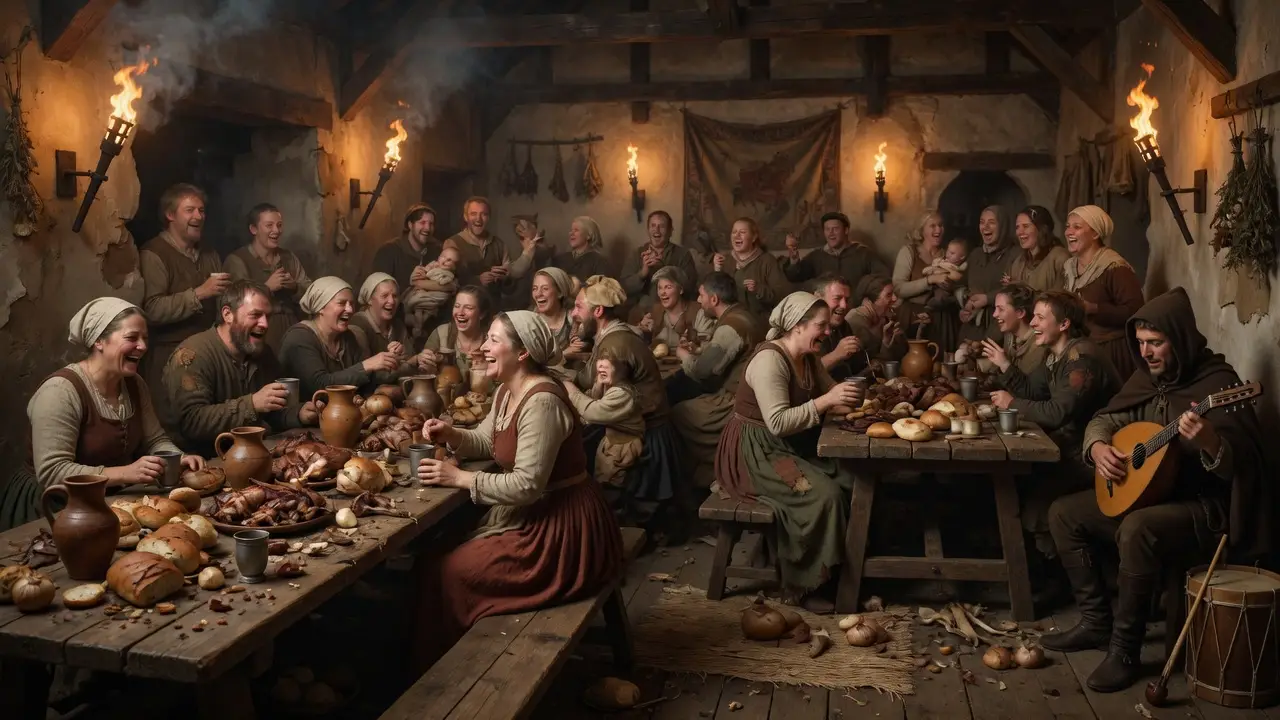
This wasn’t charity. The Church wielded these rest days as social control, as community glue, and as economic pressure on landlords who wanted to work tenants straight through. But whatever the motivation, the effect was real. Medieval peasants feasted, competed in games, held markets, drank heavily, and socialized on a schedule that would look generous by today’s standards.
The image of the peasant who never rested, who worked from dark to dark with no relief, belongs to a different era entirely: the Industrial Revolution, when the Church’s protective calendar was stripped away and factory owners answered to no saint.
The Myth of Total Powerlessness
Medieval peasants had no rights. That’s another fixture of the standard image. A lord could do anything he wanted. Life was entirely at the mercy of whoever owned the land.
The reality involved considerably more negotiation than that.
Manorial courts were local legal bodies that handled disputes between peasants and between peasants and their lords. And these courts actually ruled against lords with some regularity. Peasants understood customary law, the unwritten but firmly held set of expectations about what a lord could and could not demand, and they appealed to it constantly. They dragged landlords to court. They organized collective work slowdowns. They withheld labor during harvest seasons, the one period when they held maximum leverage, until grievances were addressed.
The Peasants’ Revolt of 1381 in England didn’t come from nowhere. It came from a population that had legal and social expectations, saw those expectations violated by a new poll tax, and responded with organized, politically articulate fury. These were not passive victims. They were people who understood power and pushed back against it when pushed too far.
What They Actually Ate
Forget the image of desperate, skeletal figures gnawing on scraps.
The medieval peasant diet was monotonous, yes. Heavily grain-based, yes. But it was also, in caloric terms, surprisingly adequate for most of the year. The staple was a thick pottage, essentially a dense vegetable and grain stew, supplemented by bread, legumes, and seasonal vegetables from kitchen gardens that most households maintained. In good years, with access to a forest, you could add game, fungi, and berries. Near water, fish.
Meat was scarcer than today, but it wasn’t absent. Feast days often involved communal meals where roasted meat was shared widely. Lords were socially obligated to provide food and drink during certain celebrations, and peasants took full advantage.
Famine was real and devastating when it came. The Great Famine of 1315 to 1322 killed millions across Europe. But famine was the catastrophic exception, not the daily baseline. Between famines, most peasants ate enough to work, raise children, and live into middle age.
The Plague Changes Everything
Then came 1347.
The Black Death arrived in Sicily on a Genoese trading ship, and within three years it had torn through Europe with a ferocity that no disease before or since has matched on that continent. Somewhere between a third and a half of Europe’s population was dead. Some regions lost two-thirds.
The psychological impact is almost impossible to overstate. Medieval people had a framework for suffering. Famine was God’s punishment. War was political. But the plague killed the righteous and the sinful with equal indifference. It killed priests mid-prayer. It killed entire monasteries. The very people whose job was to explain suffering to the population were dying faster than they could write the explanation down.
What followed the plague, however, was something that doesn’t fit the standard narrative at all.
With labor suddenly scarce, the survivors had leverage. Real leverage. Lords who needed workers to farm their land found that workers could now demand better wages, better conditions, and more freedom of movement. The feudal system, already creaking, began to collapse under the weight of a labor market that had suddenly, violently, tipped in favor of the workers.
The Dark Ages produced one of history’s most brutal accidental labor reforms.
The Architecture Argument
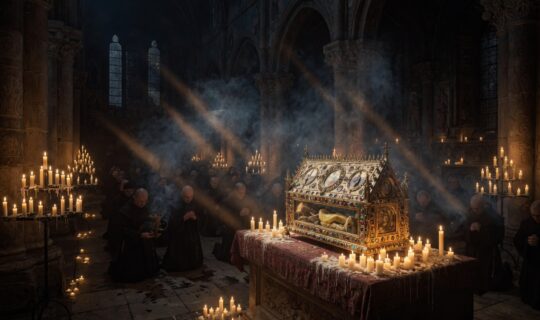
If this was truly a dark, intellectually barren period, someone needs to explain the cathedrals.
Notre-Dame de Paris. Chartres. Cologne. Canterbury. These buildings were constructed without power tools, without modern engineering software, without steel reinforcement. They were built by communities that pooled generational knowledge, developed entirely new architectural solutions like the flying buttress to solve problems as they arose, and produced structures so precisely engineered that most of them are still standing after eight centuries.
The flying buttress was not the product of a dark mind. It was a creative, mathematically sophisticated answer to the problem of how to build walls higher and thinner while keeping the whole structure from collapsing outward. Medieval builders were working at the edge of what was physically possible with stone, and they knew it.
These weren’t monuments built by an accidentally capable society. They were the deliberate products of a culture that took beauty, permanence, and ambition seriously.
Why the Myth Persists
The short answer is that it’s useful.
A brutish, backward medieval world makes modernity feel like an unambiguous upgrade. It makes capitalism’s early excesses look like liberation from something worse. It makes the Church’s eventual weakening look like progress rather than a complicated transfer of power. And it makes the people who declared the Renaissance feel like they deserved their own mythology.
The longer answer is that suffering is easier to flatten than to understand. Real medieval life was full of contradiction. There were feast days and famines. Legal protections and brutal violence. Community and exploitation. Faith that genuinely comforted and faith that was wielded like a weapon.
That complexity doesn’t fit on a textbook page. So it got simplified into mud and misery, and most of us learned the simplified version and never looked deeper.
The Dark Ages were dark in some ways. Violence was intimate and constant. Disease arrived without warning and left without explanation. Women’s legal standing was heavily constrained. The Church held enormous power over thought and expression, and it didn’t always use that power gently.
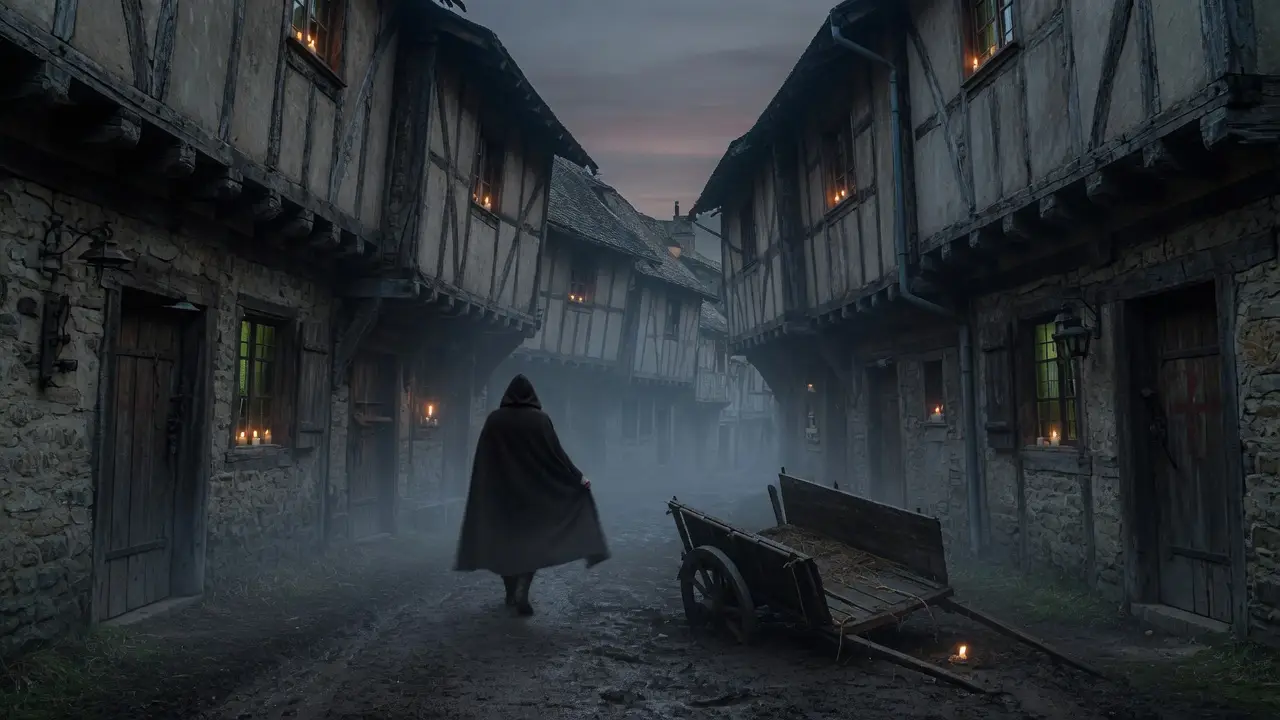
But darkness was not the whole picture. It was never the whole picture.
The people who lived through those centuries loved their children, argued with their neighbors, celebrated harvests, built things meant to outlast them, and occasionally told the people in power exactly where they could go.
They were not waiting to be rescued by the Renaissance.
They were just living their lives, in all the complicated, inconvenient, fully human ways that a single dark label was never going to capture.
The real dark age might be the one where we stopped asking questions about the one that came before.