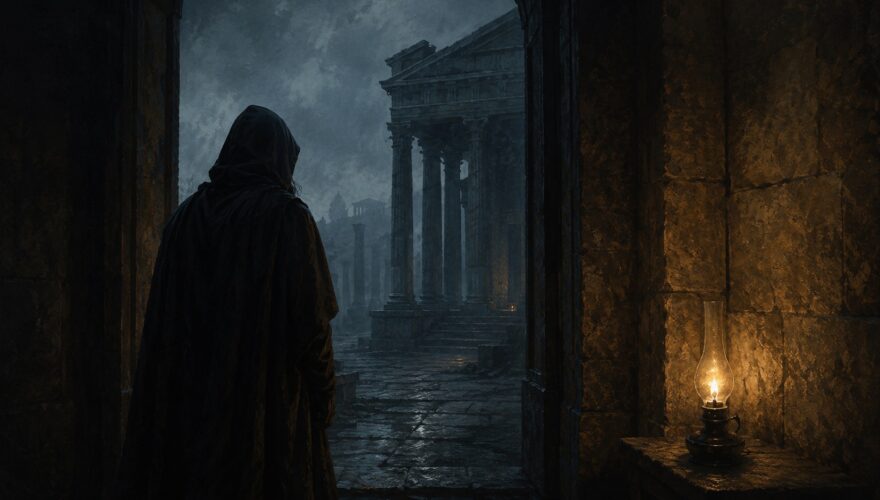
In the summer of 430 BC, Athens was the safest place in Greece to die.
Pericles had ordered the countryside emptied. Farmers, shepherds, and entire villages streamed in through the gates, cramming themselves and their animals into a city built to hold a fraction of their number, all so Athens could out-wait Sparta’s army camped just beyond the walls. Stay behind the Long Walls. Let the navy do the fighting. Starve the enemy out. It was a brilliant strategy, on paper.
The Pandemic Before the Pandemic Got Famous
Nobody had planned for what happens when you lock tens of thousands of frightened, sweating people inside a besieged city in high summer. Something else got through the gates before the Spartans ever did, and by the time anyone understood what it was, it had already reached every house in the city.
Historians call it the Plague of Athens. By the most careful modern estimates, it killed somewhere between seventy-five and a hundred thousand people, including the very statesman whose strategy had likely made the outbreak worse. And it’s barely a footnote compared to the pandemic that gets all the credit nearly two thousand years later: the Black Death.
That’s the trouble with the fourteenth century’s plague. It’s so total in its grip on the popular imagination that it has swallowed the memory of three earlier catastrophes that did almost exactly the same thing to the people living through them: broke empires, ended golden ages, and left survivors wondering if their gods had simply stopped watching.
The Black Death didn’t invent mass death. It inherited a playbook that was already six centuries old.
A City That Poisoned Itself Trying to Survive
The Peloponnesian War had only been running two years when the disease slipped into Athens through the port at Piraeus. Ancient writers traced its path backward through Egypt, Libya, and Persia, all the way to somewhere south of Egypt, though nobody could say exactly where it began. What they could say, in horrible detail, was how it felt to watch it move through a body.
It started almost mundanely: a headache, red eyes, a raw throat. Then came coughing, then vomiting, and finally the skin itself seemed to turn against its owner, breaking into blisters while a fire raged underneath that no amount of water could put out. Victims tore off their clothes because they couldn’t stand fabric touching their burning skin. Some climbed into public water tanks just for a moment of relief, then climbed back out and burned just as badly as before.
Thucydides, the historian who spent the rest of his life chronicling this war, caught the disease himself and survived it. He tells us so directly, almost as a credential. Describing what the sickness did to a dying body, he wrote a line that still stops readers cold:
Join The Archive Briefing
Weekly dispatches. The history they didn't teach you — sourced, subverted, delivered to your inbox.
“What they would have liked best would have been to throw themselves into cold water.”
He wasn’t reaching for poetry. He was taking notes so future generations could recognize the disease if it ever returned. It never quite did, not exactly. To this day, nobody has definitively identified what actually caused the Plague of Athens. Typhus, smallpox, even a hemorrhagic fever resembling Ebola have all been proposed, and none has stuck. Whatever it was, it hit a population with no prior exposure to it, and immune systems built for nothing like it simply gave out.
LESSER-KNOWN DETAIL
Athenians were so convinced the plague was unnatural that many suspected Sparta had poisoned their wells, partly because the Peloponnese barely got sick at all while Athens was devastated. Modern historians think Athens’s own overcrowding, not sabotage, was the real culprit.
Doctors died first and fastest, since they were the ones closest to the sick. Prayer didn’t help either. Thucydides noted, almost clinically, that appeals to the temples proved just as useless as medicine, until people stopped bothering with either.
What came next was, in some ways, worse than the disease itself. As bodies piled up faster than families could bury them, and the wealthy died just as randomly as the poor, something in the city’s social fabric gave way. People stopped fearing punishment, since a trial they might not live to see wasn’t much of a deterrent. Funeral customs collapsed; families flung fresh corpses onto pyres that strangers had already lit, just to be rid of them. Fortunes changed hands overnight, and people who’d spent their whole lives being careful decided caution was pointless. Spend the money. Take the pleasure. Nothing was guaranteed anymore, least of all tomorrow.
Thucydides wasn’t exaggerating for effect. The ground eventually gave up its own testimony. In the mid-1990s, archaeologists digging near the Kerameikos cemetery uncovered a mass grave: roughly 150 bodies, thrown in without order or ceremony, dated to almost exactly the plague years. Among them lay the skull of an eleven-year-old girl. Archaeologists gave her a name, Myrtis, since history never recorded her own.
Pericles wasn’t so anonymous. He lost his sister, two of his legitimate sons, and finally, in 429 BC, his own life. The man who told Athenians their city was an inspiration to the rest of Greece didn’t die in battle or by a rival’s hand. He caught the same fever as everyone else, and Athens, already exhausted, never fully recovered the momentum it needed to beat Sparta.

The Legion That Marched an Invisible War Home
Nearly six hundred years passed before the ancient world faced anything on this scale again, and once more, war opened the door.
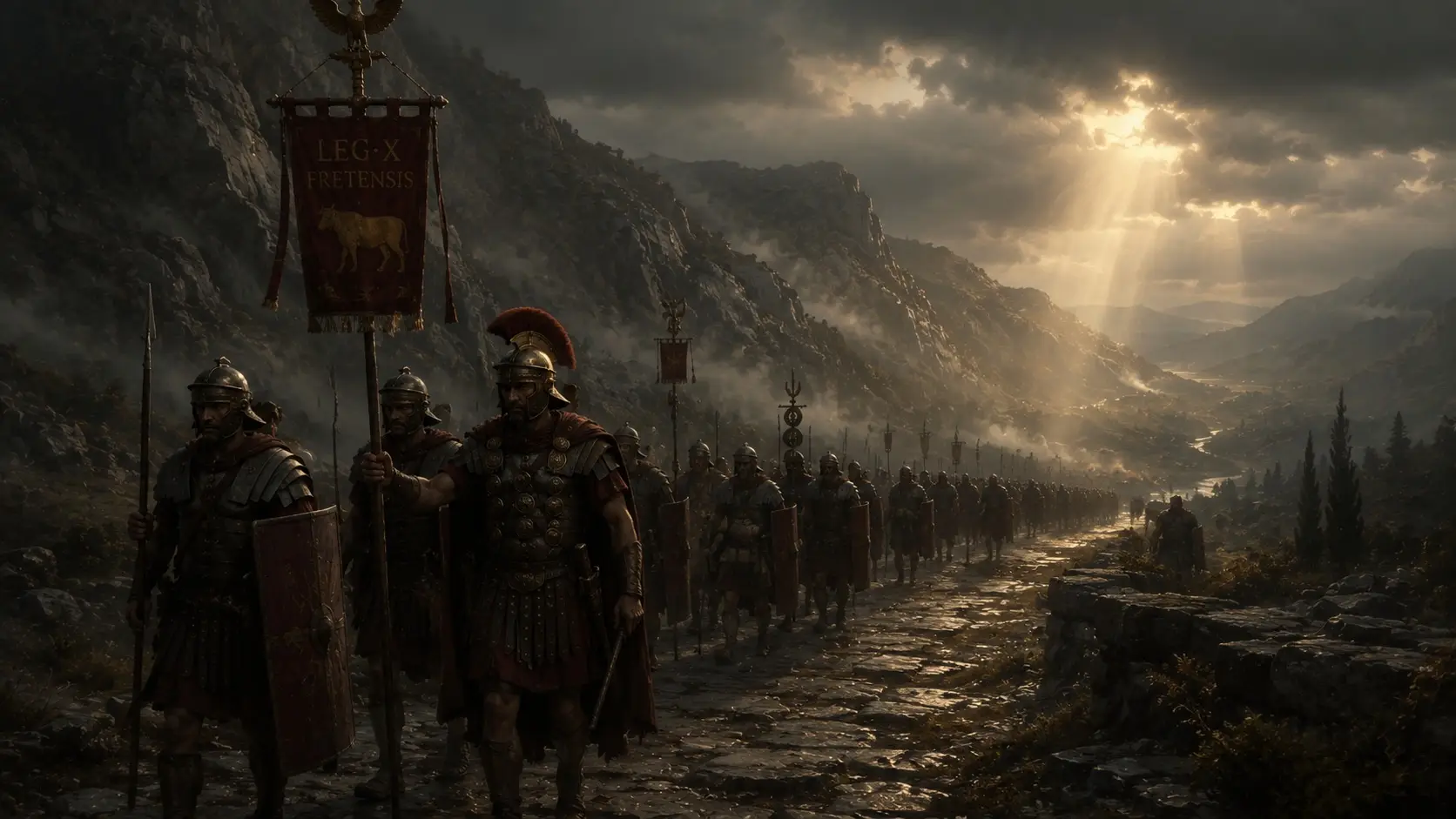
In 165 AD, Roman soldiers under the co-emperor Lucius Verus laid siege to Seleucia, a major city in the Parthian Empire. They won, and won brutally, torching the city even as it tried to surrender. Roman writers liked to explain what happened next as divine punishment: soldiers had supposedly broken into a sealed shrine sacred to Apollo and released something that had been sealed away for good reason. It’s a good story. It also lines up almost perfectly with an army carrying home a virus nobody in the Mediterranean world had ever built immunity to.
Whatever the real trigger, the legions marched the disease home along the very roads that had made Rome unstoppable for two centuries. That was always the empire’s genius: a connected web of legions, trade ships, and highways that could move an army from Britain to Syria in weeks. It moved a plague just as efficiently.
By 166, it had reached Rome. By 172, nearly every province had felt it.
The physician Galen watched it firsthand and described a fever that wouldn’t break, throats swollen nearly shut, and a rash that turned pustular around the ninth day, exactly the kind of detail modern doctors still cite when arguing the disease was smallpox. He scattered brief references to “the great plague” through his other medical writings rather than dedicating a single work to it, almost as if he couldn’t bring himself to dwell on what it meant to watch an entire civilization get sick at once.
LESSER-KNOWN DETAIL
There’s a fourth ancient plague almost nobody talks about: the Plague of Cyprian (249 to 262 AD), sandwiched between the Antonine and Justinianic outbreaks. Some historians tie it to accelerating Rome’s third-century crisis and even to boosting early Christian conversion, since Christians earned a reputation for staying behind to nurse the sick when others fled.
Cassius Dio, writing decades later, was less restrained. Describing a fresh outbreak that tore through Rome in 189, he left behind a number that has outlived nearly everything else written about the plague:
“Two thousand often died on a single day in Rome.”
He was describing one especially brutal stretch, not the whole epidemic, and historians suspect he rounded up for effect. It didn’t need to be exact to be devastating. A quarter of everyone infected is believed to have died from it, and across the roughly twenty years the disease circulated, something like seven to ten percent of the entire Roman population perished. In the army and the most crowded cities, that share may have climbed past thirteen percent.
The reign the plague fell into is, by one of history’s crueler ironies, the same reign later remembered as humanity’s happiest chapter. Writing more than sixteen centuries afterward, the historian Edward Gibbon opened his account of Rome’s decline by describing this exact era, the reign of Marcus Aurelius, as the one in which:
“The condition of the human race was most happy and prosperous.”
Gibbon wasn’t being naive. He was weighing strong borders, competent government, and a philosopher on the throne. He simply wasn’t weighing the plague heavily enough, and for a long time, neither did anyone else. The history we inherit tends to be written by people counting what’s easy to count, and disease rarely leaves behind a monument.
Marcus Aurelius spent the back half of his reign fighting two wars at once: one against Germanic tribes pressing the northern border, and one invisible, moving through his own soldiers and subjects. He wrote his private notebook, the Meditations, largely during these campaign years on the Danube, and it’s striking how rarely the word “plague” appears in it. Instead, page after page circles the same idea from different angles: that death is natural, that nothing lasts, that a person should meet their end the way they’d leave a dinner party early. It reads less like a record of catastrophe and more like a man rehearsing his own death for years, because he suspected exactly how his story would end.
LESSER-KNOWN DETAIL
Marcus Aurelius spent nearly fifteen years of his reign living alongside the plague and still barely names it in his private writings, a strange silence for a man otherwise obsessed with mortality.
He was right. In March of 180, camped near the Danube, the disease that had shadowed his entire reign finally caught up with him. Even as he lay dying, witnesses say he ordered the people around him to keep their distance, worried about spreading contagion in his final hours. Then he called for his son Commodus, made certain the machinery of succession was moving, and let go. The Five Good Emperors, a run of leadership historians still treat as Rome’s administrative high point, ended not with a battle or a coup, but with a fever that had been quietly killing people since before Commodus was old enough to remember life without it.
Constantinople Runs Out of Room for Its Dead
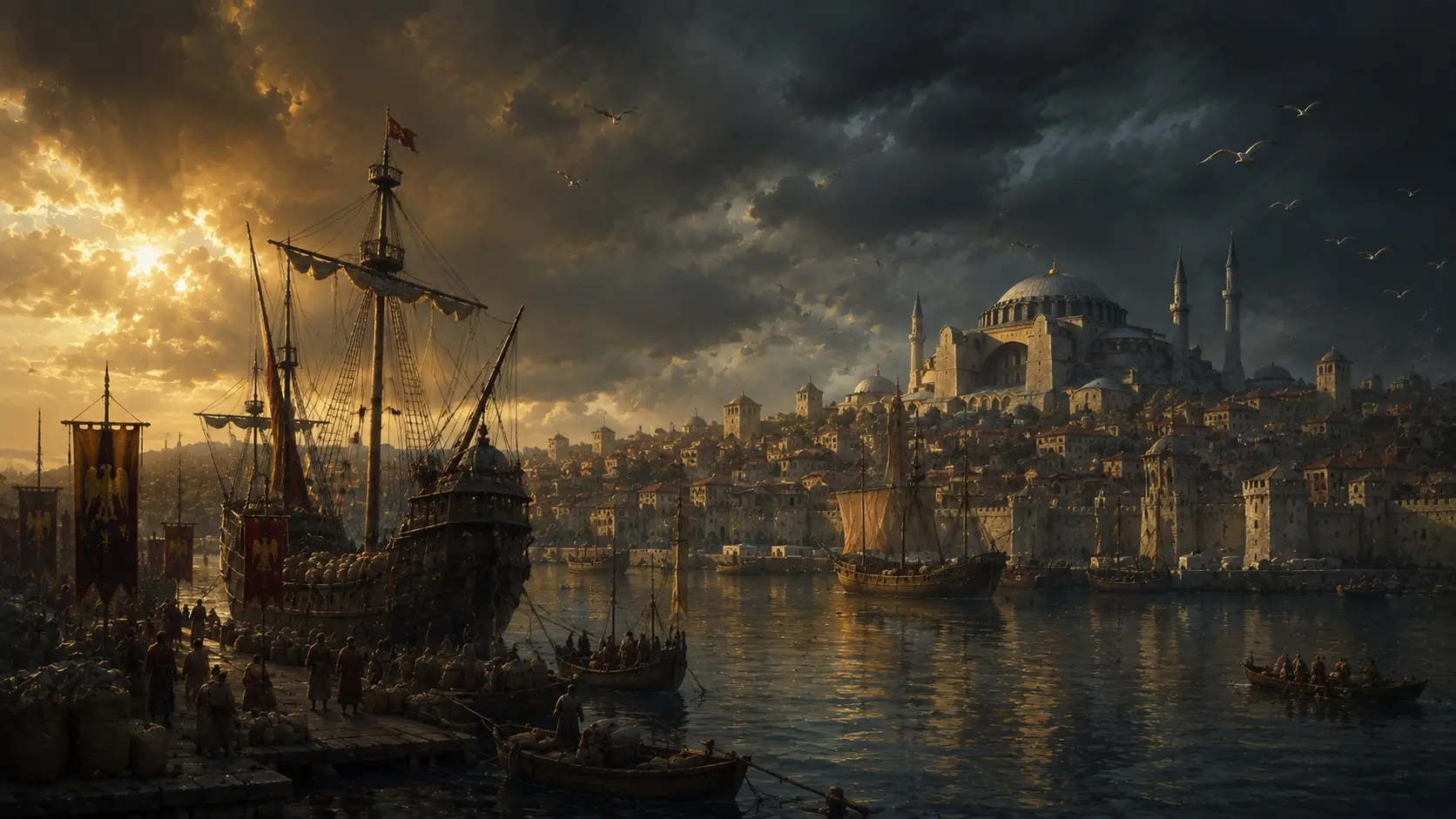
If Athens taught the ancient world that a plague could kill a golden age, and Rome learned that a plague could undercut an empire for two decades without anyone naming the real culprit, then Constantinople in 541 AD came face to face with the same disease, essentially, that would return as the Black Death eight hundred years later.
It arrived through trade, as these things so often do. Grain ships from Egypt, the empire’s breadbasket, carried something in their holds beyond wheat: rats, and the fleas riding them, carrying a bacterium called Yersinia pestis. Nobody watching those ships dock in Constantinople’s harbor had any reason to fear a grain shipment. Within months, one of the largest, richest cities on Earth was drowning in its own dead.
The court historian Procopius happened to be living in the city when it hit, and left behind the most detailed eyewitness account to survive from antiquity. He described sudden fevers followed by swellings in the groin, under the arms, behind the ears, the same grim symptom that would terrify Europe centuries later. Some victims slipped into comas. Others turned violently delirious, hallucinating attackers and fleeing through the streets before collapsing. Nobody, Procopius insisted, could reliably predict who would live: doctors who touched the sick sometimes walked away fine, while people who kept their distance dropped dead anyway.
At its worst, the death toll in the city reached numbers that strained belief, day after day, for months. Grave diggers ran out of space inside the walls, so officials started stripping the roofs off fortification towers and using them as open pits, stacking bodies until they were full. Ships were loaded with corpses and pushed out to drift, doing double duty as floating graves.
Justinian himself, the emperor the plague would eventually be named after, caught the disease in the middle of the crisis and survived. His empire, by most accounts, killed off roughly a fifth of Constantinople’s population before the outbreak finally eased.
LESSER-KNOWN DETAIL
The 2013 DNA study confirming Yersinia pestis came from teeth pulled out of skeletons in Bavaria, proving the Justinianic Plague reached parts of Europe that no surviving historical text ever mentioned as affected.
That’s not to say Justinian responded to the disaster with much grace. His own court historian, in a separate and far less flattering work known as the Secret History, accused the emperor of squeezing tax revenue out of farmland that no longer had any farmers left alive to work it:
“Justinian showed no mercy towards the ruined freeholders.”
According to Procopius, the emperor didn’t just tax the survivors for what they owed. He billed them for their dead neighbors’ shares too, apparently unwilling to let a pandemic interrupt imperial revenue. Whether that’s entirely fair to Justinian, or colored by Procopius’s well-documented grudge against him, is hard to say for certain. Either way, it’s a striking detail: an empire facing the worst disease anyone alive had ever seen, still finding room to squeeze its own dying citizens for coin.
The Argument
For most of the last two centuries, the Justinianic Plague has been told as an apocalypse: tens of millions dead across the Mediterranean world, the single event that finished off antiquity and ushered in the Middle Ages. It’s a dramatic, tidy story, and it shows up in textbook after textbook.
In 2019, a team of historians decided to test that story against the physical evidence instead of simply trusting Procopius’s numbers and passing them down. They examined coinage, tax records, papyrus documents, pollen samples showing how much farmland stayed under cultivation, and burial patterns across the empire. Their paper, published under the deliberately provocative title “The Justinianic Plague: An Inconsequential Pandemic?”, argued that almost none of it supports a catastrophe on the scale everyone had assumed. The economy kept functioning. Farming continued. There’s no clear signature of the demographic collapse you’d expect if a quarter of the Mediterranean had actually died.
It’s a genuinely uncomfortable argument, and not every historian accepts it. Critics point out that ancient tax and coinage records are patchy at best, and that no clear signal isn’t the same thing as no catastrophe. The debate is very much alive. But it says something about how these stories get told and retold: an eyewitness describes towers of unburied corpses, later historians multiply that into tens of millions, and centuries afterward, a fresh look at the evidence suggests the truth sits somewhere far messier in between.
LESSER-KNOWN DETAIL
Procopius wrote two completely different accounts of the same emperor: an official, fairly measured history, and a scathing, almost gossipy “Secret History” that wasn’t discovered and published until centuries after his death.
One detail isn’t up for debate, at least. In 2013, researchers extracted DNA from skeletons buried in sixth-century graves near Munich and confirmed, unambiguously, that the culprit was indeed Yersinia pestis, the same bacterium behind the Black Death and the plague that still exists, quietly, in isolated pockets of the world today. Fourteen centuries after Procopius sat down to describe what he’d witnessed, a laboratory in Bavaria proved he’d been telling the truth about what killed his neighbors, even if it’s still arguing with him about how many.
What Survived When the Dying Finally Stopped
None of these three plagues ended the world they struck. That’s easy to forget, given how they get described: as apocalypses, as civilization-enders. What they actually did was slower and, in some ways, more unsettling. They bent the direction history was already heading, hard enough that it never quite bent back.
Athens lost its war to Sparta four years after the plague burned out, and while disease wasn’t the only reason, historians rarely discuss that outcome without mentioning that Athens fought its hardest stretch of the war missing a huge share of its population and its most capable leader. The Golden Age of Greek democracy didn’t vanish overnight, but it never fully recovered its old momentum either.
Rome’s reckoning arrived more slowly. The Antonine Plague didn’t cause the fall of the Roman Empire on its own, no single event ever does, but it emptied farms, thinned legions, and drained a treasury that had assumed an endlessly growing tax base. Many historians treat it as the first domino in a chain that would become the Crisis of the Third Century, decades of civil war and near-collapse that Rome barely survived.
Constantinople’s plague, whatever its final toll turns out to have been, struck at the worst possible moment for Justinian’s biggest ambition: reconquering the western half of the old Roman Empire from the Germanic kingdoms that now held Italy and North Africa. Those wars dragged on for decades afterward, underfunded and undermanned, and most of the reclaimed territory slipped away again within a generation of his death. Historians still argue how much of that failure belongs to the plague and how much belongs to Justinian simply overreaching. What’s harder to argue with is the timing.