Medieval guilds weren’t noble craft brotherhoods. They were legal cartels that fixed prices, crushed outside competition, and trapped the poor in brutal apprenticeships for generations.
Strip away the doublets and the guild halls and the story underneath is instantly familiar: insiders writing the rules to keep outsiders out, licensing requirements that protect incumbents more than consumers, and gatekeeping systems dressed up as quality control. Every time a modern industry lobbies for regulations that happen to make it harder for new competitors to enter, it’s running a version of the same playbook medieval guilds perfected eight hundred years ago.
The Loom That Cost a Man His Hands
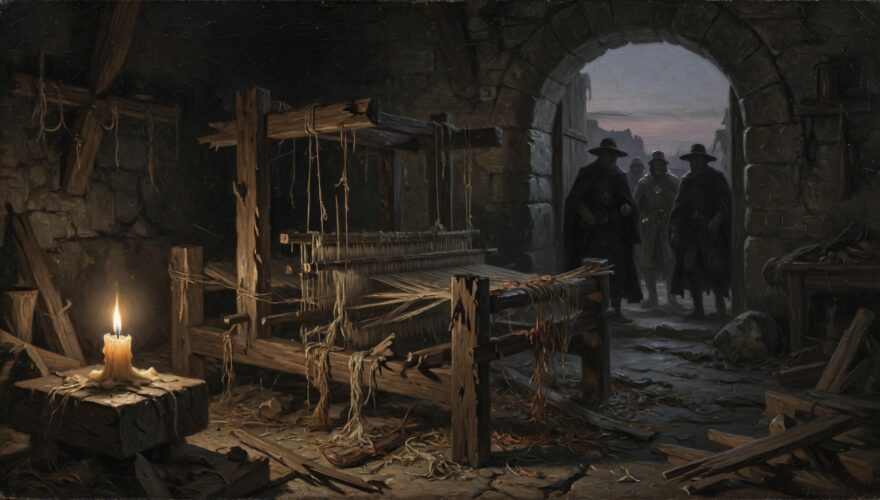
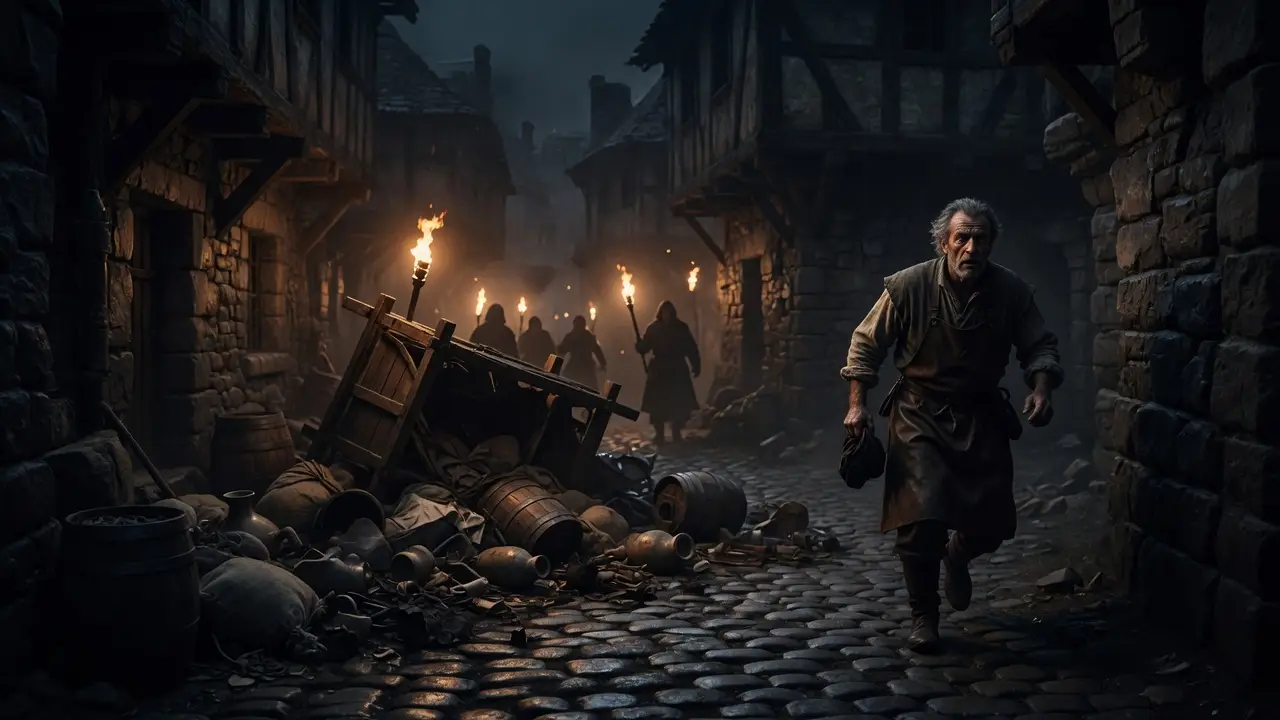
In 1298, a weaver in Bruges made the mistake of working too fast.
He wasn’t lazy. He wasn’t cutting corners. He’d simply figured out a faster way to run his loom, and the cloth coming off it was just as fine as anyone else’s. Word got back to the weavers’ guild. Within days, men came to his shop. They didn’t just fine him. They broke his equipment beyond repair and made sure every other weaver in the city knew exactly why.
That wasn’t an isolated act of thuggery. That was policy.
Medieval guilds like to be remembered as brotherhoods of skilled craftsmen, quaint institutions that trained young apprentices and stamped out quality goods under candlelit workshops. That version shows up in museum plaques and heritage tourism brochures. The real version looked a lot more like organized crime with better tailoring.
Born From Necessity, Weaponized For Control
Guilds didn’t start as villains. In the early medieval period, merchants and craftsmen banded together for the same reason people always have: safety in numbers. Roads were dangerous. Markets were chaotic. A lone blacksmith or wool merchant had no leverage against a lord who wanted to seize his goods or a rival town undercutting his prices. Guilds offered protection, shared knowledge, and a collective voice.
By the twelfth and thirteenth centuries, that collective voice had become a stranglehold.
LESSER-KNOWN DETAIL
Guild masters could reject a candidate’s masterpiece for purely economic reasons, effectively vetoing new competition under the guise of quality control.
Cities began granting guilds legal monopolies over entire trades. Once a guild controlled the baking of bread in a town, or the dyeing of cloth, or the forging of iron, no one else was legally allowed to practice that trade within the city walls. Not because they lacked skill. Because they lacked membership.
And membership was the whole game.
Join The Archive Briefing
Weekly dispatches. The history they didn't teach you — sourced, subverted, delivered to your inbox.
The Price of Admission
Getting into a guild wasn’t a matter of talent. It was a matter of money, connections, and years of controlled servitude.
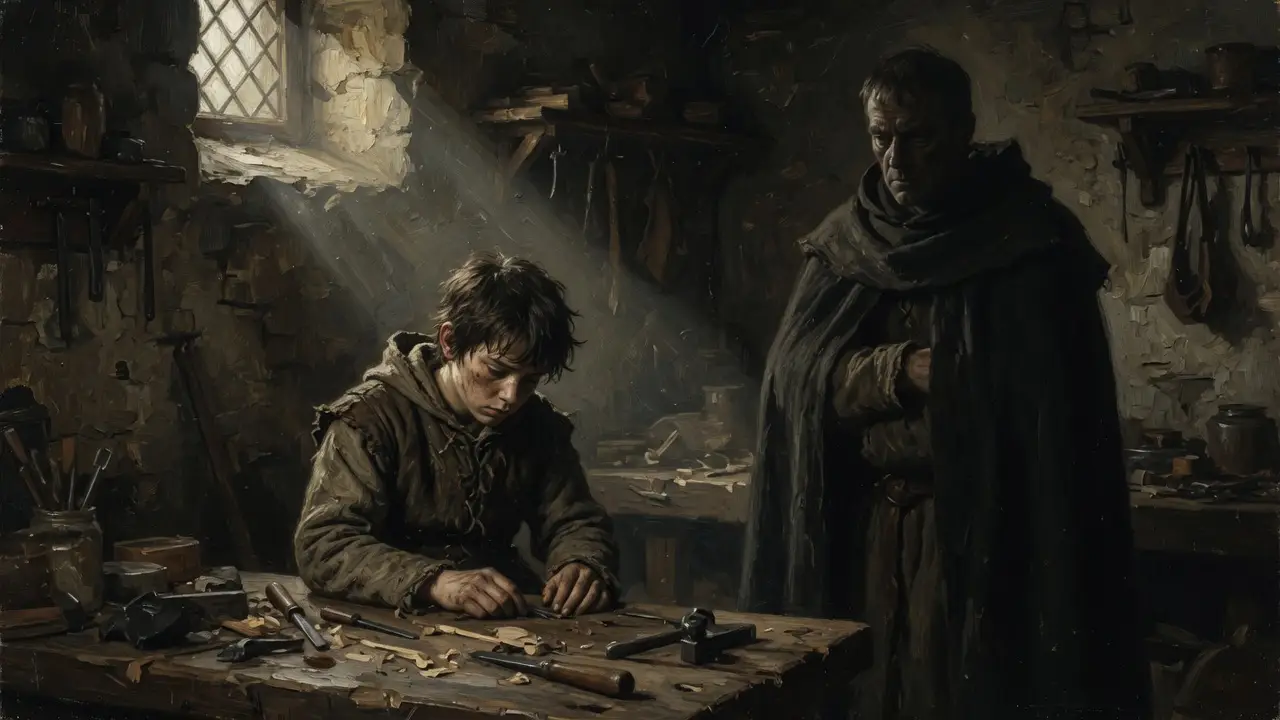
A boy entering an apprenticeship, often as young as twelve or thirteen, was bound to a master for anywhere from five to nine years. During that time he worked without wages, lived under his master’s roof, and could be beaten for disobedience. English apprenticeship indentures from the period spelled out obligations that read less like job training and more like ownership contracts: the apprentice was to keep his master’s secrets, avoid taverns and dice, not marry, and obey in all lawful commands.
If he survived the apprenticeship, he became a journeyman, a step up but still not a full guild member. Journeymen worked for daily wages under a master’s supervision, sometimes for another decade, waiting for the chance to become a master themselves. And becoming a master required a masterpiece.
“No stranger or foreigner shall be permitted to buy or sell wares within the town unless first made free of the craft.”
Common phrasing found across English and Flemish guild ordinances
Literally. A candidate had to produce a flawless example of his craft, judged by the very masters who had a financial interest in keeping the guild small. Guilds routinely rejected masterpieces not because the work was bad, but because letting in one more master meant one more competitor splitting the same customers.
On top of that came entrance fees, sometimes equivalent to a year or more of a laborer’s wages. For the poor, for orphans, for anyone without family already inside the guild system, the door simply didn’t open. Guild membership became hereditary in practice if not always in law, passed down like a family business because that’s exactly what it was.
Fixing the Market, Crushing the Competition
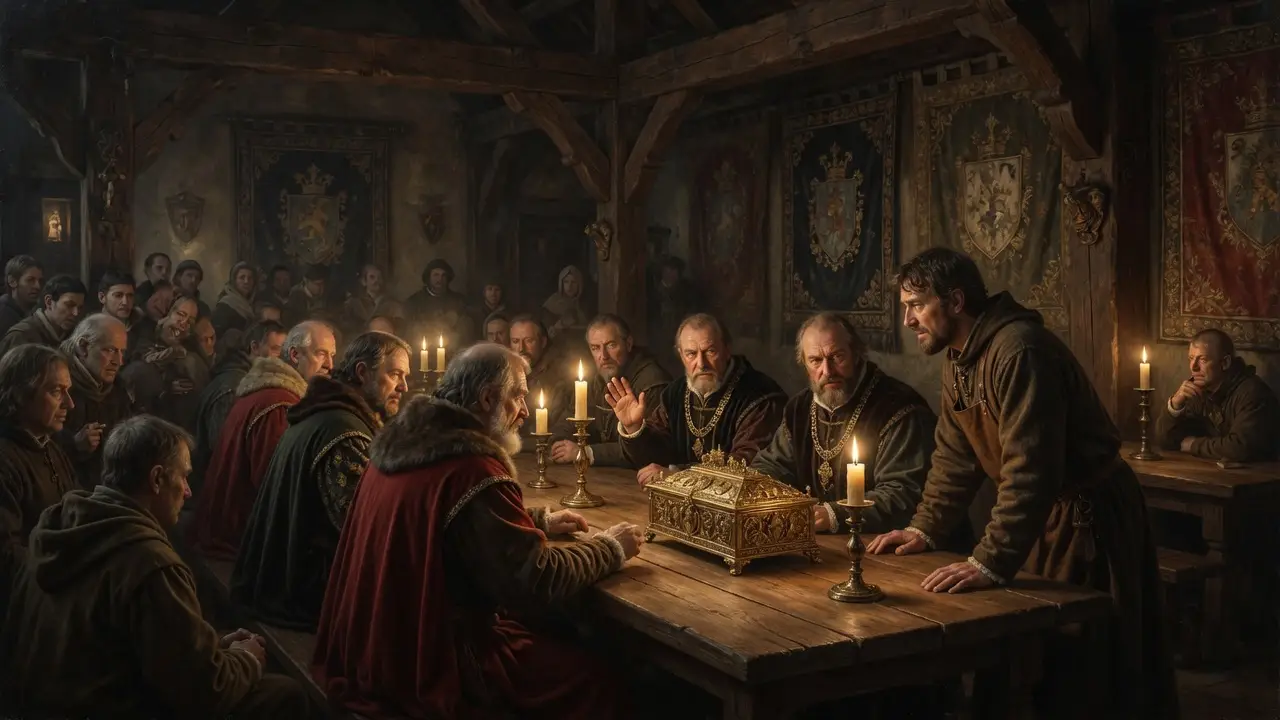
Once inside, guild members enjoyed something close to a legal cartel. Guild statutes fixed prices. They fixed wages. They dictated exactly how many looms a weaver could own, how many hours a shop could operate, what materials could be used, and how goods had to be finished. This wasn’t about protecting consumers from shoddy work. It was about making sure no member could undercut another, and making sure no one outside the guild could undercut anyone at all.
Guild ordinances from English and Flemish towns during this period commonly included language along these lines: no stranger or foreigner shall be permitted to buy or sell wares within the town unless first made free of the craft. That single clause, repeated across trades and cities for centuries, effectively locked entire local economies behind guild membership.
Enforcement wasn’t gentle. Guild inspectors, sometimes called searchers, had the authority to enter workshops, confiscate substandard goods, and burn them publicly. Unlicensed workers, often called by contemptuous nicknames in guild records, could have their tools destroyed and their goods seized. In some cities, working outside guild sanction was treated as a criminal offense, punishable by fines, imprisonment, or exile from the city itself.
“People of the same trade seldom meet together, even for merriment and diversion, but the conversation ends in a conspiracy against the public.”
Adam Smith, on trade guilds and associations, 18th century
Women faced a particularly brutal version of this exclusion. Widows of guild masters were sometimes permitted to continue a husband’s business, but only under heavy restriction, and only until she remarried or a male heir came of age. Women who tried to practice a trade independently, without a husband’s guild standing behind them, were frequently driven out entirely, their goods confiscated as illegally produced.
The Turning Point: When the Cartel Turned on Itself
By the fourteenth and fifteenth centuries, the guild system had become so rigid that it started eating its own future.
Journeymen, watching masters grow wealthy while they remained locked out indefinitely, began forming their own secret associations, essentially guilds within guilds, sometimes called compagnonnages in France or journeymen’s fraternities in Germany. These groups organized strikes, boycotted uncooperative masters, and in some documented cases turned to violence against masters who refused to raise wages or open the path to mastership.
LESSER-KNOWN DETAIL
Some guild courts operated as private legal systems, trying and punishing members without involving town magistrates.
Cities responded by cracking down on journeymen’s associations just as hard as they had once cracked down on unlicensed workers, which tells you everything about who these laws were actually designed to protect.
Meanwhile, wealthy merchants began quietly routing production outside city walls entirely, into rural areas where guild law didn’t reach, a system historians call the putting-out system. Weavers in the countryside worked for a fraction of guild wages, unprotected but also uncontrolled. It was exploitative in its own right, but it also cracked the guild monopoly wide open. The very system built to protect craftsmen from ruinous competition ended up driving production to the people with the least power to resist exploitation.
Collapse, Not Reform
Guilds didn’t get dismantled because someone finally recognized the injustice of it all. They collapsed because they became economically obsolete.
As nation-states centralized power, monarchs increasingly saw guild monopolies as obstacles to tax revenue and national economic growth rather than useful local institutions. The rise of merchant capitalism, colonial trade, and eventually industrial manufacturing made the old guild model of small, tightly controlled workshops impossible to compete with. Adam Smith, writing in the eighteenth century, called guild regulations a conspiracy against the public, arguing that trade associations rarely met even for merriment without conversation ending in some scheme to raise prices.
“He shall not haunt taverns, nor play at dice, nor absent himself from his master’s service by day or night unlawfully.”
typical language from English apprenticeship indentures
France abolished its guilds outright during the Revolution in 1791, framing them explicitly as barriers to liberty and free enterprise. England’s guild system faded more slowly, strangled gradually by industrial production that made small-scale monopoly control irrelevant.
By the nineteenth century, most of what remained of the guild system existed as ceremonial tradition, livery companies in London hosting dinners and charitable functions, stripped of the economic teeth that had once decided who could work, who could sell, and who starved.
The System Built to Keep Outsiders Out
Here’s the detail that rarely makes it into the romanticized version of guild history: the guild system wasn’t primarily about craftsmanship. It was about controlling scarcity. Every rule, from the length of apprenticeships to the price of a loaf of bread, existed to manufacture artificial scarcity and protect the income of a closed group of insiders.
That’s not a medieval quirk. That’s a cartel operating manual.
LESSER-KNOWN DETAIL
In parts of Germany, guild membership required proof of “honorable” ancestry, excluding the children of shepherds, executioners, and gravediggers by birth alone.
In several English cities, guild courts had the power to try and punish their own members privately, without ever involving the town’s civil authorities, meaning guilds functioned as a parallel legal system with jurisdiction over an entire industry’s workforce.
In some German cities, guild membership required proof of “honorable birth,” which excluded not just the poor but entire hereditary categories of people, including the children of shepherds, executioners, and gravediggers, professions considered dishonorable regardless of the individual’s actual conduct or skill.
The next time you hear medieval guilds described as the noble ancestors of trade unions, remember the weaver in Bruges who worked too efficiently for his own good, and the men who came to break his loom.