The British Empire didn’t just trade with China. It drugged it. The deliberate, state-backed opium strategy that bankrupted an entire civilization. This is not a story about addiction. It’s a story about money, empire, and the lengths a government will go to win a trade war.
The Most Profitable Crime in History
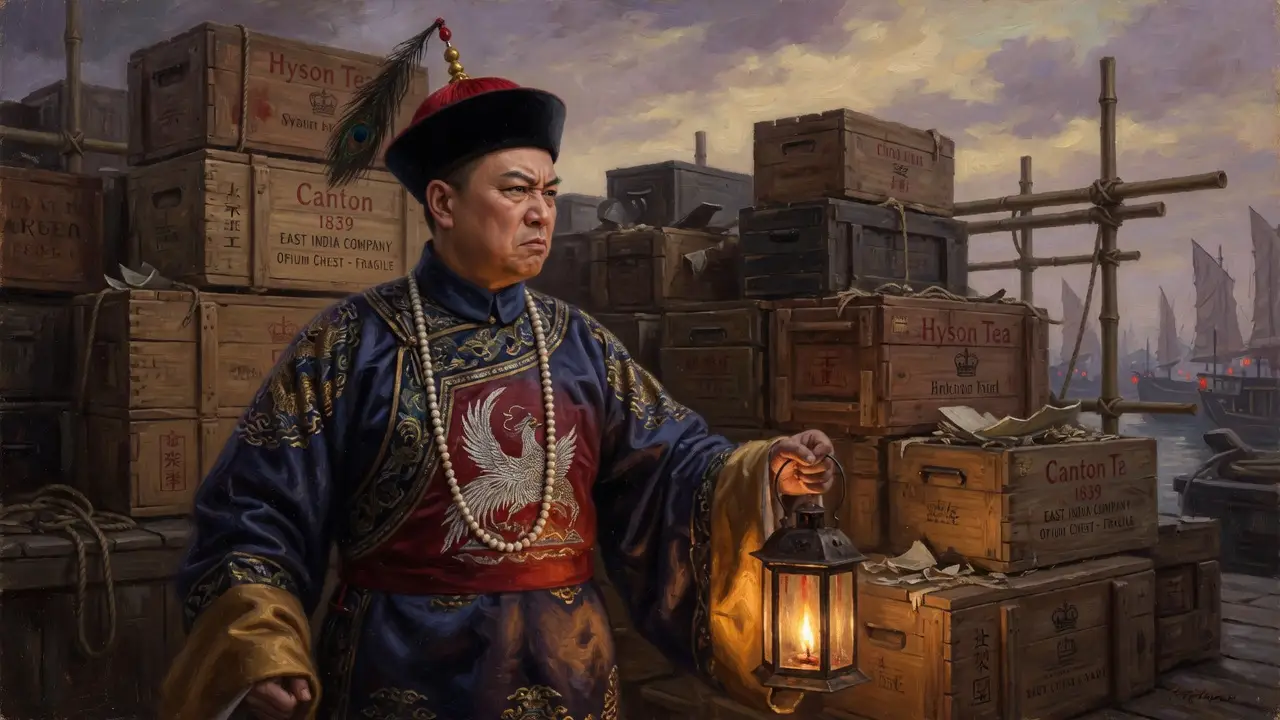
Canton, 1839. A Chinese imperial commissioner named Lin Zexu stands before 1.2 million pounds of confiscated opium, ordering it dissolved into the sea with salt and lime. It takes workers twenty-three days to destroy it all. Lin then writes a letter directly to Queen Victoria, appealing to her conscience, asking how a nation that banned opium sales on its own soil could justify flooding another country with the drug. The letter was never officially acknowledged. Within two years, British warships were shelling Chinese coastal cities to protect their right to keep selling it.
A Balance Sheet That Didn’t Balance
By the late 1700s, Britain had a problem. The British public was obsessed with Chinese goods: silk, porcelain, and above all, tea. Demand was insatiable. The East India Company was hemorrhaging silver into China to pay for it, and China wanted almost nothing Britain made in return. Emperor Qianlong had made that clear in a letter to King George III in 1793: “We possess all things. I set no value on objects strange or ingenious, and have no use for your country’s manufactures.”
That single sentence captures the entire economic standoff. China was self-sufficient, largely closed to foreign trade, and utterly unimpressed by European industrialization. The British, meanwhile, were watching their silver reserves drain eastward with no way to stop the bleeding through legitimate commerce.
Someone in the East India Company eventually landed on an answer. Not a product China wanted. A product China would come to need.
The Drug That Built an Empire
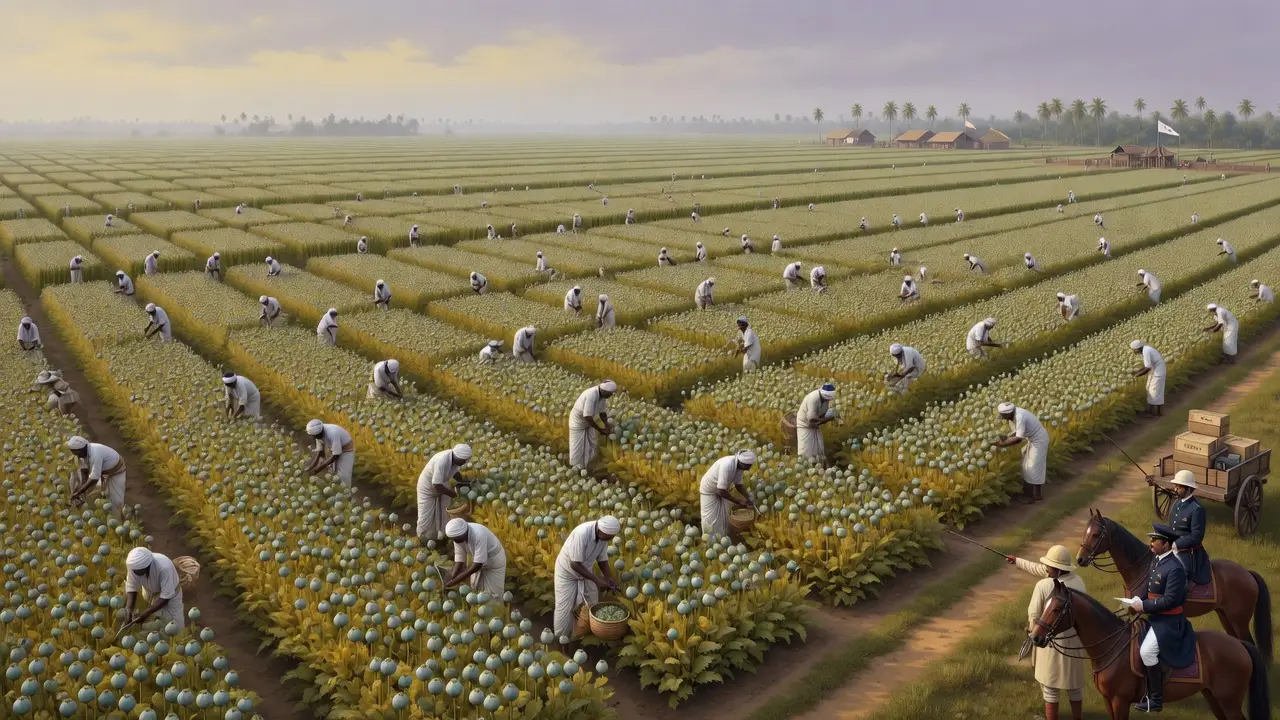
Opium had been present in China for centuries, mostly used in small medicinal quantities. The British didn’t invent the trade, but they industrialized it. The East India Company took control of the poppy fields in Bengal, producing opium on a massive, organized scale, then hired private merchantseuphemistically called “country traders”, to smuggle it into China through a network of fast ships and corrupt officials.
The arrangement was legally elegant and morally bankrupt. The Company itself never technically touched the drug on Chinese soil. It auctioned the opium in Calcutta, collected the silver, and let private contractors absorb the legal risk on the Chinese end. It was plausible deniability dressed up in trade ledgers.
“The Chinese had paid with cash for English imports; the English now pay China in kind, the kind being poison.”
Karl Marx, writing about the Opium Wars (1858)
The numbers scaled with shocking speed. In 1729, roughly 200 chests of opium entered China annually. By 1838, that figure had climbed to approximately 40,000 chests per year. Each chest contained around 140 pounds of processed drug. The trade reversed the silver flow so completely that China was now hemorrhaging the same silver it had once accumulated, paying for a poison being used against it.
Join The Archive Briefing
Weekly dispatches. The history they didn't teach you — sourced, subverted, delivered to your inbox.
One lesser-known detail: the East India Company actually employed chemists to refine Bengali opium into a more potent, more addictive product specifically calibrated for the Chinese market. This wasn’t accidental commerce. It was engineered dependency.
The Human Cost Nobody Counted
By the 1830s, addiction had spread far beyond the coastal merchant class. It reached soldiers, civil servants, farmers, women, and children in interior provinces far from any port. Estimates of addicted users range from two to twelve million people, a spread that reflects how poorly anyone was actually tracking it, not uncertainty about whether the crisis was real.
Families sold possessions to fund habits. Villages watched their working-age men rendered useless. The Chinese military had units where the majority of soldiers were addicted, a fact that would prove catastrophic when confrontation came.
A Qing-era official named Huang Juezi wrote in a memorial to the Emperor in 1838: “The harm caused by opium is greater than that of flood, drought, or banditry.” He was asking for the death penalty for dealers. What he got, instead, was war.
Lin Zexu and the Letter That Changed Nothing
Commissioner Lin Zexu was an incorruptible official in an empire full of bribed ones, and he was sent to Canton in 1839 with a mandate to end the trade. He was effective, methodical, and fatally optimistic about the power of moral argument.
He surrounded the foreign trading district, cutting off food and water until foreign merchants surrendered their stocks. He oversaw the destruction of the opium personally. He wrote that letter to Queen Victoria, an extraordinary document in which he argued that Britain, by selling poison to China, was violating the basic principles of Heaven. “Suppose there were people from another country who carried opium for sale to England and seduced your people into buying and smoking it; certainly your honorable ruler would deeply hate it and be bitterly aroused.”
The letter used Britain’s own moral logic against it. It should have been unanswerable. Instead, it was ignored.
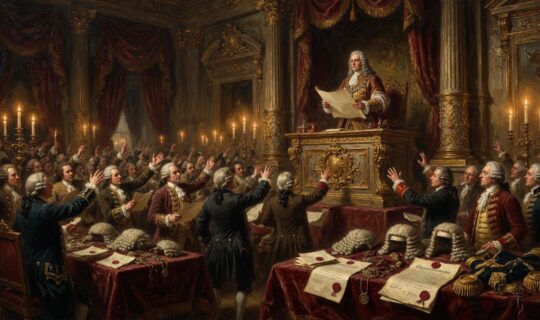
In London, the debate was fierce. Former Prime Minister William Gladstone, then a young MP, rose in Parliament and called the coming war “unjust in its origins, a war more calculated to cover this country with permanent disgrace.” He lost the vote by nine. The fleet sailed.
Gunboats and the Art of the Unequal Treaty
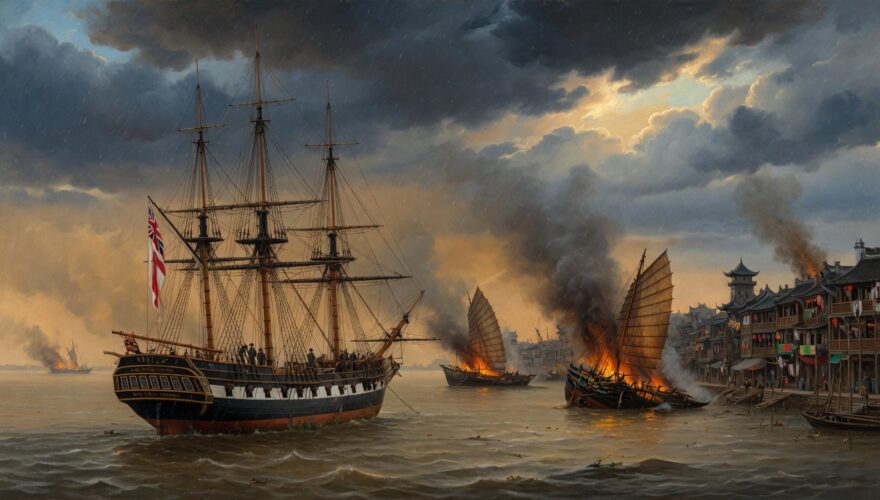
The First Opium War lasted from 1839 to 1842. It was not a war in any balanced sense. British steam-powered warships moved through Chinese waters while Chinese junks burned around them. Coastal fortifications fell in hours. Cities that had never seen foreign soldiers suddenly had them walking their streets.
The Chinese military’s addiction problem, the one officials had been warning about for years, became visible in combat. Units broke and fled. Officers who had falsified readiness reports for years had no answer for iron-hulled steamers firing explosive shells.
The Treaty of Nanking that ended the war gave Britain Hong Kong, forced open five treaty ports, extracted a massive indemnity, and established extraterritoriality, meaning British subjects in China could not be tried under Chinese law. It did not, notably, even mention opium by name. That omission was intentional. The British government didn’t want the embarrassment of a formal opium clause in a peace treaty. The trade simply continued, now under military protection.
A second war followed between 1856 and 1860, triggered by a dispute over a vessel’s registration flag that was transparently pretextual. This time France joined in. The outcome was the legalization of the opium trade inside China, forced into the Tientsin Treaties. The Qing Empire had been legally compelled to welcome its own destruction.
What the Ledger Actually Said
Here is the part that strips away any remaining ambiguity about intent: the opium trade funded British India. At its peak, the trade accounted for roughly one-sixth of British India’s entire revenue. Without it, the administrative costs of maintaining the Indian colonial apparatus would have been unmanageable.
China was not collateral damage. China was the revenue stream.
One figure that rarely appears in popular histories: the East India Company paid its dividends to British shareholders using profits that flowed, in significant part, from this trade. Investors in London including members of Parliament who voted for the wars. held financial stakes in the enterprise they were legislating to protect.
“We have heard that in your honorable barbarian country, the people are not permitted to inhale the drug. If it is admittedly so deleterious, how can your seeking profit by sending it to injure us be reconciled with the decency of Heaven?”
Lin Zexu (1839), letter to Queen Victoria
The Sassoon family, the banking dynasty sometimes called the “Rothschilds of the East,” built much of their early fortune on the opium trade and later became prominent figures in British society, knighted and celebrated. David Sassoon, who ran the business from Bombay, had agents placed in every major Chinese port. His sons were so embedded in the trade that one of them, Abdullah Sassoon, was buried in England with honors. The drug money had laundered itself into respectability within a generation.
The Wound That Didn’t Close
The Qing Dynasty never recovered its authority after the Opium Wars. The humiliations, legal, military and territorial compounded decade after decade. The Taiping Rebellion killed somewhere between twenty and thirty million people partly because the government was too weakened and bankrupt to suppress it quickly. The 1900 Boxer Rebellion, the fall of the dynasty in 1912, the decades of civil war and foreign occupation that followed: all of it connects back to the moment a trading company decided the most efficient way to fix a balance of payments problem was mass addiction.
The Chinese term for this entire period is the “Century of Humiliation,” and it doesn’t end until 1949. That is how long the aftermath lasted.
The Ghost in the Machine
In Beijing today, the Opium Wars are mandatory history curriculum. Every Chinese student learns them in detail. Western diplomats and journalists often express frustration at how frequently Chinese officials reference historical grievances in modern negotiations. What those observers sometimes miss is that the grievance is not rhetorical. It is foundational.
Modern Chinese nationalism, Xi Jinping’s rhetoric about national rejuvenation, the emotional charge behind disputes over Taiwan and Hong Kong, none of it makes complete sense without understanding that China’s governing class absorbed, as children, a very specific lesson: that when a powerful country wants something from a weaker one, it will use any method available, and then build a legal framework to justify the method afterward.
Lin Zexu’s letter to Queen Victoria assumed that an appeal to shared morality would work. It didn’t. What worked, eventually, was nuclear weapons, economic parity, and a seat on the UN Security Council. That is the lesson the Opium Wars actually taught.