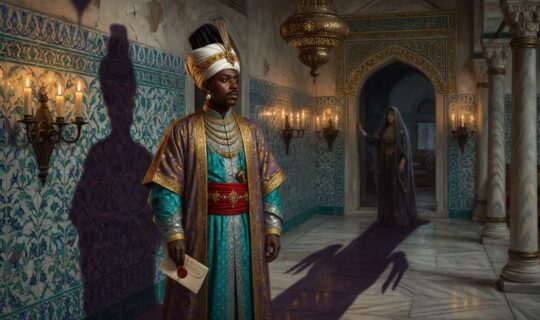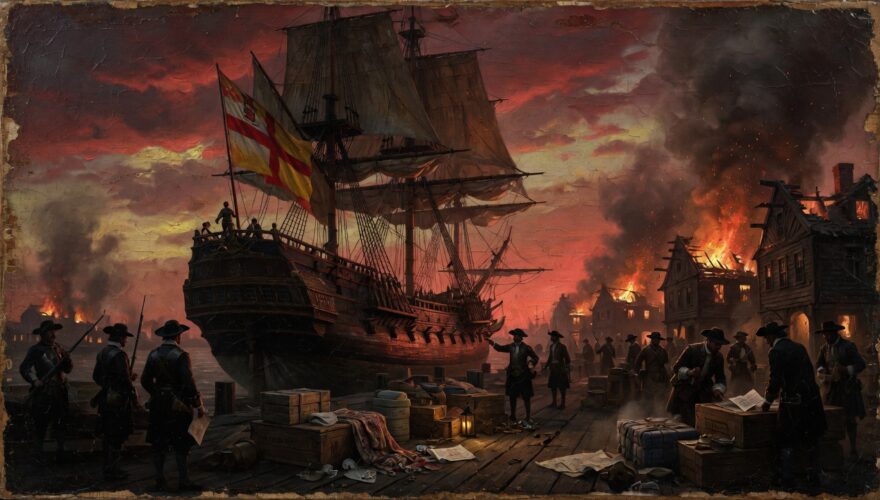
Before corporations existed, three entities mastered the art of profit without accountability. Rome’s publicani seized children as tax collateral. The Hanseatic League bankrupted kings. The East India Company starved millions. This is the story of history’s first ruthless corporate machines, and the system they built that never really ended.
The Invoice Before the Body Was Cold
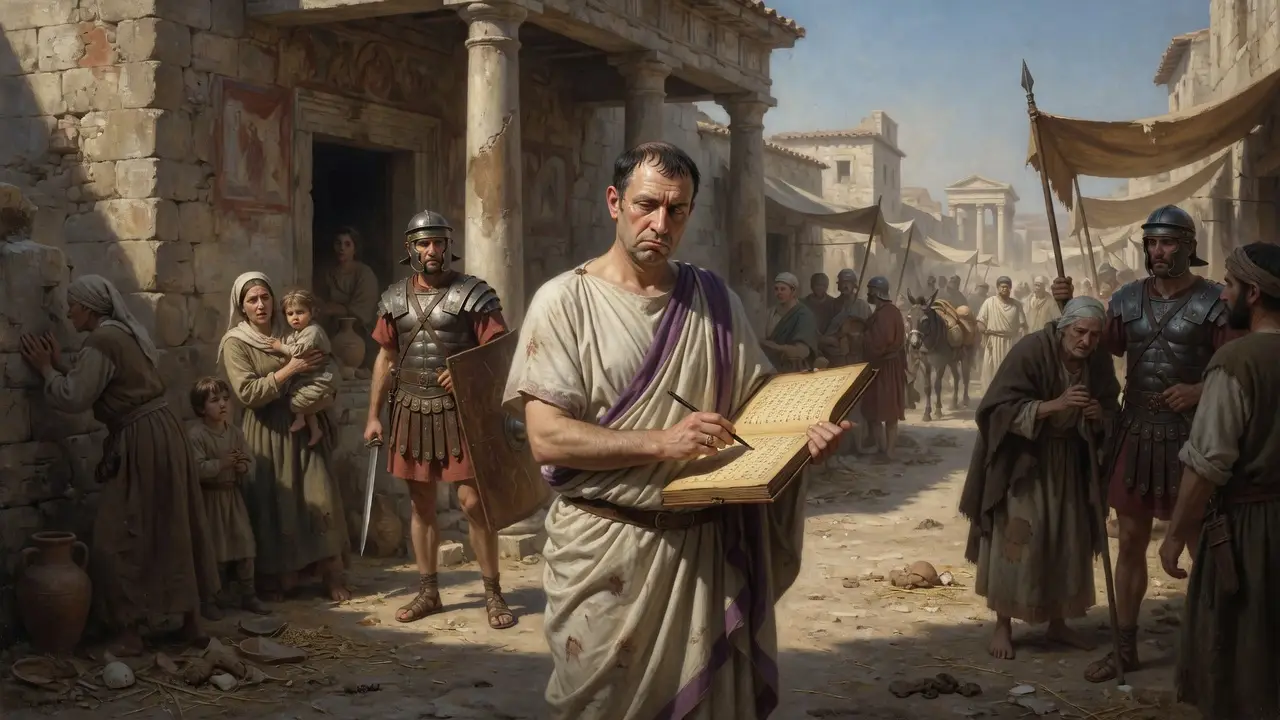
In the summer of 88 BC, a Roman tax collector named Appius rode into a small village in the province of Asia Minor with a ledger, armed escorts, and a patience that had already run out. The harvest had been poor. The villagers couldn’t pay. Appius didn’t negotiate. He didn’t write to Rome for guidance. He seized the children.
Not as slaves, technically. As collateral. The parents had ninety days to pay, plus interest, plus the collector’s personal fee for the inconvenience of waiting. If they couldn’t, the children went to market.
No senator answered for this. No magistrate filed charges. Appius worked for the publicani, Rome’s state-licensed tax-farming corporations, and the publicani worked for nobody but themselves.
What happened in that village happened across thousands of villages, in dozens of provinces, across centuries. And the men behind it weren’t monsters in any meaningful personal sense. They were shareholders.
The Architecture of Organized Greed
Long before a single person incorporated anything, human beings discovered a more efficient arrangement than individual crime: collective crime with paperwork.
The basic structure appeared in different forms across different civilizations, but the logic was always the same. A sovereign power needed resources it couldn’t efficiently extract on its own. A private group offered to extract those resources in exchange for a cut. The state provided legal cover, sometimes military backing, and crucially, a buffer of deniability. The private group provided the actual machinery of exploitation: the bookkeepers, the enforcers, the ships, the networks.
What emerged wasn’t quite government and wasn’t quite business. It was something older and more dangerous than either. It was the original hybrid. Profit motive married to state power, with accountability belonging to neither.
Join The Archive Briefing
Weekly dispatches. The history they didn't teach you — sourced, subverted, delivered to your inbox.
Three entities in particular refined this arrangement to something almost beautiful in its ruthlessness: Rome’s publicani, the Hanseatic League, and the East India Companies of northern Europe. Each operated centuries apart. Each left a specific kind of damage. And each invented, piece by piece, the corporate world we still live inside.
Rome’s Publicani: The Original Shareholders
The publicani didn’t start as predators. They started as a practical solution.
Rome in the third century BC was expanding faster than its administration could handle. Roads needed building. Armies needed supplying. Mines needed running. Taxes needed collecting from provinces so geographically dispersed that a single trip could take months. The Roman state, brilliant at conquest, was structurally terrible at the unglamorous logistics of empire.
Enter the publicani. These were private companies, organized as societates, partnerships in which investors bought shares and received dividends. The state auctioned off contracts, called publicationes, and publicani bid on the right to collect taxes from specific regions, supply legions, or operate public infrastructure. Once a contract was won, the company was essentially sovereign within its domain. The state had already been paid. Whatever came after was the company’s business.
“The tax-farmers strip the allies bare, the judges acquit the tax-farmers, and the Senate applauds the judges.”
Gaius Gracchus, tribune of Rome, 123 BC (reported by Plutarch)
The genius of the system, from Rome’s perspective, was that it transferred risk. The publicani paid upfront. If a province had a bad year, that was the company’s problem, not the Senate’s. But this transferred risk created something else entirely: an incentive structure that was fundamentally incompatible with human welfare.
Because a publicanus who had already paid the state for the right to collect, say, thirty thousand denarii from a province, needed to collect at least that much to break even. And to profit, which was the entire point, he needed to collect considerably more. The peasant farmer standing between a publicanus and his profit margin was not a Roman citizen. Was not a person the courts would hear from. Was a variable in someone else’s accounting column.
The first-century BC Greek historian Diodorus Siculus described what tax farming looked like at ground level in Sicily: collectors arriving with hired muscle, demanding payment in quantities the locals had never agreed to, and when the money wasn’t there, taking furniture, livestock, stored grain, the doors off houses. “They make slaves of the free,” he wrote, “and they think they are doing nothing wrong.”
Cicero, who prosecuted the corrupt governor Verres for extorting Sicily in tandem with publicani in 70 BC, called the province “stripped, plundered, and ruined.” His case succeeded, but Verres’ crimes were considered exceptional only in their visibility. The underlying system that enabled them continued for another century.
LESSER-KNOWN DETAILS
The word “company” itself comes from the Latin com (together) + panis (bread), meaning those who share bread. The publicani, however, were formally called societates publicanorum, and Roman legal scholars debated whether a societas could survive the death of a partner. Most concluded it could not. The publicani invented clauses to get around this, creating history’s first continuity-of-entity legal fiction.
The publicani reached their peak power during the late Republic, when their political influence was enormous. They bankrolled political campaigns. They cultivated senators. When the governor of Asia Minor, Marcus Junius Brutus, yes, that Brutus, lent money to the city of Salamis in Cyprus through an agent named Scaptius, he charged 48% annual interest. The legal limit was 12%. Brutus arranged for Scaptius to be appointed a provincial prefect with cavalry. The cavalry surrounded the city’s senate house until five of its members starved to death.
Brutus later helped assassinate Caesar in defense of the Republic.
The publicani’s end came not through moral awakening but through administrative efficiency. Augustus Caesar, restructuring the empire after the civil wars, began transferring tax collection to paid imperial bureaucrats. Professional, salaried, accountable to him directly. It wasn’t reform. It was competition. The emperor decided he didn’t need a middleman anymore.
The societates dissolved. Their model didn’t.
The Hanseatic League: A City That Owned Cities
Nobody voted the Hansa into existence. Nobody wrote a charter founding it, nobody signed a constitution, and for much of its five-hundred-year history, nobody could precisely say who was in it.
The Hanseatic League emerged in the twelfth century from a very simple problem: German merchants trading in the Baltic and North Sea faced legal systems that didn’t recognize them, rulers who could seize their goods arbitrarily, and pirates who simply took everything. Individually, each merchant was vulnerable. Collectively, they discovered they could be something closer to a state.
What began as informal agreements between merchants in Lübeck, Hamburg, and a handful of Baltic ports slowly calcified into one of history’s most peculiar power structures. At its height, the League encompassed between 70 and 170 cities (the number fluctuated depending on which cities had paid their dues and which had drifted out), controlled the majority of trade across northern Europe, and operated its own foreign policy, its own courts, its own navy, and its own system of economic punishment that could reduce a kingdom to begging.
The key instrument was the Verbot: the boycott. When England’s King Edward IV attempted to restrict Hanseatic trading privileges in 1468, the League didn’t send an army. It cancelled England. Hanseatic ships withdrew from English ports. Hanseatic merchants stopped buying English wool, England’s primary export. The English economy, deeply dependent on Baltic grain and Hanseatic credit, began to seize up within months. Edward capitulated, signing the Treaty of Utrecht in 1474 and restoring Hanseatic privileges. He threw in compensation for damages as well.
A medieval trade consortium had just defeated a king in a war fought entirely with ledgers.
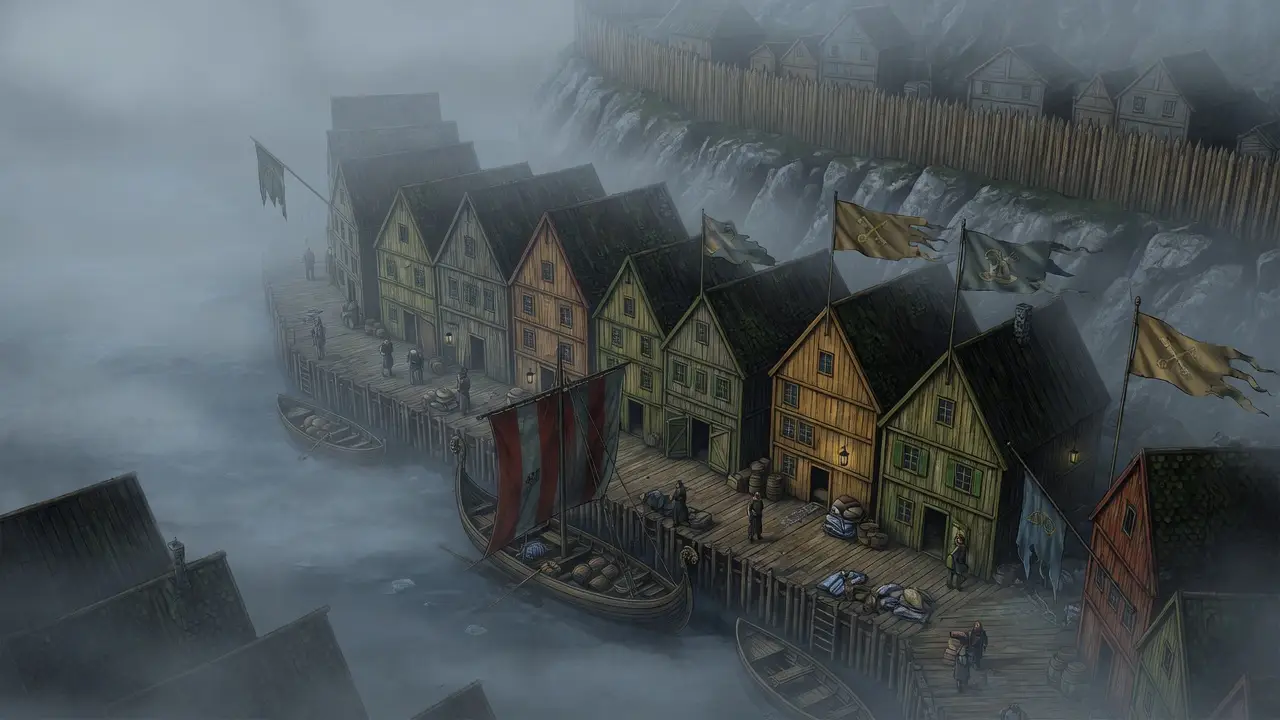
The Hansa’s physical presence in foreign ports was something between an embassy, a fortress, and a private city. The Kontor in Bergen, Norway, known as the Bryggen, was a walled compound of warehouses and dormitories where Hanseatic merchants lived and worked under their own laws, exempt from Norwegian jurisdiction. Disputes between a Hansa merchant and a Norwegian were settled in the Kontor’s own court. Local women were formally prohibited from the compound, not out of puritanism but to prevent integration: the Hansa wanted a workforce that remained German, loyal, and transferable.
“The merchants of the Hansa are lords of the sea, and what the sea does not know, the Hansa knows.”
Florentine commercial dispatch, c. 1400 (recorded in Lübeck city archives)
Young apprentices, some as young as twelve, were sent to live in Kontors for years at a stretch, working under conditions that their own employers acknowledged were brutal. A Swedish chronicle from the fifteenth century noted that new arrivals in Bergen were subjected to a hazing ritual involving prolonged beatings, forced submersion in freezing water, and smoke-fumigation in the warehouse attics. This wasn’t sadism for its own sake. It was a deliberately designed initiation that created men who owed their identity entirely to the institution that had broken and rebuilt them.
What held the Hansa together was something more powerful than governance: mutual economic dependency. Every city in the network needed every other city. Disrupt one node and you disrupted everyone. Leave the network and you lost access to the credit systems, the trade routes, the legal protections. The League had no constitution, but it had something more coercive: you simply could not afford to leave.
LESSER-KNOWN DETAILS
The League issued its own form of blacklisting called Verhansung, which meant expulsion from the network. A city that was verhanst couldn’t trade with any member port. In 1356, Bruges was effectively expelled for mistreating Hanseatic merchants. The city, which depended entirely on Hansa trade, collapsed economically within two years and begged for readmission.
When the League finally decayed in the seventeenth century, it wasn’t due to political pressure or military defeat. It was obsolescence. The Dutch and English were developing something new, joint-stock companies with royal charters, that could move faster, capitalize more aggressively, and operate across oceanic distances the Hansa had never contemplated. The Baltic was no longer the center of the world’s trade. The League’s last formal diet, its parliament, met in 1669. Only six cities sent representatives.
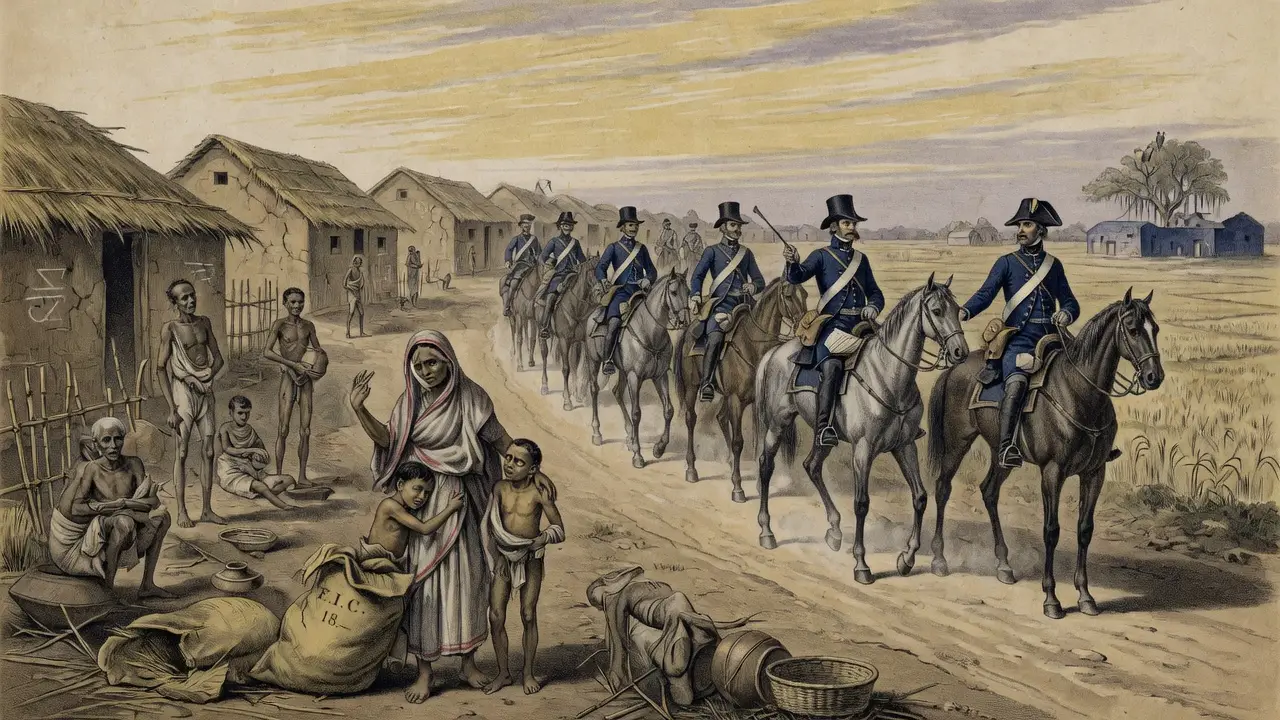
The East India Companies: Sovereignty for Sale
On the last day of December 1600, Queen Elizabeth I signed a charter incorporating “The Governor and Company of Merchants of London Trading into the East Indies.” The document gave 218 merchants a fifteen-year monopoly on English trade east of the Cape of Good Hope.
It also, almost by accident, created a template for how private capital could exercise imperial power.
The English East India Company grew slowly at first. The Dutch Vereenigde Oost-Indische Compagnie, the VOC, founded two years later, initially dominated. The VOC had superior financing, more ships, and a board of directors, the Heeren XVII, the Seventeen Gentlemen, who operated with a cold clarity about what they were actually doing. They were not in the business of trade. Trade was the vehicle. The business was monopoly. Total, enforced, permanent monopoly over the spice trade of the Indonesian archipelago.
The island of Run, a tiny nutmeg-producing speck in the Banda Islands, gives a precise image of what this meant. In 1621, VOC Governor-General Jan Pieterszoon Coen arrived at Run’s neighbor, the island of Banda, with a force of Dutch soldiers and Japanese mercenaries. The Bandanese population was somewhere between thirteen and fifteen thousand. Coen’s forces killed or expelled nearly all of them. The few survivors fled into the jungle, where most starved or were hunted. Banda’s entire population was effectively erased in a matter of months.
Then Coen imported enslaved workers, parceled the land out to Dutch planters, and resumed nutmeg production. The Heeren XVII in Amsterdam received a dividend.
Coen’s letter to his employers afterward contains one of history’s more chilling pieces of corporate communication. He wrote that he had “freed” the islands from their troublesome inhabitants, and he asked the Seventeen Gentlemen for more funding to extend this model to other islands. They sent it.
“We have lost our revenues, our trade, and very nearly our credit.”
EIC Director, letter to the Board, 1772, written during the Bengal bankruptcy crisis
Meanwhile, the English EIC was developing a different, and in the long run more consequential, approach. Rather than pure extraction, the Company in India built administrative architecture. It collected taxes, raised armies, administered law, negotiated treaties, and fought wars, all as a private enterprise pursuing shareholder returns. By the mid-eighteenth century, the EIC had more soldiers than the British government. Its territory was larger than France. Its annual revenue exceeded that of most European states.
Robert Clive, the Company’s most celebrated military commander, arrived in India as an eighteen-year-old clerk. He left as the de facto ruler of Bengal, having personally accumulated a fortune in modern terms estimated at around £200 million through gifts, bribes, and outright seizure from the treasury of the Nawab he had just deposed. When questioned by Parliament about his conduct, Clive said something that deserves to be carved above the entrance of every business school: “By God, Mr. Chairman, at this moment I stand astonished at my own moderation.”
The Company’s end came through a famine it helped cause. The Bengal Famine of 1770 killed somewhere between one and ten million people, the uncertainty itself being a measure of how little the EIC cared to count. The Company’s revenue extractors had been so effective at stripping Bengal’s wealth that when the monsoons failed, there was nothing left to fall back on. The London directors, reading the death toll reports, responded primarily by raising the land tax.
“They have the government of a great empire on one side, and the trade of a great commercial company on the other. Such a double character is altogether inconsistent.”
Adam Smith, The Wealth of Nations, 1776
The scandal was eventually too large for Parliament to ignore. The Regulating Act of 1773 placed the Company under government oversight. The Government of India Act of 1858, after the catastrophic Sepoy Mutiny, abolished it entirely. The British Crown took over directly.
The Thread Running Through All of It
Three different centuries. Three different geographies. Three different organizational forms. But look closely and the structure repeats itself with the persistence of a biological pattern.
In each case, a private entity received public legitimacy: a state contract, a royal charter, an informal sovereign recognition. In each case, that legitimacy was then used to pursue private profit with methods the state itself could not officially sanction but was perfectly happy to benefit from. In each case, the people doing the actual suffering were the ones with the least political representation, provincial peasants who couldn’t pay, indigenous traders who couldn’t compete, colonized populations who had no seat at any table that mattered.
LESSER-KNOWN DETAILS
After Parliament began investigating his conduct, Clive fell into severe opium dependency and died in 1774 at age 49, likely by suicide. The man who had commanded empires died in his London townhouse, apparently by his own pen knife. No formal charges were ever brought.
And in each case, the entity eventually collapsed not because the world became more moral, but because something more efficient came along.
The publicani were replaced by imperial bureaucrats. The Hansa was outmaneuvered by joint-stock companies. The East India Companies were nationalized when their messes became too expensive for private capital to absorb.
The pattern didn’t end. It reorganized.
The legal architecture of the modern corporation, limited liability, perpetual existence, shareholder primacy, draws directly from the charters of the East India Companies. The concept that an organization can commit harm for which no individual is fully accountable, that profit can be privatized while damage is socialized, was not invented by twentieth-century lawyers. It was field-tested across five centuries, in Bengal and Bergen and the Banda Islands, on people who never consented to be part of any experiment.
The children Appius took in 88 BC are long beyond history’s recovery. But the invoice that justified taking them has been renewed, in different currencies, every generation since.