From Mesopotamian debt cancellations to Roman debt slavery, discover how the ancient world’s financial traps turned free people into bondsmen, and why the systems that made it possible haven’t entirely disappeared.
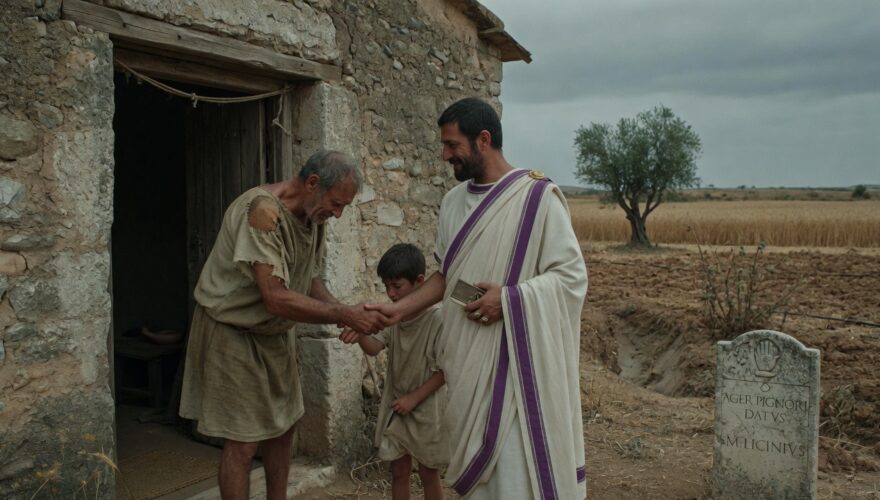
The man had borrowed grain to feed his children through the winter. He had fully intended to repay it. But the harvest failed, the interest compounded, and by the time the creditor’s men arrived at his door, the debt had grown beyond anything he could settle. He handed over his field. The following season, he worked that same field as a laborer. The season after that, he handed over his son.
This happened in ancient Mesopotamia. It happened in the Roman Republic. It happened so often, across so many centuries, that it became one of the defining catastrophes of early civilization, not war, not plague, but debt.
The Architecture of Ruin
To understand how debt destroyed lives in the ancient world, you have to understand what borrowing actually meant. There were no banks in the modern sense. No credit scores, no bankruptcy protection, no regulatory oversight. What existed instead were private creditors: wealthy landowners, merchants, temples, and in Rome, a class of money-lenders known as faeneratores, whose social standing rested on how aggressively they could extract repayment.
Interest rates were brutal by any standard. In Mesopotamia, grain loans typically carried 33% annual interest. Silver loans ran at 20%. These weren’t edge cases or predatory exceptions, they were the going rate, codified in law, accepted as normal. A farmer who borrowed in a bad year and saw another bad year follow had almost no mathematical path to solvency. The debt didn’t just grow; it accelerated.
Some Mesopotamian temples acted as the era’s equivalent of predatory lenders, issuing grain loans at 33% annual interest to farmers who had nowhere else to turn. Religious institutions and financial exploitation operated from the same address.
And the collateral was everything. Land, tools, livestock, stored grain. Then, when those ran out, people. Yourself. Your wife. Your children.
This was debt bondage, and it was the engine that quietly dismantled entire communities.
Join The Archive Briefing
Weekly dispatches. The history they didn't teach you — sourced, subverted, delivered to your inbox.
Mesopotamia: When Kings Had to Hit Reset
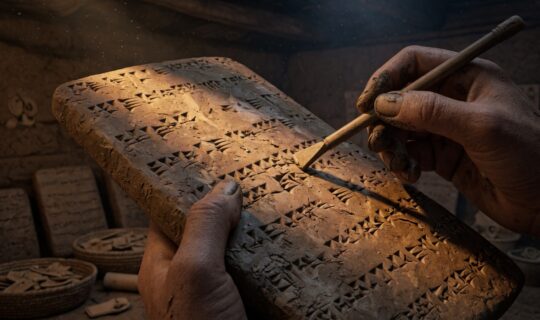
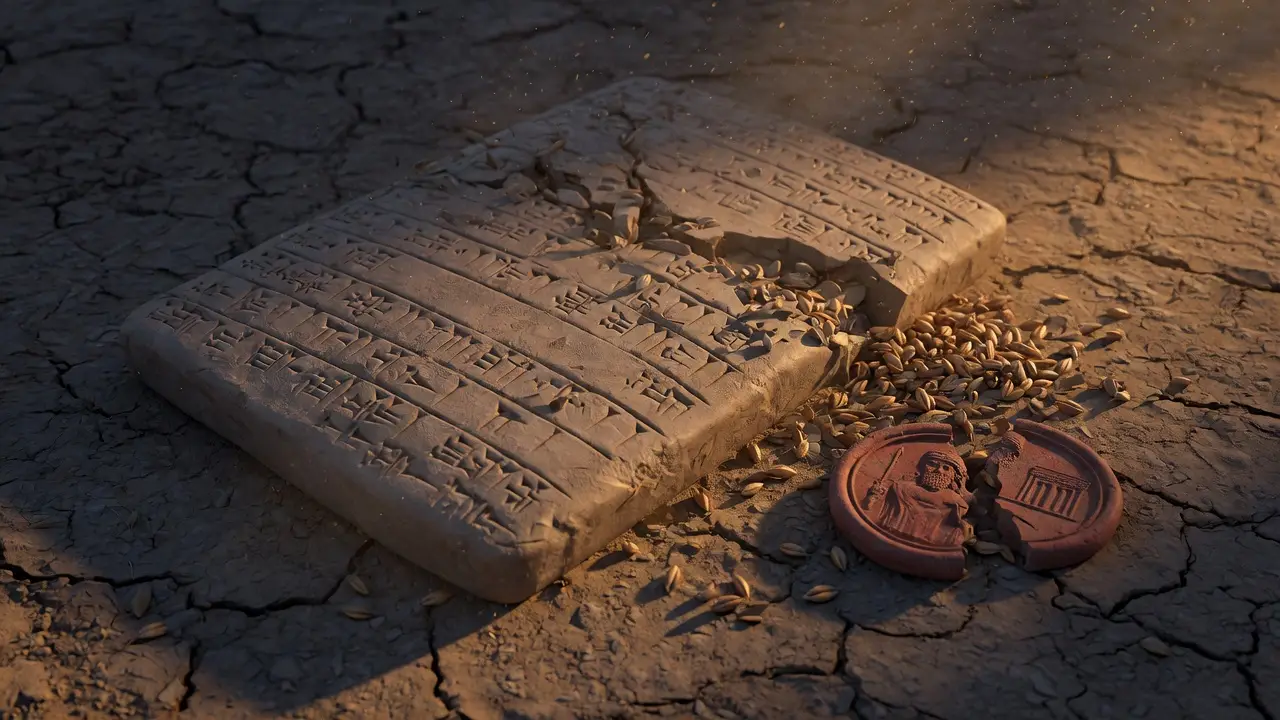
The earliest recorded debt crises come from ancient Sumer and Babylon, where written financial records predate most other human documents. Clay tablets from as far back as 2400 BCE describe networks of loans, interest schedules, and the gradual transfer of land and labor from the poor to the wealthy.
What makes Mesopotamia remarkable isn’t just that this happened, it’s that their rulers understood exactly what it was doing to their societies, and periodically intervened.
“The strong rob the weak; it is the strong who grow great.”
Solon, describing the Athens he inherited, preserved in his own surviving verses
The Sumerian term was amargi. In Akkadian: andurarum. The closest English translation is “freedom” or “release.” These were royal debt cancellations, proclaimed by kings at the start of their reign or during periods of crisis. Debts were wiped. Debt slaves were freed. Alienated lands were returned to their original owners.
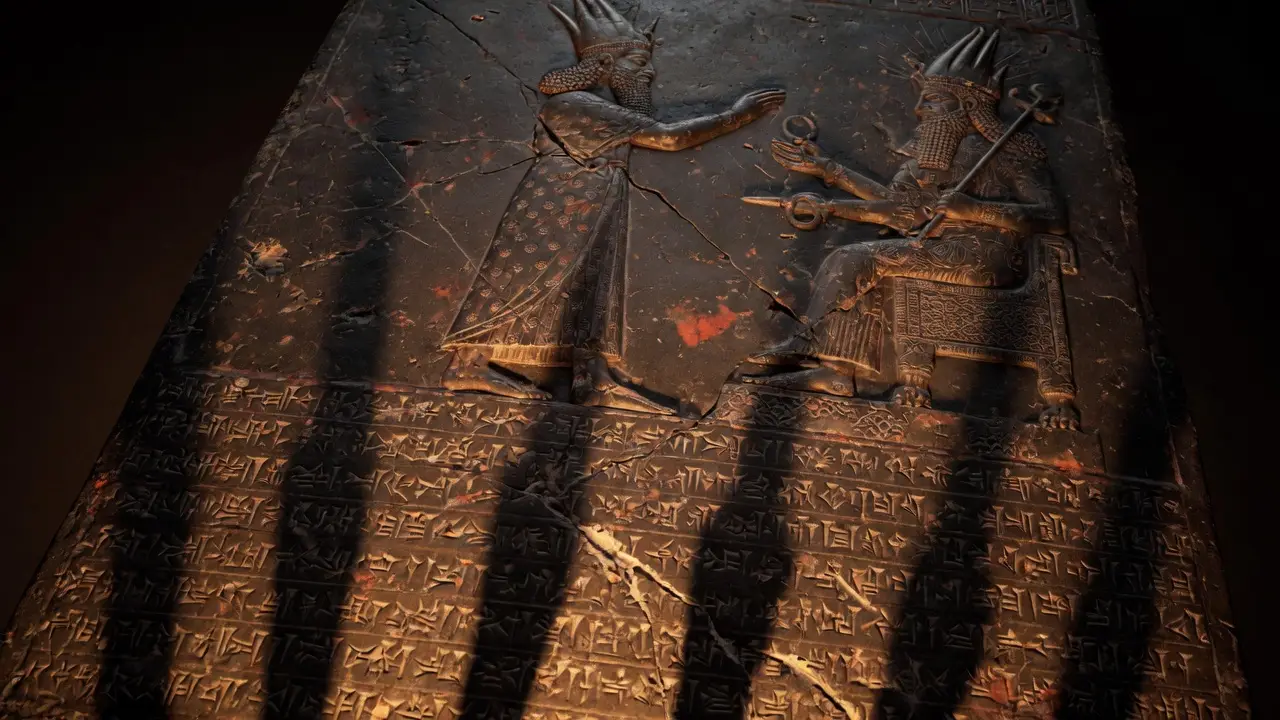
Hammurabi issued at least three such cancellations during his reign. The Edict of Ammisaduqa, issued around 1646 BCE, is one of the most detailed surviving examples. It cancels arrears on grain and silver loans, releases citizens held in debt servitude, and explicitly prohibits creditors from seizing assets from those who had already received relief. It even anticipates fraud, creditors trying to re-collect cancelled debts are specifically threatened with death.
Some Mesopotamian debt cancellations included provisions exempting commercial debts from forgiveness. Loans between merchants, long-distance trade credit, institutional finance, these were left intact. The relief was targeted specifically at subsistence farmers and small households. Whoever drafted these edicts understood the difference between productive credit and predatory extraction.
LESSER-KNOWN DETAILS
The earliest known word for “freedom” in any human language (amargi), from ancient Sumer around 2400 BCE, literally referred to the act of being released from debt. Freedom, in its first recorded usage, meant freedom from a creditor.
The system still tilted toward the wealthy. Cancellations came irregularly, sometimes decades apart, and the years between them were years of compounding damage. But the very existence of these royal resets tells you something: even the most powerful rulers in the ancient world recognized that unchecked debt accumulation was a threat to social stability. It wasn’t charity. It was crisis management.
Rome: Where Debt Became a Blood Sport
Rome took the problem and made it worse.
In the early Republic, Roman law included a provision called nexum, a debt agreement that allowed a creditor to take physical possession of the debtor’s body as collateral. If you defaulted, the creditor could literally chain you up, take you to his household, and work you until the debt was cleared. You remained technically free in Roman law, but in practice, the distinction was difficult to locate.
The Twelve Tables, Rome’s foundational legal code from around 450 BCE, laid out the terms with chilling specificity. A creditor who held a debtor under nexum for sixty days had to parade them through the public market three times, announcing the debt, giving others a chance to pay it off. If no one stepped in, the creditor could sell the debtor into slavery abroad, or, according to one deeply unsettling provision, divide the body among multiple creditors if there were more than one. Scholars debate whether this last clause was ever literally enforced. The fact that it existed in written law at all tells you something about how Romans thought about debt and personhood.
“If a man is in debt and sells his field, the buyer shall keep the field; the original owner shall not reclaim it.”
Hammurabi’s Code, Paragraph 119, on the finality of debt foreclosure
The crisis came to a head in 326 BCE, when a young Roman man named Gaius Publilius was handed over to a creditor named Lucius Papirius as a nexum debtor. What happened next split ancient sources, some say Papirius attempted to sexually assault him, others say he subjected him to flogging when the young man resisted. Either way, Publilius escaped and brought his case to the Roman Senate.
The resulting outrage produced the Lex Poetelia Papiria, which abolished nexum and prohibited the chaining of debtors. Roman citizens could no longer be held in personal bondage for debt. Their property could be seized, but their bodies belonged to them.
It was a genuine reform. It also took over a century of mounting debt crises, periodic secessiones (in which plebeian soldiers and workers literally walked out of Rome in protest), and at least one near-collapse of the military to produce it.
The Anatomy of a Debt Spiral
What did this actually look like on the ground? A Roman peasant farmer, the backbone of the Republican economy, owned a small plot of land. He served in the legions when called, sometimes for years at a stretch. While he was away, his farm fell behind. His wife and aging father couldn’t manage the full harvest. They borrowed. When he returned, he found debt waiting alongside his family.
LESSER-KNOWN DETAILS
Julius Caesar, drowning in debt earlier in his career, reportedly owed the equivalent of what would today be several hundred million dollars to Crassus, the richest man in Rome. His political career was partly a race to acquire enough power and wealth to stay ahead of his creditors.
If the harvest was good, he could claw back. If it wasn’t, the creditor took his land and he became a tenant on his own former property, paying rent in labor or grain. One more bad year and he was gone, landless, drifting toward the city, joining the swelling ranks of the Roman urban poor.
This was not an edge case. It was the primary mechanism by which Rome’s small-farmer class was systematically destroyed over the course of the second and first centuries BCE. The wealthy bought up their land and converted it to latifundia, vast plantation estates worked by slaves taken in Rome’s conquests. The dispossessed farmers couldn’t compete with slave labor. The republic that had been built on a class of independent citizen-soldiers was eating itself.
“They call them the masters of Italy, but they have not a clod of earth that they can call their own.”
Tiberius Gracchus, 133 BCE, on dispossessed Roman farmers (preserved in Plutarch’s Lives)
Tiberius Gracchus saw this clearly when he launched his land reform program in 133 BCE. His opening speech to the Roman people drew directly on the imagery of dispossession: that the men who fought Rome’s wars had no land, no home, no place to return to, that they were called the masters of the world and owned not a clod of earth. The Senate had him killed. His brother Gaius followed. The land reforms failed. The dispossession continued, and sixty years later, the Republic collapsed.
Solon’s Gamble
Athens had its own version of this catastrophe, and its own radical solution.
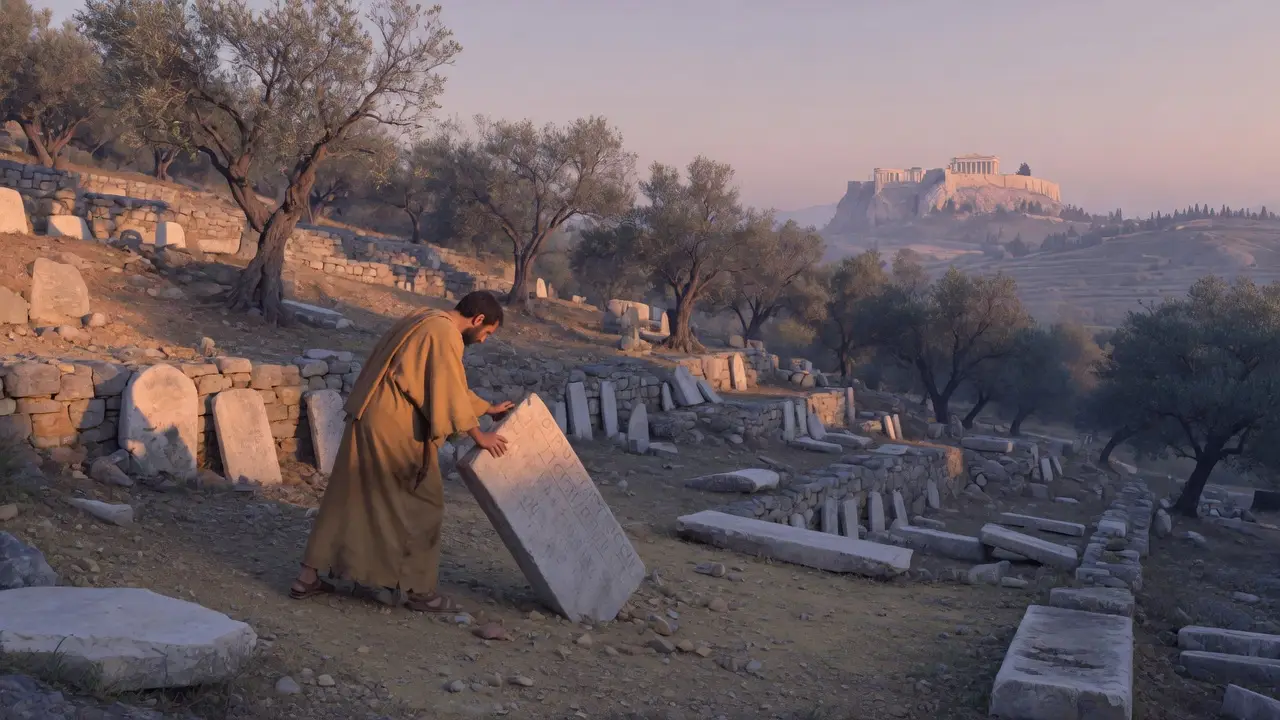
By the early 6th century BCE, Attica was fracturing under the weight of debt. Poorer farmers had mortgaged their land using a practice called horos, stone markers placed in fields to indicate that the land was collateralized. When debts went unpaid, the land was forfeit and the farmer, along with his family could be sold into slavery. Athenian citizens enslaving other Athenian citizens. The social fabric was tearing.
Solon was elected archon in 594 BCE with a mandate to fix it. His solution, the seisachtheia or “shaking off of burdens,” was sweeping: all current debts were cancelled, debt slavery was abolished for Athenian citizens, and those already sold into slavery abroad were, where possible, bought back and freed. He also removed the horos markers, hundreds of them, scattered across the fields of Attica declaring the land free.
“I freed the soil of Attica from the markers that were planted everywhere; the land that had been enslaved, I made free.”
Solon, Fragments, on the seisachtheia
Then he refused to redistribute the land itself, which alienated the poor without fully satisfying them. And he refused to cancel future debts, which eventually allowed the cycle to begin again. Solon himself later wrote that he had stood between two armies and held them apart. Both sides, he admitted, were unhappy with him.
But the seisachtheia mattered. It demonstrated, as the Mesopotamian edicts had, that debt was not an immutable fact of nature. It was a social arrangement, and it could be altered by political will.
The Echo in Every Economy
What these ancient systems share is a structural logic that hasn’t disappeared. The specific mechanisms have changed. We don’t chain debtors or sell children, but the architecture of compounding interest, land loss, and the transformation of financial obligation into permanent social subordination is recognizable in modern contexts: predatory lending in low-income communities, student debt that reshapes career choices for decades, agricultural debt cycles that strip family farms in developing economies.
The ancient world didn’t figure this out completely. Neither have we. But the Mesopotamian scribes who recorded debt cancellations, the Roman tribunes who died trying to reform the land system, and the Athenian lawgiver who literally pulled stones out of fields understood something that gets lost in sophisticated financial language: when debt compounds faster than a person can possibly earn, it isn’t a contract anymore. It’s a trap. And traps, left unaddressed, eventually destroy the societies that built them.
The creditor at the door and the father handing over his son, that story is four thousand years old. It hasn’t finished being told.