A River Full of Desperate People
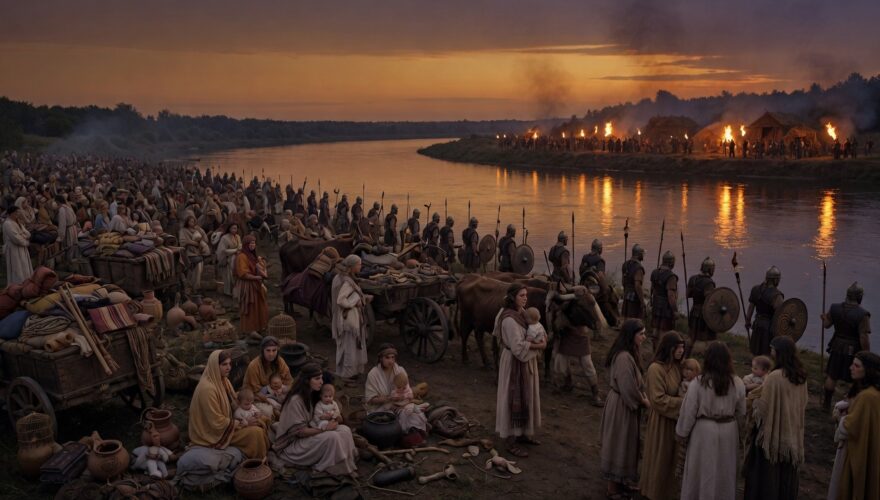
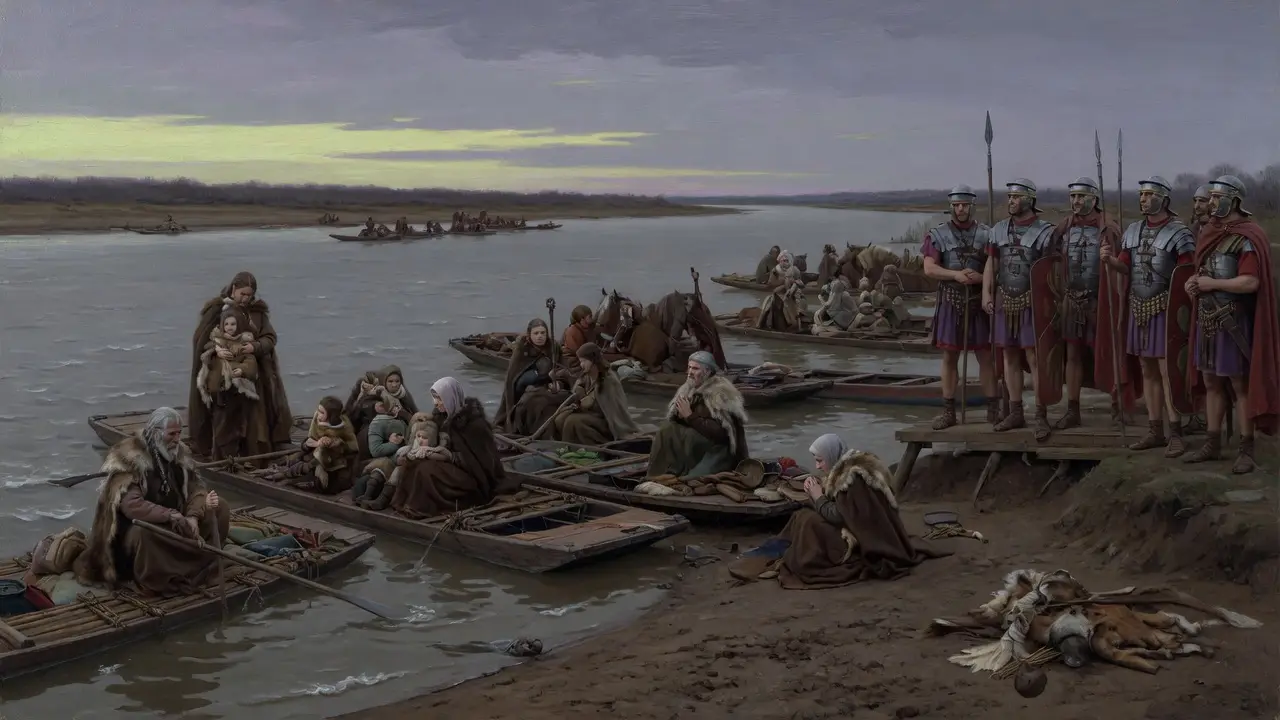
In the late summer of 376 CE, something extraordinary happened on the northern bank of the Danube. Hundreds of thousands of Goths, men, women, children, entire communities dragging whatever they could carry, had arrived at the river’s edge. They were not invaders. They were not an army. They were people fleeing the Huns, a cavalry force out of the steppe that had turned Gothic civilization into ash and memory within the span of a few brutal seasons.
The Gothic chieftains sent ambassadors across the river to the Roman Emperor Valens with a single request: let us in. We will farm your land. We will fight in your armies. We will become Romans, if that is what it takes. Just let us cross.
Valens said yes. And what happened next is one of the most consequential decisions in the history of the ancient world, and one of the most instructive case studies in how great powers handle mass displacement when they get it catastrophically wrong.
But the Goths were not the first. Not by three thousand years.
When the Bronze Age Shattered
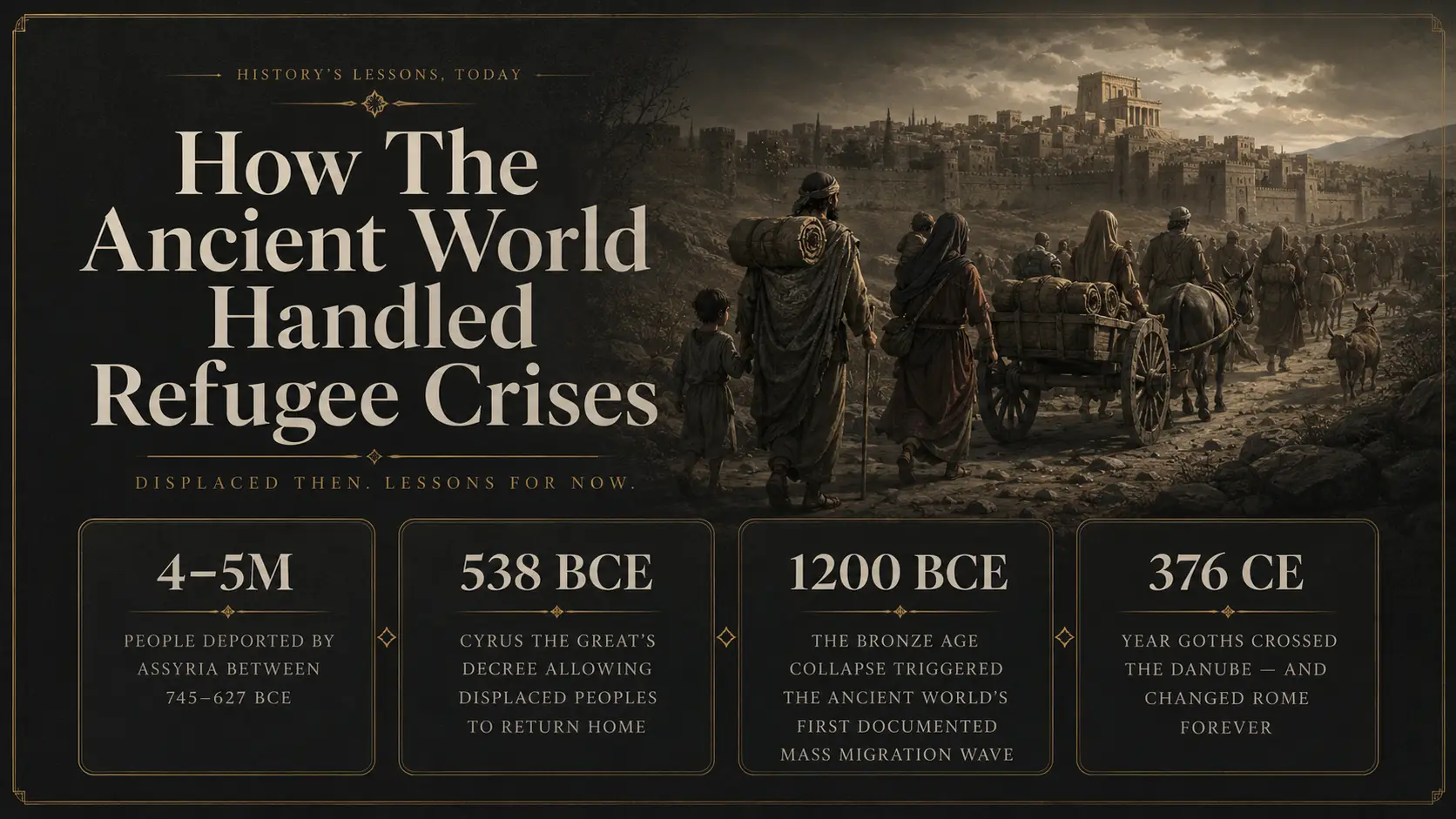
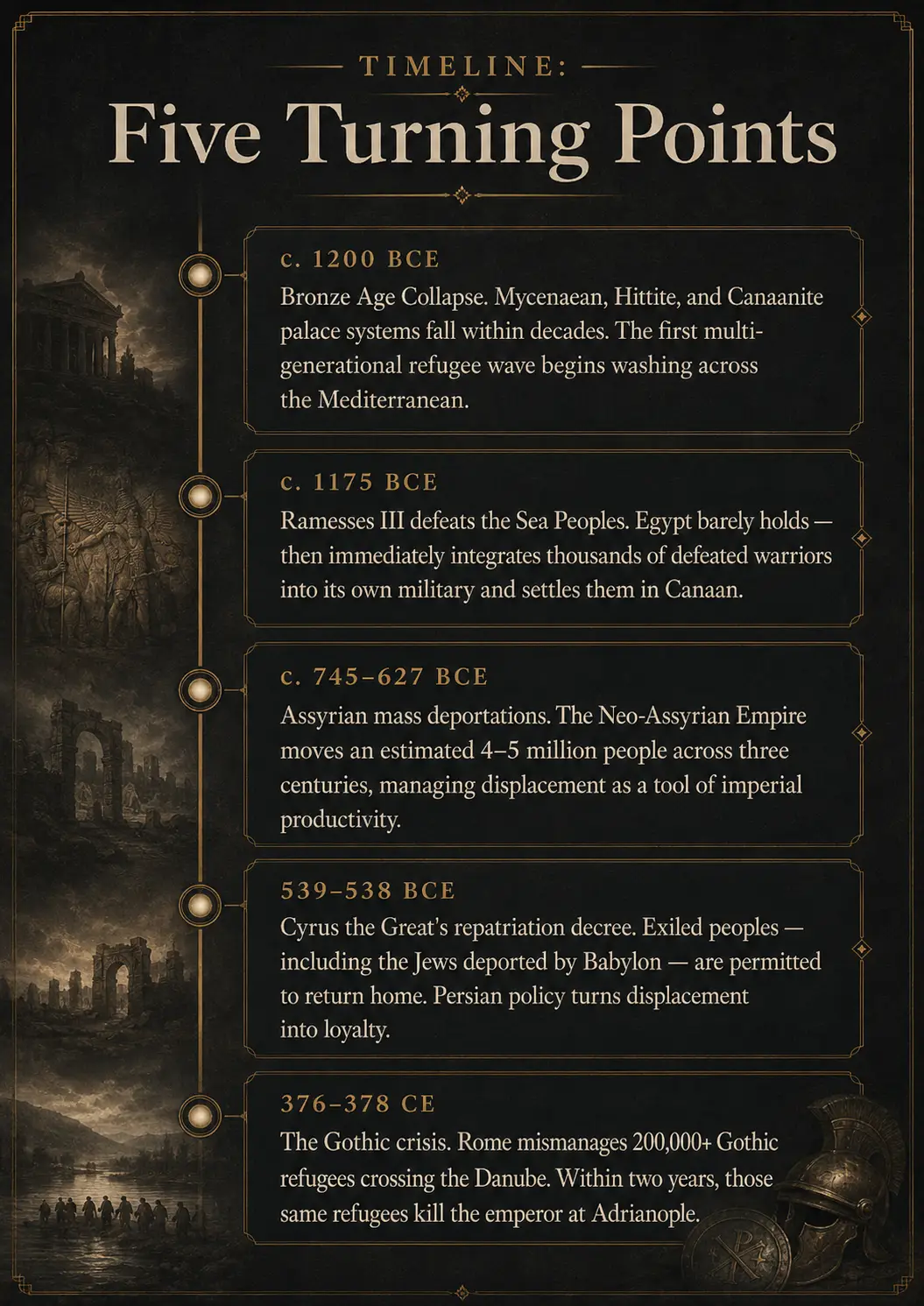
Around 1200 BCE, the eastern Mediterranean experienced a systems collapse so total that historians still debate what caused it. Palaces burned from Greece to Anatolia. Trade networks that had sustained empires for centuries simply stopped functioning. Ugarit, one of the great cosmopolitan cities of the ancient world, was destroyed so thoroughly it was never rebuilt. Egypt, already strained, looked out across the sea and saw fleets.
The Egyptians called them the Sea Peoples. We still do not know exactly who they all were. Some were almost certainly Mycenaean Greeks, displaced by the collapse of their own palace culture. Others may have been Anatolians, Cypriots, Canaanites, fragments of the Bronze Age world that had broken apart and was now washing, wave after wave, against Egypt’s borders.
Ramesses III recorded their arrival on the walls of his mortuary temple at Medinet Habu, and the language he chose was striking: he described people who had been “dislodged from their own lands” before they ever reached Egypt. They came by land and by sea, he wrote, with their belongings loaded on ox-carts. They brought families. They were not simply raiders, they were refugees who had picked up weapons because refugees without weapons do not survive.
“The foreign countries made a conspiracy in their islands. All at once the lands were removed and scattered in the fray. No land could stand before their arms.”
Ramesses III, Medinet Habu inscription, c. 1175 BCE
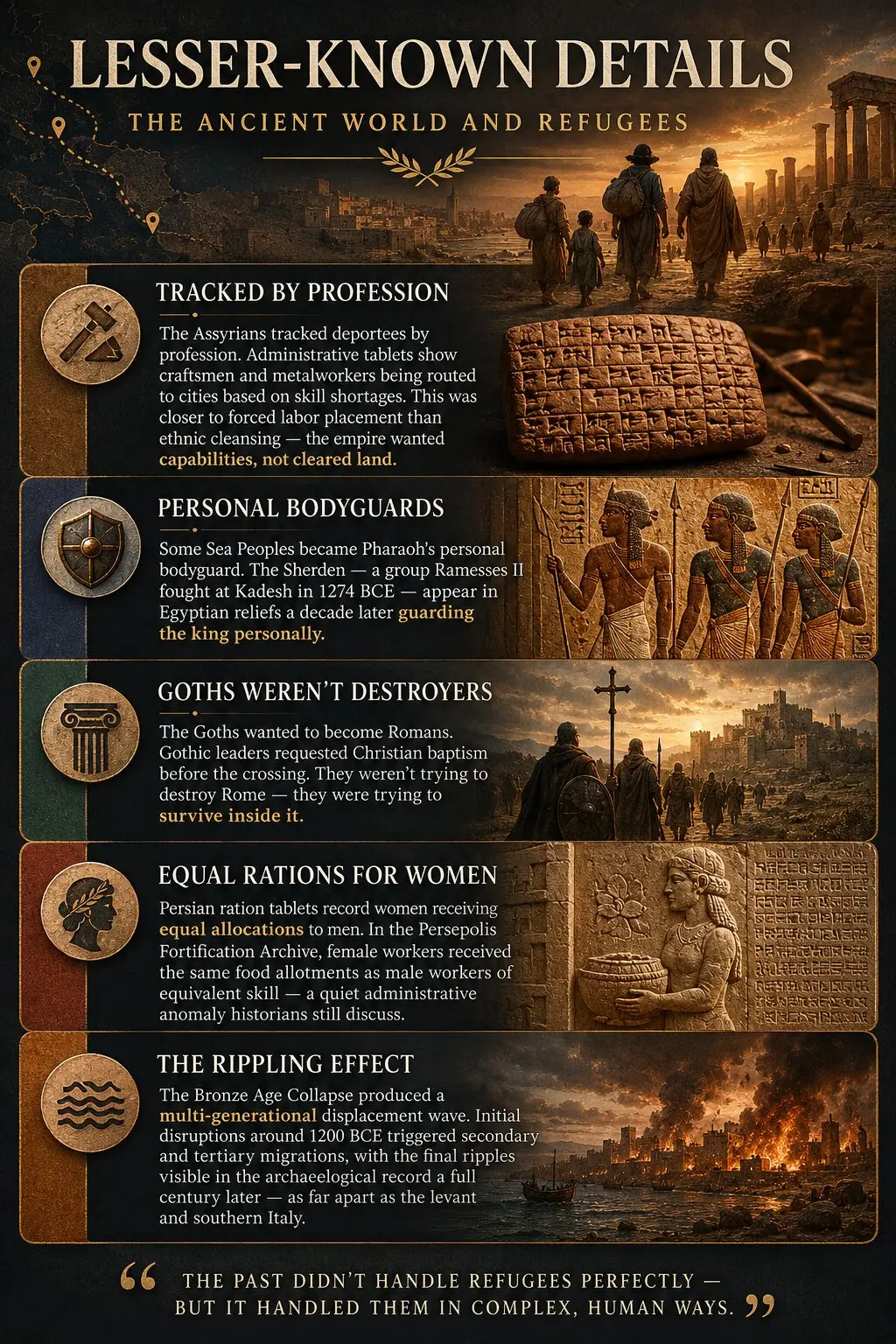
What followed was a war Egypt barely won. But the lesser-known part of the story is what Ramesses III did afterward: he settled thousands of captured Sea Peoples inside Egypt itself, enrolled them in the Egyptian military, and stationed them as garrison troops in Canaan. The same people his inscriptions call enemies were, within a generation, defending Egyptian borders. Desperation, for both sides, had a way of producing pragmatic arrangements.
Join The Archive Briefing
Weekly dispatches. The history they didn't teach you — sourced, subverted, delivered to your inbox.
The Assyrian System: Displacement as Policy
The Neo-Assyrian Empire had a different approach, and it was almost disturbingly systematic.
The Assyrians practiced mass deportation on a scale that has no real parallel in the ancient world. When they conquered a territory, they did not simply impose tribute and leave. They moved the population. Scholars estimate that between the reigns of Tiglath-Pileser III and Ashurbanipal, roughly 745 to 627 BCE, the Assyrians deported somewhere between four and five million people.
This was not punishment, or not only punishment. It was engineering.
Deportees were sent to underpopulated regions of the empire where their labor was needed. Craftsmen went where their crafts were in short supply. Farmers went where the soil was fertile but the workforce thin. Skilled administrators entered the imperial bureaucracy directly.
“I deported their inhabitants, moving them to Assyria. I placed my officials and my governors over them, and I imposed upon them the tribute due to me as their overlord.”
Tiglath-Pileser III, Annals, c. 730 BCE
The remarkable thing is that Assyrian state documents also show obligations running in the other direction. Deportees were formally entitled to rations during transport. They were to be given land and seed grain upon settlement. Assyrian administrators who abused deportees under their care could be reported and punished. This was not humanitarianism, it was the logic of an empire that needed its displaced populations to be productive, not broken.
This distinction matters. The Assyrians were not kind. But they understood something that crueler or more chaotic empires missed: a dead refugee generates no grain, builds no wall, and fights in no army.
The Achaemenid Refinement
The Persian Empire that swallowed Assyria’s legacy took this administrative sophistication further.
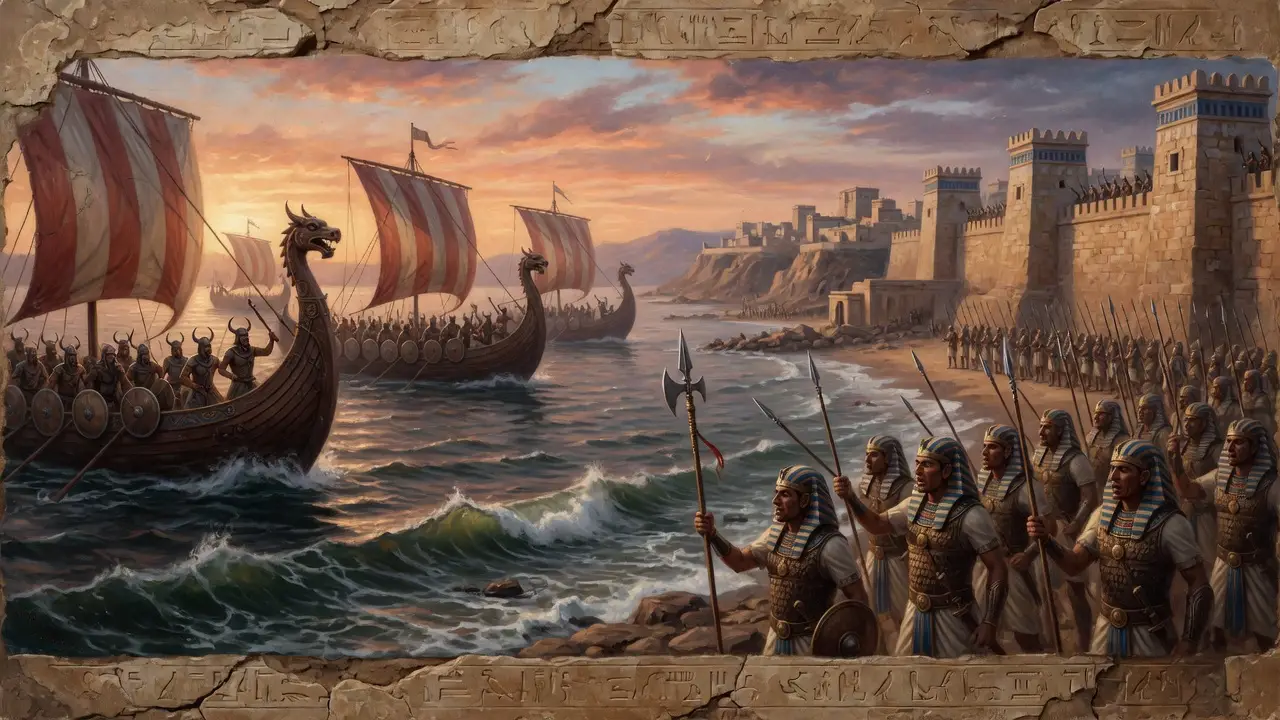
We know this because of thousands of clay tablets recovered from Persepolis, the Fortification Archive, which document in granular detail the empire’s management of workers, travelers, and displaced persons moving through the imperial core. The tablets record rations given to people described by their ethnic origins: Egyptians, Lydians, Babylonians, Greeks, Carians. The empire was, at its administrative heart, a machine for absorbing and deploying diversity.
“I returned to these sanctuaries on the other side of the Tigris, the sanctuaries of which had been ruins for a long time, the images which used to live therein and established for them permanent sanctuaries. I also gathered all their former inhabitants and returned to them their habitations.”
The Cyrus Cylinder, 539 BCE
What the Achaemenids understood was that identity could be preserved and exploited simultaneously. They did not demand that displaced peoples become Persian. They demanded that they become useful.
The Danube Crossing That Broke Rome
Back to the Goths, and to the disaster that Valens invited.
The Roman state in 376 CE was not unaware that large-scale refugee management required resources and planning. The empire had absorbed barbarian groups before. Foederati, allied peoples settled inside Roman territory in exchange for military service, were a recognized category in Roman law and practice.
What went wrong on the Danube was not ignorance. It was corruption, indifference, and administrative failure.
The Roman commanders tasked with processing the Gothic crossing quickly recognized an opportunity. The Goths were desperate and had almost nothing. Roman officials began demanding payment for food that should have been provided. When the Goths had no money, the Romans accepted slaves. Children were taken in exchange for dog meat.
“The barbarians, after crossing the river, were driven by hunger to plunder the neighboring districts, being denied the supplies which had been promised them. The soldiers who had been appointed to prevent disorders, far from rendering any assistance, enriched themselves by trafficking in the necessities of the unfortunate strangers.”
Ammianus Marcellinus, Res Gestae, Book 31, c. 378 CE
The Goths were not settled. They were herded into holding areas, starved, and robbed. Within two years, the desperation that had driven them to the Danube in the first place had curdled into rage. At the Battle of Adrianople in 378 CE, the Goths killed the Emperor Valens, destroyed two-thirds of the Roman eastern field army, and demonstrated conclusively that a refugee crisis mismanaged hard enough becomes an insurgency.
The Ghost in the Archive
There is a letter found at the ruins of ancient Ugarit, written around 1185 BCE, in the last days before the city’s destruction. The king of Ugarit was writing to the king of Alashiya, probably Cyprus, describing ships he had spotted offshore, large numbers of them, enemy forces approaching. He was asking for help.
The letter was never sent. It was found in the kiln room where the clay was still being fired when the city fell.
In it, the king mentions almost in passing that he has sent all his own forces away to deal with food shortages elsewhere. The crisis had already stretched his resources before the ships arrived. Famine and displacement had weakened the state before the final blow came.
Three thousand years later, the situation has a very specific kind of familiarity.
The Reckoning
The ancient world did not solve the problem of mass displacement. Nobody did. But the civilizations that handled it most effectively shared a quality that goes beyond politics or moral philosophy: they had durable institutions that could translate a crisis into a procedure.
The Assyrian scribe who wrote down the ration allocations for a thousand deported Israelites was not acting from compassion. He was following a protocol. But that protocol, cold and bureaucratic as it was, meant those people ate. The Roman official who sold Gothic children for food had no protocol, or had one he chose to ignore. The result was Adrianople.
What the ancient world teaches, across all its centuries of displacement and absorption, is that the question of how you treat people with nowhere left to go is not primarily a moral question. It is an organizational one. And the civilizations that organized their answers carefully tended, despite everything, to survive longer.
The ones that didn’t learned what the Goths taught Valens: that desperation, given enough time and enough betrayal, always finds a way to cross the river.
What the ancient world teaches, across all its centuries of displacement and absorption, is that the question of how you treat people with nowhere left to go is not primarily a moral question. It is an organizational one.
The ones that got it wrong learned what the Goths taught Valens: that desperation, given enough time and enough betrayal, always finds a way to cross the river.